
Description
Williams Controls WM-540 Electronic Suspended Pedal – Heavy-Duty Hall-Effect Accelerator Control
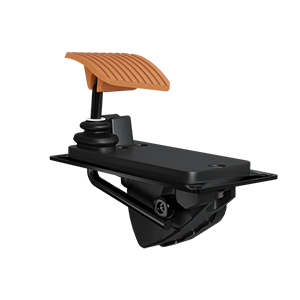
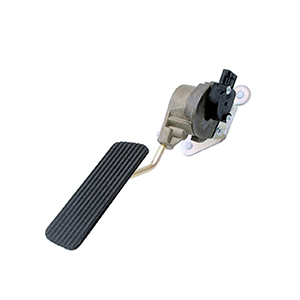
The Williams Controls WM-540 Electronic Suspended Pedal is a rugged, firewall-mounted electronic accelerator control engineered to provide a precise electrical signal to an engine control module in response to the operator’s demand for engine power. Designed for demanding commercial vehicle and mobile equipment applications, the WM-540 combines non-contact Hall-effect sensing technology with a robust mechanical construction, flexible mounting options and configurable electronic outputs. The result is a durable electronic throttle control capable of supporting reliable vehicle operation throughout an extended service life.
Unlike a conventional floor-mounted accelerator pedal, the WM-540 uses a suspended pedal arrangement mounted to the vehicle firewall. This configuration can provide valuable packaging and installation advantages where clear floor access is desirable or where the vehicle’s cab architecture is better suited to an overhead-mounted accelerator mechanism. Standard bent-steel lever rods accommodate a variety of pedal positions, while mounting brackets can be modified to meet different vehicle installation requirements.
At the heart of the WM-540 is a Hall-effect non-contact position sensor that converts pedal movement into an electrical output for the associated engine or vehicle controller. Because the sensing technology does not rely on conventional sliding electrical contacts, the WM-540 is particularly well suited to high-cycle commercial applications where long operating life, stable signal performance and reduced sensor wear are important considerations.
Firewall-Mounted Electronic Suspended Pedal
The suspended configuration of the Williams Controls WM-540 distinguishes it from traditional floor-mounted electronic accelerator pedals. The assembly is designed for firewall mounting, positioning the pedal mechanism above the vehicle floor rather than requiring the primary mechanism to be installed directly onto or through the floor structure.
This arrangement can provide important advantages during vehicle design. Maintaining clear floor access can simplify cab layouts, assist with cleaning and allow engineers greater flexibility when positioning other components within the operator footwell. Suspended accelerator pedals are also familiar to operators across many commercial vehicle platforms, providing an intuitive interface for controlling engine demand.
The WM-540 has been engineered with installation flexibility in mind. Its coated-steel mounting bracket can be modified to accommodate different mounting requirements, while standard bent-steel lever rods allow a variety of pedal placements. This adaptability makes the WM-540 particularly valuable for Original Equipment Manufacturers developing different vehicle platforms or operator cab configurations.
Electronic Throttle Control for Engine Management Systems
The primary function of the WM-540 is to communicate the operator’s demand for engine power to an electronic engine control module. Rather than using a mechanical cable or linkage to control the engine directly, pedal movement is measured electronically and converted into an appropriate electrical signal.
This approach supports modern electronic throttle architectures in which the engine controller interprets accelerator position together with other vehicle operating information. The WM-540 therefore acts as an important interface between the operator and the vehicle’s electronic control system, translating physical pedal movement into reliable electronic position information.
For OEM manufacturers, electronic throttle control can also provide greater flexibility when developing vehicle layouts. Eliminating a direct mechanical throttle linkage can simplify routing between the accelerator and engine while allowing the pedal to be positioned according to operator and cab requirements rather than the path of a mechanical cable.
Hall-Effect Non-Contact Sensing Technology
The Williams Controls WM-540 is equipped with a Hall-effect non-contact sensor. This technology determines accelerator position through changes in a magnetic field rather than through sliding electrical contact between sensing components.
Traditional potentiometer-based position sensors typically use a mechanical wiper moving across a resistive track. Repeated movement can gradually wear these contacting surfaces and may eventually influence electrical performance. Accelerator pedals are particularly demanding applications for position sensors because the pedal may be operated thousands of times during a working shift and millions of times throughout the life of the vehicle.
Hall-effect technology eliminates this particular electrical contact-wear mechanism. Pedal movement changes the magnetic relationship within the sensing system, allowing the electronics to determine accelerator position without requiring the sensing surfaces to rub against one another.
This non-contact operating principle supports long product life and consistent electronic performance, making Hall-effect sensing particularly appropriate for commercial vehicles and heavy-duty mobile equipment where accelerator reliability directly influences machine availability and operator productivity.
Five Million Full-Travel Cycle Product Life
One of the standout characteristics of the WM-540 is its rated product life of 5,000,000 full-travel cycles. This substantial cycle rating reflects the pedal’s design for high-utilisation commercial applications where the accelerator may be operated continuously throughout extended working periods.
For fleet operators and equipment owners, accelerator pedal durability can have a direct influence on lifecycle costs. Failure of an electronic throttle control can result in vehicle downtime, diagnostic work, replacement labour and lost productivity. Selecting an accelerator assembly engineered for millions of operating cycles can therefore contribute to improved vehicle availability and more predictable maintenance requirements.
The five-million-cycle rating also differentiates the WM-540 within the broader Williams Controls electronic throttle range. Combined with non-contact Hall-effect sensing, the long mechanical life makes the WM-540 a strong candidate for applications where frequent pedal movement and extended vehicle service are expected.
19.5-Degree Angular Rotation
The WM-540 provides 19.5 degrees of angular pedal rotation. This defined operating range allows the pedal movement to be translated into the proportional electrical signal required by the engine control system while maintaining a practical accelerator travel for the vehicle operator.
Pedal travel is an important consideration in accelerator design because it influences both operator feel and the ability to make precise changes in engine demand. An appropriate angular range allows the operator to modulate accelerator position progressively rather than moving abruptly between low and high demand.
The suspended pedal arrangement, lever geometry and defined angular rotation work together to provide an accelerator interface suited to commercial vehicle operation. OEM engineers can position the pedal according to the required cab geometry while incorporating the specified travel into the vehicle’s overall operator control design.
Configurable Analogue and PWM Outputs
Commercial vehicle manufacturers use a variety of electronic engine controllers and vehicle management architectures, meaning a single fixed accelerator output is not appropriate for every application. The WM-540 addresses this requirement through a flexible range of available electronic configurations.
The Hall-effect sensor can be programmed for analogue output and integrated switch functionality. The pedal can also be customised with contact or Pulse Width Modulation output sensors according to the requirements of the application.
Available output configurations include Dual Accelerator Position Sensor (Dual APS), Dual Pulse Width Modulation (Dual PWM), single APS, single PWM and APS combined with an Idle Validation Switch (APS/IVS). This range provides OEM engineers with considerable flexibility when matching the pedal to an existing engine control module or developing a new electronic throttle architecture.
The ability to configure the WM-540 for different signal formats can also support component standardisation across multiple vehicle platforms. Manufacturers may be able to retain a familiar mechanical pedal assembly while selecting the electronic configuration appropriate to each engine or controller package.
5 V and 12 V to 24 V Operating Capability
The Williams Controls WM-540 supports 5 V operation as well as 12 V to 24 V configurations, depending on the specified sensor and electronic arrangement. This allows the pedal family to accommodate a broad range of commercial vehicle electrical architectures.
Five-volt sensor supplies are commonly used by electronic control modules for accelerator position sensing, while 12 V and 24 V electrical systems are widely used throughout commercial vehicles and heavy mobile equipment. Supporting these different requirements increases the versatility of the WM-540 for OEM applications.
The appropriate operating voltage and output configuration should always be selected according to the requirements of the associated electronic controller. Supply voltage, signal characteristics, wiring and calibration requirements should form part of the complete system specification when integrating the WM-540 into a new or existing vehicle platform.
IP67 Sealed Electronics
Commercial vehicle accelerator controls can be exposed to challenging environmental conditions throughout their working life. Moisture, dust and other contaminants can enter the operator cab through normal use, while industrial and off-highway applications may expose controls to particularly demanding environments.
The electronics within the WM-540 are sealed to IP67 in accordance with IEC 60529. This provides protection against dust ingress and temporary water immersion under the conditions defined by the standard, helping protect the Hall-effect sensing electronics from environmental contamination.
Effective sealing is particularly important for an electronic accelerator because the pedal position signal provides a critical input to the engine control system. Protecting the sensing electronics helps maintain dependable communication between the operator control and the vehicle controller throughout demanding commercial service.
SAE J1113 Electromagnetic Compatibility
Modern commercial vehicles contain numerous electronic systems operating simultaneously. Engine management systems, transmission controllers, communication networks, hydraulic controls, charging systems, telematics and auxiliary equipment can all contribute to a complex electromagnetic environment.
The WM-540 electronics are highly resistant to electromagnetic interference and comply with SAE J1113 requirements. This characteristic supports dependable operation within electronically sophisticated commercial vehicles and mobile equipment.
Electromagnetic compatibility is particularly important for accelerator position sensing because unwanted electrical interference must not compromise the integrity of the operator demand signal. The WM-540’s electronic design therefore complements its mechanical and environmental durability, providing OEM engineers with a pedal intended for integration into modern electronic vehicle architectures.
Corrosion-Resistant Cast-Aluminium Housing
The mechanical construction of the WM-540 reflects its heavy-duty design philosophy. The assembly incorporates a corrosion-resistant cast-aluminium housing, providing a strong and durable enclosure for the pedal mechanism and sensing components.
Cast aluminium offers a useful combination of structural strength and corrosion resistance for commercial vehicle applications. The housing works together with the coated-steel mounting bracket to create a robust suspended accelerator assembly capable of supporting long-term operation in demanding environments.
The body castings are die-cast aluminium, while the foot treadle and base plate components use corrosion-resistant plated steel. The treadle incorporates an NBR rubber cover, providing a durable contact surface between the pedal and the operator’s footwear.
Flexible Lever and Mounting Arrangements
Installation flexibility is another important characteristic of the Williams Controls WM-540. The mounting bracket can be modified to accommodate different vehicle requirements, giving OEM designers greater freedom when integrating the accelerator into an existing or newly developed cab structure.
Standard bent-steel lever rods can accommodate a variety of pedal placements. This allows the physical treadle position to be adapted according to the seating position, firewall geometry, available footwell space and surrounding operator controls.
For applications involving particularly high static-load requirements, a customised 3/16-inch steel plate lever is also available. This heavy-duty option further demonstrates the WM-540’s suitability for commercial vehicle applications where accelerator controls may be exposed to substantial mechanical loads.
Engineered for Demanding Commercial Vehicle Operation
The Williams Controls WM-540 brings together the key characteristics required from a heavy-duty electronic suspended accelerator pedal: non-contact Hall-effect sensing, configurable electrical outputs, environmental protection, robust mechanical construction and flexible installation.
Its five-million-cycle product life provides an excellent foundation for high-utilisation applications, while 19.5-degree angular rotation supports controlled accelerator movement. IP67 sealed electronics and SAE J1113 electromagnetic compatibility protect the electronic sensing system, while the cast-aluminium housing, coated-steel bracket and adaptable lever arrangements provide the mechanical durability required for commercial service.
For OEMs seeking a firewall-mounted electronic throttle control capable of supporting modern engine management systems while accommodating different cab and vehicle configurations, the WM-540 provides a proven and highly adaptable Williams Controls solution.
Heavy-Duty Mechanical Performance
The Williams Controls WM-540 Electronic Suspended Pedal has been engineered to withstand the mechanical demands associated with commercial vehicles and heavy-duty mobile equipment. Accelerator pedals are subjected to continual operator input throughout the working life of a vehicle, while vibration, shock and occasional excessive pedal loads can place additional stress on the complete assembly. The WM-540 addresses these conditions through robust materials, a durable suspended pedal mechanism and a non-contact electronic sensing system designed for long-term operation.
The firewall-mounted arrangement provides a strong foundation for the accelerator assembly while allowing the pedal and lever position to be adapted to suit the vehicle cab. Corrosion-resistant die-cast aluminium, plated steel components and a coated-steel mounting bracket contribute to the mechanical strength required for commercial vehicle service.
These characteristics are particularly valuable for Original Equipment Manufacturers developing vehicles expected to accumulate substantial operating hours. Accelerator pedal reliability directly influences vehicle availability, making mechanical strength and long-term electronic performance important considerations during component selection.
1500 N Static Load Capability
The WM-540 is designed to withstand a static load of 1500 N applied at 150 mm from the pedal pivot. This substantial load capacity demonstrates the strength of the accelerator assembly beyond the forces normally required during routine throttle operation.
Although normal accelerator input produces considerably lower forces, pedals can occasionally experience abnormal mechanical loading. Operators may inadvertently apply excessive force, industrial footwear can produce concentrated loads, and the pedal assembly may experience unusual stresses during demanding vehicle operation.
The ability to withstand a substantial static load provides an additional mechanical margin for these circumstances. Maintaining structural integrity also helps preserve the correct mechanical relationship between the pedal, lever mechanism and Hall-effect position sensor, supporting reliable accelerator operation throughout the service life of the vehicle.
Progressive Pedal Force and Operator Feedback
The mechanical feel of an accelerator pedal is important for accurate throttle modulation and operator comfort. The WM-540 is designed to provide progressive resistance as the pedal moves through its operating range, allowing the operator to receive tactile feedback as accelerator demand increases.
At 150 mm from the pedal pivot, the WM-540 has a specified operating force of approximately 15 N at idle, increasing to approximately 32 N at full travel. This progression creates a controlled accelerator feel while allowing the operator to make precise adjustments to engine demand.
Progressive pedal resistance can be particularly useful in commercial and industrial applications where operators frequently make small throttle adjustments. Controlled pedal movement assists with low-speed manoeuvring and other operations where abrupt changes in engine demand may be undesirable.
Combined with the pedal’s 19.5-degree angular rotation, the progressive operating force provides a practical mechanical interface between the operator and the electronic throttle system.
Five Million Cycle Durability
Commercial accelerator pedals can accumulate an extremely high number of operating cycles during their service life. The WM-540 is rated for 5,000,000 full-travel cycles, providing exceptional durability for applications involving frequent accelerator operation.
This long product life is complemented by Hall-effect non-contact sensing. Because accelerator position is measured without conventional sliding electrical sensing contacts, the position sensor avoids a significant source of electrical wear associated with potentiometer-based technologies.
The combination of mechanical cycle life and non-contact sensing is particularly beneficial for fleet and industrial applications where unexpected accelerator control failure can result in equipment downtime, maintenance labour and reduced productivity.
For OEM manufacturers, the five-million-cycle rating provides a strong basis for specifying the WM-540 in vehicle platforms designed around extended operational life and demanding duty cycles.
Resistance to Continuous Vehicle Vibration
Commercial vehicles and mobile equipment produce substantial vibration throughout normal operation. Diesel engines, drivetrains, hydraulic systems, road surfaces and working equipment can transmit vibration through the chassis and cab structure to the accelerator assembly.
The WM-540 has been subjected to random broadband vibration testing up to 4 g across three axes, with testing conducted for three hours on each axis. Multi-axis testing is important because vibration within an operating vehicle does not occur in only one direction.
Resistance to vibration helps maintain the mechanical integrity of the suspended pedal assembly and the stability of the electronic position sensing system. The robust housing and mounting arrangement provide physical support, while Hall-effect technology avoids dependence upon sliding electrical contacts for position measurement.
These characteristics make the WM-540 particularly appropriate for vehicles that may operate on uneven roads, worksites and other surfaces where sustained vibration is expected.
Wide Operating Temperature Range
Commercial vehicles can be required to operate reliably across significant temperature extremes. Vehicles may experience sub-zero winter conditions, while equipment operating in warmer climates can be exposed to elevated ambient and cabin temperatures.
The Williams Controls WM-540 has a specified operating temperature range of -40°C to +85°C. This broad range supports use across diverse geographic regions and provides OEM manufacturers with a pedal platform suitable for vehicles intended for different climatic environments.
Temperature capability is particularly important for the electronic position sensor. The accelerator signal must remain dependable throughout the intended operating environment so the engine or vehicle controller can consistently interpret operator demand.
The use of carefully selected mechanical materials also supports performance across changing temperatures, helping maintain the structural and operational characteristics of the accelerator assembly.
Extended Storage Temperature Capability
The WM-540 is specified for storage temperatures from -40°C to +125°C. This wider upper storage temperature provides additional environmental capability during vehicle manufacturing, component transportation, warehousing and periods when equipment is not operating.
Vehicle interiors can reach substantial temperatures when parked in direct sunlight, while components being transported internationally may experience a wide variety of environmental conditions before installation. Appropriate storage temperature capability helps ensure the accelerator control remains suitable for subsequent installation and operation.
For global OEM supply chains, this characteristic contributes to the overall versatility of the WM-540 as a commercial vehicle accelerator solution.
High Humidity Resistance
Moisture and humidity can present significant challenges for electronic vehicle components. Prolonged exposure can contribute to corrosion and material deterioration if components are not appropriately designed and protected.
The WM-540 is specified for humidity testing at 95% relative humidity for 120 hours across temperatures from 27°C to 75°C. This performance complements the IP67 sealing of the electronic sensing components.
Humidity resistance is particularly relevant for commercial vehicles operating in tropical climates, coastal environments and other locations where elevated atmospheric moisture may be encountered regularly. Effective environmental protection helps preserve reliable accelerator position sensing throughout these conditions.
Sand and Dust Testing to SAE J1455
Commercial and off-highway vehicles frequently operate in environments containing substantial airborne dust and particulate contamination. Construction sites, agricultural areas, mining operations, industrial facilities and unsealed roads can expose vehicle controls to fine particles throughout each working shift.
The Williams Controls WM-540 has been tested for sand and dust exposure in accordance with SAE J1455. This testing supports its suitability for mobile equipment applications where environmental contamination forms part of normal operation.
Protection against dust is especially important for an accelerator pedal because of its position within the operator footwell. Dirt and particles can be introduced through footwear and normal cab access, making environmental durability an important consideration even where the vehicle itself is primarily operated on-road.
The IP67 sealed electronics and non-contact Hall-effect sensor complement this environmental resistance by helping isolate the electronic position measurement system from external contaminants.
Dual Accelerator Position Sensor Output
The WM-540 can be configured with Dual Accelerator Position Sensor outputs, commonly referred to as Dual APS. This configuration provides two accelerator position signals for integration into compatible electronic throttle control architectures.
Depending on the design of the vehicle controller, multiple position signals can form part of the system’s diagnostic and plausibility monitoring strategy. The ECU can process the available accelerator information according to the software and electrical architecture specified by the vehicle manufacturer.
Dual APS capability therefore allows OEM engineers to integrate the WM-540 into sophisticated electronic engine management systems while benefiting from the durability of non-contact Hall-effect sensing.
APS and Idle Validation Switch Configuration
Another available WM-540 configuration combines an Accelerator Position Sensor with an Idle Validation Switch, identified as APS/IVS. This arrangement allows proportional accelerator position information to be provided alongside discrete information associated with the pedal’s idle condition.
Some electronic engine controllers are designed around this combination of proportional and switched input information. Integrating the required functionality within the accelerator assembly can simplify the overall vehicle control architecture while providing the signals required by the compatible controller.
The exact electrical characteristics should always be matched to the intended engine or vehicle control module. Engineers should confirm supply voltage, output requirements, calibration and wiring before specifying a particular WM-540 configuration.
Single and Dual PWM Output Options
The Williams Controls WM-540 is also available with Pulse Width Modulation output configurations. Both single PWM and Dual PWM versions can be specified for electronic controllers designed to receive accelerator position information in this format.
PWM communicates position through changes in the duty cycle of an electrical signal, providing an alternative to analogue voltage-based accelerator position sensing. The availability of PWM options increases the range of electronic architectures that can be supported by the WM-540 platform.
Together with APS, Dual APS and APS/IVS configurations, the PWM options give OEM engineers considerable freedom when matching the accelerator pedal to the requirements of an engine controller or broader vehicle management system.
Flexible Integration Across Vehicle Electrical Systems
The WM-540 can support 5 V operation as well as 12 V to 24 V electrical configurations depending on the specified sensor arrangement. This makes the pedal suitable for integration across a broad range of commercial vehicle electrical systems.
The availability of several operating voltage and output configurations can be particularly beneficial for manufacturers producing multiple vehicle models. A familiar mechanical accelerator platform can potentially be maintained across different vehicles while the electronic configuration is selected according to the engine, ECU and electrical system used in each application.
This approach can assist with component standardisation, reducing unnecessary variation while preserving the flexibility required to accommodate different electronic architectures.
Firewall Mounting and Cab Integration
The firewall-mounted design of the WM-540 provides practical advantages when developing vehicle operator environments. Because the primary accelerator assembly is suspended rather than mounted directly to the floor, the vehicle floor can remain relatively clear around the pedal area.
This can assist with cab cleaning while also providing engineers with greater flexibility when routing other components through or beneath the vehicle floor. The coated-steel mounting bracket can be modified according to installation requirements, while standard bent-steel lever rods support a variety of pedal positions.
Correct pedal placement should be considered alongside the operator seat, brake pedal, steering column and surrounding controls. Appropriate accelerator geometry can contribute to operator comfort and provide sufficient clearance throughout the complete 19.5-degree pedal movement.
Heavy-Duty Lever Option
For applications requiring particularly high static-load capability, the WM-540 can be supplied with a customised 3/16-inch steel plate lever. This option provides additional mechanical strength for demanding installations where the standard pedal arrangement may not meet the required loading conditions.
The availability of a heavy-duty lever configuration demonstrates the adaptable nature of the WM-540 platform. OEM engineers can consider the mechanical demands of the intended application and specify an arrangement suited to the expected operating environment.
This flexibility is valuable for specialised commercial vehicles and industrial mobile equipment where accelerator pedals may be subjected to more severe mechanical loads than those typically encountered in conventional transport applications.
Engineered for Reliable OEM Electronic Throttle Integration
The Williams Controls WM-540 combines substantial mechanical durability with a flexible electronic architecture. Its 1500 N static-load capability, five-million-cycle product life, 4 g multi-axis vibration testing, wide temperature performance, humidity resistance and SAE J1455 sand and dust testing provide a robust foundation for demanding commercial vehicle applications.
At the same time, the availability of APS, Dual APS, PWM, Dual PWM and APS/IVS configurations allows the pedal to interface with a variety of modern engine control systems. Support for 5 V and 12 V to 24 V arrangements further expands the range of potential OEM applications.
Combined with firewall mounting, adaptable brackets, configurable lever geometry and non-contact Hall-effect sensing, these characteristics make the WM-540 a highly capable electronic suspended pedal for manufacturers requiring reliable and precise accelerator control throughout long-term commercial vehicle service.
Electronic Accelerator Control for Commercial Vehicle Applications
The Williams Controls WM-540 Electronic Suspended Pedal provides a robust accelerator interface for commercial vehicles requiring accurate electronic communication between the operator and the engine control system. Its combination of firewall mounting, non-contact Hall-effect sensing, configurable electrical outputs and heavy-duty mechanical construction makes it particularly suitable for Original Equipment Manufacturers developing vehicles where long service life and dependable throttle control are essential.
Commercial vehicle accelerator pedals can experience millions of movements throughout their working life. The WM-540 addresses this demanding duty cycle with a rated product life of five million full-travel cycles. This durability, combined with the absence of sliding electrical contacts within the Hall-effect sensing system, provides a strong foundation for reliable operation across high-utilisation vehicle platforms.
The suspended configuration also gives vehicle designers an alternative to floor-mounted electronic pedals. By mounting the primary pedal assembly to the firewall and using adaptable lever arrangements, engineers can position the accelerator according to the cab structure, operator environment and surrounding vehicle controls.
Heavy-Duty Truck Applications
Heavy-duty trucks represent a natural application for the WM-540. Long-distance transport vehicles, vocational trucks and specialised commercial vehicles can accumulate extensive operating hours, placing substantial demands on accelerator components.
In an electronically controlled powertrain, the accelerator pedal provides the operator demand signal required by the engine control module. Accurate and repeatable pedal position information is therefore essential for predictable engine response. The WM-540’s Hall-effect sensor provides this position information without relying on conventional sliding electrical sensing contacts.
The pedal’s mechanical characteristics are equally valuable in heavy commercial applications. A corrosion-resistant aluminium housing, coated-steel mounting bracket and substantial static-load capability provide the strength required for demanding service, while environmental testing supports reliable operation across challenging vehicle conditions.
Bus and Passenger Transport Applications
Buses and passenger transport vehicles can expose accelerator controls to exceptionally high numbers of operating cycles. Urban routes may involve frequent acceleration and deceleration throughout each shift, making pedal endurance particularly important.
The five-million-cycle product life of the WM-540 makes it well suited to high-cycle commercial applications. Non-contact Hall-effect sensing further supports durability by eliminating the electrical contact wear associated with traditional potentiometer-based position measurement.
The suspended arrangement can also provide useful packaging flexibility within bus driver compartments. Firewall mounting and adaptable lever geometry allow vehicle engineers to position the treadle according to the requirements of the driver environment while retaining the primary accelerator mechanism above the floor.
Specialist Commercial and Mobile Equipment
The characteristics of the WM-540 can also support specialist commercial vehicles and suitable mobile equipment requiring an electronic suspended accelerator. These applications may operate in demanding environments where vibration, airborne contamination and repeated mechanical loading are normal operating conditions.
The WM-540’s IP67 sealed electronics, SAE J1455 sand and dust testing, broad operating temperature capability and multi-axis vibration resistance provide important environmental characteristics for these applications.
Electrical flexibility further increases its suitability for specialised OEM projects. The availability of APS, Dual APS, PWM, Dual PWM and APS/IVS configurations allows engineers to select an interface compatible with the intended engine or vehicle controller rather than being restricted to one fixed signal architecture.
Advantages of a Suspended Accelerator Pedal
Suspended and floor-mounted accelerator pedals can both provide effective electronic throttle control, but their mechanical installation characteristics differ considerably. Selecting between these arrangements depends on the vehicle architecture, available installation space, operator ergonomics and OEM design requirements.
The WM-540’s suspended configuration positions the pedal mechanism on the vehicle firewall. This can help maintain a clearer floor area and may simplify cab cleaning compared with installations where the primary accelerator mechanism is located directly on the floor.
Firewall mounting can also provide greater flexibility when designing the vehicle floor structure. Components, wiring and other systems located beneath or around the footwell can be considered without requiring the complete accelerator mechanism to occupy floor space.
The WM-540 enhances this flexibility through standard bent-steel lever rods capable of accommodating a variety of pedal positions. The mounting bracket can also be modified according to installation requirements, allowing OEM designers to adapt the suspended pedal arrangement to different cab geometries.
Long-Life Hall-Effect Technology
The non-contact Hall-effect sensor is one of the most important technologies incorporated into the WM-540. Accelerator pedals are high-cycle operator controls, and conventional contact-based position sensors can experience wear as the sensing elements repeatedly move against one another.
Hall-effect technology determines pedal position through magnetic field changes. The electronic sensing process therefore does not require a mechanical wiper to travel continuously across a resistive track. Eliminating this electrical contact-wear mechanism supports consistent position measurement over an extended operating life.
This characteristic works particularly well alongside the WM-540’s five-million-cycle mechanical life. Together, the durable pedal mechanism and non-contact sensor provide an accelerator platform engineered around the long service expectations of commercial vehicle manufacturers and fleet operators.
Supporting Modern Electronic Engine Management
Modern engines increasingly depend upon electronic control systems to manage power delivery, emissions, efficiency and vehicle performance. Within these systems, the accelerator pedal serves as an electronic operator input rather than a direct mechanical connection to the engine.
The WM-540 translates physical pedal movement into an electrical signal that can be interpreted by the associated engine control module. Depending on the selected configuration, this information can be provided through APS or PWM outputs, with dual-channel and idle validation arrangements available for compatible control architectures.
This electronic approach gives OEM engineers considerable flexibility when developing vehicle systems. Accelerator positioning is no longer dictated by the routing requirements of a conventional mechanical throttle linkage, while the output characteristics can be selected according to the requirements of the electronic controller.
Configuration Flexibility for OEM Manufacturers
Vehicle manufacturers rarely work with a single cab, engine or electrical architecture across an entire product range. Different vehicle models may use different engine controllers, operating voltages and operator layouts. The WM-540 provides configuration flexibility that can assist OEMs in managing these variations.
Electronic options include APS, Dual APS, PWM, Dual PWM and APS/IVS, while operating configurations can accommodate 5 V and 12 V to 24 V requirements. Mechanically, adaptable mounting brackets and lever arrangements allow the pedal position to be tailored to the intended vehicle installation.
This combination creates opportunities for manufacturers to standardise around the WM-540 platform while selecting individual configurations appropriate to different vehicle variants. Component standardisation can simplify engineering, procurement, manufacturing and aftermarket parts support.
WM-540 Compared with Floor-Mounted Williams Controls Pedals
The Williams Controls electronic throttle range includes both suspended and floor-mounted accelerator pedals, allowing vehicle manufacturers to select the arrangement best suited to their application. The WM-540 differs fundamentally from models such as the WM-537 and WM-558 because it is designed as a firewall-mounted suspended pedal rather than a floor-mounted assembly.
The WM-537 provides a multi-angle floor pedal platform with 30°, 37.5° and 45° treadle configurations, while the WM-558 is another floor-mounted solution with 35° and 45° treadle options. By comparison, the WM-540 provides a suspended accelerator architecture with 19.5 degrees of angular rotation and adaptable lever positioning.
Environmental specifications also differ between product families. The WM-540 and WM-537 electronics are specified to IP67, while the WM-558 offers IP68 and IP69K protection. The correct pedal should therefore be selected according to the complete installation, electrical and environmental requirements rather than simply choosing between models based on physical appearance.
The WM-540 also provides a rated product life of five million full-travel cycles, compared with three million full-travel cycles for the WM-537 and WM-558. For particularly high-cycle applications requiring a suspended pedal arrangement, this can make the WM-540 an attractive solution.
OEM Selection Considerations
Correct specification of the WM-540 requires consideration of both mechanical and electronic requirements. OEM engineers should first evaluate the available firewall mounting area, desired pedal position, operator seating geometry and clearance around the complete accelerator mechanism.
The appropriate lever arrangement should then be selected according to the required treadle position and expected mechanical loading. Applications with particularly demanding static-load requirements may benefit from the available customised heavy-duty steel plate lever.
Electrical compatibility should be confirmed with equal care. Supply voltage, output format, signal characteristics, wiring and controller requirements should all be verified before a particular WM-540 configuration is specified.
Environmental requirements should also be considered as part of the complete vehicle design. Temperature exposure, vibration, humidity, dust and moisture conditions can influence component selection, and the applicable WM-540 specifications should be compared against the requirements of the intended application.
Replacement and Retrofit Considerations
When replacing an existing WM-540, the complete product configuration should be identified before ordering a replacement. The WM-540 family can be supplied with different electronic outputs, operating voltage requirements and mechanical arrangements, meaning that pedals sharing the same family designation may not necessarily be interchangeable.
The original part number should therefore be checked together with the output configuration, electrical connection and mechanical installation. This is particularly important for electronic accelerator controls because the replacement pedal must provide signals compatible with the existing engine or vehicle controller.
Retrofit applications require additional engineering consideration. Installing an electronic accelerator into a system originally designed around another control requires verification of the electrical interface, calibration, mechanical mounting and overall system compatibility. The applicable technical documentation should always be consulted before modifying an existing vehicle control system.
Reduced Maintenance and Lifecycle Benefits
Long component life can provide significant benefits for commercial vehicle owners and operators. Unscheduled accelerator control replacement can result in maintenance labour, diagnostic time and lost vehicle availability, particularly where equipment operates continuously or in remote locations.
The WM-540’s five-million-cycle rating and non-contact sensing technology are designed to support extended operation. Eliminating sliding electrical sensing contacts reduces one potential source of wear, while environmental sealing protects the electronic system from external contamination.
For large fleets, even modest improvements in component durability can contribute to reduced maintenance activity across the total vehicle population. For OEM manufacturers, specifying long-life operator controls supports broader vehicle reliability objectives and can help provide customers with a lower-maintenance equipment platform.
Why Choose the Williams Controls WM-540 Electronic Suspended Pedal?
The Williams Controls WM-540 combines the advantages of a suspended accelerator configuration with the durability and electrical flexibility required by modern commercial vehicles. Its firewall-mounted architecture provides useful installation flexibility, while adaptable lever arrangements allow the treadle position to be tailored to different operator environments.
Non-contact Hall-effect sensing provides dependable accelerator position measurement without conventional sliding electrical contacts. A rated life of five million full-travel cycles reinforces the product’s suitability for high-utilisation applications, while a 1500 N static-load capability provides substantial mechanical strength.
Environmental characteristics including IP67 sealed electronics, SAE J1113 electromagnetic compatibility, SAE J1455 sand and dust testing, multi-axis vibration resistance and a -40°C to +85°C operating temperature range support operation across demanding commercial vehicle environments.
Finally, the availability of APS, Dual APS, PWM, Dual PWM and APS/IVS outputs provides OEM engineers with the flexibility required to integrate the WM-540 with a variety of electronic engine and vehicle control architectures.
Williams Controls WM-540 from Control Devices
For Australian OEMs, vehicle manufacturers, equipment builders and system integrators requiring a heavy-duty electronic suspended accelerator pedal, the Williams Controls WM-540 provides a proven combination of mechanical durability, installation flexibility and non-contact electronic sensing.
Control Devices can assist customers with identifying an appropriate WM-540 configuration according to the mechanical, electrical and environmental requirements of the application. Important selection considerations include output type, supply voltage, controller compatibility, lever arrangement, firewall mounting geometry and expected operating conditions.
Correct configuration is particularly important when selecting replacement accelerator controls or integrating the WM-540 into a new vehicle platform. Matching the pedal to the complete system requirements helps ensure reliable accelerator position communication and dependable long-term vehicle operation.
Williams Controls WM-540 – Heavy-Duty Electronic Suspended Accelerator Control
The Williams Controls WM-540 Electronic Suspended Pedal provides a durable and adaptable electronic throttle solution for commercial vehicles and suitable mobile equipment. Its firewall-mounted architecture, Hall-effect non-contact sensing and configurable output options provide manufacturers with the flexibility required to integrate precise accelerator control into modern electronic vehicle systems.
With a five-million full-travel cycle product life, 1500 N static-load capability, 19.5-degree angular rotation and extensive environmental performance, the WM-540 is engineered for demanding commercial service. IP67 sealed electronics, broad temperature capability and resistance to vibration, humidity, sand and dust further support reliable operation in challenging vehicle environments.
For applications requiring a long-life suspended electronic accelerator rather than a conventional floor-mounted pedal, the WM-540 delivers a strong combination of operator control, electronic flexibility and heavy-duty engineering. Supported by Williams Controls expertise in electronic throttle technology, the WM-540 provides OEM manufacturers with a reliable accelerator platform designed for the evolving requirements of electronically controlled commercial vehicles.