
Description
Williams Controls WM-830 Non-Contact Rotary Position Sensor – Hall-Effect Position Feedback Sensor for Heavy-Duty Vehicle and Industrial Control Applications
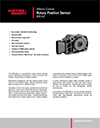
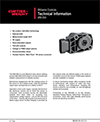
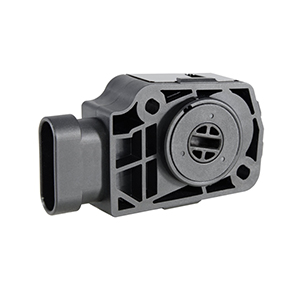
The Williams Controls WM-830 Non-Contact Rotary Position Sensor is a high-performance Hall-effect position sensing device engineered for precise angular position measurement in demanding mobile equipment, industrial machinery, agricultural vehicles, construction equipment, material handling systems, and on-highway and off-highway vehicle applications. Designed to provide reliable, accurate, and repeatable rotational position feedback, the WM-830 combines advanced non-contact sensing technology with a rugged environmental design to deliver exceptional durability and long operational life. The sensor utilizes proven Hall-effect technology to eliminate mechanical wear commonly associated with traditional contact-based potentiometers, making it an ideal solution for OEMs seeking long-term reliability and reduced maintenance requirements.
Advanced Hall-Effect Sensing Technology
At the core of the WM-830 is advanced Hall-effect sensing technology that enables accurate detection of rotational movement without physical contact between internal sensing components. Unlike conventional potentiometric sensors that rely on mechanical wipers and resistive tracks, the WM-830 employs a solid-state sensing architecture that measures angular displacement through changes in magnetic field strength. This non-contact design significantly reduces component wear, enhances reliability, and extends service life, even in high-cycle applications where continuous movement is required.
The Hall-effect sensing mechanism provides smooth and highly repeatable output signals, ensuring consistent feedback to electronic control units (ECUs), engine management systems, transmission controllers, hydraulic control modules, and other critical machine control systems. Because there is no mechanical friction within the sensing element, the sensor maintains its calibration and performance characteristics over millions of operational cycles, making it suitable for mission-critical applications where downtime must be minimized.
Precision Angular Position Measurement
The WM-830 rotary position sensor is specifically designed to measure angular displacement with a standard measurement range of 48.5 degrees. This measurement angle has become widely utilized across numerous electronic throttle control systems, pedal position sensing applications, and machine control interfaces where precise rotational feedback is required. The sensor converts mechanical rotation into proportional electrical output signals, enabling accurate monitoring and control of system position throughout the operating range.
The sensor’s linear output characteristics allow control systems to precisely determine shaft position and react accordingly. This capability is essential in applications such as accelerator pedals, hydraulic lever controls, steering systems, transmission controls, operator input devices, and automated machinery where accurate position information directly impacts system performance and safety.
Dual-Redundant Output Architecture for Enhanced Safety
One of the defining features of the Williams Controls WM-830 is its dual-redundant output configuration. The sensor incorporates two electrically isolated onboard circuits that generate independent output signals. This redundancy enables electronic control systems to continuously compare both outputs and identify potential faults, wiring issues, or abnormal operating conditions.
The dual-output architecture supports modern functional safety requirements by providing a secondary validation signal. One output channel operates at approximately 50 percent of the other output level, allowing host control systems to verify signal integrity and detect discrepancies. This design significantly improves system reliability and helps manufacturers meet increasingly stringent safety standards for vehicle and equipment control systems.
By implementing redundant sensing channels, OEMs can improve fault detection capabilities while reducing the risk of uncontrolled machine operation. This makes the WM-830 particularly valuable in applications involving operator controls, vehicle propulsion systems, and other safety-critical machine functions.
Fail-Safe Signal Integrity Protection
The WM-830 has been engineered with fail-safe output functionality that enhances overall system diagnostics and operational security. In the event of wiring faults, connection interruptions, or sensor-related abnormalities, the outputs transition into predefined states that can be recognized by the host controller. This capability allows electronic systems to rapidly detect sensor failures and implement appropriate safety responses.
Fail-safe operation is a crucial requirement in modern electronically controlled vehicles and machinery where sensor inputs influence critical control decisions. The predefined fault-state behavior assists system designers in developing robust diagnostic strategies that improve machine safety, reduce troubleshooting time, and enhance overall equipment reliability.
Rugged Design for Harsh Environmental Conditions
Industrial and mobile equipment frequently operate in environments characterized by extreme temperatures, vibration, shock loading, dust contamination, moisture exposure, and chemical contact. The Williams Controls WM-830 is specifically designed to withstand these challenging operating conditions while maintaining consistent sensing performance.
Its robust mechanical construction provides exceptional resistance to water ingress, dust contamination, vibration-induced failures, and mechanical shock. The sensor has been developed for use in harsh off-highway and on-highway applications where reliability is essential. Construction equipment, agricultural machinery, mining vehicles, forestry equipment, municipal service vehicles, and industrial automation systems can all benefit from the sensor’s ruggedized design.
The durability of the WM-830 reduces maintenance requirements and contributes to lower total ownership costs over the lifetime of the equipment. For fleet operators and equipment manufacturers, this translates into improved uptime, reduced service interventions, and increased productivity.
Wide Temperature Operating Capability
The WM-830 is designed to function reliably across a broad temperature range, making it suitable for equipment operating in diverse climates and environmental conditions. The sensor supports an operating temperature range from -40°C to +85°C and a storage temperature range extending to +105°C. These capabilities ensure dependable operation in cold-weather construction environments, hot industrial facilities, and outdoor applications exposed to significant temperature fluctuations.
The ability to maintain performance across extreme temperatures is critical for mobile equipment manufacturers whose products may operate globally in regions with highly variable environmental conditions. The WM-830 provides confidence that accurate position sensing will be maintained regardless of ambient temperature challenges.
5-Volt Electronic Control System Compatibility
The sensor operates using a standard 5-volt DC power supply, which aligns with common electronic control architectures used throughout the automotive, heavy-duty vehicle, and industrial equipment industries. This compatibility simplifies system integration and allows direct interfacing with existing control modules and electronic control units.
The WM-830’s low power consumption characteristics help minimize electrical system loads while maintaining accurate sensing performance. Typical supply voltage requirements range between 4.5V and 5.5V, ensuring stable operation even in applications where minor voltage fluctuations may occur.
Industry-Standard Connectivity
For reliable electrical integration, the Williams Controls WM-830 utilizes the industry-proven Packard Electric Metri-Pack 150 Series connector interface. These connectors are widely recognized throughout the transportation and industrial sectors for their durability, environmental sealing capabilities, and dependable electrical performance.
The use of standardized connector technology simplifies installation, serviceability, and system compatibility. OEMs and system integrators benefit from established wiring practices and proven connector performance, reducing development complexity and improving long-term reliability.
Ideal Applications for the WM-830 Rotary Position Sensor
The versatility of the WM-830 allows it to be deployed across a broad range of applications requiring accurate rotational position measurement. Common applications include:
• Electronic throttle pedal systems
• Accelerator pedal position sensing
• Hydraulic control lever monitoring
• Steering position feedback systems
• Transmission control interfaces
• Agricultural machinery controls
• Construction equipment operator inputs
• Material handling equipment controls
• Industrial automation machinery
• Mobile equipment control systems
• Off-highway vehicle electronic controls
• Engine management systems
• Drive-by-wire control applications
• Heavy-duty vehicle operator interfaces
The sensor’s robust design and redundant output capabilities make it particularly attractive for safety-critical control functions where reliable position feedback is essential to machine operation and operator safety.
Environmental Validation and Compliance Performance
The WM-830 has undergone extensive environmental validation testing to verify performance under demanding operating conditions. Testing includes thermal cycling, thermal shock exposure, humidity resistance, vibration testing, salt fog resistance, dust exposure evaluation, chemical exposure testing, and mechanical shock verification. The sensor has also been evaluated for electromagnetic interference resistance in accordance with relevant industry standards.
Environmental validation includes exposure to diesel fuel, brake fluid, antifreeze, and other common industrial and automotive chemicals, ensuring dependable operation in real-world equipment environments. These rigorous qualification procedures demonstrate the sensor’s suitability for long-term deployment in demanding mobile and industrial applications.
Benefits of Non-Contact Sensor Technology
Choosing the Williams Controls WM-830 over traditional contact-based position sensors provides numerous operational advantages. Non-contact technology eliminates friction-related wear, significantly extends service life, improves signal stability, and reduces maintenance requirements. The absence of mechanical contact points minimizes degradation over time, resulting in improved long-term accuracy and reliability.
Additionally, the Hall-effect sensing architecture offers enhanced resistance to contamination from dust, moisture, and vibration compared to conventional potentiometer designs. These benefits contribute to increased equipment uptime and lower lifecycle costs for equipment manufacturers and end users alike.
OEM Integration Advantages
For original equipment manufacturers, the WM-830 offers an attractive combination of performance, reliability, safety features, and cost-effectiveness. Its compact form factor, industry-standard connectivity, redundant outputs, and proven Hall-effect technology simplify integration into both new equipment designs and retrofit applications.
The sensor is also noted as being interchangeable with earlier WM-810 sensor designs, providing equipment manufacturers with an upgrade path that leverages improved technology while maintaining compatibility with established systems. This interchangeability can help reduce redesign costs and accelerate product development timelines.
Why Choose the Williams Controls WM-830?
The Williams Controls WM-830 Non-Contact Rotary Position Sensor delivers the performance and reliability demanded by modern electronic control systems. Combining Hall-effect sensing technology, dual-redundant outputs, fail-safe diagnostics, rugged environmental protection, and OEM-friendly integration features, the WM-830 represents a dependable solution for precise rotary position measurement in challenging industrial and mobile equipment applications.
Whether used in electronic throttle controls, hydraulic system interfaces, vehicle control modules, or industrial automation equipment, the WM-830 provides accurate position feedback, exceptional durability, and long-term operational confidence. Its robust engineering, safety-focused architecture, and proven field performance make it an excellent choice for manufacturers seeking a high-quality rotary position sensor capable of delivering reliable results in the most demanding environments.