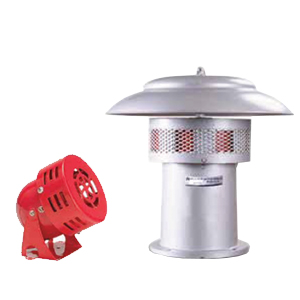

Description
TER Motor & Alarm Sirens – Powerful Industrial Audible Warning Solutions
TER Motor & Alarm Sirens provide powerful audible signalling for industrial machinery, automation systems, cranes, material handling equipment and emergency warning applications where an immediately recognisable sound is required. Designed to alert personnel across large working areas, the TER range combines robust industrial construction with high acoustic output and a selection of siren sizes and performance levels to suit different applications.
Unlike smaller electronic buzzers or local machine indicators, motor sirens are designed to generate a strong, distinctive acoustic warning capable of attracting attention over a wider area. This makes them particularly useful in industrial environments where personnel may be positioned away from the machine or equipment generating the warning.
The TER motor siren family includes the TERMMS01, TERMMS02, TERMMS03, TERMMS04, TERMMS05, TERMMS06, TERMMS07 and TERMMS08 series. Different models provide different sound levels, rotational speeds, enclosure configurations and electrical characteristics, allowing designers to select a siren according to the requirements of the installation.
TER also provides warning sirens and fire alarm siren configurations within its broader alarm-siren range. This gives machine builders, system integrators and industrial operators access to several audible signalling technologies rather than relying on one siren configuration for every application.
Powerful Low-Frequency Audible Warning
A defining characteristic of TER Motor Sirens is their powerful low-frequency sound. TER has designed the range to provide an immediately recognisable acoustic signal capable of effectively alerting large areas.
In industrial environments, this type of sound can provide an important method of attracting personnel attention. Operators may be working at different locations, concentrating on machinery, travelling through a warehouse or carrying out maintenance activities when a warning condition occurs.
An audible siren does not depend on the operator looking toward a particular indicator at the time of activation. Instead, the acoustic signal can draw attention to the existence of a condition so that personnel can respond according to established operating or emergency procedures.
This makes audible warning particularly useful as part of a broader signalling system incorporating visual indicators, warning beacons, stack lights or other machine-status devices. The siren attracts attention while other equipment can provide additional visual information about the condition.
TER TERMMS01 to TERMMS08 Motor Siren Range
The TER Motor Siren family is divided into eight primary series, from TERMMS01 through TERMMS08. This range allows the required audible output to be matched more closely to the installation rather than applying the same siren to every industrial environment.
The TERMMS01 series provides a nominal sound level of 108 dB, while TERMMS02 increases the nominal output to 112 dB. TERMMS03 is a considerably higher-output configuration with a nominal sound level of 130 dB.
The TERMMS04 and TERMMS05 series provide nominal sound levels of 105 dB and 110 dB respectively. The larger TERMMS06, TERMMS07 and TERMMS08 series provide nominal outputs of 115 dB, 120 dB and 130 dB respectively.
This broad range gives designers considerable flexibility when specifying an audible signalling device. A smaller machine may not require the same acoustic output as a large crane, warehouse, industrial processing area or infrastructure installation. The appropriate siren should therefore be selected according to the application, surrounding noise and required warning function.
Sound Output from 105 dB to 130 dB
Across the TERMMS01 to TERMMS08 family, TER offers nominal sound outputs ranging from 105 dB to 130 dB. This enables the product range to address applications requiring anything from strong local machine warning through to powerful signalling intended to alert a substantially larger industrial area.
Sound level is an important consideration when selecting an industrial siren, but simply choosing the loudest available model is not necessarily the correct approach. The siren needs to be appropriate for the ambient noise level, installation location, distance to personnel and intended function of the signal.
A siren that is insufficiently audible in the operating environment may fail to attract appropriate attention. Conversely, excessive acoustic output can create unnecessary workplace noise and may be inappropriate where personnel are positioned close to the device.
For this reason, selection should form part of the overall machine or facility signalling strategy. Workplace noise conditions and relevant occupational noise requirements should also be considered when determining the appropriate installation.
TERMMS01 Motor Siren
The TER TERMMS01 series provides a compact motor siren option with a nominal acoustic output of 108 dB. The unit uses a metal housing and provides IP44 enclosure protection.
TER specifies an operating frequency of 50/60 Hz for this series and a rotational cycle of 1,000 rpm. The maximum duration of use is specified as three minutes, an important characteristic that needs to be considered when designing the control logic for the siren.
The TERMMS01 is available in different electrical configurations. TER’s catalogue includes versions for low-voltage and AC supply arrangements, allowing the appropriate model to be selected according to the control-system architecture.
Its combination of compact construction and strong acoustic output makes the TERMMS01 suitable for consideration in machinery and industrial installations where a distinctive audible warning is required without moving immediately to the physically larger high-output siren models.
TERMMS02 Motor Siren
The TERMMS02 series increases the nominal acoustic output to 112 dB. TER specifies a combination of metal and plastic materials for the housing, with IP44 protection for the enclosure.
The series operates at 50/60 Hz and uses a substantially higher rotational speed than the TERMMS01, with TER specifying a 5,000 rpm cycle. Like the other TERMMS motor sirens, the published maximum duration of use is three minutes.
This makes TERMMS02 another option for industrial equipment requiring a clearly identifiable motor-driven audible signal. The appropriate choice between TERMMS01, TERMMS02 and the higher-output models should be based on the acoustic and electrical requirements of the actual application.
Rather than treating the motor-siren family as interchangeable, engineers should verify the characteristics of the selected TERMMS part number during system design.
TERMMS03 High-Output Motor Siren
For applications requiring substantially greater acoustic output, the TER TERMMS03 series provides a nominal sound level of 130 dB. This places it among the highest-output models within the TER Motor Siren range.
The TERMMS03 uses a metal housing with IP44 protection. TER specifies 50/60 Hz operation and a 10,000 rpm cycle, with a maximum duration of use of three minutes.
The high sound output makes careful application engineering particularly important. Installation location, personnel proximity, surrounding acoustic conditions and workplace noise requirements should all be considered when incorporating a high-output siren into machinery or a facility warning system.
Where a 130 dB siren is appropriate, it can provide a highly prominent audible signal for large or noisy industrial environments. However, high acoustic output should always be selected because the application requires it, rather than simply because it represents the maximum available rating.
TERMMS04 and TERMMS05 Motor Sirens
The TER TERMMS04 and TERMMS05 series provide alternative motor-siren configurations with nominal sound outputs of 105 dB and 110 dB respectively. Both models use metal housings and are specified with IP40 enclosure protection.
TERMMS04 operates at 50 Hz with a published rotational cycle of 16,000 rpm, while TERMMS05 operates at 50 Hz with a 12,000 rpm cycle. TER specifies a maximum duration of use of three minutes for both series.
These models demonstrate that acoustic output is not determined simply by rotational speed. The mechanical design and acoustic characteristics of the complete siren influence the resulting warning signal, making the manufacturer’s published sound rating the appropriate reference when comparing models.
The IP40 rating also differentiates these models from the IP44 TERMMS01, TERMMS02, TERMMS03 and TERMMS06 to TERMMS08 series. Environmental conditions should therefore be considered carefully when choosing between models.
TERMMS06, TERMMS07 and TERMMS08 High-Power Sirens
At the larger end of the TER motor-siren family are the TERMMS06, TERMMS07 and TERMMS08 series. These units provide progressively higher nominal sound levels of 115 dB, 120 dB and 130 dB.
All three use metal housings and provide IP44 enclosure protection. TER specifies 50 Hz operation, with rotational cycles of 8,000 rpm for TERMMS06, 6,000 rpm for TERMMS07 and 4,500 rpm for TERMMS08.
Each series has a published maximum duration of use of three minutes. This operating limitation is particularly important in automatic control applications because the siren should not simply be energised continuously without regard to the manufacturer’s operating specification.
The availability of 115 dB, 120 dB and 130 dB configurations allows engineers to select a powerful audible warning solution according to the size and acoustic characteristics of the area being served.
Three-Minute Maximum Duration of Use
A particularly important technical characteristic of the TER TERMMS motor-siren range is the published maximum duration of use of three minutes. This specification should be considered during both product selection and control-system design.
Motor sirens operate differently from many continuously rated electronic signalling products. The rotating mechanical system generates the characteristic siren sound, and the operating cycle specified by the manufacturer needs to be respected.
Where the siren is controlled by a PLC, relay system or other automatic controller, the logic should be designed with the applicable operating limitations in mind. The exact behaviour required will depend on the warning function and selected TER model.
Designers should therefore avoid assuming that an industrial siren can remain continuously energised indefinitely. The current TER instructions and technical documentation for the selected part number should always be consulted during installation and commissioning.
IP40 and IP44 Motor Siren Configurations
Environmental protection varies within the TER motor-siren family. TERMMS01, TERMMS02, TERMMS03, TERMMS06, TERMMS07 and TERMMS08 are specified with IP44 protection, while TERMMS04 and TERMMS05 are specified with IP40 protection.
This difference is important because the installation environment may influence which siren is appropriate. The selected enclosure needs to suit the conditions in which the equipment will operate, including the expected exposure to solid objects and moisture.
An IP rating should not be interpreted as a universal indication that a product is suitable for every outdoor or harsh industrial environment. Mounting location, weather exposure, contamination, washdown conditions and other environmental factors need to be considered separately.
For particularly demanding environments, TER also offers other specialised signalling products within its broader range, including heavy-duty warning devices. Selecting the product family according to the actual environmental conditions helps provide a more reliable installation.
Metal Construction for Industrial Applications
Most TERMMS motor sirens use metal housing construction, reflecting their intended role as industrial audible signalling devices. TERMMS02 incorporates a metal and plastic housing arrangement, while the remaining primary TERMMS models are identified by TER with metal housings.
Robust construction is important for equipment mounted on machinery, crane structures, industrial buildings and infrastructure where vibration and general industrial operating conditions may be present.
The mounting arrangement should nevertheless be mechanically secure and suitable for the siren’s size and operating characteristics. A high-output motor siren should be treated as a piece of industrial equipment rather than as a lightweight indicator.
Installation should also allow appropriate access for electrical connection, inspection and maintenance while positioning the siren so that the acoustic signal can effectively reach the intended area.
Motor Sirens for Cranes and Lifting Equipment
TER identifies overhead travelling cranes, gantry cranes, jib cranes, tower cranes and harbour cranes among the applications for its motor-siren range. Audible signalling can be particularly valuable around lifting equipment because crane movement may affect personnel across a substantial working area.
A motor siren can form part of a crane signalling system designed to alert personnel to a defined machine condition or operating event. The exact activation logic should be established according to the crane design, risk assessment, operating procedures and applicable requirements.
High-output sirens may be useful where large distances or significant ambient industrial noise are involved, while lower-output models may be appropriate for smaller installations. The TERMMS range gives designers several acoustic performance levels from which to select.
TER’s wider range of crane control equipment also includes pendant stations, joysticks, rotary limit switches, warning lights and other signalling devices, allowing motor sirens to be incorporated into a broader crane control and indication system.
Audible Warning for Automation and Machinery
TER Motor & Alarm Sirens are also applicable to automation systems, assembly lines, machine tools, plastic injection machines, printing machinery, strapping machines and conveyor systems.
Automated machinery can change operating state without continuous manual control, making clear signalling important where personnel need to be informed of particular machine conditions. An audible siren can attract attention even when an operator is not directly observing the machine.
The siren may be controlled through the PLC or machine control system so that it activates when a defined condition occurs. Depending on the application, this could form part of start-up signalling, process warning, fault notification or another engineered machine function.
The specific meaning of the audible signal should be clearly established and communicated to personnel. An alarm is most effective when people recognise the sound and understand the action associated with it.
Large-Area Industrial Alerting
The TER Motor Siren range is specifically designed around the requirement to alert large areas with a powerful and immediately recognisable sound. This makes the products suitable for applications where smaller local buzzers may not provide sufficient coverage.
Warehouses, production areas, crane bays, loading facilities, industrial yards and infrastructure installations can contain machinery and personnel distributed over substantial distances. A correctly selected siren can provide a prominent acoustic signal across the intended operating area.
Effective coverage depends on more than the siren’s nominal decibel rating. Building geometry, walls, machinery, acoustic reflections, background noise and mounting position can all influence how the warning is perceived.
For this reason, final siren selection and positioning should consider the real operating environment rather than relying solely on a catalogue sound-pressure figure.
Recognisable Audible Signalling for Industrial Safety Systems
TER Motor & Alarm Sirens provide machine builders and industrial operators with a range of audible warning options designed around strong acoustic performance and recognisable signalling. With eight TERMMS motor-siren series covering nominal outputs from 105 dB through to 130 dB, the range can support applications of significantly different scale.
The combination of multiple acoustic outputs, different motor speeds, industrial housing construction and IP40 or IP44 enclosure options allows engineers to select a model according to the requirements of the machine and operating environment.
From cranes and material handling systems to automated machinery, production equipment and large industrial facilities, TER Motor Sirens can form an important part of a coordinated warning and signalling strategy.
When combined with appropriate control logic, visual warning equipment and clearly defined operating procedures, TER Motor & Alarm Sirens provide a powerful means of attracting personnel attention when an industrial condition requires immediate awareness.
Industrial Alarm Sirens for Clear Audible Signalling
TER Motor & Alarm Sirens are designed to provide an unmistakable audible indication when machinery, equipment or an industrial process requires personnel attention. The strong acoustic characteristics of a siren make it particularly useful where a local indicator or small electronic sounder may not provide sufficient coverage.
Industrial environments frequently contain multiple sources of background noise, including motors, pumps, conveyors, ventilation equipment, material handling machinery and production processes. Audible signalling equipment therefore needs to be selected according to the real acoustic conditions of the installation rather than simply according to the physical size of the machine.
The TER range provides several motor siren performance levels, allowing designers to match the audible output more closely to the application. This can help create a warning system that is readily identifiable without automatically selecting the highest acoustic output available.
Audible signalling should form part of a coordinated machine or facility signalling strategy. The purpose of each signal, the conditions that activate it and the expected response from personnel should be clearly established.
Motor Sirens and Alarm Sirens – Understanding the Application
Motor sirens generate their characteristic acoustic warning through a motor-driven mechanism. This creates the powerful and recognisable siren tone associated with traditional industrial warning systems.
This operating principle makes motor sirens particularly suitable where a strong, attention-grabbing warning is required across a significant area. TER describes the sound of its motor sirens as powerful, low frequency and immediately recognisable.
Other alarm-siren configurations can provide different signalling characteristics, including products intended for dedicated alarm applications. Selecting between signalling technologies should therefore begin with the required function rather than simply choosing a device according to its sound-pressure rating.
The machine designer or system integrator should determine whether the application requires local notification, general industrial warning, process signalling or another defined alarm function, and then select equipment designed for that purpose.
Fire Alarm Siren Configurations
TER’s broader audible signalling portfolio also includes fire alarm siren products. These products provide options for applications requiring a dedicated alarm indication rather than a general machine-status sound.
Fire-related warning systems need to be designed according to the requirements applicable to the particular building, facility or installation. The presence of a product described as a fire alarm siren does not by itself establish compliance of a complete fire detection or evacuation system.
System design may involve requirements covering alarm audibility, coverage, control equipment, power supplies, monitoring, installation, testing and ongoing maintenance. The selected siren therefore needs to be considered as one component within the complete engineered system.
Where a TER fire alarm siren is being considered for an Australian installation, the specific model and its approvals should be checked against the project specification and applicable Australian requirements before selection.
LED Fire Alarm Sirens for Visual and Audible Indication
TER also offers LED Fire Alarm Sirens that combine audible signalling with visual indication. Combining sound and light provides two different methods of attracting attention from one signalling assembly.
An audible signal can alert personnel who are not looking toward the device, while a visual indication can reinforce the location or presence of the alarm. This combination can be useful where a project requires both acoustic and visual signalling functions.
Visual and audible indication can also assist in environments where background conditions affect the effectiveness of one signalling method. High ambient noise can make acoustic signalling more difficult to distinguish, while physical obstructions or the direction in which a person is facing can influence visual recognition.
The suitability of any combined alarm device should be determined according to the specific application and relevant system requirements. Machine warning, process alarm and building fire alarm functions should not be treated as interchangeable simply because each may use both sound and light.
Choosing the Correct Sound Output
The TER TERMMS range provides nominal acoustic outputs from 105 dB through to 130 dB, giving designers several options for matching a motor siren to the operating environment.
Sound-pressure level is logarithmic, which means the numerical difference between two decibel ratings should not be interpreted as a simple linear increase in acoustic intensity. Moving from a lower-output TERMMS model to a substantially higher-output siren can represent a significant change in acoustic performance.
The appropriate sound level depends on several factors, including background noise, distance between the siren and intended personnel, building geometry, machinery, walls, mounting height and the warning function.
For this reason, the highest-output model is not automatically the best choice. A correctly engineered installation aims to achieve appropriate recognition of the warning while considering workplace noise exposure and the practical conditions around the siren.
Understanding Sound Coverage in Industrial Environments
A catalogue sound-pressure rating provides an important product-selection reference, but actual warning coverage depends on the installation environment. Industrial facilities are acoustically complex spaces.
Large machinery can block or redirect sound. Walls and metal structures can create reflections. Open doors can allow sound to escape from an enclosed area, while partitions may substantially reduce the signal reaching adjacent spaces.
Background noise also changes throughout the operating cycle of a facility. A siren that is easily heard when machinery is stopped may be considerably less obvious when production equipment is operating simultaneously.
Where reliable warning coverage is critical, acoustic performance should therefore be considered under representative operating conditions. Large facilities may require more than one signalling device rather than relying on a single extremely high-output siren to cover every location.
Strategic Siren Positioning
Correct positioning can significantly influence the effectiveness of a TER Motor & Alarm Siren. The siren should be installed where its acoustic output can reach the intended area without unnecessary obstruction.
Mounting directly behind a large machine, inside a heavily enclosed structure or in another acoustically shielded location can reduce the effectiveness of the warning. Where possible, the siren should have a suitable acoustic path toward the personnel who need to hear it.
Mounting height can also influence coverage. Elevated positioning may help distribute sound across a large production area, but the installation must remain mechanically secure and accessible for inspection and maintenance.
For crane applications, the siren may move with the equipment. This means the effective relationship between the sound source and personnel can change continuously as the crane travels through its operating area.
TER Motor Sirens for Overhead Travelling Cranes
Overhead travelling cranes are a major application for TER industrial control and signalling equipment. Audible warning can be incorporated into the crane control system to provide personnel with a recognisable signal when a defined operating condition occurs.
Depending on the engineered crane system, the siren may be associated with travel, machine start-up or another function determined by the control design. The precise activation requirements should be established through the crane’s risk assessment, operating requirements and applicable standards.
The available TERMMS acoustic outputs provide options for different crane environments. A smaller workshop crane may have very different signalling requirements from a large overhead crane operating in a noisy manufacturing or processing facility.
TER’s motor sirens can also be used alongside its visual signalling products, allowing a crane system to provide both audible and visual indication where appropriate.
Gantry and Harbour Crane Warning Applications
Gantry and harbour cranes can operate across large areas where personnel, vehicles and lifting equipment may all be present. Strong audible signalling can therefore provide a useful method of drawing attention to defined crane conditions.
In these applications, the required sound output should be considered against the size of the operating area and existing environmental noise. Outdoor installations also require careful assessment of enclosure protection and exposure conditions when selecting the siren.
TER lists gantry and harbour cranes among the applications for its motor sirens, but the specific TERMMS model still needs to be selected according to the electrical, acoustic and environmental requirements of the project.
Where weather exposure or harsher environmental conditions exceed the capabilities of the selected motor siren, an alternative TER signalling solution with appropriate environmental protection may need to be considered.
Jib Crane and Workshop Applications
Jib cranes are often installed within workshops, production areas and material handling stations. Their operating areas may be smaller than those of large overhead or harbour cranes, but audible warning can still be valuable where personnel work around the equipment.
A lower-output TERMMS model may potentially provide adequate performance in a smaller area, subject to the actual ambient noise and required warning function. Selecting a siren based on the real acoustic environment helps avoid unnecessary sound output.
Workshop layouts should also be considered when determining mounting position. Storage racks, machinery, partitions and enclosed work areas can influence the distribution of the acoustic signal.
The warning function should remain clearly distinguishable from other workshop alarms so personnel understand which equipment or condition is responsible for the signal.
Conveyor System Warning Sirens
Conveyor systems are another application where audible signalling can provide useful machine awareness. Long conveyors may extend beyond an operator’s immediate field of view, making visual indication alone insufficient for some functions.
A TER siren can be controlled as part of the conveyor’s electrical system to provide an audible indication when required by the machine design. Large conveyor installations may use several warning devices positioned at appropriate points rather than relying on a single source.
Where a pre-start warning is required by the engineered system, the siren control logic needs to provide the appropriate signalling sequence before machinery begins moving. The timing and function should be determined by the machine design and applicable requirements.
Clear distinction between routine status signals and important warning signals is particularly valuable on conveyors because personnel may work at different positions along the equipment.
Automated Production and Assembly Lines
Automated production equipment can operate through complex sequences with relatively little direct operator control. Audible warning can therefore provide a useful method of notifying personnel when intervention or awareness is required.
A TER Motor & Alarm Siren may be integrated into the machine controller so that activation occurs automatically when a predefined control condition becomes true.
For example, the PLC can receive information from sensors, limit switches, control devices and other equipment and determine when the audible output should operate. The siren becomes part of the machine’s overall human-machine communication system.
The warning signal should be designed so personnel understand its meaning. Repeated unnecessary activation can reduce the effectiveness of an alarm if operators become accustomed to hearing it during normal operation.
PLC and Relay Control Integration
TER Motor Sirens can be incorporated into industrial control architectures using appropriate switching and interface equipment. The exact arrangement depends on the voltage and electrical characteristics of the selected TERMMS model.
In PLC-controlled machinery, the PLC output may operate an appropriate relay, contactor or interface device that controls the siren. Designers should verify the electrical load and switching requirements rather than assuming that every siren can be connected directly to a PLC output.
The control architecture should also account for TER’s published operating limitations. For the TERMMS motor-siren family, the specified maximum duration of use is three minutes.
Where automatic control is used, the PLC or relay logic should therefore be designed appropriately for the selected product and intended warning sequence.
Integrating Audible and Visual Warning Devices
Industrial signalling is often most effective when audible and visual indications are used together. TER’s product portfolio allows motor sirens to be considered alongside stack lights, multi-colour RGB warning lights, industrial signal lights and universal signal beacons.
The audible siren can attract attention while the visual signal provides additional information about the equipment or condition. This can be particularly useful in large industrial environments where personnel may hear a siren before identifying its source.
A coordinated signalling strategy can also use different visual states to distinguish between routine machine conditions while reserving the motor siren for situations requiring greater attention.
This avoids using high-output acoustic warning for every status change and helps maintain the significance of the audible alarm.
Avoiding Alarm Fatigue
One of the most important considerations when designing any industrial alarm system is avoiding excessive or unnecessary activation. If personnel are repeatedly exposed to alarms that require little or no response, they may become less responsive to the signal over time.
TER Motor Sirens provide powerful acoustic output, so their use should be associated with clearly defined machine or process conditions. Control logic should avoid activating the siren for routine events unless an audible warning is genuinely required.
Different signalling devices can be assigned different roles. Routine machine status can be communicated through stack lights or RGB indicators, while a motor siren can be reserved for conditions where immediate awareness is more important.
This creates a clearer signalling hierarchy and helps personnel understand the relative significance of different machine indications.
Sound Level and Workplace Noise Considerations
The high acoustic output available from TER Motor Sirens means workplace noise needs to be considered during product selection and installation. Models at the upper end of the range can produce nominal sound levels of up to 130 dB.
Personnel proximity, exposure duration and the location of the siren should therefore form part of the engineering assessment. A high-output siren installed unnecessarily close to a normal workstation may create very different exposure conditions from the same siren positioned to provide warning across a large industrial area.
The objective should be to achieve effective warning recognition while controlling unnecessary acoustic exposure. Applicable workplace health and safety requirements should be considered as part of the installation design.
Where necessary, an acoustic assessment can help determine whether the selected siren and mounting position provide appropriate performance for the environment.
Environmental Conditions and Enclosure Selection
Environmental conditions are another important factor when selecting a TER motor siren. As established in Part 1, the TERMMS family includes both IP40 and IP44 models.
The installation should consider moisture, dust, weather exposure, contamination and the possibility of direct contact with water. An IP44 model provides different protection characteristics from an IP40 model, but neither rating should automatically be interpreted as suitable for every harsh or exposed outdoor environment.
Where a siren is installed on a crane or mobile machine, vibration and mechanical movement should also be considered. Mounting hardware needs to remain secure throughout the normal operation of the equipment.
Correct cable entry, electrical installation and mechanical mounting all contribute to the reliability of the completed signalling system.
Testing Audible Warning Performance During Commissioning
Commissioning provides an opportunity to confirm that the selected TER siren performs as intended in the actual operating environment. The device should be tested with representative machinery and background noise where practical.
Personnel should be able to recognise the warning from the areas in which they are expected to work. If sound coverage is inadequate, simply increasing siren output may not always be the best solution. Repositioning the device or installing additional warning points may provide more effective coverage.
The control sequence should also be tested to confirm that the siren activates under the correct conditions and does not remain energised beyond the operating limits specified for the selected product.
Where the siren forms part of a combined visual and audible warning system, both signalling methods should be tested together to confirm that the intended machine-state communication is clear.
Building a Coordinated Industrial Warning System
TER Motor & Alarm Sirens are most effective when considered as part of the complete industrial signalling architecture. Audible warning, visual indication, control-system logic and operating procedures should work together rather than being designed independently.
The broad TERMMS range gives designers access to acoustic outputs from 105 dB to 130 dB, while TER’s wider signalling portfolio provides complementary visual warning technologies for machinery, cranes and industrial installations.
By selecting the appropriate sound level, positioning the siren correctly and integrating activation into clearly defined control logic, engineers can create a warning system that attracts attention without introducing unnecessary signalling complexity.
This makes TER Motor & Alarm Sirens a versatile option for crane systems, conveyors, automated machinery, material handling equipment and industrial facilities requiring strong and recognisable audible signalling.
Selecting the Correct TER Motor & Alarm Siren
Selecting the correct TER Motor & Alarm Siren requires more than simply choosing the model with the highest sound-pressure level. The intended warning function, ambient noise, size of the area, distance to personnel, electrical supply, environmental conditions and mounting position should all be considered before specifying a particular siren.
The TERMMS motor-siren family provides nominal sound levels ranging from 105 dB to 130 dB, allowing engineers to select a performance level appropriate to different industrial environments. Smaller machinery or enclosed production areas may require a different solution from large crane bays, warehouses, material handling facilities or heavy industrial installations.
The selected siren should provide a clearly recognisable warning under representative operating conditions while avoiding unnecessarily excessive acoustic output. This is particularly important where personnel work relatively close to the signalling device.
Product selection should also consider the environmental protection required by the installation. The TERMMS range includes both IP40 and IP44 configurations, so the conditions around the intended mounting location should be compared with the characteristics of the selected model.
Comparing the TERMMS Motor Siren Models
TER offers eight primary TERMMS motor-siren series, providing engineers with a progression of acoustic and mechanical configurations. TERMMS01 provides a nominal sound output of 108 dB, while TERMMS02 increases this to 112 dB. TERMMS03 provides a substantially higher nominal output of 130 dB.
TERMMS04 and TERMMS05 provide nominal outputs of 105 dB and 110 dB respectively. At the larger end of the range, TERMMS06 provides 115 dB, TERMMS07 provides 120 dB and TERMMS08 provides 130 dB.
The models also differ in rotational speed, enclosure construction and IP protection. These characteristics mean that selection should be based on the complete product specification rather than sound level alone.
For example, two applications requiring similar audible coverage may still require different TERMMS models because of electrical supply, environmental exposure or physical installation constraints. The current TER technical information for the selected part number should therefore be checked before final specification.
Considering Ambient Noise Before Selecting a Siren
Ambient noise is one of the most important factors influencing industrial siren selection. Manufacturing facilities can contain continuously changing combinations of motors, pumps, compressors, conveyors, extraction systems, mobile plant and production machinery.
The warning signal needs to remain recognisable under the operating conditions in which personnel are expected to respond to it. Assessing the siren only while machinery is switched off may provide an unrealistic indication of its effectiveness during production.
The frequency characteristics of the warning signal can also influence how easily it is distinguished from surrounding machinery. TER describes its motor sirens as providing a powerful, low-frequency and immediately recognisable sound intended to alert large areas.
Where acoustic conditions are complex, the completed installation should be evaluated during commissioning. Repositioning the siren or using several strategically positioned warning devices may sometimes provide more effective coverage than relying on one extremely high-output unit.
Electrical Supply and Control Considerations
The electrical characteristics of the selected TER siren need to be compatible with the machine or facility control system. Different TERMMS models and variants are available for different supply arrangements, so the exact voltage and electrical requirements should be confirmed before installation.
Where the siren is controlled by a PLC, the electrical load should be considered carefully. A motor-driven siren should not automatically be treated in the same way as a small electronic indicator connected directly to a low-current PLC output.
An appropriate relay, contactor or interface device may be required depending on the selected siren and control architecture. Switching devices should be selected according to the electrical characteristics of the load and the required operating sequence.
The control circuit should also account for the manufacturer’s published operating limitations. TER specifies a maximum duration of use of three minutes for the TERMMS motor-siren family.
Designing Control Logic Around the Operating Duty
The three-minute maximum duration of use specified for the TERMMS motor sirens is an important design consideration, particularly where activation is automatic.
A PLC-controlled alarm should include appropriate logic so the siren operates within the limitations of the selected product. Designers should avoid programming a condition that could unintentionally energise the motor siren continuously for an extended period.
The required alarm sequence may involve a defined operating period, an intermittent warning pattern or another arrangement appropriate to the application and permitted by the selected product. The final sequence should be established using the current TER technical documentation.
Where continuous or prolonged audible warning is required, engineers should verify whether a TERMMS motor siren is the appropriate signalling technology or whether another TER alarm device with a different duty capability would better suit the application.
Mechanical Installation and Secure Mounting
TER Motor Sirens are industrial devices containing a motor-driven acoustic mechanism, making secure mechanical mounting particularly important. The supporting structure should be capable of maintaining the siren securely throughout normal operation.
Mounting hardware should be appropriate for the siren, supporting structure and environmental conditions. Installations on cranes, mobile equipment or vibrating machinery require particular attention because repeated movement and vibration can place additional demands on fasteners and mounting points.
The siren should be positioned so that surrounding structures do not unnecessarily obstruct the acoustic output. Machinery enclosures, structural beams, walls and other equipment can influence the distribution of sound throughout the working area.
Where the siren is mounted at height, maintenance access should also be considered. A position that provides excellent acoustic coverage but makes routine inspection unnecessarily difficult may increase the long-term maintenance burden.
Protecting the Siren from the Operating Environment
Environmental protection should be matched to the intended installation. The TERMMS family includes IP40 and IP44 models, and these ratings need to be considered against the expected exposure conditions.
Industrial installations may involve dust, moisture, temperature changes, vibration and accidental physical contact. Outdoor machinery can introduce additional exposure to rain, wind and other weather conditions.
The published IP rating should therefore be treated as one part of the environmental assessment rather than as a universal statement that the product is suitable for every industrial location.
Where conditions exceed the capabilities of the selected siren, a different product, alternative mounting position or additional engineered protection may be necessary.
Preventative Maintenance of TER Motor Sirens
Motor-driven sirens should be included in the preventative-maintenance program for the machinery or facility in which they are installed. Because the warning device may only operate during particular conditions, a fault can otherwise remain unnoticed until the siren is actually required.
Routine testing can confirm that the siren activates correctly and produces the expected audible signal. The mounting arrangement, electrical connections, enclosure condition and associated control equipment should also be inspected periodically.
Maintenance frequency should be appropriate to the application and operating environment. Equipment exposed to vibration, contamination or harsh industrial conditions may require more frequent inspection than a siren installed in a relatively clean and stable location.
Any change in the sound produced by the motor siren, difficulty starting or other abnormal operation should be investigated rather than assuming the device remains capable of providing its intended warning performance.
Testing the Complete Warning Function
Testing should extend beyond confirming that the siren makes a sound. The complete warning function needs to operate correctly from the initiating control condition through to the final audible indication.
Where a PLC controls the siren, testing can verify that the appropriate input condition causes the expected output sequence. Associated relays, contactors or other interface equipment should operate correctly and the siren should deactivate as intended.
The acoustic warning should also be evaluated from the locations where personnel are expected to hear it. This can identify areas where machinery, walls or other structures reduce the effectiveness of the signal.
If the motor siren operates together with warning lights or beacons, the combined visual and audible sequence should be tested to confirm that personnel receive clear and consistent information.
Motor Sirens for OEM Machinery
Original equipment manufacturers can integrate TER Motor & Alarm Sirens into machinery during the design stage, allowing the electrical control, mechanical mounting and warning philosophy to be developed as part of the complete machine.
This approach can be particularly useful for cranes, conveyors, automated machinery and material handling equipment where audible warning forms an integral part of the operating sequence.
OEMs can select an appropriate TERMMS model according to the expected environment and required acoustic output rather than adding a generic siren late in the machine-building process.
Early selection also allows the required control interface and mounting arrangement to be incorporated into the electrical drawings, PLC program and mechanical design.
Retrofitting Audible Warning to Existing Machinery
TER Motor Sirens can also be considered when upgrading existing industrial machinery. Older equipment may have limited audible warning capability, or an existing signalling device may no longer suit the current operating environment.
A retrofit provides an opportunity to review the complete warning function rather than simply replacing one siren with another of similar size. Changes in machinery, facility layout, production noise or operating procedures may mean that a different acoustic output or mounting position is now more appropriate.
The electrical control architecture should also be reviewed. Where older relay-based machinery has been upgraded to PLC control, suitable interface equipment may be required between the controller and motor siren.
Any modification should be assessed as part of the machinery’s engineered electrical and safety system, with appropriate consideration given to applicable requirements and risk controls.
TER Sirens for Warehouses and Material Handling Facilities
Warehouses and material handling facilities can contain conveyors, cranes, automated vehicles, loading equipment and personnel operating simultaneously. Audible signalling can provide an effective method of attracting attention when a defined equipment condition occurs.
The large-area warning characteristics of TER Motor Sirens can be useful where personnel are distributed across a substantial working space. However, warehouse racking, walls and stored materials can affect acoustic propagation and should be considered when positioning warning devices.
Large installations may benefit from multiple sirens positioned according to the required warning zones. This approach can provide more consistent coverage than attempting to reach every location from one central sound source.
Visual signalling can also complement the audible warning, particularly where personnel need to identify which machine or area generated the alarm.
TER Motor Sirens for Heavy Industrial Applications
Heavy industrial environments can require particularly prominent audible signalling because background machinery noise may be substantial. TER’s higher-output TERMMS models provide nominal sound levels of 115 dB, 120 dB and up to 130 dB for applications where strong acoustic performance is required.
High sound output needs to be engineered carefully. Personnel proximity, acoustic reflections, workplace noise exposure and the intended warning area should all be assessed before selecting and positioning the siren.
A high-output siren can be valuable in an appropriate application, but greater acoustic power should not be treated as a substitute for good system design. Strategic positioning, appropriate warning zones and clearly defined alarm functions remain essential.
The broad TERMMS range allows designers to select the acoustic performance according to the application rather than applying the maximum-output model universally.
Supporting Clear Alarm Identification
An effective industrial alarm should not only be audible; personnel should understand what the signal means. Where several machines and warning devices operate within the same facility, alarm identification becomes increasingly important.
Operating procedures and personnel training should establish the meaning of the relevant audible signals and the response expected when they activate.
Visual signalling can provide additional information. For example, a TER stack light, multi-colour RGB warning light or signal beacon can help personnel identify the machine or zone associated with an audible warning.
This combination can be especially useful in large facilities where the sound from a siren may be heard across several work areas.
Motor Sirens as Part of a Complete TER Signalling System
TER offers a broad range of industrial signalling products, allowing Motor & Alarm Sirens to be incorporated into a coordinated visual and audible warning system.
Depending on the application, a machine may use stack lights for routine status indication, RGB warning lights for programmable multi-state signalling, signal beacons for prominent visual warning and a motor siren for conditions requiring stronger audible awareness.
Using different signalling technologies according to their strengths can create a clearer human-machine interface. Routine information does not need to trigger a high-output alarm, while important conditions can receive a more prominent combination of visual and audible indication.
The result is a structured signalling hierarchy in which each device has a defined purpose rather than every warning product operating simultaneously for every machine condition.
Australian Industrial Applications
TER Motor & Alarm Sirens are suitable for consideration across a wide variety of Australian industrial applications, including manufacturing, materials handling, crane systems, warehousing, infrastructure and automated production equipment.
Australian installations can involve substantially different operating environments, from indoor manufacturing facilities to outdoor material handling equipment. Product selection should therefore consider the specific electrical, acoustic and environmental conditions of each project.
Where the siren forms part of a machinery safety function, fire alarm system or another regulated application, the complete installation should be designed and assessed against the applicable Australian requirements rather than relying solely on the product description.
Control Devices can assist Australian customers with identifying TER products suitable for the intended industrial signalling application and with reviewing the available product configurations.
TER Motor & Alarm Sirens from Control Devices Australia
Control Devices supplies TER industrial control and signalling products to machine builders, system integrators, maintenance organisations and industrial operators throughout Australia.
When selecting a TER Motor & Alarm Siren, useful project information includes the intended application, required warning area, approximate ambient noise, available supply voltage, environmental conditions, preferred mounting position and the required control method.
Providing this information can help identify which TERMMS series is most appropriate rather than selecting solely according to the maximum available sound output.
Control Devices can also assist with complementary TER products for industrial signalling and machine control, including warning lights, stack lights, RGB signal lights, universal signal beacons and other control equipment.
Why Choose TER Motor & Alarm Sirens?
TER Motor & Alarm Sirens provide a broad range of powerful audible signalling options for machinery and industrial environments. Eight primary TERMMS motor-siren series allow designers to choose between nominal sound outputs ranging from 105 dB to 130 dB.
The range includes different motor speeds, housing arrangements and IP40 or IP44 enclosure configurations, allowing product selection to account for more than acoustic output alone.
TER’s powerful low-frequency motor-siren sound provides an immediately recognisable warning designed to alert large areas, making the range particularly suitable for cranes, material handling equipment, conveyors, automated machinery and industrial facilities.
When correctly selected, installed and integrated into the control system, a TER Motor Siren can provide an effective audible interface between industrial machinery and the personnel working around it.
Powerful Industrial Audible Warning from TER
Effective industrial signalling depends on ensuring that important machine and process conditions are communicated clearly. TER Motor & Alarm Sirens provide a powerful audible solution for applications where personnel need to be alerted across machinery, production areas and larger industrial environments.
With TERMMS motor sirens covering nominal sound outputs from 105 dB to 130 dB, TER provides options for installations ranging from local machine warning through to high-output industrial signalling. Different enclosure and electrical configurations further allow the product to be matched to the requirements of the project.
Motor sirens can be integrated with PLC and relay control systems and used alongside visual warning equipment to create a coordinated signalling strategy. Correct selection should account for sound coverage, ambient noise, personnel location, environmental conditions, electrical requirements and the published operating duty of the selected siren.
For cranes, conveyors, automated machinery, material handling systems, warehouses and industrial facilities, TER Motor & Alarm Sirens provide robust and recognisable audible signalling backed by TER’s extensive experience in industrial control and warning equipment.
Contact Control Devices for assistance selecting a TER Motor & Alarm Siren suited to the acoustic, electrical and environmental requirements of your industrial application.