
Description
TER ERMES High-Speed Incremental Encoder
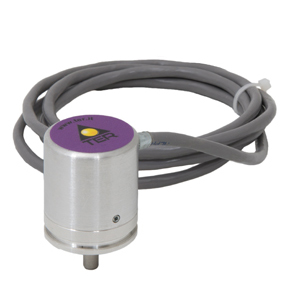
The TER ERMES High-Speed Incremental Encoder is a compact magnetic encoder designed to measure mechanical rotation and convert that movement into scaled electrical signals for industrial motion control systems. Engineered for applications requiring reliable position and speed feedback, ERMES provides a versatile sensing solution for cranes, automation equipment, machine tools, conveyor systems and a wide variety of industrial machinery.
Incremental encoders are fundamental components within many modern motion control systems. By generating electrical pulses as a shaft rotates, an encoder allows the associated controller to monitor movement, calculate rotational speed and determine changes in position. The TER ERMES performs this function using magnetic sensing technology combined with configurable pulse resolutions and industrial output interfaces.
Designed for high-speed operation, ERMES is capable of rotational speeds up to 15,000 rpm. A selection of pulse resolutions from 10 to 1024 pulses per revolution allows the encoder to be configured according to the measurement requirements of the application. This flexibility makes ERMES suitable for applications ranging from general machinery monitoring through to more precise industrial motion control.
The encoder is also designed to be extremely compact and lightweight, helping simplify installation where available mounting space is limited. TER combines this compact construction with an aluminium enclosure, 6 mm or 10 mm shaft options and a cable connection to provide a practical industrial encoder for new machinery and replacement applications.
Incremental Position and Speed Feedback for Industrial Machinery
The primary function of the TER ERMES is to provide electrical feedback corresponding to mechanical rotation. As the encoder shaft rotates, the magnetic sensing system generates a sequence of output signals that can be interpreted by the associated controller.
These signals allow the control system to determine rotational movement and speed. By counting the generated pulses, the controller can calculate how far the connected shaft has rotated. By measuring the rate at which those pulses are generated, the system can also determine rotational speed.
This makes incremental encoders particularly useful within machinery where accurate motion information needs to be incorporated into the control system. Applications can include positioning systems, crane mechanisms, conveyor drives, automation equipment and other machines incorporating rotating shafts or drive components.
The ERMES encoder provides this feedback in a compact industrial package designed for integration into demanding machinery applications.
Magnetic Sensing Technology
TER ERMES uses a magnetic sensing method to detect rotational movement. Rather than relying on a conventional optical sensing arrangement, the encoder uses magnetic technology to generate the electrical information corresponding to shaft rotation.
Magnetic sensing is particularly attractive for industrial encoder applications because it enables compact and robust sensing architectures. TER has combined this technology with an aluminium enclosure and industrial electronic protection features to create an encoder designed for reliable operation across a wide variety of machinery applications.
The sensing system generates incremental output information as the shaft rotates, providing the control system with the electrical pulses required for position and speed calculations.
For machinery designers and maintenance personnel, this provides a practical method of adding rotational feedback to equipment without requiring a large or complex mechanical sensing assembly.
High-Speed Operation up to 15,000 rpm
One of the defining characteristics of the TER ERMES is its high rotational speed capability. TER specifies a maximum rotation speed of 15,000 rpm, making the encoder suitable for machinery where shafts can rotate substantially faster than those found in many conventional crane positioning applications.
This high-speed capability expands the range of applications in which ERMES can be used. In addition to crane and lifting equipment, the encoder can be incorporated into automation machinery, machine tools, printing equipment, conveyor systems and other high-speed rotating mechanisms.
When selecting an encoder for a high-speed application, the mechanical speed rating must be considered alongside shaft coupling, alignment, mounting and the electrical pulse frequency generated at the selected resolution.
A higher pulses-per-revolution setting produces more electrical transitions during each revolution. At high rotational speeds, this results in a correspondingly higher output frequency. The associated PLC, counter, drive or motion controller therefore needs to be capable of processing the selected encoder resolution at the maximum expected machine speed.
10 to 1024 Pulses per Revolution
The TER ERMES is available with multiple incremental resolutions, allowing the encoder to be matched to different motion-control requirements. TER specifies pulse resolutions ranging from 10 to 1024 pulses per revolution.
Available resolutions include 10, 36, 100, 256, 360, 512, 750 and 1024 pulses per revolution. This range provides considerable flexibility when selecting an encoder for a particular machine.
Lower pulse counts may be appropriate where the control system requires general rotational or speed information without extremely fine positional resolution. Higher pulse counts provide more incremental information for every shaft revolution and can therefore support more detailed position and speed measurement.
The most appropriate pulse resolution depends on factors including required measurement accuracy, mechanical gearing, maximum rotational speed, controller input frequency and the way in which the encoder information will be processed by the machine control system.
A and B Quadrature Output Signals
The TER ERMES provides A and B incremental output channels arranged with a 90-degree phase relationship. This quadrature signal arrangement is widely used in industrial incremental encoder systems because it allows the controller to obtain more information than would be available from a single pulse channel.
As the encoder shaft rotates, the A and B channels produce pulse trains that are offset from one another. The order in which the signals change can be interpreted by the controller to determine the direction of rotation.
This means the encoder can provide information not only about how much movement has occurred but also about the direction of that movement. Such information is important in positioning systems where machinery can travel or rotate in both directions.
Quadrature signals can also be processed by compatible high-speed counters and motion controllers to provide enhanced position measurement depending on the counting method used by the control system.
Z Reference Signal with Zero Pulse
In addition to the A and B incremental channels, TER specifies a Z reference signal for the ERMES encoder. This reference output provides a zero pulse associated with the encoder revolution.
TER specifies the zero pulse with a width of 90 degrees. The reference signal provides a repeatable event once per revolution that can be used by a compatible control system as part of a referencing, indexing or synchronisation function.
The way the Z signal is used depends on the machinery and controller. In some applications, it may provide a known reference event during machine setup or operation. In others, it can be used alongside the incremental channels to support rotational indexing or position verification.
The inclusion of a dedicated revolution reference signal increases the versatility of the ERMES encoder for industrial motion control applications.
Normal and Complementary Output Signals
TER provides ERMES configurations capable of supplying normal or complementary output signals. The encoder output specification includes the A and B quadrature channels and Z reference signal together with inverted signal options.
Complementary signalling can be advantageous in industrial installations where encoder information must travel between the sensor and the control equipment while maintaining reliable signal integrity.
The appropriate output configuration should be selected according to the input requirements of the PLC, drive, counter or motion controller connected to the encoder.
Correct matching between the encoder output stage and the receiving electronics is important for reliable operation. Supply voltage alone should not be used to determine compatibility; output voltage, interface type, wiring and controller input specifications should also be confirmed.
Line Driver RS422 Output Option
TER specifies a line driver RS422 output stage as one of the available ERMES configurations. This type of output is commonly used for encoder feedback where robust transmission of high-speed digital signals is required.
The use of complementary signals allows the receiving device to interpret the difference between paired signal lines, providing a robust method of transmitting encoder information within industrial electrical environments.
This can be particularly beneficial where motors, contactors, variable-speed drives and other electrical equipment are operating in the surrounding machinery and may generate electromagnetic interference.
The receiving controller must support the selected interface and be wired according to the appropriate TER connection information.
Short-Circuit-Protected Push-Pull Output
ERMES is also available with a push-pull output stage. TER identifies this output as short-circuit protected, providing an additional level of electrical protection for industrial applications.
Push-pull outputs can provide a practical interface for PLCs, counters and other industrial control devices where a compatible voltage-level digital signal is required.
The availability of both line driver and push-pull configurations makes ERMES adaptable to different control architectures. Rather than restricting the encoder to one interface type, the appropriate version can be selected according to the electrical requirements of the machine.
Multiple Output Interface Configurations
The TER ERMES range provides several output interface configurations to support integration with different control systems. These include 5 VDC TTL-compatible normal and complementary outputs, 10–30 VDC push-pull short-circuit-protected normal and complementary outputs, and configurations combining a 10–30 VDC supply with 5 V output signals.
This variety is particularly useful when selecting an encoder for replacement applications because existing machinery can use different encoder input standards depending on the controller, drive or motion-control equipment originally installed.
For new machinery, the output configuration can be selected to match the preferred control architecture. For replacement projects, the electrical interface of the existing encoder should be checked carefully before selecting the corresponding ERMES version.
10 to 30 VDC Power Supply
TER specifies a 10 to 30 VDC power supply range for applicable ERMES configurations. This broad industrial DC supply range supports integration with commonly used machinery control power systems.
TER specifies consumption of approximately 25 mA at 24 VDC without load. This relatively low current requirement allows the encoder to be incorporated into control systems without placing a significant additional load on the DC power supply.
When integrating the encoder, the designer should consider both the encoder consumption and the electrical load associated with the selected output interface and receiving equipment.
Correct polarity, voltage and wiring should always be confirmed before energising the device.
Electrical Protection for Industrial Applications
Industrial electrical systems can expose electronic sensors to conditions such as supply disturbances, wiring errors and abnormal electrical loads. TER has therefore incorporated several electrical protection features into the ERMES design.
The encoder features protection against input and output over-current, over-voltage and reverse polarity. These protective characteristics help increase robustness when the encoder is integrated into industrial machinery.
Electrical protection does not remove the requirement for correct installation or appropriate external circuit protection, but it provides an additional layer of resilience within the encoder itself.
Interference Immunity for Industrial Environments
Encoder signals are often installed close to motors, contactors, drives and other equipment capable of producing electrical interference. Reliable signal transmission is therefore an important consideration when designing an industrial feedback system.
TER states that the ERMES encoder provides interference immunity in accordance with DIN EN 61000-6-2. This characteristic supports the encoder’s use within industrial environments where electromagnetic disturbances may be present.
Appropriate installation practices remain important. Encoder cables should be routed and terminated according to the requirements of the machine and control equipment, with suitable attention to separation from high-power conductors and other potential interference sources.
6 mm and 10 mm Shaft Options
The TER ERMES is available with either a 6 mm or 10 mm diameter shaft. These alternatives provide additional flexibility when mechanically integrating the encoder with different machinery designs.
The correct shaft option should be selected according to the coupling arrangement and mechanical interface of the equipment. Proper shaft alignment is important to minimise unnecessary mechanical loading and support reliable encoder operation.
When replacing an existing encoder, shaft diameter should be confirmed together with mounting dimensions, coupling dimensions, electrical output and pulse resolution rather than selecting a replacement based solely on electrical specifications.
Compact Aluminium Encoder Construction
TER describes the ERMES as an extremely compact and lightweight encoder designed for straightforward assembly and wiring. Its aluminium enclosure provides a durable mechanical structure while helping maintain a compact overall package.
This can be particularly valuable where encoder mounting space is restricted or where the sensor must be integrated into an existing mechanism.
TER specifies an overall envelope of approximately 57.4 mm in height and 36 mm in diameter, demonstrating the compact nature of the ERMES design.
Despite its small size, the encoder combines high rotational speed capability, configurable pulse resolution, multiple output options and industrial electrical protection features within a single product platform.
IP42 Protection
The TER ERMES is classified to IP42. This rating should be considered carefully when determining the installation location and environmental protection requirements of the application.
ERMES is intended for industrial machinery applications, but IP42 does not provide the same level of environmental sealing as higher-rated outdoor or washdown equipment. The encoder should therefore be installed where the specified degree of protection is appropriate for the expected exposure.
If the machinery operates in an environment involving substantial water exposure, heavy dust contamination or other severe environmental conditions, the complete installation should be evaluated to determine whether additional protection is necessary.
Wide Industrial Operating Temperature Range
TER specifies an operational ambient temperature range from -25°C to +80°C for the ERMES encoder, with the same -25°C to +80°C range specified for storage.
This broad temperature capability supports installation across a wide variety of industrial machinery environments, including applications where control components may experience substantial seasonal or process-related temperature variation.
TER also describes the product as having extreme temperature resistance, while the formal general technical specifications provide the -25°C to +80°C operational rating. For equipment selection and system design, the specified operational range should be used as the primary reference.
A Versatile High-Speed Encoder for Motion Control
The TER ERMES combines high-speed operation, magnetic sensing technology, configurable incremental resolution and multiple electrical output options within a compact industrial encoder.
With rotational capability up to 15,000 rpm and resolutions from 10 to 1024 pulses per revolution, the encoder can be adapted to a wide range of position and speed measurement requirements. A and B quadrature signals provide incremental movement and direction information, while the Z channel provides a revolution reference signal.
Line driver RS422 and short-circuit-protected push-pull output options provide compatibility with different control architectures, while 6 mm and 10 mm shaft alternatives support mechanical integration across a broad range of equipment.
These characteristics make the TER ERMES High-Speed Incremental Encoder a versatile feedback solution for crane systems, automation machinery, machine tools, conveyors and other industrial motion-control applications.
TER ERMES for Crane and Lifting Applications
The TER ERMES Incremental Encoder is particularly well suited to crane and lifting equipment where rotational movement needs to be converted into electrical feedback for the machine control system. Cranes incorporate numerous rotating mechanisms, including drums, drive shafts, gearboxes and travelling systems, making reliable position and speed information an important part of many control architectures.
By generating incremental electrical signals as its shaft rotates, ERMES allows a compatible controller to monitor movement and calculate changes in position or rotational speed. The A and B quadrature channels also allow the direction of rotation to be determined, providing valuable information in machinery that operates in both forward and reverse directions.
The broad selection of resolutions from 10 to 1024 pulses per revolution allows the encoder to be matched to different crane mechanisms. Resolution can be selected according to the mechanical transmission ratio, required positional information, operating speed and capabilities of the associated controller.
For crane manufacturers, system integrators and maintenance personnel, the combination of compact dimensions, magnetic sensing and multiple output interfaces provides a versatile solution for incorporating rotational feedback into lifting and material handling equipment.
Overhead Travelling Crane Applications
Overhead travelling cranes are among the applications identified by TER for the ERMES encoder. These machines commonly incorporate several independent motions, including bridge travel, trolley travel and hoisting movement.
Depending on the control architecture, rotational feedback can be used to monitor one or more of these movements. An encoder may be mechanically connected to a drive system, rotating shaft or other suitable part of the mechanism so that the controller receives pulse information corresponding to movement.
This information can then be processed by a PLC, counter, drive or other compatible control device. The exact function depends on the machinery design and may include speed measurement, relative position monitoring, synchronisation or other motion-related control functions.
ERMES offers multiple pulse resolutions and electrical output options, allowing the encoder configuration to be selected according to the requirements of the overhead crane system.
Gantry Crane Position and Speed Feedback
Gantry cranes can present demanding motion-control requirements because large structures may travel over substantial distances while carrying significant loads. Reliable feedback can help the control system monitor the movement of the associated drive mechanisms.
The TER ERMES can provide incremental pulse information corresponding to mechanical rotation, allowing a suitable controller to calculate movement or speed according to the mechanical relationship between the encoder and the crane.
Where a gantry crane uses multiple drive mechanisms, encoder information may also form part of a wider control strategy designed to monitor coordinated movement. The precise control arrangement depends on the crane design and should be engineered according to the requirements of the machine.
The encoder’s compact construction can be beneficial where installation space is limited around gearboxes, drive assemblies or other rotating machinery components.
Tower Crane Applications
TER identifies tower cranes as another suitable application for the ERMES Incremental Encoder. Tower cranes incorporate several rotating and linear movements that may require position or speed information within the machine control system.
Depending on the crane architecture, an incremental encoder can be used in mechanisms associated with hoisting, trolley movement or other rotational systems. The generated pulse signals allow the controller to relate mechanical movement to electrical information.
The ability to select between different pulse resolutions gives machinery designers flexibility when balancing measurement detail against rotational speed and controller input-frequency limitations.
ERMES can therefore form part of a broader tower crane control architecture alongside other TER control products such as rotary limit switches, position limit switches, pendant controls and signalling equipment.
Harbour Crane and Port Machinery Applications
Harbour cranes and port handling equipment operate within demanding industrial environments where large machinery movements must be controlled consistently. TER includes harbour cranes among the applications for the ERMES encoder.
Rotational feedback can be used within suitable control systems to provide information associated with drive movement, speed or relative position. The encoder’s high-speed capability also allows it to accommodate mechanisms operating at substantially higher rotational speeds than the final crane movement itself, depending on where the encoder is mechanically connected.
When selecting ERMES for harbour or port equipment, environmental exposure should be considered carefully. The encoder carries an IP42 protection rating, so the intended mounting location and any additional environmental protection should be evaluated against actual site conditions.
Hydraulic Crane Applications
Hydraulic cranes are also included within TER’s broad range of ERMES applications. Although hydraulic power is used to create machinery movement, rotational feedback may still be required from shafts, drums, winches or other mechanical components within the overall crane system.
ERMES can convert this rotational movement into incremental electrical signals for use by the control system. This allows mechanical movement to be monitored electronically without relying solely on the hydraulic command signal.
As with other applications, encoder resolution, shaft size, output interface and supply characteristics should be selected according to the specific machine design.
Integration with TER Rotary Limit Switches
An important capability identified by TER is the possibility of assembling ERMES with rotary limit switches for the control of multi-revolution rotors. This creates a particularly useful combination for crane and industrial machinery applications.
A rotary limit switch and an incremental encoder perform different but complementary functions. The rotary limit switch can provide mechanically related switching points associated with the rotation of a shaft, while the encoder generates continuous incremental pulse information that can be processed electronically.
Combining these technologies allows a machine designer to obtain both switching functions and electronic motion feedback from the same general rotating mechanism.
This can be useful where machinery requires defined limit or switching positions while also needing information about speed, direction or relative movement.
Control of Multi-Revolution Rotors
Many industrial mechanisms rotate through multiple revolutions rather than moving through a single turn. Examples can include hoist drums, winches, travelling mechanisms and other geared machinery systems.
TER specifically identifies ERMES as suitable for assembly with rotary limit switches for controlling multi-revolution rotors. In such applications, the encoder produces pulses throughout the rotation while the associated rotary limit switch can provide switching functions at mechanically predetermined positions.
The number of encoder pulses corresponding to the final machine movement depends on the selected resolution and the mechanical transmission between the encoder shaft and the controlled mechanism.
Correct system engineering is therefore important when establishing the relationship between shaft rotation, pulse count and actual machine movement.
Automation and Assembly Line Applications
Beyond cranes and lifting equipment, TER identifies automation and assembly lines as applications for the ERMES encoder. Automated machinery frequently requires information about the movement of shafts, conveyors, indexing mechanisms and drive systems.
Incremental feedback can provide this information in a format that can be processed by PLCs, motion controllers and industrial counters.
The A and B quadrature channels provide information about movement and rotational direction, while the Z reference signal can provide a repeatable reference event once per encoder revolution.
The broad range of available pulse resolutions allows ERMES to be selected for different levels of measurement detail within automated machinery.
Machine Tool Position and Speed Monitoring
Machine tools represent another potential application for the TER ERMES. These machines often incorporate rotating shafts and drive mechanisms where speed or position information is required by the control system.
With a maximum rotational speed of up to 15,000 rpm, ERMES is particularly relevant to applications where encoder shaft speed can be considerably higher than that encountered in slower lifting mechanisms.
Selection of the pulse resolution becomes especially important at higher rotational speeds because the electrical output frequency increases as both speed and pulses per revolution increase.
The receiving electronics must therefore be capable of processing the maximum pulse frequency expected from the selected ERMES configuration.
Conveyor Belt Applications
TER identifies conveyor belts as another application for the ERMES Incremental Encoder. Conveyor systems frequently require speed and movement information for monitoring, sequencing or coordination with other machinery.
An encoder mechanically connected to an appropriate conveyor shaft or drive mechanism can generate pulses corresponding to conveyor movement. Once the mechanical relationship is known, the control system can use this information to calculate speed or relative travel.
Higher pulse resolutions can provide more pulse information for a given amount of conveyor movement, while lower resolutions may be appropriate where only basic speed or movement monitoring is required.
Magnetic sensing, compact construction and multiple electrical interface options make ERMES adaptable to a variety of conveyor control architectures.
Printing Machine Applications
Printing machinery can incorporate numerous rotating components that must operate at controlled speeds and maintain coordinated movement. TER includes printing machines among the industrial applications for ERMES.
Incremental encoder feedback can provide electrical information corresponding to shaft movement, allowing the associated control system to monitor speed and relative position.
The high rotational speed capability of ERMES can be beneficial for fast-moving printing machinery, while the range of available resolutions allows the feedback characteristics to be matched to the control requirements.
Where high pulse frequencies are expected, the selected output interface, cabling and controller input capability should all be considered carefully.
Strapping Machine Applications
TER also identifies strapping machines as suitable applications for the ERMES encoder. Automated strapping equipment relies on controlled mechanical sequences to position, tension and secure material around products or loads.
Rotational feedback from appropriate mechanisms can provide information to the control system about machine movement and speed. ERMES offers a compact means of generating this information from a rotating shaft.
The availability of multiple pulse resolutions allows the encoder to be adapted to the mechanical and control requirements of different strapping machine designs.
Stage Technology and Entertainment Applications
Stage technology is another application specifically identified by TER. Modern theatres, entertainment venues and performance installations can use sophisticated lifting and movement systems for scenery, lighting equipment, platforms and other stage elements.
These systems may require electronic feedback from winches, drives or rotating mechanisms so that movement can be monitored by the control system.
The ERMES Incremental Encoder can provide the required pulse information while its A and B quadrature channels allow direction of rotation to be determined.
Where ERMES forms part of a stage machinery system, the complete control and safety architecture should be designed according to the requirements applicable to the installation.
Wind Turbine Applications
TER lists wind turbines among the possible applications for ERMES. Wind energy systems incorporate a variety of rotating mechanisms and auxiliary control functions where position or speed information may be required.
The encoder’s magnetic sensing technology, multiple resolution options and industrial output interfaces provide a versatile platform for suitable rotational feedback functions.
Environmental conditions within wind turbine applications can vary significantly depending on the installation location and mounting position. Because ERMES is rated IP42, environmental suitability should be assessed carefully and additional protection provided where required.
Warehouse Racking and Storage Systems
Automated warehouse and racking systems can use encoders to monitor the movement of storage and retrieval machinery. TER identifies warehouse racking systems as another application for the ERMES encoder.
These systems can incorporate travelling carriages, lifting mechanisms, conveyors and other motor-driven equipment. Incremental feedback allows the controller to obtain electrical information corresponding to the movement of suitable rotating components.
Depending on the control architecture, this information can support relative position measurement, speed monitoring or sequencing with other parts of the automated storage system.
Medical Equipment Applications
TER also identifies medical equipment within the broad range of potential ERMES applications. Many specialised machines incorporate controlled mechanical movement requiring compact position or speed sensing.
The small dimensions and multiple electrical configurations of ERMES can support integration where space is restricted and rotational feedback is required.
The suitability of any encoder for a specific medical equipment application should be assessed by the equipment manufacturer according to the regulatory, performance and safety requirements of the final system.
Amusement Ride Applications
Amusement rides are another application listed by TER for the ERMES encoder. These systems can incorporate numerous rotating and travelling mechanisms that require movement information within the wider control architecture.
An incremental encoder can provide feedback corresponding to mechanical rotation, enabling compatible controllers to monitor movement, direction or speed.
ERMES provides this information through its incremental channels and selectable pulse resolutions. However, where the encoder is incorporated into safety-related amusement machinery, the complete system design must address the applicable safety standards and risk-control requirements of the final installation.
Choosing the Correct Encoder Resolution
Selecting the appropriate pulses-per-revolution value is one of the most important considerations when specifying an incremental encoder. TER offers ERMES resolutions from 10 to 1024 pulses per revolution, allowing the device to support a wide variety of applications.
A higher pulse count provides more incremental information for each mechanical revolution. This can improve the measurement detail available to the controller, particularly where relatively small changes in shaft position need to be detected.
However, higher resolution also increases output frequency at a given rotational speed. This is particularly important with ERMES because the encoder can operate at speeds up to 15,000 rpm.
The selected resolution should therefore provide sufficient measurement detail without exceeding the input-frequency capability of the receiving control equipment at maximum operating speed.
Mechanical Transmission and Encoder Scaling
In many industrial applications, the encoder does not directly measure the final movement of the machine. Instead, it measures rotation at a shaft that is mechanically related to that movement through gears, drums, pulleys, wheels or other transmission components.
The control system can convert encoder pulses into meaningful machine units once the mechanical relationship is known. For example, a defined number of encoder revolutions may correspond to a particular linear travel distance or angular movement.
Accurate scaling therefore requires consideration of encoder resolution, gearbox ratio, drum or wheel dimensions and any other relevant mechanical transmission factors.
When these parameters are correctly established, the incremental pulse stream can provide useful feedback for monitoring the movement of the final machine mechanism.
Direction Detection Using Quadrature Signals
The 90-degree phase relationship between the A and B output channels allows a compatible controller to determine the direction in which the ERMES shaft is rotating.
When the shaft rotates in one direction, one channel leads the other. When rotation reverses, the relationship changes. The receiving controller can interpret this sequence to distinguish between forward and reverse movement.
This capability is especially useful for cranes, conveyors, automated storage systems and other machinery where movement routinely occurs in both directions.
Direction information can be processed alongside pulse count and pulse frequency to provide a more complete representation of machine movement.
A Flexible Encoder for Diverse Industrial Applications
The extensive range of applications identified by TER demonstrates the versatility of the ERMES Incremental Encoder. From overhead travelling cranes and tower cranes to automation systems, machine tools, conveyors, printing equipment and warehouse machinery, the underlying requirement is the same: reliable conversion of rotational movement into usable electrical feedback.
ERMES addresses this requirement with magnetic sensing technology, high-speed operation up to 15,000 rpm, selectable resolutions from 10 to 1024 pulses per revolution and multiple output interface options.
Its ability to integrate with TER rotary limit switches for multi-revolution rotor control is particularly valuable for crane and material handling systems, creating opportunities to combine electronic feedback with mechanically related switching functions.
Together, these capabilities make the TER ERMES Incremental Encoder a versatile component for industrial motion control, speed detection and position feedback systems.
Installing the TER ERMES Incremental Encoder
Correct installation is important for obtaining reliable performance and long service life from the TER ERMES Incremental Encoder. Although the encoder is compact and designed for straightforward assembly, the mechanical and electrical installation should be considered carefully as part of the complete motion-control system.
The encoder should be mounted securely so that its shaft is correctly aligned with the rotating mechanism being measured. Excessive mechanical loading, misalignment or inappropriate coupling arrangements can introduce unnecessary forces into the encoder shaft and may affect measurement reliability or service life.
The installation should also consider access for wiring, inspection and future maintenance. Where ERMES is incorporated into a larger assembly with a TER rotary limit switch, sufficient space should be provided for the complete mechanism and associated electrical connections.
Shaft Alignment and Mechanical Coupling
Shaft alignment is an important consideration when connecting an incremental encoder to industrial machinery. The encoder measures the rotation transmitted to its shaft, so the mechanical connection should transfer movement consistently without introducing excessive radial or axial forces.
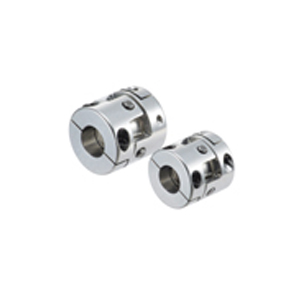
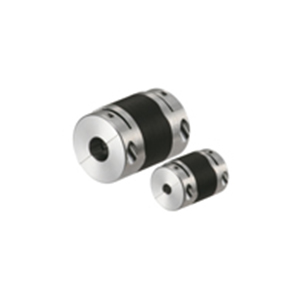
A suitable coupling can help accommodate small alignment variations between the encoder and the machine shaft. The appropriate coupling arrangement depends on the application, rotational speed, shaft dimensions and mechanical installation.
ERMES is available with 6 mm and 10 mm shaft options, allowing the mechanical interface to be selected according to the requirements of the equipment.
For replacement applications, shaft diameter should be checked together with the existing coupling dimensions and mounting arrangement. Mechanical compatibility is just as important as matching the electrical specifications of the encoder.
High-Speed Mechanical Installation Considerations
With a maximum rotational speed of up to 15,000 rpm, the TER ERMES can operate in applications where careful mechanical installation is particularly important. At higher shaft speeds, poor alignment or unsuitable coupling arrangements can create vibration and additional mechanical loading.
The connected mechanism should therefore operate smoothly within the mechanical capabilities of the encoder and coupling system. The encoder should not be used as a structural support for another rotating component.
Installation practices should reflect the maximum speed expected during actual machine operation rather than only the normal operating speed. Machinery can experience temporary speed increases during acceleration, commissioning or abnormal operating conditions, and these factors should be considered during equipment selection.
Correct Selection of 6 mm or 10 mm Shaft
The availability of both 6 mm and 10 mm shaft options gives machinery designers flexibility when specifying the ERMES encoder. The most appropriate shaft diameter will depend on the mechanical arrangement and coupling used within the machine.
A replacement encoder should not be selected solely by product family or pulse resolution. The shaft diameter, mounting dimensions and mechanical connection should be confirmed against the existing installation.
For new machinery, selecting the appropriate shaft option during the design stage can simplify coupling selection and help create a compact and reliable installation.
Electrical Wiring and Encoder Signal Integrity
The quality of the electrical installation can have a significant effect on encoder performance. ERMES generates digital pulse signals that must be transmitted reliably from the encoder to the receiving PLC, drive, counter or motion controller.
Industrial machinery can contain motors, variable-frequency drives, contactors, braking systems and other electrical equipment capable of generating electromagnetic interference. Cable routing and termination should therefore be planned with signal integrity in mind.
Where practical, encoder signal wiring should be routed separately from high-power conductors and other significant interference sources. Wiring practices should follow the requirements of the selected ERMES output configuration and the receiving control equipment.
TER specifies interference immunity in accordance with DIN EN 61000-6-2, supporting use of ERMES in industrial environments. Correct installation remains important to obtain dependable signal transmission in the final machine.
Selecting RS422 Line Driver Outputs
The RS422 line driver option is particularly relevant where robust transmission of high-speed incremental encoder signals is required. Complementary signal pairs allow compatible receiving electronics to interpret the difference between the paired electrical signals.
This approach can provide strong noise immunity and reliable signal transmission in industrial environments, especially where encoder cables pass through machinery containing motors, drives and switching equipment.
When selecting an RS422 ERMES configuration, the receiving device must have compatible differential inputs. Wiring should follow the appropriate pinout and connection information supplied for the selected encoder.
Output interface compatibility should always be confirmed before installation rather than assuming that all incremental encoders use interchangeable electrical signals.
Selecting Push-Pull Encoder Outputs
TER also offers ERMES with a short-circuit-protected push-pull output stage. Push-pull outputs provide another practical method of interfacing incremental encoder signals with compatible industrial controllers.
The suitability of a push-pull configuration depends on the electrical requirements of the receiving equipment. Input voltage range, switching thresholds, maximum frequency and wiring arrangement should all be checked during product selection.
The availability of multiple output architectures allows ERMES to support different industrial control systems without requiring one universal electrical interface to suit every application.
Matching the Encoder to the Receiving Controller
Successful encoder integration requires compatibility between the ERMES output and the receiving control device. The controller must be capable of recognising the encoder’s signal levels and processing the maximum pulse frequency generated during machine operation.
This is particularly important when using high pulse resolutions at high rotational speeds. An encoder operating at 1024 pulses per revolution produces significantly more pulse information than a 10 pulse-per-revolution configuration at the same shaft speed.
The PLC high-speed counter, drive input or motion controller should therefore be checked to confirm that its input frequency is sufficient for the selected encoder resolution and maximum shaft speed.
Where quadrature counting is used, the way the controller processes the A and B signal edges should also be considered when determining the effective count resolution.
Understanding Pulses per Revolution
Pulse resolution determines how many incremental signal cycles are produced during one complete encoder shaft revolution. TER provides ERMES resolutions ranging from 10 to 1024 pulses per revolution.
A lower resolution produces fewer pulses for each mechanical revolution and may be suitable for applications requiring general speed or movement information. A higher resolution provides more detailed incremental information and can support finer measurement of relative movement.
The highest available resolution is not automatically the best choice for every application. Resolution should be selected according to the actual control requirement, mechanical scaling and processing capability of the receiving electronics.
Calculating Encoder Output Frequency
When specifying an incremental encoder, the relationship between shaft speed and pulse resolution should be considered because it determines the fundamental output pulse frequency.
The basic pulse frequency can be calculated by multiplying the rotational speed in revolutions per minute by the pulses per revolution and dividing the result by 60.
For example, increasing either rotational speed or encoder resolution increases the frequency of the output signal. This becomes particularly important with ERMES because the encoder can operate at speeds up to 15,000 rpm and is available with resolutions up to 1024 pulses per revolution.
The control equipment should have sufficient input-frequency capability for the worst-case operating condition, including any expected overspeed or commissioning conditions.
Using the Z Reference Signal
The Z output provides a reference pulse associated with each encoder revolution. TER specifies a zero pulse with a 90-degree width for the ERMES encoder.
This reference signal can be used by compatible control systems for indexing, synchronisation or referencing functions. Its precise use depends on the machinery and control architecture.
Because an incremental encoder generally provides relative movement information rather than automatically retaining an absolute mechanical position, a reference event can be useful where the machine needs to establish a known relationship between pulse count and mechanical position.
Incremental Encoder Referencing After Power Loss
Incremental encoder systems should be designed with an understanding of how position information is handled when electrical power is removed. The encoder generates pulse information as movement occurs, but it does not inherently provide the same retained absolute position information as an absolute encoder.
If the control system loses its stored pulse count or if mechanical movement occurs while the controller is unable to count encoder signals, a referencing procedure may be required before accurate relative position information can be re-established.
The Z reference signal or another machine reference sensor can form part of this process depending on the system architecture.
Integrating ERMES with Rotary Limit Switches
One of the particularly useful features of ERMES is its suitability for assembly with TER rotary limit switches for the control of multi-revolution rotors.
This combination can provide two complementary forms of machine information. The encoder supplies electronic incremental feedback throughout shaft movement, while the rotary limit switch can provide switching functions associated with mechanically determined positions.
For crane hoists, winches and other multi-turn mechanisms, this arrangement can provide a practical means of combining electronic movement information with established rotary limit-switch technology.
The precise configuration should be selected according to the number of shaft revolutions, required switching positions, encoder resolution and mechanical relationship between the control device and the final machine movement.
Replacement Encoder Selection
When replacing an existing incremental encoder, several parameters should be compared before determining whether ERMES is suitable. Matching only the pulses-per-revolution value is not sufficient.
The replacement assessment should include shaft diameter, mounting dimensions, maximum rotational speed, supply voltage, output interface, pulse resolution, A and B signal configuration, reference signal requirements, cable connection and environmental protection.
The electrical input characteristics of the existing controller should also be confirmed. An encoder that is mechanically compatible but uses an incompatible electrical output may not operate correctly with the existing control system.
Careful specification checking can reduce commissioning problems and help ensure that the replacement encoder provides the expected feedback signals.
Environmental Considerations and IP42 Protection
The TER ERMES carries an IP42 protection rating. This should be considered when selecting the mounting position, particularly on equipment that may be exposed to dust, moisture or outdoor environmental conditions.
IP42 does not provide the same level of environmental sealing as higher IP-rated equipment designed for direct exposure to substantial water or heavy contamination.
Where ERMES is installed on machinery operating in a demanding environment, the mounting location should provide conditions appropriate to the encoder’s specified protection level. Additional enclosure or guarding may be considered where the application requires greater environmental protection.
The specified operating temperature range of -25°C to +80°C should also be considered when evaluating the installation environment.
Inspection and Maintenance of the ERMES Encoder
Incremental encoders generally require relatively little routine maintenance, but periodic inspection can help identify developing mechanical or electrical problems before they affect machine operation.
The encoder mounting should remain secure and the coupling should be checked for wear, looseness or damage. Cable condition and electrical connections should also be inspected, particularly where the machinery is subject to vibration or repeated movement.
Unexpected changes in position feedback, intermittent pulse signals or unstable speed readings may indicate a problem elsewhere in the mechanical or electrical installation and should be investigated.
Maintenance should be performed with the machinery appropriately isolated and in accordance with the procedures applicable to the equipment and workplace.
Advantages of Magnetic Incremental Encoder Technology
The magnetic sensing technology used by TER ERMES contributes to a compact encoder architecture suitable for industrial machinery applications.
Combined with its aluminium enclosure, selectable shaft sizes and multiple electrical configurations, the sensing technology allows ERMES to provide high-speed incremental feedback within a small physical package.
The product’s ability to operate at up to 15,000 rpm further expands its suitability beyond slower crane mechanisms into automation, machine tools, printing machinery and other higher-speed applications.
Key Advantages of the TER ERMES Incremental Encoder
The TER ERMES combines a broad range of technical characteristics that make it adaptable to many industrial motion-control applications. Magnetic sensing technology provides incremental rotational feedback, while resolutions from 10 to 1024 pulses per revolution allow the measurement characteristics to be selected according to the machinery.
High-speed operation up to 15,000 rpm supports both conventional industrial mechanisms and faster rotating equipment. A and B quadrature signals provide movement and direction information, while the Z channel provides a repeatable revolution reference.
Multiple electrical output configurations, including RS422 line driver and short-circuit-protected push-pull options, allow the encoder to interface with different control architectures. Electrical protection against over-current, over-voltage and reverse polarity adds further resilience for industrial applications.
Compact aluminium construction, 6 mm and 10 mm shaft options and a broad operating temperature range further increase the versatility of the ERMES platform.
What to Consider When Selecting a TER ERMES Encoder
Before selecting an ERMES configuration, the application should be assessed from both a mechanical and electrical perspective. Important parameters include the required pulses per revolution, maximum shaft speed, shaft diameter, mechanical coupling and mounting arrangement.
The electrical system should then be checked for supply voltage, required output interface, controller input characteristics and maximum processing frequency.
Environmental conditions should also be reviewed against the IP42 protection rating and specified temperature range.
Where the encoder will be combined with a TER rotary limit switch, the mechanical relationship between the encoder, limit switch and multi-revolution mechanism should also be considered.
TER ERMES for Industrial Motion Control Systems
The TER ERMES Incremental Encoder provides a compact solution for converting rotational mechanical movement into scalable electrical information for industrial control systems.
Its combination of magnetic sensing, high-speed capability and configurable resolution allows the encoder to serve applications ranging from crane and lifting systems to automation equipment, machine tools, conveyors, warehouse systems and specialised industrial machinery.
Whether the requirement is speed detection, relative position feedback, direction monitoring or integration with a multi-revolution rotary mechanism, ERMES provides a flexible platform that can be configured according to the requirements of the machine.
TER ERMES Incremental Encoder from Control Devices
Control Devices Pty Ltd supplies TER industrial control products for crane, lifting, automation, material handling and machinery applications throughout Australia.
The TER ERMES Incremental Encoder provides high-speed magnetic rotational feedback in an extremely compact package, with resolutions from 10 to 1024 pulses per revolution and rotational speeds up to 15,000 rpm.
Available output configurations allow ERMES to interface with a variety of industrial control systems, while 6 mm and 10 mm shaft options provide flexibility for mechanical integration. The encoder can also be assembled with TER rotary limit switches for applications requiring control of multi-revolution rotors.
For new machinery, replacement encoder applications or integration with TER rotary limit switches, Control Devices can assist with selection of the appropriate ERMES configuration based on pulse resolution, shaft size, electrical interface and application requirements.
With its combination of compact construction, magnetic sensing technology, high-speed performance and flexible industrial interfaces, the TER ERMES Incremental Encoder provides a versatile solution for position and speed feedback across a broad range of industrial motion-control applications.