
Description
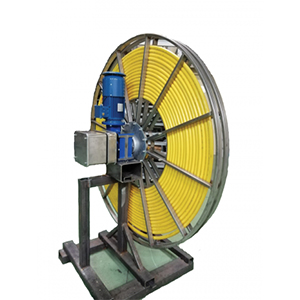
TER Apollo Explosion Proof Cable Reels – ATEX and IECEx Cable Reels for Hazardous Areas
TER Apollo Explosion Proof Cable Reels are heavy-duty motor-driven and spring-driven cable reels designed for the transmission of electrical power, control signals and data to mobile equipment operating in potentially explosive and demanding industrial environments. Developed for applications where conventional cable management equipment may not be suitable, the Apollo Ex-proof range combines robust mechanical construction, industrial cable reeling technology and hazardous-area certification requirements within a highly configurable cable reel platform.
The Apollo Ex-proof range is designed for applications where electrical cables must extend and retract as machinery travels, lifts, rotates or changes position. Depending on the selected configuration, the reel can carry power, control or mixed cables and can also accommodate industrial communication requirements including Profinet, Profibus and CAN bus applications.
Available in motor-driven and spring-driven configurations, TER Apollo Explosion Proof Cable Reels can be engineered around the movement, cable requirements and operating conditions of the application. This makes the range particularly suitable for mobile industrial equipment operating in industries such as mining, oil and gas, petrochemical processing, fuel handling, ports and other hazardous or demanding environments.
The Apollo Ex-proof range is designed with a high degree of customisation through TER’s modular construction system. Cable type, reel arrangement, accessories and application requirements can therefore be considered as part of the selection process rather than treating the cable reel as a one-size-fits-all component.
Explosion Proof Cable Reels for Potentially Explosive Areas
Potentially explosive environments require equipment to be selected with particular attention to the hazardous substances present, the classified area and the applicable protection and certification requirements.
The TER Apollo Ex-proof range has been developed specifically for potentially explosive areas. Rather than simply adapting a conventional cable reel for an industrial environment, the Ex-proof series incorporates equipment and construction considerations intended for hazardous-area applications.
This makes Apollo Ex-proof suitable for consideration where mobile machinery requires continuous electrical connection while operating within an appropriately assessed potentially explosive environment.
Correct selection must always consider the hazardous-area classification and the certification and marking of the exact reel configuration. The term “explosion proof” should not be interpreted as meaning that any Apollo Ex-proof reel can automatically be installed in every hazardous area.
ATEX Cable Reel Solutions
The TER Apollo Ex-proof range is designed in accordance with hazardous-area requirements that include conformity with ATEX Directive 2014/34/EU, Annex VIII.
ATEX requirements apply to equipment and protective systems intended for use in potentially explosive atmospheres within the relevant regulatory framework. For industrial users, the certification information associated with the Apollo Ex-proof range provides an important basis for evaluating the equipment for a proposed hazardous-area installation.
The exact equipment marking, installation requirements and suitability for the classified area should always be checked against the documentation supplied for the selected reel.
Hazardous-area equipment selection should be performed by appropriately competent personnel using the site’s area classification, gas or dust characteristics, equipment group and category, temperature requirements and other applicable design information.
IECEx Cable Reel Certification
In addition to its ATEX documentation, TER identifies the Apollo Ex-proof range with IECEx certification through the COC IECEx Scheme.
IECEx provides an internationally recognised framework for equipment intended for use in explosive atmospheres. This can be particularly important for international projects, mining operations, oil and gas facilities and industrial sites where IECEx certification forms part of the project specification.
The Apollo Ex-proof range therefore provides a useful platform for engineers requiring industrial cable reeling equipment supported by established hazardous-area conformity documentation.
As with ATEX requirements, IECEx suitability should be confirmed using the certification and marking applicable to the exact equipment supplied.
TER Apollo Ex-proof Certifications
TER publishes CE, Ex and IECEx markings and homologations for the Apollo Ex-proof range.
The manufacturer’s documentation identifies conformity with ATEX Directive 2014/34/EU, Annex VIII, together with ATEX certification CY 19 ATEX 0206266 X-type and notification of the technical file.
TER also references relevant standards within the EN 60079 and EN 80079 families for equipment intended for explosive atmospheres.
These certification details are important when Apollo Ex-proof equipment is being incorporated into a hazardous-area project because the reel must be evaluated as part of the complete electrical and mechanical installation rather than solely as a cable storage device.
Motor-Driven Apollo Ex-proof Cable Reels
The Apollo Ex-proof family includes motor-driven cable reel configurations for applications where powered cable reeling is required.
A motor-driven reel can be appropriate where machinery travel, cable length, operating speed or application dynamics require an actively driven reeling system.
The cable is managed as the associated mobile equipment travels through its operating range, helping maintain an organised electrical connection between the moving machinery and the fixed supply point.
Motor reel selection is application-specific and should consider factors including travel distance, installation arrangement, cable dimensions, cable mass, operating speed, acceleration, direction of movement and the relationship between the reel and cable feed point.
Spring-Driven Apollo Ex-proof Cable Reels
TER also offers spring-driven Apollo Ex-proof cable reels.
Spring cable reels use stored mechanical spring energy to maintain appropriate reeling action as cable is extended and recovered. This provides a practical solution for many mobile machinery applications where the movement and cable requirements are compatible with a spring-operated design.
As the equipment travels away from the reel or cable feed position, cable is paid out. When the equipment returns, the reel recovers the cable according to the designed spring arrangement.
The correct spring reel must be selected according to the required working travel, cable dimensions, cable weight, installation orientation and movement characteristics.
Power Transmission to Mobile Equipment
One of the primary functions of an industrial cable reel is to maintain electrical power to equipment that moves relative to a fixed supply point.
Apollo Ex-proof cable reels can be configured for power transmission applications where a suitable reeling cable must travel with the machinery.
The reel stores and manages the cable while allowing the connected equipment to move through its required operating range.
This type of system can be particularly useful for cranes, hoists, winches and other mobile industrial machinery where a fixed cable installation cannot accommodate the required movement.
Control Signal Transmission
Modern industrial machinery frequently requires more than electrical power. Control signals may also need to be transmitted between fixed infrastructure and moving equipment.
TER Apollo Ex-proof reels can be configured for control cable applications, allowing the cable management system to support the electrical control requirements of the moving machinery.
This enables power and control requirements to be considered together when designing the cable reel system.
The exact number and type of conductors depend on the application and should be defined during reel selection.
Analogue and Digital Signal Applications
The Apollo Ex-proof range is designed to transmit both analogue and digital control signals to mobile equipment.
This flexibility is useful in modern industrial systems where machinery may incorporate sensors, control devices, communication networks and automation equipment in addition to conventional power circuits.
By selecting an appropriate cable and reel configuration, the system can support the electrical requirements of the moving machine while maintaining organised cable management throughout its travel.
Signal compatibility should always be assessed as part of the complete cable and control system design.
Profinet Cable Reel Applications
TER identifies Profinet among the industrial communication applications that can be incorporated into Apollo Ex-proof cable reel systems.
Profinet is widely used in industrial Ethernet networks for communication between automation equipment. Where a moving machine requires a reeling connection incorporating Profinet, the cable itself must be specifically suitable for repeated reeling and the required communication performance.
The Apollo Ex-proof platform allows power and signal requirements to be combined in configurations designed around the application.
This provides engineers with a cable management option for mobile machinery where industrial network communication must be maintained as equipment travels.
Profibus Cable Reel Applications
Profibus communication can also be accommodated within suitable Apollo Ex-proof configurations.
For machinery using Profibus-based automation, a compatible reeling cable can allow communication to be maintained between fixed and mobile equipment.
The repeated mechanical movement associated with cable reeling places different demands on cable construction compared with a conventional fixed cable installation.
For this reason, TER specifies cables designed specifically for reeling applications when configuring Apollo systems.
CAN Bus Cable Reel Applications
CAN bus is another communication technology identified by TER for Apollo Ex-proof power and signal combinations.
CAN-based communication is used across many mobile and industrial machine control systems, making the ability to incorporate an appropriate CAN bus cable valuable for specialised moving equipment.
A properly engineered reel configuration can therefore provide mechanical cable management while maintaining the required electrical and communication connection.
The suitability of the selected cable, conductor arrangement and communication system should be confirmed during application engineering.
Power and Signal Combination Cable Reels
A major advantage of the Apollo Ex-proof range is the ability to configure reels for combinations of power and signal transmission.
Rather than automatically requiring completely separate cable management systems for each function, an engineered configuration can incorporate appropriate power, control and communication requirements according to the application.
This can help simplify the cable management arrangement on mobile equipment while still allowing different electrical functions to be transmitted.
The exact combination should be specified according to electrical requirements, cable construction and the hazardous-area design of the complete installation.
Round and Flat Reeling Cables
TER Apollo Ex-proof cable reels can be equipped with round or flat cables depending on the application.
Both cable formats can be suitable for reeling systems when designed specifically for repeated movement, but the preferred arrangement depends on the reel geometry, electrical requirements and mechanical operating conditions.
TER also supports power, control and mixed cable configurations specifically intended for reeling applications.
This gives designers flexibility when matching the cable construction to the electrical and mechanical requirements of the machinery.
Cables Designed for Reeling Applications
A cable reel system subjects its cable to repeated bending, winding and unwinding throughout the operating life of the equipment.
For this reason, cable intended primarily for static installation should not automatically be assumed suitable for a moving reel application.
The selected cable must be appropriate for the repeated mechanical movement, bend conditions and environmental exposure associated with the reel.
TER’s Apollo Ex-proof system can be supplied with round, flat, power, control or mixed cables designed specifically for reeling applications.
IP65 and IP66 Protection
TER specifies the Apollo Ex-proof range with IP65/IP66 protection.
This protection is important for equipment intended to operate in harsh industrial environments where exposure to dust, moisture and other contaminants may occur.
The appropriate IP classification should be confirmed for the exact reel configuration and installation.
It is also important to recognise that the environmental protection of the overall system depends on correct installation and the protection provided by associated connectors, cable entries and other equipment.
Operating Temperature from -20°C to +60°C
The Apollo Ex-proof range is specified for an ambient operating temperature range from -20°C to +60°C.
This allows the reels to be considered for a broad range of industrial environments, including outdoor and process applications where temperature conditions can vary substantially.
Temperature is particularly important when selecting hazardous-area equipment because the ambient conditions must remain consistent with the certification and equipment marking applicable to the installation.
Applications outside the published range should not be assumed acceptable without specific manufacturer assessment.
Designed for Harsh Industrial Environments
TER describes Apollo Ex-proof as a robust cable reel range developed for demanding environments and potentially explosive areas.
High-quality materials and components are used to provide durability, resistance to shock and wear and protection against environmental contaminants including water, dust and oils.
These characteristics are particularly valuable on mobile machinery, where the cable reel can be exposed to vibration, repeated movement and industrial contamination throughout its service life.
The mechanical durability of the reel is therefore an important part of the overall design alongside its hazardous-area characteristics.
Modular Explosion Proof Cable Reel Construction
Apollo Ex-proof uses a modular construction system that allows a high degree of customisation.
This is particularly important for cable reels because the correct configuration depends on far more than cable length alone.
Working travel, cable size, cable mass, installation orientation, reeling direction, operating speed, acceleration, electrical requirements and required accessories can all influence the final configuration.
The modular Apollo platform allows these variables to be considered when selecting a reel for a specific machine.
Optional Limit Switches
TER can provide Apollo Ex-proof cable reel configurations with limit switches on request.
Limit switches can provide additional position-related functionality within the cable reel system where required by the machine design.
The exact function and configuration should be defined according to the application and the associated control system.
Where accessories are installed in a hazardous area, their suitability and certification must form part of the complete equipment selection.
Optional Heaters
Heaters are another option available for Apollo Ex-proof configurations.
Depending on the installation, heating may be required to address specific environmental or condensation-related requirements within appropriate equipment areas.
The need for a heater should be identified during application engineering rather than automatically specified for every reel.
Any heater configuration must remain consistent with the certification and environmental requirements of the complete assembly.
Plugs and Cable-End Connectors
Apollo Ex-proof cable reels can also be supplied with plugs or connectors at the cable end according to the application.
This allows the cable reel assembly to be configured around the required connection to the mobile equipment.
Connector selection is especially important in hazardous-area applications because electrical compatibility alone is not sufficient. Environmental protection, hazardous-area suitability and the requirements of the complete installation must also be considered.
Accessories for Apollo Ex-proof Cable Reels
TER provides a range of accessories for Apollo Ex-proof motor and spring reel installations.
Depending on the reel type, available equipment can include cable guides, roller cable reels, cable feed points, cable socks, spring dampers and fixed or swivelling support brackets.
TER specifies selected accessories using antistatic, non-sparking and corrosion-resistant materials, supporting their use as part of appropriately configured hazardous-area cable reel installations.
The required accessories depend on the physical cable path, mounting arrangement and movement of the machine.
Engineered Around the Application
Explosion proof cable reel selection is fundamentally an application-engineering process.
TER’s Apollo Ex-proof request documentation considers information including working travel, horizontal or vertical installation, winding direction, speed, acceleration time, reel height, operating voltage, environmental temperature, cable type, cable cross-section, diameter, weight and the amount of cable that remains wound or unwound.
These variables help determine the mechanical and electrical configuration required for the installation.
Providing accurate application information at the quotation stage can therefore help ensure that the selected Apollo Ex-proof reel is appropriately configured for the machinery and operating environment.
A Flexible Cable Reel Platform for Hazardous Areas
TER Apollo Explosion Proof Cable Reels combine hazardous-area design requirements with the practical cable management needs of moving industrial machinery.
Motor-driven and spring-driven configurations allow the range to address different travel and reeling requirements, while power, control, analogue, digital and industrial communication options provide flexibility for modern machine systems.
With IP65/IP66 protection, an ambient operating range from -20°C to +60°C, modular construction and ATEX and IECEx documentation, Apollo Ex-proof provides a versatile platform for demanding cable reeling applications.
For mines, oil and gas facilities, petrochemical plants, fuel handling installations, cranes and other mobile equipment operating in potentially explosive environments, the Apollo Ex-proof range provides an engineered approach to managing electrical and communication cables while machinery is in motion.
Selecting the Correct TER Apollo Explosion Proof Cable Reel
Selecting the correct TER Apollo Explosion Proof Cable Reel requires consideration of the complete mechanical, electrical and environmental application. Unlike a fixed electrical connection, a cable reel must continuously manage cable as machinery moves while maintaining the required electrical power, control or communication connection.
Important selection factors include the required working travel, cable type, conductor arrangement, cable diameter and mass, installation orientation, movement speed, acceleration, reel mounting position, cable feed arrangement and hazardous-area requirements.
TER’s modular Apollo Ex-proof platform allows the reel configuration to be adapted around these parameters. Providing accurate application data during selection is therefore essential to identifying an appropriate motor-driven or spring-driven cable reel.
Motor-Driven or Spring-Driven Cable Reel?
One of the first decisions when specifying an Apollo Ex-proof system is whether the application requires a motor-driven or spring-driven reel.
Both designs perform the fundamental task of managing cable as equipment moves, but they achieve this using different mechanical principles and are suited to different operating requirements.
A spring-driven reel uses stored mechanical energy within the spring assembly to recover cable as the connected equipment moves back towards the reel. A motor-driven reel uses a powered drive system to control the reeling operation.
The appropriate solution depends on factors including travel distance, speed, acceleration, cable size, installation geometry and operating cycle.
Spring-Driven Apollo Ex-proof Reels
Spring-driven cable reels provide a comparatively straightforward method of maintaining cable recovery without requiring a separate powered reel drive.
As the connected machinery moves away from the cable reel, the cable is unwound and energy is stored in the spring mechanism. As the machinery returns, the stored spring energy assists with winding the cable back onto the drum.
The spring arrangement must be correctly selected for the cable and working travel. Insufficient retraction force may result in poor cable recovery, while an unsuitable configuration can impose unnecessary tension on the cable and connected equipment.
TER therefore engineers the spring arrangement according to the requirements of the selected reel and application.
Motor-Driven Apollo Ex-proof Reels
Motor-driven Apollo Ex-proof cable reels provide an actively driven solution for applications where the movement, cable characteristics or operating requirements call for powered reeling.
The drive system can be engineered to maintain appropriate cable management as the connected equipment moves through its working travel.
Motor-driven configurations can be particularly relevant where long travel distances, substantial cable sizes, higher operating demands or particular installation geometries make a spring reel unsuitable.
The motor reel should be selected as part of the overall machinery system, taking into account speed, acceleration, direction of travel and cable behaviour.
Horizontal Cable Reel Installations
Horizontal travel is common in industrial cable reel applications. Examples include travelling cranes, mobile machines, transfer equipment and other machinery moving along a defined horizontal path.
Depending on the installation, the reel may remain fixed while the connected machine travels, or the reel may be mounted on the moving equipment while the cable is connected to a fixed feed point.
The cable may be paid out along the floor, into a cable channel, onto supports or through a dedicated cable guidance arrangement depending on the design.
TER considers the physical installation geometry when configuring an Apollo reel because the way the cable is deployed influences reel torque, cable tension and the required accessories.
Vertical Cable Reel Applications
Apollo Ex-proof reels can also be engineered for vertical cable movement.
Vertical applications introduce the effect of cable weight directly into the reel selection. The reel may need to support and recover a hanging length of cable as equipment moves vertically.
The cable mass, vertical travel and dynamic movement therefore become particularly important engineering parameters.
Correct reel selection helps ensure that the cable is managed throughout the required travel without placing inappropriate loads on the cable termination or connected machinery.
Working Travel and Cable Length
The required working travel is a fundamental parameter when selecting any cable reel.
Working travel refers to the movement that the connected equipment must achieve while maintaining the electrical connection. The total cable required by the reel may be greater than this travel because additional cable can be needed for connection, winding and installation requirements.
TER’s application data therefore considers both machinery travel and the cable arrangement rather than simply specifying a reel according to a nominal cable length.
Accurate travel information should be provided during selection to avoid unnecessarily oversized equipment or insufficient cable capacity.
Reel Mounting Position
The physical position of the cable reel relative to the moving machinery affects how the cable is wound, unwound and guided.
A reel may be positioned at one end of the travel, near the centre of the travel or on the moving equipment depending on the application.
Each arrangement produces different cable movement characteristics and may require different reel sizing or accessories.
The intended mounting position should therefore be established early in the design process rather than selecting the reel first and attempting to adapt the installation afterwards.
Centre-Feed Cable Reel Arrangements
In some horizontal travel applications, a cable feed point can be positioned around the centre of the machinery travel.
This arrangement can reduce the maximum cable payout required in either direction compared with an end-feed installation.
However, the actual benefits and reel configuration depend on the machine geometry and cable routing.
The centre-feed arrangement should therefore be evaluated as part of the complete cable management design.
Cable Winding Direction
The direction in which cable enters and leaves the reel is another important mechanical consideration.
TER’s application engineering documentation requests information regarding the required winding direction because the reel and associated accessories need to match the physical installation.
Correct winding arrangement helps the cable enter the drum in a controlled manner and reduces unnecessary mechanical stress.
The final reel orientation should be installed according to the approved application configuration and TER documentation.
Reeling Speed
The travel speed of the connected machinery affects the dynamic behaviour of the cable reel.
As operating speed increases, the reel must respond quickly enough to pay out or recover cable while maintaining suitable cable control.
This is particularly important for motor-driven systems and for machinery with frequent movement.
TER therefore considers movement speed as part of the cable reel selection process rather than treating it as independent of reel sizing.
Acceleration and Deceleration
Acceleration can be just as important as maximum speed.
A machine that starts or stops rapidly can introduce dynamic forces into the cable and reel system. The cable reel must respond appropriately to these changes without allowing excessive slack or imposing unsuitable tension.
TER’s application data includes acceleration time because this information contributes to understanding the dynamic operating conditions.
Accurate movement information is particularly important for high-cycle machinery and demanding industrial installations.
Selecting the Correct Reeling Cable
The cable is a critical component of the complete reel system. A cable that performs well in a fixed installation is not automatically suitable for continuous reeling.
Reeling cables are designed to tolerate repeated bending and movement as they wind and unwind from the reel drum.
TER supports round and flat cable arrangements and power, control and mixed cable configurations designed for reeling applications.
The selected cable should be matched to the electrical requirements, mechanical duty, bend characteristics and environmental conditions of the installation.
Cable Diameter and Weight
Cable diameter and cable weight have a direct influence on reel selection.
A larger or heavier cable requires greater drum capacity and can significantly change the torque required to control and recover the cable.
For vertical installations, cable mass becomes particularly important because the reel may support a substantial hanging cable length.
TER therefore requests cable diameter and weight information as part of the application assessment.
Power Cable Configurations
Apollo Ex-proof reels can be configured for power cables used to supply mobile electrical machinery.
The conductor size and number of conductors should be selected according to the electrical load, system voltage and installation requirements.
Voltage drop, cable length, conductor current capacity and the thermal behaviour of cable remaining wound on the drum may also need to be considered during electrical design.
The complete system should be engineered according to the applicable electrical requirements rather than selecting cable solely according to the connected equipment’s nominal current.
Control Cable Configurations
Control cable configurations allow Apollo Ex-proof reels to carry command, feedback and other electrical control circuits between fixed and mobile machinery.
The number of conductors and electrical characteristics depend on the control architecture of the machine.
Where control and power circuits are incorporated into the same broader reel arrangement, the cable and collector configuration should be engineered for the required functions.
This flexibility allows Apollo Ex-proof to support both conventional and modern automated machinery.
Mixed Power and Control Cable Applications
Some applications require both power and control functions to travel with the moving equipment.
TER supports mixed cable configurations that can be selected according to the required conductor arrangement and application.
Combining functions can help simplify cable management compared with installing multiple independent moving cable systems.
The exact cable construction should nevertheless be selected according to electrical compatibility, signal requirements and the repeated mechanical duty of the reel.
Industrial Data Communication
Modern mobile machinery increasingly relies on digital communications in addition to conventional power and control wiring.
TER identifies Profinet, Profibus and CAN bus among the communication technologies that can be incorporated into appropriate Apollo Ex-proof cable reel configurations.
The cable must be designed not only to withstand repeated reeling but also to maintain the electrical characteristics required by the communication network.
For this reason, communication cable selection should be treated as part of the engineered reel package rather than substituted with an arbitrary flexible cable.
Electrical Continuity Through the Cable Reel
A cable reel must allow the drum to rotate while maintaining the required electrical connection between the fixed and moving portions of the system.
Appropriately configured collector arrangements allow electrical circuits to remain connected while the reel winds and unwinds cable.
The collector configuration depends on the number and type of circuits required by the application.
For hazardous-area installations, the complete electrical arrangement must remain consistent with the certification and protection requirements applicable to the selected Apollo Ex-proof assembly.
Cable Guides and Cable Control
TER offers cable guidance accessories that can help control the path of the cable as it enters or leaves the reel.
Correct guidance is particularly important where the cable approaches the reel at an angle or where machinery geometry could otherwise cause uncontrolled movement.
Guide arrangements should minimise unnecessary abrasion, sharp bending and lateral forces on the cable.
The required accessory configuration depends on reel position, cable direction and the movement of the associated machinery.
Roller Cable Guides
Roller guides can be used to direct the reeling cable through a controlled path while reducing sliding contact.
These accessories can be particularly useful where the cable needs to change direction between the reel and the machine.
The number, position and arrangement of rollers should be selected according to the actual cable path and permissible bend conditions.
TER provides accessories designed to complement the Apollo Ex-proof cable reel platform.
Cable Feed Points
A defined cable feed point can help establish the correct relationship between the reel and moving machinery.
The feed arrangement controls where the cable transitions between the fixed installation and its moving path.
Correct positioning can reduce unnecessary cable movement and help maintain an organised reeling geometry.
The cable feed point should therefore be considered as part of the reel installation rather than as an unrelated accessory.
Cable Socks and Strain Management
Cable socks can be used in appropriate applications to provide mechanical support and distribute pulling forces over a section of cable.
This can help prevent concentrated mechanical load from being applied directly to the cable termination.
Correct strain management is important on mobile equipment because repeated movement can otherwise place stress on connectors and cable ends.
The required cable-end arrangement should be selected according to the reel configuration and connected equipment.
Spring Dampers
TER identifies spring dampers among the accessories available for appropriate Apollo Ex-proof reel installations.
Damping can help manage dynamic movement within the cable system where sudden changes in machinery motion could otherwise result in undesirable cable behaviour.
The need for a spring damper depends on the movement profile and mechanical arrangement of the installation.
Accessory selection should therefore be included within the application engineering process.
Fixed and Swivelling Support Brackets
TER offers fixed and swivelling support arrangements for appropriate Apollo cable reel configurations.
A fixed mounting provides a defined reel orientation, while a swivelling arrangement can accommodate applications where the cable approach direction changes during operation.
The support structure must be capable of carrying the reel and the mechanical loads generated during cable movement.
Mounting hardware should also be selected with the environmental and hazardous-area conditions of the installation in mind.
Hazardous-Area Equipment Selection
Selection of an explosion protected cable reel requires more than identifying that the installation is generally described as hazardous.
The specific area classification and explosive atmosphere must be known so that the equipment marking and certification can be compared with the site requirements.
Relevant considerations can include whether the hazard involves gas or dust, the applicable equipment group and category, environmental conditions and temperature requirements.
Selection should be undertaken by personnel competent in hazardous-area equipment and installation requirements.
Understanding Ex Marking
Ex marking communicates important information about equipment intended for explosive atmospheres.
The marking associated with the exact Apollo Ex-proof configuration should be reviewed as part of equipment selection and installation documentation.
It should not be assumed that the commercial description “explosion proof” provides sufficient information to determine suitability for a particular classified area.
The certificate, equipment marking and manufacturer’s instructions provide the appropriate technical basis for evaluating the selected configuration.
Gas and Dust Hazard Considerations
Potentially explosive atmospheres may arise from flammable gases, vapours, mists or combustible dusts.
These hazards are not interchangeable from an equipment-selection perspective. The site classification should identify the relevant atmosphere and the requirements that apply to equipment installed within it.
The exact Apollo Ex-proof reel should therefore be checked against the classified-area requirements rather than assuming that certification for one type of atmosphere automatically covers another.
This is particularly important in industries such as mining, petrochemical processing and bulk material handling where different hazards may exist across the same site.
Temperature and Hazardous-Area Installation
Ambient temperature is an important part of hazardous-area equipment selection.
TER specifies an ambient operating range of -20°C to +60°C for Apollo Ex-proof equipment. The installation should remain within the temperature conditions associated with the selected equipment and its certification.
Where site temperatures fall outside the specified range, the reel should not automatically be assumed suitable.
Project-specific requirements should be referred for appropriate engineering and manufacturer assessment.
Installation of Apollo Ex-proof Cable Reels
Installation should follow the documentation applicable to the selected Apollo Ex-proof configuration.
The supporting structure should provide adequate mechanical strength, the reel should be correctly oriented and the cable path should remain consistent with the engineered arrangement.
Electrical connections and hazardous-area cable entries should be completed using suitable equipment and installation practices.
Installation within a classified area should be undertaken by appropriately qualified and competent personnel in accordance with applicable requirements.
Mechanical Installation Checks
Before operation, the reel mounting should be checked to confirm that all required fasteners and supports are correctly installed.
The cable path should be inspected throughout the machinery travel to identify possible snagging, excessive bending, abrasion or interference.
Guides, feed points and other accessories should be positioned according to the intended system geometry.
The cable should wind onto the drum in a controlled manner throughout the operating range.
Electrical Installation Checks
The electrical installation should be verified against the selected cable and collector configuration.
Checks should include conductor identification, termination, protective earthing where applicable and the compatibility of power, control and communication circuits.
Where connectors are used, their suitability for the environment and hazardous-area installation should also be confirmed.
Electrical tests should be performed in accordance with the applicable installation procedures and equipment documentation.
Commissioning the Cable Reel
Commissioning provides an opportunity to verify the complete cable reel system before normal machinery operation begins.
The equipment should initially be operated through its movement in a controlled manner while cable payout, recovery, alignment and guidance are observed.
The reel should maintain appropriate cable control throughout the working travel without excessive slack, uncontrolled movement or unsuitable tension.
Any abnormal cable behaviour should be investigated before the system is placed into routine service.
Testing Communication Circuits
Where the Apollo Ex-proof reel carries Profinet, Profibus, CAN bus or other communication circuits, network operation should be verified throughout the machinery travel.
A communication link that operates correctly while stationary should not automatically be assumed to remain satisfactory throughout repeated reel movement.
Commissioning should therefore confirm both mechanical cable performance and the required communication functionality.
The testing method should reflect the network and machinery requirements of the application.
Routine Cable Reel Inspection
Regular inspection can help identify deterioration before it affects normal operation.
The reel, cable, guides, mounting hardware and accessories should be checked for visible damage, unusual wear, contamination or loosening.
The cable should be inspected for signs of abrasion, crushing, cracking or other deterioration associated with repeated movement.
Inspection frequency should reflect the operating cycle, environment and importance of the equipment.
Hazardous-Area Maintenance
Maintenance of Ex equipment requires particular care because modifications or inappropriate replacement components can affect the certified protection of the assembly.
Repairs, adjustments and component replacement should follow the manufacturer’s instructions and applicable hazardous-area maintenance requirements.
Unapproved modifications should not be made to Ex enclosures, cable entries, electrical components or other features associated with the certified design.
Maintenance should be carried out by personnel with appropriate competence for the equipment and hazardous-area installation.
Inspecting the Reeling Cable
The reeling cable is a wear component subjected to repeated mechanical movement and should receive appropriate inspection throughout its service life.
Areas near termination points and locations exposed to guides or repeated bending can warrant particular attention.
If significant cable damage is identified, the cause should be investigated rather than simply replacing the cable without reviewing the reel geometry.
Incorrect alignment, damaged guides or unsuitable tension can otherwise cause the same problem to recur.
Maintaining Reliable Cable Management
A correctly selected and maintained cable reel helps keep the electrical connection organised as machinery moves through its normal operating range.
This can reduce uncontrolled cable movement and help protect the cable from avoidable mechanical damage.
Reliable performance depends on the reel, cable, guidance system and installation working together as an engineered assembly.
The modular design of TER Apollo Explosion Proof Cable Reels allows these elements to be configured around the specific requirements of demanding mobile machinery and hazardous-area installations.
Industrial Applications for TER Apollo Explosion Proof Cable Reels
TER Apollo Explosion Proof Cable Reels are designed for mobile industrial equipment operating in demanding environments where electrical power, control signals or data communications must be maintained as machinery moves. The Apollo Ex-proof platform combines industrial cable management with equipment configurations developed for potentially explosive atmospheres, making it particularly relevant to industries where hazardous-area requirements form an important part of the electrical and mechanical design.
TER identifies applications for Apollo Ex-proof equipment including mines, oil platforms, petrochemical plants and fuel depots. The modular design of the range also allows cable type, reel drive system, accessories and electrical configuration to be selected around the requirements of the moving equipment.
Because hazardous areas can differ significantly in their classification and environmental conditions, the exact Apollo Ex-proof configuration must always be assessed against the requirements of the proposed installation. ATEX or IECEx certification does not mean that every configuration is automatically suitable for every potentially explosive atmosphere.
Explosion Proof Cable Reels for Mining Applications
Mining operations can require electrical power and control connections to machinery that moves repeatedly through demanding operating environments. Cable management can become particularly challenging where large machines travel significant distances while remaining connected to fixed electrical infrastructure.
TER Apollo Ex-proof cable reels provide an engineered approach to managing reeling cables in applications where hazardous-area requirements are also present.
Depending on the machinery and application, the reel can be configured around power, control, analogue or digital signal requirements. Appropriate industrial communication configurations can also support modern automated equipment.
Selection should consider the specific hazardous-area classification, environmental conditions, cable requirements, working travel, movement speed and mechanical installation.
Cable Reels for Mobile Mining Equipment
Mobile mining equipment can place substantial mechanical demands on electrical cables. Repeated travel means that the cable must be deployed and recovered in a controlled manner while remaining protected from unnecessary abrasion, crushing and uncontrolled movement.
An appropriately engineered Apollo Ex-proof cable reel can manage this cable movement while maintaining the electrical connection required by the equipment.
Motor-driven or spring-driven configurations can be considered according to the travel, cable size, movement characteristics and installation geometry.
The reel, cable and cable guidance arrangement should be treated as one coordinated system rather than selecting each component independently.
Oil and Gas Industry Cable Reel Applications
Oil and gas facilities can contain classified areas where flammable gases or vapours may create potentially explosive atmospheres. Equipment installed within these locations must be selected according to the site’s hazardous-area requirements.
TER identifies oil platforms among the intended application areas for Apollo Ex-proof cable reels. In these environments, mobile machinery may require power and signal connections while also demanding robust equipment capable of operating in harsh industrial conditions.
The Apollo Ex-proof platform allows the cable reel to be configured according to the movement and electrical requirements of the machinery while providing the relevant Ex equipment framework.
Final suitability should always be confirmed using the marking and certification associated with the exact equipment being supplied.
Offshore Platform Applications
Offshore installations combine demanding mechanical and environmental conditions with strict equipment selection requirements. Cable reel equipment can be exposed to moisture, industrial contaminants, vibration and repeated movement while supporting critical machinery functions.
TER Apollo Ex-proof reels can be considered for appropriately assessed applications where mobile equipment requires a reeling power, control or data connection.
The IP65/IP66 protection specified for the Apollo Ex-proof range supports its use in demanding industrial environments, while the modular construction allows the reel to be engineered around the required cable and movement.
For offshore projects, the complete installation should be assessed against the site’s environmental, hazardous-area, corrosion and project-specific requirements.
Petrochemical Plant Cable Management
TER specifically identifies petrochemical plants as an application for Apollo Ex-proof equipment.
Petrochemical facilities can contain numerous classified areas associated with the processing, storage and transfer of flammable materials. Where mobile machinery requires an electrical connection within these environments, suitable cable management equipment forms part of the overall installation design.
Apollo Ex-proof cable reels provide power, control and signal configuration options that allow the reel system to be adapted to different machinery requirements.
Hazardous-area selection should be based on the actual classified location and the certification and marking of the proposed reel assembly.
Fuel Depot Applications
Fuel storage and distribution facilities represent another application specifically identified by TER for the Apollo Ex-proof range.
Where mobile equipment is used around fuel transfer or storage areas, electrical equipment may need to comply with hazardous-area requirements determined by the site classification.
An Apollo Ex-proof cable reel can provide controlled cable deployment and recovery for appropriate moving equipment while supporting power, control or communication requirements.
The reel should be selected together with appropriate cables, connectors and accessories so that the complete system is suitable for the intended installation.
Hazardous Material Handling Applications
Industrial facilities handling flammable materials can require moving machinery within or near classified areas. Depending on the process, this machinery may need electrical power, instrumentation or control communication while travelling through its operating range.
A properly configured cable reel can help maintain this connection while preventing large lengths of cable from being left unmanaged around the operating area.
Apollo Ex-proof provides a configurable platform for these requirements, with motor- and spring-driven reel options and support for different electrical and communication cable arrangements.
The suitability of the reel for the hazardous atmosphere remains dependent on the certification and marking of the exact configuration and the requirements of the site.
Mobile Industrial Machinery
The Apollo Ex-proof range is not limited to one specific machine type. Its modular design allows it to be considered wherever mobile industrial equipment requires a continuously managed cable connection within an appropriately assessed hazardous environment.
Possible machinery movements can include horizontal travel, vertical movement or other defined cable payout and recovery arrangements.
The appropriate reel configuration depends on the working travel, cable characteristics, speed, acceleration and installation geometry.
This application-engineered approach allows Apollo Ex-proof to address specialised machinery requirements that may not be served effectively by a standard off-the-shelf cable reel.
Power Transmission in Hazardous Areas
Electrical power is one of the principal functions that can be carried through an Apollo Ex-proof cable reel system.
Where a mobile machine must remain connected to a fixed electrical supply, the reel provides a method of storing and managing the flexible reeling cable as the equipment changes position.
The conductor arrangement should be selected according to the connected load, system voltage, required cable length and applicable electrical design requirements.
The thermal and electrical characteristics of cable wound onto a reel should also be considered when determining the allowable operating conditions of the complete system.
Control Signals for Mobile Equipment
Many industrial machines require control circuits in addition to their main power supply.
Apollo Ex-proof can accommodate control cable configurations that allow commands, feedback and other signals to pass between fixed infrastructure and moving equipment.
This allows the cable reel to become part of the machine’s broader control architecture rather than serving solely as a power cable storage device.
Where power and control functions are combined, the electrical configuration should be engineered according to the requirements of the machine and selected cable.
Industrial Network Communication
Industrial automation increasingly requires communication networks to remain connected to moving machinery. TER identifies Profinet, Profibus and CAN bus among the communication options that can be incorporated into suitable Apollo Ex-proof arrangements.
This capability is valuable where sensors, drives, controllers or other automation equipment located on the moving machine need to communicate with fixed control infrastructure.
The communication cable must be suitable for repeated reeling while maintaining the electrical characteristics required by the selected network.
Correct cable selection and system commissioning are therefore particularly important for data communication applications.
Profinet for Mobile Automation
Profinet is widely used in modern industrial automation systems and can support communication between PLCs, distributed I/O, drives and other networked devices.
Where Profinet communication must travel with moving machinery, the cable management system needs to accommodate both repeated mechanical movement and the requirements of industrial Ethernet communication.
A properly configured Apollo Ex-proof system can incorporate an appropriate reeling cable for this purpose.
Network performance should be verified during commissioning throughout the complete working travel of the machine.
Profibus and CAN Bus Applications
Profibus and CAN bus remain important communication technologies across a broad range of industrial and mobile machinery.
TER’s ability to support these communication requirements within Apollo Ex-proof configurations increases the flexibility of the range for existing machinery as well as new equipment designs.
The required network should be identified when the reel is specified so that the cable and electrical arrangement can be engineered appropriately.
Substituting an unsuitable cable after commissioning can affect both mechanical reeling performance and communication reliability.
ATEX and IECEx – Why Certification Matters
Hazardous-area certification provides important information about the design and assessed protection of equipment intended for potentially explosive atmospheres.
TER publishes ATEX and IECEx information for its Apollo Ex-proof range, allowing engineers and equipment specifiers to compare the relevant certification with project requirements.
ATEX is particularly significant within the European regulatory framework, while IECEx provides an internationally recognised certification system for equipment used in explosive atmospheres.
The applicable certificate and complete Ex marking should be reviewed for the exact equipment configuration before installation.
Understanding the Limits of the Term Explosion Proof
The commercial term “explosion proof cable reel” is useful when describing the Apollo Ex-proof product category, but it should not be interpreted as a universal statement of suitability.
Potentially explosive atmospheres are classified according to defined hazards and operating conditions. Equipment suitable for one classified location may not necessarily be appropriate for another.
Correct selection therefore requires comparison of the equipment marking and certification with the site’s hazardous-area classification.
This distinction is especially important when specifying equipment for gas, vapour or combustible dust environments.
ATEX Directive 2014/34/EU
TER identifies conformity of Apollo Ex-proof equipment with ATEX Directive 2014/34/EU, Annex VIII.
This directive addresses equipment and protective systems intended for use in potentially explosive atmospheres within its regulatory scope.
For machinery designers and industrial users, the manufacturer’s ATEX documentation forms an important part of the technical information used when evaluating equipment for a classified area.
The equipment should still be installed, inspected and maintained according to the requirements applicable to the specific site and jurisdiction.
Applicable Ex Standards
TER references standards within the EN 60079 and EN 80079 families in the Apollo Ex-proof technical documentation.
These standards address various aspects of equipment and systems intended for explosive atmospheres.
For project documentation, the exact standards and editions applicable to the selected equipment should be taken from the current manufacturer certificate and associated technical documentation.
This is preferable to relying on a generic product description where certification requirements are critical.
Apollo Ex-proof Versus Standard Apollo Cable Reels
TER also manufactures standard Apollo cable and hose reels for demanding industrial applications. Although the standard Apollo and Apollo Ex-proof ranges share a common cable reel heritage, they should not be treated as interchangeable products.
Apollo Ex-proof is specifically intended for potentially explosive areas and incorporates the certification and equipment requirements associated with those applications.
A standard industrial Apollo reel may be appropriate for many demanding non-hazardous environments, but it should not be substituted into a classified area merely because its mechanical performance appears similar.
Where a potentially explosive atmosphere is present, the appropriately certified configuration should be selected according to the site’s hazardous-area requirements.
When to Choose Apollo Ex-proof
Apollo Ex-proof should be considered where mobile machinery requires a reeling cable connection and the proposed installation is within a potentially explosive environment requiring appropriately certified equipment.
The range is particularly useful where the application also requires a high degree of mechanical or electrical customisation.
Motor or spring operation, working travel, cable type, conductor requirements, industrial communications and accessories can all be considered during selection.
This allows the cable reel to be engineered around the machine rather than forcing the machinery design around a generic reel.
When a Standard Apollo Reel May Be More Appropriate
Where the installation is not located within a classified hazardous area, the standard TER Apollo range may provide a more appropriate solution.
The decision should be based on the actual environmental and regulatory requirements rather than specifying Ex equipment automatically for every demanding industrial application.
Using the appropriate product family can simplify selection while ensuring that the required mechanical, electrical and environmental performance is addressed.
Control Devices can assist with determining whether a standard Apollo or Apollo Ex-proof configuration should be considered for the application.
Importance of Application Data
The performance of a cable reel depends heavily on the accuracy of the information used during selection.
TER’s application engineering process considers parameters including working travel, horizontal or vertical movement, winding direction, machinery speed, acceleration, reel position, cable size, cable mass, voltage and environmental conditions.
Providing this information accurately helps establish the reel dimensions, spring or motor arrangement, cable capacity and accessory requirements.
Where operating conditions are uncertain, they should be clarified during the design stage rather than estimated after the reel has been supplied.
Planning the Cable Path
The cable path should be considered alongside the reel rather than after the reel mounting position has been finalised.
The cable should be able to move throughout the complete machinery travel without snagging, excessive abrasion or unsuitable bending.
Guides, rollers, feed points and strain management accessories can be incorporated where required to create a controlled cable path.
Good cable routing contributes to both reliable reel operation and the service life of the reeling cable.
Commissioning Apollo Ex-proof Cable Reels
Commissioning should verify the mechanical and electrical operation of the complete cable reel installation before routine operation begins.
The machinery should be moved through its operating range in a controlled manner while the cable payout and recovery are observed.
The cable should enter and leave the reel correctly, remain appropriately controlled and avoid interference with surrounding structures or equipment.
Electrical power, control and communication functions should also be verified throughout the working travel.
Inspection of Hazardous-Area Cable Reels
Routine inspection is particularly important for equipment operating in demanding and potentially explosive environments.
Inspection should consider the reel structure, cable condition, mounting hardware, guides, accessories, cable entries and other relevant components.
Signs of physical damage, unusual wear, corrosion or deterioration should be investigated in accordance with the manufacturer’s instructions and applicable hazardous-area maintenance requirements.
The required inspection frequency should reflect the operating environment, duty cycle and applicable site procedures.
Protecting the Ex Integrity of the Equipment
Hazardous-area equipment should not be modified in ways that compromise its certified design.
Unapproved changes to Ex components, enclosures, cable entries, connectors or other certified features can affect the suitability of the equipment for its intended classified area.
Replacement components and maintenance procedures should therefore follow TER documentation and applicable hazardous-area requirements.
Work on Ex equipment should be undertaken by appropriately competent personnel.
Inspecting Reeling Cables for Wear
The cable itself should be included in routine inspection because it is repeatedly bent, wound and unwound during normal reel operation.
Inspection should look for abnormal abrasion, cuts, crushing, cracking, deformation or other deterioration.
If repeated damage occurs in the same area, the cable path, reel alignment, guides and tension should be reviewed to identify the underlying cause.
Replacing a damaged cable without correcting an installation problem may simply result in premature damage to the replacement.
Benefits of TER Apollo Explosion Proof Cable Reels
The Apollo Ex-proof range combines hazardous-area equipment design with TER’s modular approach to industrial cable management.
Motor-driven and spring-driven configurations provide flexibility for different movement requirements, while power, control and industrial communication options allow the reel to support increasingly sophisticated mobile machinery.
Round and flat reeling cables, mixed power and control configurations, optional accessories and engineered cable guidance allow the system to be adapted to the physical and electrical requirements of the application.
IP65/IP66 protection and a specified ambient operating range from -20°C to +60°C further support the use of Apollo Ex-proof equipment in demanding industrial environments.
Why Choose TER Apollo Ex-proof Cable Reels?
TER specialises in industrial control and safety-related components for cranes, lifting machinery and other demanding equipment. Apollo Ex-proof extends this experience into cable management for mobile machinery operating in potentially explosive environments.
The range is particularly valuable where a project cannot be adequately addressed by a generic cable reel because the application requires a combination of specific cable capacity, movement characteristics, electrical circuits, communication requirements and hazardous-area considerations.
TER’s modular approach allows these variables to be addressed during configuration, creating a cable reel system matched more closely to the application.
The availability of ATEX and IECEx documentation also provides engineers and specifiers with the certification information needed when evaluating equipment for relevant classified installations.
TER Apollo Explosion Proof Cable Reels from Control Devices
Control Devices supplies TER Apollo Explosion Proof Cable Reels for Australian industrial, mining, oil and gas, petrochemical, material handling and hazardous-area applications.
Because Apollo Ex-proof reels are highly configurable, providing detailed application information is important when requesting a reel selection or quotation.
Useful information includes the required working travel, horizontal or vertical installation, reel mounting position, machinery speed, acceleration, operating voltage, required power and control circuits, communication requirements, cable dimensions, cable weight, environmental conditions and hazardous-area classification.
This information allows the application to be assessed against the available TER Apollo Ex-proof configurations and associated accessories.
Building a Complete Apollo Ex-proof Cable Reel System
A successful cable reel installation consists of more than the reel drum itself.
The reel drive or spring system, electrical collector arrangement, reeling cable, cable guides, feed points, mounting hardware, cable-end connection and control requirements all form part of the complete solution.
For hazardous-area installations, the certification and environmental suitability of the equipment must also be considered as part of the overall design.
Taking a system-based approach helps ensure that the cable reel, cable and mobile machinery operate together throughout the required working travel.
TER Apollo Explosion Proof Cable Reels – Engineered Cable Management for Hazardous Areas
TER Apollo Explosion Proof Cable Reels provide an engineered cable management solution for mobile machinery operating in demanding and potentially explosive industrial environments.
Available in motor-driven and spring-driven configurations, the Apollo Ex-proof range can support electrical power, analogue and digital control signals and industrial communication requirements including Profinet, Profibus and CAN bus.
Its modular construction allows round or flat reeling cables, power and control configurations and application-specific accessories to be selected according to the machinery and installation requirements.
With IP65/IP66 environmental protection, an ambient operating range from -20°C to +60°C and TER’s published ATEX and IECEx documentation, Apollo Ex-proof provides a specialised solution for industries including mining, offshore oil and gas, petrochemical processing and fuel handling.
Correct selection remains essential. Working travel, movement speed, acceleration, cable dimensions, electrical requirements, reel orientation, cable path, environmental conditions and hazardous-area classification should all be established before the final reel configuration is selected.
For applications requiring reliable power, control or data transmission to moving equipment within an appropriately classified hazardous environment, TER Apollo Explosion Proof Cable Reels provide a highly configurable industrial cable reeling platform engineered around demanding mobile machinery.
Contact Control Devices for technical assistance with TER Apollo Ex-proof cable reel selection, application assessment, cable requirements, accessories and complete cable management solutions for hazardous-area industrial equipment.