
Description
TER Wind Display Meter WM44-P V3 – Industrial Wind Speed Display and Alarm Monitor
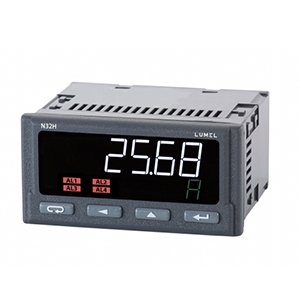
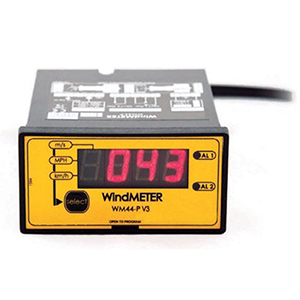
The TER WM44-P V3 Wind Display Meter is a compact industrial wind monitoring display designed for use with compatible TER anemometers and wind sensing equipment. Featuring a clear 3-digit display, two programmable alarm thresholds and a compact panel-mounted format, the WM44-P V3 provides operators with an immediate indication of measured wind speed while supporting alarm signalling and integration with industrial monitoring equipment.
Designed for installation in instrument panels, electrical cabinet doors and industrial enclosures, the WM44-P V3 provides a practical solution where wind speed information needs to be available directly to operators or maintenance personnel. Its compact 96 x 48 mm front format makes it particularly suitable for machinery control panels where installation space is limited.
The WM44-P V3 can be used with compatible TER wind sensing equipment, including products from the Paka and Vayu ranges. Depending on the selected system configuration, wind information can be obtained using conventional wired sensing or compatible RF communication, providing flexibility when designing wind monitoring systems for cranes, lifting equipment and other industrial applications.
With measurement capability up to 200 km/h, selectable engineering units, programmable alarm thresholds and industrial output options, the TER WM44-P V3 combines wind indication and alarm monitoring within a compact operator interface.
Compact Industrial Wind Speed Display
The WM44-P V3 is designed around a compact panel-mounted display format. Rather than requiring a large standalone enclosure, the unit can be incorporated directly into an instrument panel, electrical cabinet door or suitable industrial housing.
This provides system designers with considerable installation flexibility. Wind information can be positioned alongside other machine instrumentation, operator controls and status indicators, allowing personnel to view measured conditions from the same control location used to operate or supervise the equipment.
The compact design is particularly valuable in crane cabins, control panels and machinery enclosures where panel space may be limited. Despite its small dimensions, the WM44-P V3 combines real-time wind speed indication with configurable alarm functionality and external system interfaces.
Clear 3-Digit Wind Speed Indication
The TER WM44-P V3 uses a 3-digit numerical display to provide clear wind speed information to the operator. The numerical format allows measured conditions to be checked quickly without requiring interpretation of an analogue scale.
For machinery and industrial applications, immediate access to measured wind speed can support operational awareness. Operators can compare the displayed value with the wind limits and procedures established for the equipment and application.
The display is intended to provide measured wind information rather than independently determine whether equipment can continue operating. Applicable wind limits should always be established from equipment manufacturer instructions, engineering requirements, site procedures and appropriate risk assessments.
Selectable Wind Speed Units
The WM44-P V3 supports multiple wind speed engineering units, allowing the display to be configured according to the conventions used by the equipment, organisation or site.
Wind speed can be displayed in kilometres per hour (km/h), miles per hour (mph) or metres per second (m/s). This eliminates the need for operators to perform manual conversions between commonly used wind measurement units.
For Australian industrial and crane applications, kilometres per hour and metres per second are particularly useful, while the availability of miles per hour allows the same instrument platform to be applied in markets or equipment documentation using imperial units.
Wind Speed Measurement up to 200 km/h
The TER WM44-P V3 supports wind speed measurement up to 200 km/h when used with the appropriate compatible sensing equipment and configuration.
This corresponds to approximately 124 mph or 55.5 m/s, providing a substantial measurement range for industrial wind monitoring applications.
The wide measurement range allows the WM44-P V3 to be used across a variety of equipment and environmental monitoring applications where both normal operating winds and significantly stronger conditions may need to be indicated.
The suitability of the overall system depends on the selected anemometer, installation, signal configuration and environmental conditions. The complete wind monitoring system should therefore be specified according to the requirements of the intended application.
Published Measurement Accuracy of ±2%
TER specifies wind measurement accuracy of ±2% for the WM44-P V3 system under the applicable operating and configuration conditions.
Measurement accuracy is an important consideration in industrial wind monitoring because displayed values may be used by operators as part of established operating procedures. The overall quality of the measurement also depends on factors beyond the display itself, including the selected wind sensor, sensor condition and installation position.
An anemometer positioned behind a structural obstruction, for example, may measure local airflow that differs from the conditions affecting the wider machine or load. Correct sensor selection and positioning are therefore important when developing a complete wind monitoring installation.
Two Programmable Wind Alarm Thresholds
A major feature of the TER WM44-P V3 is its two programmable alarm thresholds. These allow the wind monitoring system to provide more than a simple numerical indication of current wind speed.
Alarm thresholds can be configured according to the requirements established for the application. Where appropriate, one threshold may be used as an initial warning level while the second can represent a higher alarm condition.
This staged approach can provide operators with additional awareness as wind conditions increase, allowing site procedures to define the appropriate response at each level.
The actual alarm values should not be selected arbitrarily. Wind thresholds should be based on the machinery manufacturer’s specifications, engineering assessment, load characteristics and established operating procedures.
Wind Speed Pre-Alarm and Alarm Monitoring
Using two independently programmable thresholds allows the WM44-P V3 to support a pre-alarm and alarm strategy where this is appropriate for the installation.
A lower threshold can provide advance warning that wind conditions are approaching a significant operating level. This can give personnel an opportunity to assess conditions and apply the site’s established procedures before the higher threshold is reached.
The second threshold can then provide another output when the corresponding programmed wind speed is reached.
How these outputs are used depends on the design of the overall system. They may be connected to compatible visual indicators, audible warning equipment, PLC inputs or other appropriately engineered monitoring equipment.
Configurable Alarm Behaviour
The WM44-P V3 provides configuration options that allow its alarm behaviour to be adapted to the requirements of the installation. This is useful because wind conditions can fluctuate rapidly, particularly during gusty weather.
Without appropriate configuration, a wind speed that repeatedly moves above and below an alarm threshold could result in frequent switching of the alarm output. Appropriate alarm logic can help provide a more useful response to changing conditions.
TER’s WM44-P V3 configuration allows alarm parameters to be established according to the intended monitoring strategy. System commissioning should ensure that these settings correspond with the operating procedures established for the machinery or site.
Two Programmable Relay Outputs
The WM44-P V3 provides two programmable relay outputs associated with its alarm functions. These outputs allow the measured wind condition to be communicated beyond the local display.
Relay outputs can provide discrete signals to compatible external equipment when programmed wind thresholds are reached. This enables the WM44-P V3 to form part of a wider industrial warning or monitoring arrangement rather than operating only as a standalone indicator.
For example, relay outputs may be incorporated into an appropriately designed system containing warning lights, audible indicators, PLC inputs or remote status equipment.
Any automatic machinery response based on wind measurement should be engineered specifically for the application. The presence of programmable relay outputs does not by itself make the WM44-P V3 a safety-rated control system.
Integration with Visual and Audible Warning Equipment
Wind alarms are most useful when the relevant personnel can recognise them clearly. The programmable outputs of the WM44-P V3 can be integrated with compatible external warning devices where required by the system design.
A visual indicator can provide a clear status signal in noisy industrial environments, while an audible warning may help attract attention where operators are not continuously watching the display.
Systems can also be designed to use different indications for different thresholds. A lower wind threshold might generate an initial warning, while a second threshold could provide a higher-level indication according to the established site procedure.
The selection and configuration of external warning equipment should consider the operating environment, visibility, ambient noise and required response from personnel.
Compatible with TER Paka Wind Sensors
The WM44-P V3 can be used as part of a TER wind monitoring system incorporating compatible Paka anemometers.
The Paka range is designed for industrial wind speed monitoring and includes configurations providing different electrical output methods. This allows a Paka sensing solution to be selected according to the architecture of the complete monitoring system.
When paired with an appropriate Paka sensor, the WM44-P V3 provides a convenient operator display for measured wind speed while its alarm functionality allows configured thresholds to be communicated to external equipment.
This combination is particularly relevant to crane and industrial applications where a robust field-mounted wind sensor needs to communicate with an operator display located within a panel or control enclosure.
Compatible with TER Vayu Wind Monitoring Equipment
The WM44-P V3 can also be used within TER wind monitoring systems incorporating compatible Vayu sensing equipment.
The Vayu family provides industrial wind measurement solutions intended for demanding machinery and environmental applications. Depending on the selected configuration, Vayu sensing equipment can provide the measurement information required by the associated display and monitoring system.
Using components from the same TER wind monitoring range allows system designers to configure sensing, indication and alarm functions around the requirements of the application.
Compatibility between the exact sensor version, signal type and WM44-P V3 configuration should always be confirmed when specifying the complete system.
Wired Wind Monitoring Configurations
Conventional wired sensing provides a straightforward approach to wind monitoring where suitable cabling can be installed between the anemometer and display.
A wired system can be particularly appropriate where the sensor and control panel are located on the same fixed structure and cable routing can be achieved without excessive complexity.
The actual input technology depends on the selected WM44-P V3 and sensor configuration. TER offers wind monitoring equipment supporting pulse and analogue signal arrangements, allowing the overall system to be configured according to the selected products.
Correct wiring, electrical protection and signal compatibility should be confirmed from the technical documentation for the exact components being installed.
RF Wireless Wind Monitoring Options
For installations where conventional signal cabling is difficult, TER provides compatible wind monitoring arrangements using RF communication.
The WM44-P V3 platform supports configurations using IEEE 802.15.4 communication in the 2.4 GHz ISM band. This provides an alternative method of transferring wind information between compatible TER equipment.
Wireless communication can be particularly useful on machinery or structures where long cable runs, moving equipment or installation constraints make conventional wiring less practical.
Actual RF performance depends on the installation environment. Large metal structures, buildings, machinery and other obstacles can influence radio propagation, so communication performance should be assessed for the intended site.
RF Communication Range
TER publishes maximum and typical communication ranges for the applicable RF configuration of the WM44-P V3.
For indoor or urban environments, the published maximum range is up to 60 metres, with a typical range of approximately 30 metres. For outdoor line-of-sight conditions, TER publishes a maximum range of up to 750 metres and a typical range of approximately 200 metres.
These figures should be treated as communication specifications under defined conditions rather than guaranteed distances for every installation. Physical obstructions, electromagnetic conditions, antenna position and surrounding metal structures can substantially affect actual range.
For crane and industrial installations in particular, an on-site assessment may be appropriate where reliable RF communication is critical to the monitoring system.
IEEE 802.15.4 Industrial Wireless Communication
The applicable wireless WM44-P V3 configuration uses IEEE 802.15.4 communication operating within the 2.4 GHz ISM frequency band.
TER specifies transmission power of 10 mW, equivalent to 10 dBm, together with receiver sensitivity of -100 dBm for the applicable wireless configuration.
This communication method allows compatible TER wind sensing equipment and display systems to exchange measurement information without requiring a conventional signal cable between the devices.
Wireless configuration should be selected with consideration for the installation environment and the communication requirements of the overall monitoring system.
4-20 mA Analogue Output
Applicable WM44-P V3 configurations provide a 4-20 mA analogue output, allowing the measured wind information to be transmitted to compatible external instrumentation.
The 4-20 mA standard is widely used throughout industrial automation and process instrumentation. Providing this output enables the wind monitoring system to interface with equipment such as PLC analogue inputs, remote displays and data acquisition systems.
TER specifies a maximum connectable impedance of 500 ohms and published analogue output accuracy of 1.5% for the applicable configuration.
This means the WM44-P V3 can serve not only as a local operator display but also as an interface for transmitting wind information to another part of the monitoring architecture.
Panel-Mounted Industrial Design
The WM44-P V3 is specifically suited to panel installation. Its approximately 96 x 48 mm front format follows the compact rectangular form commonly used for industrial panel instrumentation.
The enclosure extends behind the panel, allowing the display face to remain accessible to the operator while the electrical connections and associated wiring are contained within the cabinet or enclosure.
This configuration can provide a clean and professional installation within crane control panels, industrial machinery consoles and electrical cabinets.
When planning the panel layout, sufficient space should be allowed behind the instrument for the body, terminals, wiring and appropriate cable routing.
IP50 Protection for Panel Installations
The TER WM44-P V3 has a specified protection degree of IP50. This is an important distinction when comparing it with outdoor enclosure-style wind displays.
The WM44-P V3 is primarily intended for installation in instrument panels, electrical cabinets and suitable industrial enclosures. Where the surrounding environment requires greater protection against water or other contaminants, the complete panel or cabinet should provide the environmental protection required by the installation.
The IP50 specification should not be confused with the higher environmental protection provided by dedicated outdoor display enclosures such as other products within the TER wind monitoring range.
Correct enclosure selection is therefore an important part of designing a WM44-P V3 installation.
Wide Industrial Operating Temperature Range
The WM44-P V3 is specified for operation from -20°C to +70°C, supporting use across a broad range of industrial environments when installed within the appropriate enclosure.
This broad operating range is particularly useful for equipment located in non-climate-controlled machinery spaces, crane cabins, industrial cabinets and outdoor equipment enclosures where internal temperatures can vary considerably.
Environmental conditions should still be considered for the complete installation, including humidity, condensation, enclosure temperature and exposure to external contaminants.
24 Vdc and 230 Vac Power Options
TER documentation includes WM44-P V3 configurations for common industrial electrical supplies, including 24 Vdc and 230 Vac, 50-60 Hz.
A 24 Vdc version can integrate naturally with industrial control systems already using low-voltage DC power, while the 230 Vac configuration provides an alternative for installations where mains-level control power is available.
TER specifies power consumption below 3.5 W at 24 Vdc and below 3.5 VA at 230 Vac for the applicable configurations.
The exact power supply version should be selected when ordering and verified against the electrical design of the installation.
A Compact Interface for Industrial Wind Monitoring
The TER WM44-P V3 Wind Display Meter combines the essential functions required for straightforward industrial wind speed monitoring within a compact panel-mounted instrument.
Its 3-digit display gives operators immediate access to measured wind speed, while selectable km/h, mph and m/s units allow the indication to match the conventions used by the machinery or site.
Two programmable alarm thresholds provide the foundation for a staged wind warning strategy, while relay outputs allow alarm conditions to be communicated to compatible external equipment. Applicable 4-20 mA and RF configurations provide additional integration flexibility for more complex monitoring architectures.
With compatibility across TER’s Paka and Vayu wind monitoring ranges, measurement capability up to 200 km/h and a compact industrial panel format, the WM44-P V3 provides a versatile solution for cranes, lifting machinery and other industrial applications requiring reliable wind speed indication and alarm monitoring.
Configuring the TER WM44-P V3 Wind Display Meter
The TER WM44-P V3 Wind Display Meter is designed to provide configurable wind monitoring rather than simply displaying a fixed measurement. During installation and commissioning, the instrument can be configured to suit the measurement units, alarm requirements and system architecture of the application.
Correct configuration is particularly important in crane, lifting and industrial applications because wind alarm thresholds should correspond with established operating requirements. The WM44-P V3 provides the measurement and signalling functions required to communicate changing wind conditions, while the appropriate limits and operator responses must be determined from machinery manufacturer instructions, engineering requirements and site procedures.
Commissioning should therefore include confirmation of the connected wind sensor, selected measurement units, alarm thresholds, alarm timing behaviour, external outputs and displayed wind speed.
Programming Wind Speed Alarm Thresholds
The two programmable alarm thresholds are among the most important functions of the WM44-P V3. They allow different wind speed levels to generate separate output conditions, enabling a staged monitoring strategy where appropriate.
A lower threshold may be configured as an initial warning level, while the second threshold can represent a higher wind condition. This provides greater flexibility than a system using only one alarm point.
For example, site procedures may require personnel to become aware of increasing wind at the first threshold and take a different action if the second threshold is subsequently reached. The exact response depends entirely on the machinery and application.
Alarm values should never be selected simply because they are common settings used elsewhere. Equipment configuration, load geometry, exposed surface area and manufacturer requirements can all influence the permissible wind conditions for an operation.
Alarm Activation Delays
Wind does not normally increase in a perfectly steady manner. Gusts can cause measured wind speed to rise briefly above a programmed threshold before falling again.
The WM44-P V3 provides configurable alarm timing behaviour that can help prevent a very short transient from immediately generating the same response as a sustained high-wind condition.
An activation delay allows the monitoring system to require the threshold condition to remain present for the configured period before the associated alarm changes state.
This can provide a more useful indication in environments where short-duration fluctuations are common. The delay should nevertheless be selected carefully so that it remains appropriate to the operating requirements and risk controls established for the equipment.
Alarm Deactivation Delays
Similar considerations apply when wind speed falls below an alarm threshold. A short temporary reduction in wind speed does not necessarily indicate that conditions have stabilised.
Configurable alarm deactivation behaviour can prevent an alarm from immediately clearing during a brief reduction in measured wind speed.
This can help reduce repeated switching when conditions fluctuate around a programmed threshold and can provide a more stable alarm indication to operators or connected equipment.
The final configuration should reflect the operating procedures established for the installation rather than relying solely on the default instrument settings.
Using Two Alarm Levels Effectively
The availability of two alarm thresholds allows the WM44-P V3 to support a structured approach to wind monitoring.
Where appropriate, Alarm 1 can be configured as an advance warning and Alarm 2 as a higher-level wind condition. The outputs can then be connected to compatible indicators or monitoring equipment according to the system design.
For example, different visual indicators may be used to distinguish normal, warning and higher wind conditions. Alternatively, one alarm may be transmitted to an operator indication while another is communicated to a PLC or supervisory system.
The WM44-P V3 provides the electrical signalling capability, but the meaning assigned to each threshold and the required operator response should be documented within the site’s operating procedures.
Relay Outputs for External Wind Alarms
The programmable relay outputs allow the WM44-P V3 to communicate alarm conditions to external industrial equipment.
Relay contacts provide a convenient method of generating discrete signals that can be interpreted by PLC digital inputs, annunciators, warning devices and other compatible equipment.
This enables the WM44-P V3 to operate as part of a broader wind monitoring architecture rather than requiring personnel to continuously watch the numerical display.
Electrical loading of the relay contacts should remain within the ratings specified for the instrument, and suitable interface components should be used where the connected load exceeds those ratings or requires additional isolation.
Visual Wind Warning Systems
A common method of extending a wind monitoring display is to connect it to external visual indicators. This can make wind status visible to personnel who are not positioned directly in front of the WM44-P V3.
For crane and lifting applications, visual indicators may be positioned where operators or other relevant personnel can readily identify a change in wind status.
Where two alarm levels are configured, separate indications can provide a simple representation of increasing wind conditions. The specific colours, meanings and required actions should be established within the site’s procedures and applied consistently.
Visibility should be assessed under the actual ambient lighting conditions of the installation.
Audible Wind Alarm Integration
Audible warning equipment can also be connected through an appropriately designed external circuit where an audible indication is required.
This can be useful in locations where personnel may not continuously observe the display or visual indicators. However, industrial sites can have high background noise levels, so the suitability and audibility of any warning device should be assessed for the intended environment.
Where external alarms are used, personnel should understand what each indication means and what action is required when it occurs.
Connecting the WM44-P V3 to a PLC
The WM44-P V3 can be integrated into industrial automation systems using its available outputs and compatible configurations.
Alarm relay outputs can be connected to appropriate PLC digital inputs, allowing the controller to detect when programmed wind thresholds have been reached.
Applicable versions also provide a 4-20 mA analogue output. This allows the measured wind information to be transmitted to a compatible PLC analogue input where it can be scaled, displayed, recorded or incorporated into supervisory monitoring.
This combination of discrete alarm outputs and analogue measurement can provide both immediate threshold information and a continuous representation of wind speed to the external system.
4-20 mA Output for Continuous Wind Monitoring
The 4-20 mA output available on applicable WM44-P V3 configurations provides a standard industrial interface for communicating wind measurement information.
Unlike a relay output, which represents a discrete alarm state, an analogue current loop provides a continuously varying signal corresponding to the measured parameter.
A PLC, remote display or data acquisition system can therefore receive wind information and use it for trending, operator displays or other monitoring functions.
TER specifies a maximum connectable impedance of 500 ohms for the applicable analogue output, together with published output accuracy of 1.5%.
Integrating Wind Data into SCADA and Monitoring Systems
Where the WM44-P V3 is connected to a PLC, its wind measurement can subsequently be incorporated into an HMI or SCADA system.
This can allow wind speed to be displayed alongside other machine or site information. Historical trends can also be generated where the external automation system includes appropriate data logging capability.
Alarm states from the WM44-P V3 may similarly be displayed within the supervisory interface, providing personnel with a centralised view of wind conditions and other equipment status information.
The design of the external control and monitoring system should account for signal scaling, alarm handling, communications and appropriate response to sensor or wiring faults.
Wired Anemometer Integration
Wired wind monitoring remains an effective option where a suitable cable route can be established between the field-mounted sensor and WM44-P V3.
A compatible TER anemometer can be mounted at the required measurement location while the display is installed within a protected control panel or enclosure.
Wired arrangements can provide a straightforward architecture with no dependency on radio propagation. They are therefore well suited to fixed machinery and structures where cable installation is practical.
The exact sensor signal and electrical connections depend on the selected WM44-P V3 and anemometer configuration. The technical documentation for both components should be checked before installation.
TER Paka Anemometer Integration
The Paka range provides compact industrial wind sensing options that can form part of a WM44-P V3 monitoring system when the appropriate compatible configurations are selected.
A Paka wind speed sensor can be installed at a representative measurement position while the WM44-P V3 provides the operator-facing wind indication and programmable alarm functions.
This arrangement separates the measurement point from the display location. The anemometer can therefore be positioned where it is exposed to relevant airflow, while the display remains within a convenient and protected control environment.
Correct compatibility between the selected Paka sensor output and WM44-P V3 input should be confirmed during product selection.
TER Vayu Wind Sensor Integration
Compatible Vayu wind sensing equipment can also be incorporated into TER wind monitoring arrangements using the WM44-P V3.
The appropriate Vayu configuration should be selected according to the required measurement technology and communication method. This allows system designers to develop a wind monitoring installation around the physical and electrical requirements of the machinery.
Where the sensor needs to be installed on a moving or difficult-to-wire structure, compatible wireless options may provide an alternative to a conventional signal cable.
Wireless Wind Monitoring with RF Communication
RF communication can simplify installations where routing a signal cable from the anemometer to the display would be difficult or impractical.
Applicable TER wireless configurations use IEEE 802.15.4 communication within the 2.4 GHz ISM band. Compatible sensor equipment can transmit wind information to the receiving display without requiring a direct measurement cable between the two devices.
This can be particularly useful on cranes and other large machinery where movement, distance or structural complexity makes conventional wiring challenging.
Wireless communication should still be treated as an engineered part of the installation. The environment between the transmitting and receiving equipment can significantly affect performance.
Understanding TER RF Range Specifications
TER publishes maximum and typical RF communication distances for applicable WM44-P V3 wireless configurations.
In indoor or urban environments, the published maximum distance is up to 60 metres, with a typical range of approximately 30 metres. Under outdoor line-of-sight conditions, the published maximum is up to 750 metres, with a typical range of approximately 200 metres.
These values should not be interpreted as guaranteed communication distances for every site. Metal structures, buildings, machinery, antenna orientation and electromagnetic conditions can all influence actual performance.
A crane installation, for example, may contain large steel structures that affect radio propagation as the machine moves. The wireless arrangement should therefore be assessed under realistic operating conditions.
RF Installation Around Metal Structures
Industrial machinery frequently contains substantial amounts of steel, and this can influence 2.4 GHz wireless communication.
Where possible, transmitting and receiving equipment should be positioned to minimise unnecessary shielding by large metal structures. Antenna placement should also follow the recommendations for the selected TER equipment.
Changes in machinery position should be considered during commissioning. A radio link that performs well in one machine position should be checked across the relevant operating range where movement can alter the path between devices.
Selecting Wired or Wireless Wind Monitoring
The choice between wired and wireless communication depends on the physical and operational characteristics of the installation.
Wired monitoring may be preferable where the sensor and display are relatively close and cable routing is straightforward. It provides a conventional physical signal path and can simplify troubleshooting.
Wireless monitoring can be advantageous where the sensor is positioned on moving equipment, at significant distance or in a location where installing new signal cabling would be difficult.
Neither method is automatically better for every application. Product selection should consider machinery movement, installation cost, maintenance access, electromagnetic environment and the required reliability of the complete monitoring system.
Panel Installation of the WM44-P V3
The WM44-P V3 is designed for integration into an industrial panel. The approximately 96 x 48 mm front format provides a compact operator interface while the body and electrical connections are positioned behind the panel.
The instrument should be installed where the display can be viewed clearly during normal operation. Viewing position, panel height and surrounding controls should be considered when determining its location.
Sufficient clearance should also be provided behind the panel for the instrument body, terminals and wiring. Cables should not be forced into tight bends or positioned where they place unnecessary mechanical stress on electrical connections.
Protecting the IP50 Display
The WM44-P V3 has a specified protection degree of IP50. Consequently, the environmental protection of the complete installation may depend substantially on the panel, cabinet or enclosure into which the display is installed.
Where the machinery is outdoors or exposed to moisture, dust or industrial contamination, an enclosure with an appropriate environmental rating should be selected.
This is an important distinction from outdoor-style wind displays supplied within their own higher-rated environmental enclosure. The WM44-P V3 is specifically suited to protected panel installation.
24 Vdc Power Supply Configuration
The 24 Vdc WM44-P V3 configuration is particularly convenient for industrial machinery that already uses a low-voltage DC control supply.
Nominal 24 Vdc systems are common in PLC panels, crane control systems and industrial automation equipment, allowing the display to be incorporated into the existing electrical architecture where appropriate.
The supply should be suitably regulated and protected according to the electrical requirements of the installation. TER specifies power consumption below 3.5 W for the applicable 24 Vdc configuration.
230 Vac Power Supply Configuration
A 230 Vac, 50-60 Hz configuration is also available for installations where mains-level control power is the preferred supply.
TER specifies power consumption below 3.5 VA for the applicable 230 Vac version.
The correct supply version should be established during product selection. Electrical installation should be carried out by appropriately qualified personnel and include the required isolation and protection for the installation.
Wind Sensor Positioning
Even a correctly configured display cannot compensate for a poorly positioned anemometer. Sensor location is therefore one of the most important considerations when installing a WM44-P V3 wind monitoring system.
Buildings, machinery, crane structures and other obstacles can create shielding, turbulence and local acceleration of airflow. A sensor mounted immediately behind a structural member may therefore measure conditions that are not representative of the wind affecting the wider equipment.
The measurement point should be selected so that the anemometer is exposed to airflow relevant to the application while remaining appropriately protected from physical damage.
Crane Anemometer Positioning
For crane applications, wind speed may vary with height and surrounding structures. An anemometer positioned near ground level may not represent the wind conditions experienced by elevated crane components or suspended loads.
The appropriate sensor position depends on the crane type, structure, working height and manufacturer’s requirements.
Mounting hardware should be sufficiently rigid to maintain the sensor position, and the anemometer should remain unobstructed throughout the relevant crane movements.
Where wireless communication is used, the selected mounting location should also provide a suitable RF path to the receiving equipment.
Commissioning the WM44-P V3
Commissioning should confirm that the complete wind monitoring system operates correctly before it is relied upon for operational information.
The connected anemometer should be checked for correct installation and free movement. Wiring or RF communication should then be verified before confirming that the WM44-P V3 responds correctly to the sensor.
The displayed measurement units should be checked, followed by the programmed alarm thresholds and any associated timing parameters.
External relay indications and analogue outputs should also be tested where used. This helps confirm that the entire signal path from the wind sensor through the WM44-P V3 to the connected monitoring equipment functions as intended.
Testing Wind Alarm Functions
Alarm testing should form part of commissioning and subsequent maintenance procedures where appropriate.
The objective is to confirm that each configured threshold generates the intended response and that connected external equipment correctly recognises the alarm condition.
Testing should also verify that activation and deactivation behaviour corresponds with the programmed settings.
Where alarms form part of site procedures, personnel should understand the meaning of each indication and the required response.
Inspection and Maintenance Considerations
Periodic inspection of the complete wind monitoring system can help maintain dependable measurement performance.
The WM44-P V3 should be checked for display readability, secure mounting and sound electrical connections. The surrounding enclosure should remain in good condition and continue to provide the environmental protection required by the installation.
The remote anemometer should also be inspected for contamination, physical damage and unrestricted movement. Sensor mounting hardware and cables should remain secure.
Wireless systems should additionally be checked for reliable communication under normal machinery operating conditions.
A Flexible Wind Monitoring Interface for Industrial Systems
The TER WM44-P V3 provides significantly more functionality than a basic wind speed indicator. Its combination of local numerical display, two configurable alarm levels, relay outputs and applicable analogue and RF options allows it to operate as an interface between field-mounted wind sensing equipment and the wider industrial monitoring system.
It can provide operators with immediate wind information while simultaneously communicating alarm states or measurement data to compatible external equipment.
The ability to combine the display with TER Paka and Vayu wind sensing equipment provides further flexibility when developing wired or wireless wind monitoring solutions.
For cranes, lifting equipment and other industrial machinery, this modular approach allows sensing, display, alarm and system integration requirements to be addressed using components selected around the needs of the application.
Industrial Applications for the TER WM44-P V3 Wind Display Meter
The TER WM44-P V3 Wind Display Meter provides a compact wind monitoring interface for industrial applications where operators need clear access to measured wind speed and programmable alarm information. Its panel-mounted design makes it particularly suitable for integration into machinery control panels, crane cabins, electrical cabinets and industrial operator stations.
When combined with compatible TER wind sensing equipment, the WM44-P V3 can form part of a complete wind monitoring system for cranes, lifting equipment, material handling machinery and other exposed industrial installations. Wired and compatible RF configurations provide flexibility when determining how the field-mounted sensor communicates with the operator display.
The WM44-P V3 provides measurement and alarm information that can support established operating procedures. It does not independently determine whether machinery or a lifting operation is safe to operate. Wind limits and required responses should be established from equipment manufacturer documentation, engineering requirements, site procedures and appropriate risk assessments.
Overhead Travelling Crane Wind Monitoring
Overhead travelling cranes operating in outdoor or partially exposed environments can encounter changing wind conditions throughout the working day. A dedicated wind monitoring system allows measured wind speed to be made available directly to the crane operator or other responsible personnel.
The WM44-P V3 is particularly convenient for this type of installation because its compact panel format allows the display to be integrated into an existing crane control panel or operator cabin. A compatible TER anemometer can be installed at an appropriate measurement location, while the display remains protected within the control environment.
Two programmable alarm thresholds provide additional monitoring capability. Where appropriate, one threshold can be configured as an initial warning and the second as a higher wind condition, with the resulting relay outputs connected to compatible external equipment.
Gantry Crane Wind Monitoring
Gantry cranes are frequently installed outdoors in manufacturing facilities, storage yards, container handling areas and other material handling environments. Their exposed structures can make wind monitoring an important consideration in the overall operating strategy.
A compatible anemometer can be installed at a representative position on the crane, with measured wind speed displayed on the WM44-P V3 at the operator station or control panel.
Where conventional cabling between the sensor and display is practical, a wired configuration can provide a straightforward installation. Where machinery movement or structural complexity makes signal cabling difficult, a compatible TER RF configuration may provide an alternative.
Tower Crane Wind Speed Monitoring
Tower cranes operate at elevated heights where wind conditions can differ significantly from those experienced at ground level. Measuring wind at an appropriate location on the crane can therefore provide more relevant information to the operator than relying solely on general ground-level observations.
The TER WM44-P V3 provides a compact operator interface capable of displaying wind speed in km/h, mph or m/s. This allows the measurement units to be selected according to the crane documentation and site requirements.
Correct anemometer positioning is particularly important on tower cranes. The sensor should be installed according to the requirements of the equipment and application, taking account of structural airflow disturbance, maximum operating height and physical protection of the sensor.
Harbour Cranes and Port Applications
Harbour cranes and port handling equipment can operate in highly exposed environments where wind conditions change rapidly. Large crane structures and suspended or handled loads may present significant exposed surface areas, making reliable wind information valuable to operating personnel.
A WM44-P V3 system can provide continuous local indication of measured wind speed while its programmable alarm outputs communicate configured threshold conditions to compatible external warning or monitoring equipment.
Where the operator station already contains industrial instrumentation, the compact panel-mounted format allows the wind display to be incorporated alongside other machinery information.
Wireless configurations may also be useful where the anemometer and display are located on different parts of large moving equipment and conventional signal cabling would be difficult to install.
Construction and Lifting Equipment Applications
Wind conditions can be relevant to a wide range of lifting and construction activities, particularly where equipment, structures or loads have substantial exposed surface areas.
The WM44-P V3 provides objective wind speed measurement information that can be used alongside established operating procedures. Rather than relying only on subjective assessment of environmental conditions, personnel can view the measured wind speed directly.
Programmable alarm levels provide additional awareness as conditions change, while external outputs allow wind information to be incorporated into a broader site or machine monitoring arrangement where required.
Wind Turbine and Renewable Energy Applications
Wind measurement also has applications beyond lifting equipment. Industrial wind instrumentation can be incorporated into renewable energy installations and other infrastructure where environmental conditions need to be monitored.
The WM44-P V3 can provide a compact local indication where compatible TER wind sensing equipment is installed. Applicable analogue output configurations can also allow measured information to be transmitted to external industrial monitoring equipment.
The suitability of the WM44-P V3 for a particular renewable energy application should be assessed against the required measurement range, system architecture and environmental protection requirements.
Hangars and Large Industrial Buildings
TER wind monitoring equipment can also be applied around hangars and large industrial buildings where significant openings and exposed areas can make wind information useful to site personnel.
A compatible wind sensor can be positioned externally while the WM44-P V3 remains installed within a protected internal control panel or operator station.
This separation between the field measurement point and operator display is one of the practical advantages of an industrial wind monitoring system. The sensor can be positioned where representative airflow can be measured without requiring the display itself to be installed in the same exposed location.
Industrial Machinery and Process Sites
The WM44-P V3 is not limited exclusively to crane installations. Its compact panel design makes it suitable for other industrial machinery and process applications requiring wind speed indication and configurable alarms.
Potential applications include exposed machinery, outdoor material handling systems, industrial yards and infrastructure where measured wind information is relevant to equipment operation or site procedures.
The availability of relay outputs and applicable 4-20 mA analogue signalling also allows the display to interact with broader industrial monitoring architectures.
WM44-P V3 or WM44-EV011 V3?
TER offers different display configurations to suit different installation requirements, and the WM44-P V3 and WM44-EV011 V3 provide two distinct approaches to wind monitoring.
The WM44-P V3 is a compact panel-mounted instrument featuring a 3-digit wind speed display and two programmable alarm levels. Its IP50 protection makes it particularly appropriate for installation within a suitable control panel, electrical cabinet or protected operator environment.
The WM44-EV011 V3, by comparison, uses a larger backlit 128 x 64 pixel graphical LCD and is housed within an IP65 enclosure. It can provide wind speed and direction information in appropriate configurations and offers additional functionality such as historical graphs and data logging.
The correct display therefore depends on the requirements of the application rather than one model simply replacing the other.
When to Choose the WM44-P V3
The WM44-P V3 is a strong choice where the primary requirement is clear wind speed indication and configurable alarm monitoring within an existing industrial panel.
Its compact dimensions make it suitable where panel space is limited, and its straightforward numerical indication allows wind speed to be viewed quickly.
Applications requiring two programmable alarm levels, external relay signalling and integration into an existing machine control panel can benefit from the focused functionality of the WM44-P V3.
It may also be particularly appropriate where the equipment already has an environmentally protected enclosure and there is no requirement for a separate outdoor display housing.
When to Consider the WM44-EV011 V3
The WM44-EV011 V3 may be more appropriate where a larger graphical display, wind direction indication, historical graphs, data logging or an IP65 display enclosure is required.
Its graphical interface provides additional information beyond the compact numerical presentation of the WM44-P V3, making it suitable for installations requiring more comprehensive wind monitoring functionality.
Understanding these differences allows the TER display to be selected around the actual application rather than specifying unnecessary functionality or an unsuitable enclosure format.
Choosing the Correct TER Wind Sensor
The display is only one component of the complete wind monitoring system. An appropriate TER wind sensor must also be selected according to the measurement, output and installation requirements.
Compatible Paka and Vayu wind sensing products provide options for industrial applications. Selection should consider the required wind measurement, sensor output, wired or wireless communication, installation environment and mounting position.
Where wind direction is also required, the system architecture should include appropriate directional sensing and a display or monitoring interface capable of presenting that information.
Choosing Between Wired and RF Communication
A wired configuration can provide a straightforward solution where the anemometer and display can be connected using an appropriate protected cable route. This is often attractive for fixed structures or machinery where installation access is readily available.
RF communication can provide an alternative where machinery movement, distance or physical complexity makes direct signal wiring difficult.
The wireless option should be evaluated in the actual operating environment because steel structures, machinery positions and other obstacles can influence radio propagation.
For critical monitoring applications, commissioning should verify dependable communication throughout the relevant equipment operating range.
Importance of Correct Anemometer Positioning
Wind monitoring accuracy depends heavily on the position of the sensing equipment. Even a high-quality anemometer may provide unrepresentative information if it is installed in an area affected by significant airflow disturbance.
Buildings, crane structures, walls and machinery can create turbulence, shielding and local acceleration. Sensor positioning should therefore be considered as part of the engineering of the complete wind monitoring system.
For elevated equipment, the sensor should ideally measure conditions relevant to the machinery rather than relying on a convenient ground-level location that may experience substantially different wind.
Using Wind Alarms as Part of Site Procedures
The two programmable alarm levels of the WM44-P V3 are most effective when they are integrated into clearly defined operating procedures.
Personnel should understand what each alarm means, the wind threshold associated with it and the required response. This is particularly important where the first threshold is used as an advance warning and the second represents a higher-level condition.
Alarm thresholds should be based on appropriate equipment manufacturer information, engineering assessment and site requirements rather than generic wind values.
Where the characteristics of the load can influence permissible wind conditions, site procedures should also account for factors such as load dimensions and exposed surface area.
Inspection of the WM44-P V3 Display
The WM44-P V3 should be included in the routine inspection program for the wind monitoring system. The display should remain clearly readable and securely mounted within the panel.
Electrical terminals and wiring should remain secure, and the surrounding enclosure should continue to provide the environmental protection required by the installation.
Any external warning devices connected to the relay outputs should also be tested periodically to confirm that the intended alarm indication remains operational.
Anemometer Inspection and Maintenance
The remote wind sensor should be inspected according to the requirements of the selected TER model and the conditions of the installation.
Moving sensor components should remain unobstructed, while mounting hardware should remain secure. Accumulated contamination, physical damage or nearby modifications to the machinery can affect the quality of the measurement.
Cables should be checked where accessible for damage or deterioration. Wireless systems should be checked for reliable communication, particularly where machinery modifications or new structures may have altered the RF environment.
Periodic Wind Alarm Testing
Periodic testing of the alarm system can help verify that the complete measurement and signalling chain continues to operate correctly.
Testing should confirm the behaviour of both alarm thresholds and any connected external equipment. Where activation or deactivation delays are configured, their operation should also be verified.
The test procedure should be appropriate to the installation and avoid creating unsafe machinery conditions simply to generate an alarm.
Benefits of a Dedicated Industrial Wind Display
A dedicated wind display gives operators direct access to environmental information without requiring them to navigate through a general-purpose control or supervisory system.
The WM44-P V3 presents wind speed through a clear 3-digit numerical indication and allows the preferred km/h, mph or m/s measurement unit to be selected.
Two programmable alarm thresholds extend the instrument beyond simple indication, while relay outputs allow wind conditions to be communicated to other equipment.
Applicable 4-20 mA and RF configurations provide further flexibility for integration into industrial monitoring systems.
Why Choose the TER WM44-P V3?
The TER WM44-P V3 combines the functionality required for industrial wind speed indication with a compact panel-mounted format.
Its measurement capability up to 200 km/h, selectable engineering units, two programmable alarm thresholds and external signalling options make it suitable for a broad range of wind monitoring installations.
Compatibility with appropriate TER Paka and Vayu sensing equipment enables the display to form part of a coordinated wind monitoring system using components designed for industrial applications.
The availability of wired and compatible wireless arrangements also gives system designers flexibility when adapting wind monitoring to existing machinery or developing a new installation.
TER Wind Monitoring Equipment from Control Devices
Control Devices supplies TER wind monitoring products for Australian crane, lifting, material handling and industrial applications, including the WM44-P V3 Wind Display Meter and compatible TER wind sensing equipment.
Control Devices can assist customers with product selection when determining the appropriate wind display, sensor, electrical supply and communication configuration for the intended installation.
When enquiring about a WM44-P V3 system, useful information includes the type of machinery, required wind measurement range, preferred measurement units, available electrical supply, proposed sensor position, distance between the sensor and display, alarm requirements and whether wired or RF communication is preferred.
This information can help identify an appropriate combination of TER display and sensing equipment for the application.
Building a Complete TER Wind Monitoring System
A complete industrial wind monitoring installation involves more than selecting a display. The sensor, mounting arrangement, communication method, operator interface, alarm thresholds and maintenance requirements should all be considered together.
The WM44-P V3 provides the operator-facing element of this system, displaying measured wind speed and providing programmable alarm outputs. Compatible Paka or Vayu equipment can provide the field measurement, while external warning or automation equipment can receive the display’s alarm or analogue signals where required.
This modular approach allows the system to be configured according to the needs of the machinery rather than relying on a one-size-fits-all arrangement.
TER WM44-P V3 Wind Display Meter – Compact Industrial Wind Monitoring
The TER WM44-P V3 Wind Display Meter provides a compact and versatile solution for industrial applications requiring clear wind speed indication and programmable alarm monitoring.
Its panel-mounted 96 x 48 mm format makes it particularly suitable for crane cabins, electrical cabinets and industrial operator panels where space is limited. A clear 3-digit display provides immediate wind speed information in selectable km/h, mph or m/s units, while measurement capability extends to 200 km/h when used within an appropriate compatible system.
Two programmable alarm thresholds allow the instrument to support staged wind monitoring strategies, while relay outputs provide a practical interface to compatible visual warnings, audible indicators, PLC inputs and other external equipment.
Applicable WM44-P V3 configurations provide additional integration options including 4-20 mA analogue output and IEEE 802.15.4 RF communication, enabling the wind monitoring architecture to be adapted to the physical and electrical requirements of the installation.
Compatibility with TER Paka and Vayu wind sensing equipment allows the WM44-P V3 to form part of a coordinated industrial wind monitoring solution for overhead travelling cranes, gantry cranes, tower cranes, harbour cranes, lifting equipment and other exposed industrial machinery.
With its compact panel format, broad -20°C to +70°C operating temperature range, selectable 24 Vdc or 230 Vac supply configurations and focused wind alarm functionality, the WM44-P V3 provides a practical interface between field wind measurement and the operator.
Contact Control Devices for further information, technical assistance and product selection support for the TER WM44-P V3 Wind Display Meter, compatible TER Paka and Vayu wind sensors and complete industrial wind monitoring solutions.