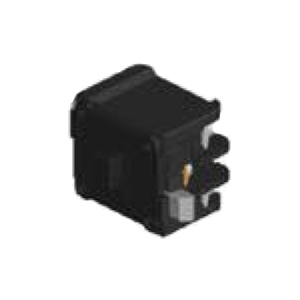

Description
TER PRSL0508PI 1-Speed 3NC Switch for Mushroom Pushbutton
The TER PRSL0508PI is a 1-speed, 3NC switch designed for use with mushroom pushbutton arrangements in compatible TER NPA-CP pendant control stations. Developed as part of TER’s industrial direct-control pendant system, the PRSL0508PI provides three normally closed electrical contacts within a compact switching component intended for demanding machinery control applications.
TER identifies the PRSL0508PI specifically within NPA-CP configurations using a latched mushroom pushbutton. The switch arrangement provides three normally closed contact circuits, allowing the mushroom actuator to operate multiple NC contacts through a single switching mechanism. This makes accurate part identification particularly important when maintaining, repairing or refurbishing an existing TER NPA-CP pendant.
For OEMs, maintenance departments, crane and hoist service companies, system integrators and industrial equipment repairers, the PRSL0508PI provides a manufacturer-specific replacement switch for restoring compatible NPA-CP mushroom pushbutton assemblies while maintaining the intended TER switching configuration.
TER Part Number PRSL0508PI
The complete manufacturer part number for this switch is TER PRSL0508PI.
Using the exact TER part number is important when sourcing replacement switches because the NPA and NPA-CP pendant ranges use several different switching components with different contact arrangements, operating stages and intended actuator combinations.
A switch that appears mechanically similar should not automatically be considered electrically interchangeable. The contact configuration and compatibility with the installed actuator and pendant must also be confirmed.
1-Speed Switch Operation
TER specifies PRSL0508PI as a 1-speed switch.
In this context, the switch provides a single operating stage associated with movement of the compatible mushroom pushbutton actuator. It should not be confused with the one-speed and two-speed directional switches used elsewhere within NPA-CP pendant configurations.
The one-speed designation is therefore an important part of the PRSL0508PI product identification.
Three Normally Closed Contacts
The defining electrical characteristic of PRSL0508PI is its 3NC contact configuration.
NC means normally closed. In the switch’s normal, non-operated state, each normally closed contact path is closed according to the intended switching arrangement. Operation of the associated mushroom pushbutton causes the relevant NC contacts to change state through the switch mechanism.
Providing three NC contacts allows a single actuator arrangement to interact with three separate normally closed circuits where required by the machine’s electrical design.
PRSL0508PI Contact Terminal Identification
TER’s NPA-CP switching diagram identifies the three normally closed contact pairs of PRSL0508PI as 11-12, 21-22 and 31-32.
These terminal numbers provide technicians with a clear reference when identifying the three contact circuits during installation, inspection, fault diagnosis or replacement.
Connections should always be verified against the applicable machine wiring diagram before conductors are disconnected or reconnected.
Contact Pair 11-12
Terminals 11 and 12 form the first normally closed contact pair identified in the TER PRSL0508PI switching diagram.
The actual function assigned to this contact depends on the electrical design of the machine or pendant configuration.
Technicians should therefore avoid assuming the purpose of the contact from its terminal number alone.
Contact Pair 21-22
Terminals 21 and 22 form the second normally closed contact pair.
This provides another independent NC circuit operated through the same PRSL0508PI switching mechanism.
Correct conductor identification is important when replacing the switch so that the original circuit arrangement is maintained.
Contact Pair 31-32
Terminals 31 and 32 form the third normally closed contact pair identified by TER.
Together with 11-12 and 21-22, this gives the PRSL0508PI its three normally closed contact configuration.
All three circuits should be checked during electrical testing following replacement or refurbishment.
Designed for Mushroom Pushbutton Applications
The PRSL0508PI is specifically associated with mushroom pushbutton applications within the TER NPA-CP pendant family.
The mushroom actuator provides the operator interface, while PRSL0508PI performs the corresponding electrical switching function behind the actuator.
These components should be considered separately when ordering spare parts because replacing the switch does not necessarily require replacement of a serviceable actuator, and replacing the actuator alone does not correct an internal switch fault.
Used with the Latched Mushroom Pushbutton
TER’s NPA-CP configuration diagrams show PRSL0508PI paired with a latched mushroom pushbutton.
A latched mushroom actuator remains mechanically engaged after operation until it is intentionally reset according to its design.
The PRSL0508PI provides the three normally closed electrical contact paths associated with this actuator arrangement.
Switch and Actuator Are Separate Components
It is important to distinguish the PRSL0508PI switch from the mushroom pushbutton actuator itself.
The switch is the internal electrical component. The mushroom pushbutton is the operator-actuated mechanical component used to operate the switch.
This distinction is particularly useful during fault diagnosis because an operating problem can originate from either the actuator, the switch, the wiring or another part of the machine-control circuit.
TER NPA-CP Pendant Compatibility
The PRSL0508PI is identified for use in compatible TER NPA-CP pendant control stations.
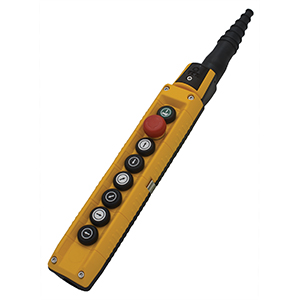
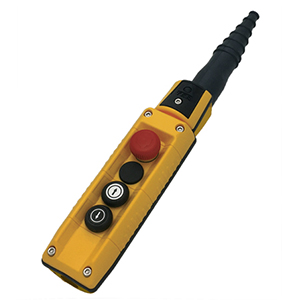
The NPA-CP is TER’s direct-control pendant family, available in configurations with different numbers of actuators and switching arrangements.
PRSL0508PI appears within TER NPA-CP configuration diagrams where a latched mushroom pushbutton and three normally closed contacts are required.
Understanding the TER NPA-CP
The NPA-CP is an industrial pendant control station developed for direct control of machinery.
TER offers the NPA-CP in configurations from two to eight actuators, allowing the control station to be adapted to different machine functions.
Available control arrangements include one-speed and two-speed switching configurations, together with mushroom pushbuttons and other components selected according to the application.
Direct-Control Pendant Applications
The NPA-CP differs from auxiliary-control pendant systems because it is designed for direct-control applications.
This makes accurate switch selection especially important. Replacement components must correspond with the electrical arrangement originally engineered for the machine.
PRSL0508PI should therefore be selected according to the installed NPA-CP configuration and applicable electrical documentation.
PRSL0508PI Versus Standard NPA Switches
TER’s standard NPA auxiliary-control pendant family uses a different range of switch components.
For example, other TER references are available with 1NC, 1NO, multi-contact and multi-stage arrangements for standard NPA applications.
PRSL0508PI should not be substituted simply on the basis that another switch fits a TER pendant. Its 1-speed, 3NC arrangement and NPA-CP mushroom pushbutton application should be confirmed.
Why the 3NC Configuration Matters
The three normally closed contacts are fundamental to the electrical function of PRSL0508PI.
A replacement switch with a different number or type of contacts could alter the machine-control circuit and should not be treated as equivalent without proper engineering verification.
Maintaining the original 3NC configuration helps preserve the intended circuit arrangement of compatible NPA-CP installations.
Normally Closed Contact Operation
A normally closed contact provides electrical continuity in its normal state and changes state when the switch is actuated.
In PRSL0508PI, three separate NC contact paths are operated through the mushroom pushbutton switching arrangement.
The exact way those contacts are incorporated into the machine circuit depends on the original equipment design.
Multiple Circuits from a Single Actuator
The three-contact design allows one mushroom actuator to influence multiple circuits simultaneously through PRSL0508PI.
This can be useful in machine-control architectures requiring several normally closed paths to change state from one operator action.
The purpose of each individual circuit should always be determined from the machine wiring diagram rather than inferred from the switch alone.
Machine-Specific Circuit Functions
PRSL0508PI defines the switch contact arrangement but does not define how every machine manufacturer uses those contacts.
Different OEMs can integrate the three NC contacts into their electrical designs according to the requirements of the equipment.
This is why wiring documentation remains essential during replacement and troubleshooting.
Use in Emergency-Stop Arrangements
TER shows PRSL0508PI with a latched mushroom pushbutton in NPA-CP configurations, and TER identifies an emergency-stop mushroom pushbutton option for the complete NPA-CP family.
However, the PRSL0508PI switch by itself should not be described as a complete emergency-stop device or complete machine safety function.
An emergency-stop function depends on the complete actuator, switching arrangement, machine circuitry, control architecture and applicable machinery design.
Emergency Stop Is a Complete Function
A machine emergency-stop system involves more than an individual contact block.
The operator actuator, contacts, wiring, control devices and final machine response must work together to achieve the required function.
PRSL0508PI should therefore be specified accurately as a 1-speed 3NC switch for the compatible mushroom pushbutton arrangement rather than being presented as an independent emergency-stop system.
Replacement in Existing Emergency Mushroom Assemblies
Where PRSL0508PI is being replaced within an existing emergency mushroom arrangement, the complete function should be tested after maintenance.
Testing should verify both mechanical actuator operation and the resulting electrical response of all three contact circuits.
The machine should not return to normal service until the applicable control function has been verified.
TER NPA-CP Switch Technical Specifications
TER publishes technical specifications for the switches used within the NPA-CP direct-control family.
These family-level specifications include utilisation categories AC3 and AC4, with AC23B applying to the specified PRSL508PI configuration, together with a rated operational power of 3 kW, rated thermal current of 20 A and rated insulation voltage of 660 Vac.
These values should be interpreted in the context of the applicable NPA-CP switching arrangements and TER documentation rather than automatically treated as unrestricted ratings for every possible PRSL0508PI application.
Rated Operational Power
TER specifies rated operational power of 3 kW within the technical specifications for the NPA-CP switching system.
The actual electrical suitability of a replacement switch installation depends on the complete circuit, utilisation category, operating conditions and original machine design.
Technicians should therefore verify the relevant electrical requirements before replacing or modifying any direct-control switch.
Rated Thermal Current
The NPA-CP switch technical data specifies a rated thermal current of 20 A.
This is part of TER’s published technical information for the NPA-CP switching system.
It should not be used as a reason to modify the original wiring or circuit design without appropriate engineering assessment.
Rated Insulation Voltage
TER specifies a rated insulation voltage of 660 Vac for the NPA-CP switches.
This value relates to the electrical insulation characteristics of the applicable switching system.
Normal operating voltage and application suitability should still be determined from the complete machine-control design.
Mechanical Life
TER specifies a mechanical life of one million operations for the NPA-CP switching system.
Mechanical life represents the durability of the switch mechanism under specified operating conditions and should not be confused with electrical life under load.
Actual service life can vary according to operating frequency, electrical loading, environmental conditions and maintenance history.
Screw-Type Terminal Connections
The NPA-CP switches use screw-type terminals with self-lifting pads.
This connection arrangement supports secure conductor termination when installed correctly.
During PRSL0508PI replacement, each conductor should be identified and returned to the correct terminal according to the machine wiring documentation.
Benefits of Self-Lifting Terminal Pads
Self-lifting terminal pads are designed to assist conductor insertion and clamping during installation.
Correct conductor preparation and fastening remain important to achieving a reliable connection.
Loose or poorly installed conductors can cause intermittent operation, heating or loss of the intended control function.
Inspecting Terminal Condition
The PRSL0508PI terminals should be inspected during maintenance for signs of overheating, corrosion, mechanical damage or previous incorrect connection.
Discolouration or damaged terminal hardware can indicate a problem that requires further investigation.
A defective switch should be replaced rather than returned to service solely because its actuator still moves.
Inspecting Conductors Before Reconnection
Conductors removed from the existing switch should be checked for damaged insulation, broken strands, overheating or excessive deformation.
Any conductor defect should be addressed before connection to the replacement PRSL0508PI.
Good switch condition cannot compensate for damaged wiring.
Maintaining Correct Terminal Identification
Terminal identification should be preserved throughout the repair process.
Where conductors are marked, the identification should remain readable and correspond with the machine documentation.
This reduces the risk of cross-connecting the three normally closed circuits.
Safe Isolation Before Switch Replacement
Safe electrical isolation is essential before replacing PRSL0508PI.
The NPA-CP is a direct-control pendant and may be associated with circuits capable of commanding significant machinery movement.
The machine should be isolated using the appropriate workplace and electrical procedures before the pendant enclosure is opened.
Preventing Unexpected Machine Movement
Unexpected movement presents a serious hazard during control-station maintenance.
Technicians should ensure that the relevant equipment cannot operate while the switch is being inspected, disconnected or replaced.
Isolation should be verified rather than assumed from the absence of visible machine activity.
Documenting the Existing Connections
Before removing the original PRSL0508PI, technicians should document the existing conductor positions.
Machine drawings, wire numbers and photographs can help confirm the original connections.
The formal electrical documentation should remain the primary reference where available.
Testing the Existing Switch Before Removal
Where safe and appropriate, electrical testing can help determine whether the original PRSL0508PI is actually defective before replacement.
Continuity testing can be used under isolated conditions to evaluate the three NC contact pairs and their change of state when the actuator is operated.
Testing should be performed by suitably competent personnel using appropriate procedures and equipment.
Checking 11-12 Continuity
The first NC contact pair can be checked between terminals 11 and 12.
Its state should correspond with the intended PRSL0508PI switching sequence as the mushroom actuator is operated and reset.
Abnormal continuity can indicate switch damage or an operating mechanism problem.
Checking 21-22 Continuity
The second normally closed circuit can be checked between terminals 21 and 22.
This contact should change state consistently with operation of the switch mechanism.
Intermittent or inconsistent behaviour should be investigated before the pendant returns to service.
Checking 31-32 Continuity
The third NC contact pair can be tested between terminals 31 and 32.
All three contact paths should behave consistently according to the intended switch operation.
A fault affecting only one contact pair can still justify replacement of the PRSL0508PI assembly.
Testing All Three Contacts
Because PRSL0508PI contains three NC circuits, testing only one contact pair is not sufficient to confirm the condition of the complete switch.
Each contact should be checked individually.
This helps identify faults that could otherwise remain hidden until the machine is returned to operation.
Mechanical Inspection of the Switch
In addition to electrical testing, the switch should be inspected mechanically.
The operating mechanism should move consistently and should not show evidence of cracking, deformation or excessive wear.
A mechanically damaged switch should not be reused simply because electrical continuity is still present.
Checking Mushroom Actuator Movement
The associated mushroom pushbutton should move correctly and operate the switch without binding.
A stiff or damaged actuator can prevent correct switch operation even when the PRSL0508PI itself remains electrically serviceable.
The actuator and switch should therefore be assessed as interacting components.
Checking Latching and Reset Operation
Where the mushroom pushbutton is a latched type, the latching and reset mechanism should operate positively.
The actuator should remain in its intended latched condition after operation and reset according to the specified mechanism.
Irregular latching should be investigated independently from the electrical contacts.
Diagnosing a Mushroom Pushbutton That Will Not Latch
If the mushroom actuator does not latch correctly, the problem may be mechanical rather than electrical.
The actuator, mounting arrangement and surrounding enclosure should be inspected before assuming that PRSL0508PI is responsible.
Accurate fault diagnosis helps avoid unnecessary component replacement.
Diagnosing a Mushroom Pushbutton That Will Not Reset
A mushroom pushbutton that will not reset can result from actuator damage, contamination, misalignment or a defective associated mechanism.
The switch should also be inspected to ensure its movement is not obstructed.
The complete assembly should operate freely before recommissioning.
Diagnosing an Intermittent NC Contact
An intermittent normally closed contact can cause unreliable machine-control behaviour.
Possible causes include internal switch wear, damaged terminals, loose wiring or conductor faults.
Testing each PRSL0508PI contact pair individually can help isolate the source of the problem.
Diagnosing a Contact That Remains Open
If an NC contact remains open when the switch should be in its normal state, the contact mechanism, actuator position and wiring should be investigated.
A defective internal contact can require replacement of the switch.
The associated machine circuit should also be checked to rule out external wiring faults.
Diagnosing a Contact That Does Not Open
If a normally closed contact fails to change state when the mushroom actuator is operated, the switch should be treated as potentially defective.
Mechanical operation alone does not confirm that the internal electrical contacts are functioning correctly.
Electrical testing should verify all three circuits.
Checking for Contact Wear
Repeated electrical and mechanical operation can produce wear over the service life of a switch.
Where an older NPA-CP is being refurbished, switch condition should be evaluated rather than assuming every original component remains suitable indefinitely.
Maintenance history can provide useful information when deciding whether replacement is appropriate.
Checking for Overheating
Heat discolouration, melted insulation, burnt terminals or unusual odours can indicate an electrical problem.
The cause should be investigated before a replacement PRSL0508PI is installed.
Simply fitting a new switch without correcting an external circuit problem can lead to repeated failure.
Checking for Contamination
Dust, moisture or other contamination inside the pendant can affect electrical and mechanical components.
If contamination is found around PRSL0508PI, the enclosure and cable-entry system should also be inspected.
The source of contamination should be corrected before the pendant returns to service.
NPA-CP IP65 Protection
TER specifies an IP65 degree of protection for the complete correctly assembled NPA-CP pendant control station.
This rating applies to the complete enclosure system, not to PRSL0508PI as an individual internal switch.
The switch should therefore not be advertised as an independently IP65-rated component.
Why the IP65 Distinction Matters
The PRSL0508PI is installed inside the protective NPA-CP enclosure.
Environmental protection depends on the complete pendant housing, tightening components and cable-entry arrangement being in suitable condition and correctly assembled.
A new switch cannot compensate for a cracked enclosure or defective cable entry.
NPA-CP Class II Construction
TER specifies the complete NPA-CP pendant as Class II equipment.
This classification belongs to the complete control station rather than to PRSL0508PI individually.
Repairs should preserve the original TER construction and should not introduce unauthorised modifications.
NPA-CP Operating Temperature
TER specifies an operating ambient temperature range of -25°C to +70°C for the complete NPA-CP.
This enables the pendant family to operate across a broad range of industrial environments.
The figure should be attributed to the complete NPA-CP rather than presented as a standalone PRSL0508PI temperature certification.
NPA-CP Storage Temperature
The complete NPA-CP has a TER-specified storage temperature range of -40°C to +70°C.
Replacement PRSL0508PI switches should nevertheless be stored appropriately, protected from moisture, contamination, mechanical damage and unsuitable handling before installation.
Good spare-parts storage supports dependable future maintenance.
Applications in Winch Control Systems
TER identifies winches among the applications for the NPA-CP pendant family.
Where a compatible NPA-CP incorporates the PRSL0508PI mushroom pushbutton switching arrangement, the switch can form part of the pendant’s control system.
Replacement should preserve the machine’s original circuit design and switching logic.
Applications in Hoist Control Systems
Hoists are another major application area for the NPA-CP.
Industrial lifting equipment requires dependable operator controls and accurate maintenance of the electrical switching components.
The PRSL0508PI provides the specified 3NC switching arrangement where used within the compatible pendant configuration.
Stage Technology Applications
TER lists stage technology among the applications for the NPA-CP.
Stage lifting and movement systems can require pendant control of machinery used to position equipment, scenery and related systems.
Accurate replacement of control-station switches helps preserve the intended operating arrangement.
Strapping Machine Applications
The NPA-CP can also be applied to industrial strapping machinery.
Where PRSL0508PI is incorporated into a compatible mushroom pushbutton assembly, it provides the required three normally closed switching paths.
The exact purpose of those circuits depends on the machine design.
Automatic Car Wash Applications
TER identifies automatic car wash systems as another NPA-CP application.
These environments can expose pendant stations to demanding operating conditions, making the condition of the complete enclosure particularly important.
PRSL0508PI remains an internal switch and relies on the complete pendant enclosure for environmental protection.
Lifting Platform Applications
Lifting platforms can use NPA-CP pendant controls for appropriate direct-control functions.
Where the installed configuration includes PRSL0508PI, the switch provides the 1-speed 3NC arrangement associated with the mushroom pushbutton.
Correct replacement helps maintain the original electrical control architecture.
Truck Outfitting Applications
TER also lists truck outfitting among NPA-CP applications.
Vehicle-mounted lifting and handling systems can require robust local operator controls capable of functioning in demanding industrial conditions.
PRSL0508PI supports maintenance of compatible mushroom pushbutton switching arrangements within these installations.
Importance of Genuine Part Identification
Using the exact PRSL0508PI reference helps maintenance teams match the replacement component to the intended TER NPA-CP configuration.
This is particularly important where several TER switch types are stored within the same maintenance facility.
Clear identification reduces the likelihood of installing a switch with the wrong contact arrangement.
Preventing Incorrect 3NO Substitution
A 3NO switch should not be confused with the PRSL0508PI 3NC arrangement.
Normally open and normally closed contacts perform fundamentally different circuit functions.
Substitution without engineering verification can alter machine behaviour and should be avoided.
Preventing Incorrect Single-Contact Substitution
Likewise, a single-contact switch does not provide the three independent NC paths available from PRSL0508PI.
Physical similarity is not sufficient to establish electrical equivalence.
The original contact configuration should be maintained unless an authorised engineering change specifies otherwise.
Preventing Incorrect Multi-Speed Substitution
PRSL0508PI is a one-speed switching component and should not be confused with the multi-stage switches used for directional machine controls.
Multi-speed switches have different operating sequences and contact arrangements.
Replacement should always be based on the TER reference and machine electrical design.
Supporting Planned Pendant Refurbishment
PRSL0508PI can be stocked as part of a planned refurbishment program for equipment using compatible NPA-CP pendants.
During workshop servicing, technicians can inspect the switch alongside the mushroom actuator, wiring, enclosure and cable-entry system.
Defective components can then be replaced before the pendant is returned to the machine.
Supporting Field Service
Industrial service technicians can also use PRSL0508PI during field repair where a switch fault has been identified.
Having the correct TER reference available can reduce equipment downtime and avoid unnecessary replacement of the complete pendant station.
Safe isolation and complete post-repair testing remain essential.
PRSL0508PI as a Maintenance Spare
Facilities operating multiple TER NPA-CP pendants may choose to hold PRSL0508PI in spare-parts inventory.
The appropriate quantity depends on the number of installed units, application criticality, operating intensity and maintenance history.
Accurate stock descriptions should include both the TER part number and the 1-speed 3NC contact configuration.
Recommended Spare-Part Description
A clear maintenance-store description is “TER PRSL0508PI – 1-Speed 3NC Switch for NPA-CP Mushroom Pushbutton.”
This identifies the manufacturer, exact reference, operating stage, contact arrangement and primary application.
Clear labelling helps distinguish PRSL0508PI from other TER pendant switches.
Supporting Long-Term NPA-CP Serviceability
The availability of individual switch components such as PRSL0508PI supports component-level maintenance of TER NPA-CP pendant stations.
Where the pendant enclosure, actuator, wiring and other switches remain serviceable, a defective switch can be replaced without automatically replacing the entire control station.
This can support efficient maintenance while retaining the established machine-control configuration.
TER PRSL0508PI for Industrial Pendant Maintenance
The TER PRSL0508PI combines a one-speed operating arrangement with three normally closed contacts for compatible NPA-CP mushroom pushbutton applications.
Its clearly defined 11-12, 21-22 and 31-32 contact pairs provide a manufacturer-documented switching arrangement for maintenance, repair and refurbishment of compatible direct-control pendant stations.
Correct identification, safe electrical isolation, careful conductor reconnection and complete functional testing are essential whenever PRSL0508PI is replaced within industrial machinery.
Detailed PRSL0508PI Replacement Procedure
Replacing the TER PRSL0508PI should be approached as a controlled electrical maintenance task rather than a simple component swap. The switch forms part of a direct-control pendant arrangement and may be connected to multiple machine-control circuits through its three normally closed contact paths.
Before replacement begins, the machine should be safely isolated, the pendant configuration documented and the existing conductor arrangement clearly identified.
This preparation helps ensure that the new PRSL0508PI is installed in the same electrical configuration as the original switch.
Confirming the Correct Replacement Part
The replacement switch should be checked before installation to confirm that the part number is TER PRSL0508PI.
The 1-speed, 3NC configuration should also match the original application.
Using the exact part reference helps reduce the risk of fitting a switch with a different internal contact arrangement.
Checking the 3NC Contact Layout
PRSL0508PI uses three normally closed contact pairs identified as 11-12, 21-22 and 31-32.
These three circuits should correspond with the wiring arrangement of the original switch.
The conductor positions should be checked against the machine documentation before any reconnection takes place.
Safe Isolation Before Disconnection
The pendant should only be opened after the machinery has been placed in a suitable isolated condition.
Because the NPA-CP is designed for direct control, the switch may be connected to circuits capable of initiating significant machine movement.
Appropriate lockout, isolation and verification procedures should therefore be completed by competent personnel.
Verifying Isolation
The absence of machine operation should not be used as the sole indication that the system is electrically safe.
Isolation should be verified according to the applicable maintenance and electrical procedures.
Only once a safe state has been established should the PRSL0508PI terminals be accessed.
Recording the Original Wiring
Before conductors are removed from the existing switch, their positions should be documented.
Wire labels, terminal numbers, photographs and wiring diagrams can all help preserve the original configuration.
The purpose is to avoid reversing or cross-connecting any of the three normally closed circuits.
Marking Individual Conductors
Where wire identification is unclear, temporary markers can be used during maintenance.
Each conductor should be linked clearly to the terminal from which it was removed.
This is especially important where several wires of similar colour are connected to the switch.
Disconnecting the Existing Switch
Conductors should be removed carefully so that wire strands, insulation and terminal hardware are not damaged.
Excessive pulling on the conductor should be avoided.
If a terminal is difficult to release, the cause should be identified rather than forcing the wire free.
Inspecting Removed Conductors
Once disconnected, each conductor should be examined for damaged insulation, overheating, broken strands or excessive deformation.
Any damaged wire end should be corrected using suitable electrical maintenance practices before reconnection.
The replacement switch should not be connected to a visibly defective conductor.
Inspecting the Existing PRSL0508PI
The removed switch can provide useful information about the original fault.
Technicians should look for cracked housings, burnt terminals, discolouration, contamination or mechanical wear.
These findings can help determine whether the failure was caused by normal wear or by an external circuit problem.
Checking for Terminal Overheating
Darkened plastic, melted insulation or heat marks around terminal screws can indicate excessive resistance, overloading or a loose connection.
If overheating is present, the cause should be investigated before the new switch is installed.
Otherwise, the replacement component may be exposed to the same fault conditions.
Checking for Mechanical Damage
The switch body should be checked for cracking or deformation.
Mechanical damage can result from impact to the pendant, incorrect installation or excessive force from the actuator arrangement.
A physically damaged switch should not be returned to service.
Checking for Contamination
Dust, moisture or other contaminants around the switch should prompt inspection of the complete pendant enclosure.
The source may involve enclosure damage, a compromised cable-entry system or previous incorrect assembly.
The underlying cause should be corrected as part of the repair.
Inspecting the Mushroom Pushbutton Actuator
The mushroom pushbutton should be inspected while the switch is accessible.
The actuator should move freely and should engage the switch mechanism correctly.
Damage to the actuator can create operating problems even where the electrical switch is in good condition.
Checking Latching Operation
If the installed mushroom actuator is a latched type, it should remain securely latched after operation.
The mechanism should not release unexpectedly or fail to hold its intended position.
Any abnormal latching behaviour should be corrected before the new switch is fitted.
Checking Reset Operation
The mushroom actuator should also reset positively according to its design.
Difficulty resetting can result from actuator wear, contamination or misalignment.
The switch should not be blamed automatically for a mechanical reset fault.
Inspecting the Switch Mounting
The PRSL0508PI should be mounted securely within the pendant arrangement.
Loose or damaged mounting points can affect alignment between the switch and mushroom actuator.
The mounting arrangement should therefore be inspected before fitting the replacement switch.
Checking Switch Alignment
The new PRSL0508PI should align naturally with the actuator mechanism.
It should not require excessive force or improvised positioning.
Incorrect alignment can cause incomplete actuation or unnecessary mechanical stress.
Installing the Replacement PRSL0508PI
The replacement switch should be installed in the intended position and secured according to the existing TER arrangement.
The switch should sit firmly and remain correctly aligned with the mushroom actuator.
Before wiring is reconnected, the mechanical operation can be checked manually.
Manual Mechanical Operation Check
The mushroom pushbutton can be operated by hand to confirm that the PRSL0508PI switch mechanism moves correctly.
The switch should respond consistently through the full actuator movement.
Any binding or incomplete operation should be corrected before electrical reconnection.
Reconnecting Contact Pair 11-12
The conductors associated with terminals 11 and 12 should be returned to the correct first normally closed contact pair.
The connection should match the original machine wiring documentation.
Terminal fastening should be secure without damaging the conductor.
Reconnecting Contact Pair 21-22
The second circuit should be reconnected to terminals 21 and 22.
The wires should be confirmed against their identification before tightening.
This helps preserve the intended circuit arrangement and avoids accidental cross-connection.
Reconnecting Contact Pair 31-32
The third normally closed circuit should be connected to terminals 31 and 32.
All conductor strands should remain properly contained within the terminal connection.
No exposed conductor should be left where it could contact adjacent parts.
Checking Terminal Tightness
Each terminal should be checked after reconnection.
The conductor should remain securely retained without excessive clamping or damaged strands.
Loose terminals can cause intermittent operation and heat generation.
Checking for Stray Wire Strands
Stray conductor strands should not extend outside the intended terminal area.
They can create unintended electrical contact with adjacent terminals or components.
A careful visual inspection should be completed before the pendant is closed.
Checking Conductor Routing
Wires connected to PRSL0508PI should remain clear of moving actuator mechanisms.
Conductors should also remain away from enclosure joints where they could become trapped during reassembly.
Correct routing supports both mechanical and electrical reliability.
Continuity Testing Before Reassembly
Where appropriate and under isolated conditions, continuity testing can be performed before the pendant is closed.
This allows each of the three normally closed circuits to be checked directly at the replacement switch.
The test can also confirm that the switch changes state when the mushroom actuator is operated.
Testing 11-12 in the Normal State
Terminals 11 and 12 should show the expected normally closed condition when the actuator is in its normal position.
The actual test method should follow appropriate electrical procedures.
If the contact does not behave as expected, the installation should be investigated before continuing.
Testing 11-12 During Actuation
When the mushroom actuator operates the switch, the 11-12 contact should change state according to the intended PRSL0508PI switching sequence.
The change should be repeatable and consistent.
Irregular behaviour can indicate a mechanical or electrical issue.
Testing 21-22 in the Normal State
The second normally closed pair, 21-22, should also be checked in the normal actuator position.
Its continuity should correspond with the expected switch state.
Any inconsistency should be investigated separately from the first contact pair.
Testing 21-22 During Actuation
Operation of the mushroom pushbutton should cause the 21-22 contact to change state correctly.
The transition should occur consistently with the overall switch mechanism.
The contact should also return to the expected state when the actuator is reset.
Testing 31-32 in the Normal State
The third contact pair, 31-32, should be tested in the same way.
Its normal state should correspond with the PRSL0508PI 3NC configuration.
Testing all three contacts provides a more complete verification of the switch.
Testing 31-32 During Actuation
Operation of the mushroom actuator should also change the 31-32 contact state.
The contact should return correctly after reset.
Any contact that behaves differently from the others should be investigated.
Testing All Three Contacts Together
After individual checks, all three normally closed contacts can be evaluated as a complete switching arrangement.
The three circuits should respond consistently to operation and reset of the mushroom pushbutton.
This confirms that the replacement PRSL0508PI is functioning as intended at the switch level.
Checking Simultaneous Contact Operation
Because the three NC contacts are operated through one switch mechanism, they should respond consistently to a single actuator movement.
Noticeable irregularity between the contact paths can indicate a defective switch or incorrect actuation.
The complete mechanism should be checked before recommissioning.
Testing Latching and Contact State
Where the actuator is latched, the electrical contact state should remain appropriate while the mushroom remains mechanically engaged.
The contacts should only return to their normal condition when the actuator is properly reset.
This relationship should be confirmed during testing.
Testing Reset and Contact Restoration
After the mushroom pushbutton is reset, all three normally closed contacts should return to their intended normal states.
Incomplete electrical restoration can indicate a switch or actuator problem.
The pendant should not return to service until the behaviour is reliable.
Diagnosing a Single Failed Contact Pair
If one contact pair fails while the other two operate correctly, the PRSL0508PI should be treated as potentially defective.
The conductor connections should first be checked to rule out an external wiring problem.
If the fault remains internal to the switch, replacement is appropriate.
Diagnosing All Three Contacts Remaining Open
If all three NC contacts remain open when they should be closed, the actuator position and switch mounting should be checked first.
The mushroom may still be mechanically engaged or the switch may be incorrectly aligned.
Electrical testing can then determine whether the switch itself is faulty.
Diagnosing All Three Contacts Remaining Closed
If none of the three contacts change state during actuation, the switch may not be receiving full mechanical movement from the mushroom actuator.
The actuator, mounting and switch alignment should be inspected.
An internal switch fault is also possible.
Diagnosing Intermittent Contact Operation
Intermittent operation can result from internal contact wear, loose terminals, damaged conductors or mechanical misalignment.
Movement of the pendant cable can also reveal faults elsewhere in the wiring.
Diagnosis should therefore consider the complete control station rather than the switch alone.
Checking the NPA-CP Pendant Enclosure
While the pendant is open, the enclosure should be inspected for cracks, deformation or contamination.
A defective housing can affect environmental protection and mechanical support for the installed controls.
Any enclosure fault should be addressed as part of the broader repair.
Checking the Upper Cover
The upper enclosure around the mushroom pushbutton should remain mechanically sound.
Cracking or distortion can affect actuator alignment and switch operation.
A damaged upper cover should be replaced independently of PRSL0508PI.
Checking the Central Enclosure Section
The central section should be checked for damaged mating surfaces, fastener locations or internal mounting features.
Problems in this area can interfere with correct pendant reassembly.
The housing should remain structurally suitable before the new switch is commissioned.
Checking the Lower Enclosure
The lower housing should also be inspected where the pendant has suffered impact or contamination.
Damage to one section can indicate more extensive mechanical stress.
The complete enclosure should be evaluated rather than focusing only on the switch location.
Inspecting the Tightening Rubber
Tightening rubber used within the enclosure arrangement should remain clean, correctly positioned and free from damage.
Incorrect sealing component placement can interfere with enclosure closure.
This should be corrected before the pendant is reassembled.
Checking the Cable Entry
The cable-entry system should be inspected while the pendant is open.
The cable sleeve, sleeve holder, cable clamp and associated fasteners should all remain in suitable condition.
These components support mechanical cable retention and the integrity of the complete station.
Inspecting the Cable Sleeve
The rubber cable sleeve should be checked for cracking, splitting or hardening.
A deteriorated sleeve can affect how the cable enters the pendant.
Replacement may be required independently of the switch repair.
Inspecting the Cable Sleeve Holder
The cable sleeve holder should remain securely fitted and free from deformation.
Any damage that affects the cable-entry arrangement should be corrected.
The holder should not be forced into alignment by tightening other components excessively.
Inspecting the Cable Clamp
The cable clamp should securely retain the incoming cable without excessive compression.
Loose cable retention can transfer mechanical force to internal conductors and switch terminals.
Any deficiency should be corrected before the pendant returns to service.
Checking Cable Clamp Fasteners
Associated clamp fasteners should remain present, secure and in suitable condition.
Damaged or incorrect screws should be replaced using the appropriate TER reference for the installed pendant arrangement.
Improvised fasteners should be avoided where the correct component is available.
Inspecting the Pendant Cable
The incoming cable should be checked for abrasion, cuts, crushing or damaged outer sheath.
Particular attention should be paid to the section near the cable entry, where repeated movement can concentrate mechanical stress.
Severe cable damage should be corrected before recommissioning.
Checking Internal Cable Strain
The internal conductors should not carry the mechanical load of the pendant cable.
The cable-retention system should absorb external pulling forces.
Excessive strain at PRSL0508PI terminals can contribute to loose or damaged electrical connections.
Checking Cable Movement During Handling
After reassembly, normal handling of the pendant should not cause excessive cable movement inside the enclosure.
If movement is visible, the cable clamp or other retention components should be rechecked.
The issue should be resolved before the pendant is returned to operation.
Reassembling the Pendant After Switch Replacement
Once the new PRSL0508PI has been connected and tested, the pendant enclosure can be reassembled.
All conductors should remain clear of the housing joints and moving control components.
The enclosure should close naturally without excessive force.
Preventing Trapped Wiring
Wires trapped between enclosure sections can suffer insulation damage and can prevent correct housing closure.
A visual check should be completed before fastening the pendant.
Any conductor near the joint should be repositioned safely.
Checking Mushroom Pushbutton Alignment During Closure
The actuator should remain correctly aligned as the enclosure is assembled.
Closure should not place side loading or unusual pressure on the mushroom mechanism.
After fastening, the actuator should still operate freely.
Checking Enclosure Fasteners
Fasteners should be installed securely and consistently.
Over-tightening should be avoided because it can damage enclosure components.
Under-tightening can also lead to poor housing alignment.
Checking the Complete Housing Joint
The completed enclosure should show an even joint around its mating surfaces.
Visible gaps, pinched rubber or distortion can indicate incorrect assembly.
Any irregularity should be corrected before electrical recommissioning.
Maintaining the Complete Pendant IP65 Rating
TER specifies IP65 protection for the complete correctly assembled NPA-CP pendant control station.
Correct enclosure closure and cable-entry assembly are therefore important after PRSL0508PI replacement.
The switch itself should not be described as independently IP65 rated.
Functional Testing After Reassembly
Once the pendant is fully reassembled, the complete machine-control function should be tested under controlled conditions.
This confirms that the replacement switch, actuator and associated wiring operate correctly within the real machine circuit.
Testing should be completed before normal production use resumes.
Testing Mushroom Pushbutton Operation
The mushroom pushbutton should operate positively and produce the expected machine response.
Its mechanical movement should remain smooth and consistent.
The switch should change state correctly with each operation.
Testing the Latched Condition
Where a latched mushroom is used, the actuator should remain engaged after operation until intentionally reset.
The electrical circuit should remain in the intended actuated condition while the mushroom is latched.
Unexpected reset or contact restoration should be investigated.
Testing the Reset Condition
After reset, the mushroom actuator and all three NC contacts should return to their intended normal state.
The machine response should match the original control design.
Failure to restore correctly should be treated as a control fault.
Testing All Three Circuits in the Machine
Bench continuity testing verifies the switch itself, but functional machine testing is also important.
Each circuit associated with 11-12, 21-22 and 31-32 should perform its intended role within the machine-control system.
This confirms that reconnection was completed correctly.
Checking for Unexpected Machine Behaviour
Any unexpected machine movement, failure to stop or abnormal control response should be treated seriously.
The system should be isolated again and the wiring and switching arrangement rechecked.
The machine should not remain in service with unresolved control behaviour.
Testing Emergency-Stop Function if Applicable
Where PRSL0508PI is used within an emergency-stop arrangement, the complete emergency-stop function should be tested according to the applicable machinery procedures.
This includes the actuator, all relevant switch contacts, control circuitry and final machine response.
The individual switch replacement does not eliminate the need for full functional verification.
Checking Reset Without Automatic Restart
Where required by the machine design, resetting the mushroom actuator should not by itself cause unexpected machine restart.
The behaviour should be checked against the original control system and applicable safety design.
Any abnormal restart behaviour should be investigated immediately.
Checking Mechanical Reliability Through Repeated Operation
The mushroom actuator can be operated several times during controlled testing to confirm consistent switch behaviour.
All three NC contacts should change state reliably during each cycle.
Intermittent operation should be investigated before release to service.
Checking for Delayed Contact Operation
Electrical contacts should respond consistently to mechanical actuation.
Delayed or irregular switching can indicate a defective mechanism or incorrect actuator alignment.
This should be corrected before the pendant is returned to use.
Checking for Abnormal Mechanical Feel
The operator should not experience unusual resistance, excessive looseness or sticking at the mushroom actuator.
Abnormal feel can be an early sign of mechanical misalignment or component damage.
The cause should be identified rather than ignored.
Diagnosing Faults After Replacement
If a problem remains after installing a new PRSL0508PI, the fault may exist elsewhere in the control system.
Possible causes include wiring faults, terminal problems, damaged cable conductors, contactors or other machine-control components.
Further diagnosis should follow the relevant circuit rather than replacing additional parts without evidence.
Checking the Machine Wiring Diagram
The wiring diagram can help trace each PRSL0508PI contact into the wider control system.
This makes it easier to identify which downstream component or circuit may be responsible for a remaining fault.
Machine-specific documentation should therefore be retained and kept current.
Tracing Contact 11-12
The first NC circuit can be traced from terminals 11-12 through the machine wiring diagram.
This helps confirm the function assigned to that contact.
Any fault beyond the switch can then be investigated along the corresponding circuit.
Tracing Contact 21-22
The second NC circuit can be traced in the same way from terminals 21-22.
This is useful where only one function appears abnormal after replacement.
Separate circuit tracing helps avoid confusing external faults with switch defects.
Tracing Contact 31-32
The third contact path can be followed from terminals 31-32 into the machine control system.
Each contact may serve a different circuit function depending on the OEM design.
Accurate tracing is therefore preferable to assumption.
Checking Associated Contactors
Where PRSL0508PI contacts operate or interrupt control circuits involving contactors, those devices may also require inspection.
A welded, sticking or defective contactor can create machine behaviour that appears to originate at the pendant.
The full circuit should be considered during troubleshooting.
Checking Control Relays
Control relays can also influence the machine response associated with the mushroom switch.
If the PRSL0508PI tests correctly but the machine function remains abnormal, related relays should be investigated where applicable.
The circuit diagram can guide this process.
Checking Cable Conductors for Intermittent Faults
Pendant cables are subject to repeated flexing and movement during normal use.
Internal conductor damage can therefore produce intermittent faults even when the outer sheath appears largely intact.
Additional testing may be required where switch replacement does not resolve the issue.
Checking for Previous Wiring Modifications
Older machinery may have undergone previous electrical changes that are not reflected in the original documentation.
Unusual jumpers, altered conductor routes or non-standard connections should be assessed carefully.
Unauthorised modifications should not simply be copied without understanding their purpose.
Maintaining Original Circuit Integrity
A like-for-like PRSL0508PI replacement should preserve the established electrical arrangement where that design remains correct and serviceable.
Any intentional circuit modification should be managed separately through appropriate engineering controls.
Routine maintenance should not unintentionally alter machine-control logic.
When PRSL0508PI Replacement Alone Is Appropriate
Switch replacement alone can be suitable where the PRSL0508PI has a confirmed electrical or mechanical fault but the mushroom actuator, enclosure, wiring and cable remain serviceable.
This provides a focused repair without unnecessarily replacing the complete pendant.
Full testing should still follow the component replacement.
When the Mushroom Actuator Should Also Be Replaced
If the actuator is cracked, damaged, difficult to latch or unreliable during reset, replacement may also be required.
A new PRSL0508PI cannot correct a defective mechanical mushroom assembly.
Both components should operate together correctly.
When Wiring Repair Is Required
Damaged conductors, loose terminals or heat-damaged insulation should be repaired before commissioning the new switch.
Electrical wiring condition is independent of the switch condition.
Returning a new component to a faulty circuit can result in continued unreliable operation.
When Cable Replacement Is Required
If the pendant cable has severe external damage or internal conductor faults, cable replacement may be required.
The decision should be based on inspection and electrical testing.
A new switch should not be expected to compensate for a defective cable.
When Enclosure Repair Is Required
Cracked or distorted pendant housing components should be replaced where they no longer provide suitable mechanical protection.
The complete enclosure supports the switch, actuator and environmental protection of the station.
Switch replacement should form part of a complete repair where multiple defects are present.
When Complete Pendant Replacement May Be Appropriate
A complete NPA-CP replacement may be more practical where extensive enclosure damage, multiple switch failures, severe wiring deterioration or cable problems are present.
The repair decision should consider machine downtime, component condition, service history and overall cost.
PRSL0508PI is best suited to targeted maintenance where component-level repair remains appropriate.
Workshop Refurbishment of NPA-CP Pendants
PRSL0508PI is well suited to workshop refurbishment programs for removed TER NPA-CP control stations.
The pendant can be inspected systematically, with switches, actuators, wiring and enclosure parts tested before reassembly.
This allows several maintenance issues to be corrected during one controlled refurbishment process.
Field Replacement of PRSL0508PI
Field replacement may also be practical where the switch fault is clearly identified and suitable maintenance conditions are available.
Correct isolation, documentation and post-repair testing remain essential.
The quality of the final installation should not be compromised by the location of the repair.
Including PRSL0508PI in Spare-Parts Kits
OEMs and maintenance organisations can include PRSL0508PI in spare-parts kits for machinery fitted with compatible NPA-CP pendant stations.
This can reduce downtime where a switch failure is confirmed.
Associated mushroom actuators and enclosure components can also be stocked according to equipment criticality.
Accurate Spare-Parts Labelling
Stored switches should be clearly labelled with the TER part number and contact configuration.
A suitable inventory description is “TER PRSL0508PI – 1-Speed 3NC Switch for Mushroom Pushbutton.”
This reduces the risk of confusing it with another TER pendant switch.
Protecting Stored PRSL0508PI Switches
Replacement switches should be stored in clean, dry conditions where terminals and mechanical components are protected from impact and contamination.
Original packaging should be retained where practical until installation.
Good storage helps ensure the switch remains ready for future maintenance.
Tracking Switch Replacement History
Maintenance records should identify the date and reason for PRSL0508PI replacement.
Recording the associated machine and pendant can help identify patterns of repeated failure.
This information can support preventative maintenance and stock planning.
Investigating Repeated Switch Failures
If PRSL0508PI requires frequent replacement in the same machine, the wider electrical and mechanical conditions should be reviewed.
Repeated overheating, excessive switching frequency, poor terminals or actuator misalignment may contribute to shortened service life.
The underlying cause should be corrected where possible.
Supporting Preventative Maintenance
Routine inspection of NPA-CP pendant switches can help identify early signs of wear or overheating.
Control operation, actuator feel, terminal condition and cable movement can all provide useful maintenance indicators.
Preventative inspection can reduce the likelihood of unexpected control failure.
Supporting Long-Term NPA-CP Reliability
The TER PRSL0508PI supports long-term serviceability of compatible NPA-CP pendant stations by allowing the internal mushroom switch to be replaced independently.
Combined with correct electrical diagnosis and maintenance of the associated actuator, wiring and enclosure, this can help preserve the existing machine-control system.
Accurate part selection remains central to a dependable repair.
PRSL0508PI as a Technical Replacement Component
The PRSL0508PI is more than a generic pendant switch. Its defined 1-speed, 3NC contact arrangement and documented NPA-CP mushroom pushbutton application make it a specific electrical replacement component.
Maintaining terminals 11-12, 21-22 and 31-32 in their intended circuits helps preserve the original machine-control configuration.
Safe isolation, careful installation, complete contact testing and controlled recommissioning should accompany every replacement.
Industrial Applications for TER PRSL0508PI
The TER PRSL0508PI 1-Speed 3NC Switch is used within compatible NPA-CP pendant control stations where a mushroom pushbutton arrangement requires three normally closed contact paths. As a dedicated TER replacement component, it supports maintenance of direct-control pendant systems used across lifting equipment, industrial machinery and other demanding applications.
Its three normally closed contacts provide the electrical switching function associated with the mushroom actuator, while the wider NPA-CP pendant provides the enclosure, operator interface and cable-entry system.
Correct selection of PRSL0508PI is therefore particularly important where the original machine-control design relies on its 3NC contact arrangement.
Use in Winch Control Systems
TER identifies winches among the application areas for the NPA-CP pendant family.
In these systems, a mushroom pushbutton may form part of the local control arrangement, with PRSL0508PI providing the required normally closed switching contacts.
Any replacement should retain the intended circuit design and machine response.
Use in Hoist Control Systems
Hoists are another major application for NPA-CP pendant controls.
Where a compatible mushroom pushbutton is fitted, PRSL0508PI can provide the three normally closed contact circuits associated with that actuator.
Reliable operation is particularly important in lifting applications where control functions must remain predictable and consistent.
Use in Stage Technology
TER lists stage technology among the applications for the NPA-CP family.
Stage lifting and movement equipment can use pendant controls for local machinery operation during setup, positioning and performance preparation.
PRSL0508PI supports maintenance of the mushroom switch arrangement where used in the installed NPA-CP configuration.
Use in Strapping Machinery
Industrial strapping equipment can also use NPA-CP direct-control pendants.
A mushroom pushbutton may be incorporated where the machine design requires a latching control with multiple normally closed circuits.
The exact circuit function should always be confirmed from the machine electrical documentation.
Use in Automatic Car Wash Equipment
Automatic car wash systems are another identified NPA-CP application.
These environments can involve repeated pendant handling and exposure to moisture, making proper enclosure maintenance particularly relevant.
PRSL0508PI itself remains an internal switch and relies on the complete pendant enclosure for environmental protection.
Use in Lifting Platform Controls
Lifting platforms may use NPA-CP pendant stations for suitable direct-control functions.
Where the pendant includes the PRSL0508PI mushroom pushbutton switch arrangement, the component provides three normally closed contacts within the control circuit.
Replacement should preserve the original machine logic and conductor connections.
Use in Truck Outfitting
TER also identifies truck outfitting as an NPA-CP application area.
Vehicle-mounted lifting and handling equipment can require local pendant controls capable of operating reliably under demanding working conditions.
PRSL0508PI supports service and repair of compatible mushroom switch arrangements in these systems.
Supporting Direct-Control Pendant Reliability
The PRSL0508PI contributes to the electrical reliability of the NPA-CP by providing the intended three normally closed contact paths behind the mushroom actuator.
Each contact must operate consistently for the complete machine-control function to respond as designed.
Periodic inspection and correct replacement can therefore form an important part of pendant maintenance.
Why Contact Reliability Matters
A normally closed contact that becomes intermittent, resistive or mechanically unreliable can affect the machine circuit connected to it.
Where three separate circuits are present, a fault in only one contact pair may create behaviour that is difficult to diagnose without individual testing.
PRSL0508PI should therefore be evaluated as a three-contact device rather than by checking only one circuit.
Monitoring Contact Pair 11-12
The 11-12 contact pair should operate consistently throughout the service life of the switch.
Intermittent continuity, abnormal resistance or failure to change state can indicate wear or damage.
The connected circuit should also be checked to rule out external wiring problems.
Monitoring Contact Pair 21-22
The 21-22 contact pair should be included in the same preventative maintenance checks.
Each normally closed path should respond correctly to mushroom actuation and reset.
Testing all contact pairs helps identify partial switch failure.
Monitoring Contact Pair 31-32
The third contact pair, 31-32, should also remain reliable and repeatable.
A single failed circuit can justify replacement of the complete PRSL0508PI switch assembly.
All three paths should therefore be verified during troubleshooting.
Preventative Continuity Testing
Where appropriate maintenance procedures allow, isolated continuity testing can help assess the condition of the PRSL0508PI contacts.
Each circuit can be tested in both the normal and actuated states.
The results should be consistent across repeated operations.
Checking Contact Change During Actuation
Each normally closed contact should change state when the mushroom actuator operates the switch.
The change should be positive and repeatable.
Slow, inconsistent or incomplete switching may indicate internal wear or mechanical misalignment.
Checking Contact Restoration During Reset
When the mushroom actuator is reset, all three NC contact paths should return to their intended normal condition.
Failure of one circuit to restore can indicate a defective switch mechanism or contact set.
The pendant should not be recommissioned until the issue is resolved.
Mechanical Wear in the Switch
Repeated operation can gradually wear the internal switching mechanism.
TER specifies a mechanical life for the NPA-CP switching system, but actual field life depends on operating frequency, environmental conditions, electrical load and maintenance history.
Older switches should therefore be assessed based on condition and performance rather than age alone.
Electrical Wear in the Contacts
Electrical loading can also contribute to contact wear over time.
Arcing, heating and repeated switching under load can affect contact condition.
Any evidence of abnormal heating or unreliable switching should be investigated promptly.
Inspecting for Burnt or Discoloured Terminals
Burnt or discoloured terminals can indicate excessive resistance or electrical stress.
Loose conductor connections are one possible cause and should be checked carefully.
The underlying problem should be corrected before a new PRSL0508PI is installed.
Inspecting for Loose Terminal Screws
Terminal screws should remain secure throughout normal service.
Vibration, repeated movement or incorrect installation can contribute to looseness.
Loose connections can create intermittent control behaviour or heat generation.
Inspecting for Damaged Conductors
Conductors connected to PRSL0508PI should remain mechanically and electrically sound.
Broken strands, damaged insulation or heat deterioration can create faults that resemble switch failure.
The wiring should therefore be evaluated alongside the switch during diagnosis.
Inspecting for Cable-Related Faults
Pendant cables experience repeated movement during everyday operation.
Internal conductor damage can occur even when the external cable sheath appears relatively intact.
If PRSL0508PI tests correctly but machine behaviour remains intermittent, cable condition should be investigated.
Distinguishing Switch Faults from Wiring Faults
A failed machine response does not automatically mean the PRSL0508PI switch is defective.
The problem can also originate from wiring, terminals, the actuator, contactors, relays or downstream machine circuitry.
Structured fault diagnosis helps avoid unnecessary replacement.
Distinguishing Switch Faults from Actuator Faults
A mushroom pushbutton can fail mechanically while the internal PRSL0508PI contacts remain serviceable.
Likewise, the actuator can feel normal while one or more internal contacts have failed.
Mechanical and electrical testing should therefore be treated as separate but related checks.
Diagnosing a Mushroom That Feels Loose
Excessive actuator movement can indicate worn mounting components, damage or mechanical misalignment.
The switch should be inspected to confirm that the mushroom still operates it correctly.
Loose mechanical components should be corrected before electrical testing is considered complete.
Diagnosing a Mushroom That Feels Stiff
Unusually stiff movement may result from contamination, enclosure interference or actuator damage.
The PRSL0508PI mechanism should also be checked to ensure it is not contributing to the restriction.
Normal mechanical movement should be restored before recommissioning.
Diagnosing Failure to Latch
If a latched mushroom does not remain engaged after operation, the fault is likely associated with the mechanical actuator or its installation.
The switch can still be tested independently to determine whether its electrical contacts respond correctly.
Both elements must operate properly in the completed assembly.
Diagnosing Failure to Reset
A mushroom that cannot be reset should be investigated for mechanical obstruction, wear or actuator damage.
The switch should also be checked to confirm that it is not binding or incorrectly mounted.
The problem should not be bypassed or ignored.
Diagnosing One Contact That Fails to Open
If one normally closed contact remains closed during actuation while the other two change state, the PRSL0508PI may have an internal contact fault.
The associated terminal connections should be checked first.
If the fault remains within the switch, replacement is appropriate.
Diagnosing One Contact That Fails to Close
If one contact remains open after the mushroom is reset, the circuit may be affected by an internal switch fault, mechanical misalignment or wiring problem.
Testing directly at the switch terminals can help isolate the cause.
All three contacts should return to their intended normal state before service resumes.
Diagnosing Multiple Contact Failures
Where two or more contact pairs behave incorrectly, the switch mechanism should be considered a likely source of the fault.
Actuator alignment should also be checked to ensure the switch is receiving the correct mechanical movement.
Replacement may be more appropriate than attempting to return a defective contact assembly to service.
Diagnosing No Electrical Response
If none of the switch contacts change during mushroom operation, the first check should be whether the actuator is actually operating the PRSL0508PI mechanism.
If mechanical movement is correct, the switch can then be electrically tested.
Wiring and terminal faults should also be considered.
Diagnosing Unexpected Machine Restart
If resetting the mushroom results in unexpected machine restart, the wider control architecture should be investigated immediately.
Resetting a control should not be assumed to provide an appropriate restart sequence unless the machine design specifically requires it.
This is a system-level issue rather than a characteristic of PRSL0508PI alone.
Emergency-Stop Function Verification
Where PRSL0508PI forms part of an emergency-stop mushroom arrangement, the complete emergency-stop function should be verified after maintenance.
The test should include actuator operation, all relevant electrical contacts, control circuitry and the resulting machine response.
The switch itself should never be treated as the complete safety function.
Checking the Latched Emergency State
Where applicable, the mushroom should remain mechanically latched after operation.
The connected control circuits should remain in the intended stopped condition until the actuator is deliberately reset.
Any inconsistency should be corrected before the equipment returns to service.
Checking Reset Behaviour
After the mushroom is reset, the machine-control system should behave according to its original engineered design.
Reset should not create unintended movement.
The full sequence should be tested under controlled conditions.
Checking All Three NC Circuits in an Emergency Arrangement
Where all three PRSL0508PI contacts contribute to the emergency control arrangement, each circuit should be individually verified.
Testing only the visible machine response may not confirm that every contact is operating correctly.
Individual electrical checks provide a stronger verification of the replacement.
Supporting Machine Safety Maintenance
Accurate maintenance of mushroom switch components can contribute to dependable machine-control performance.
However, machine safety depends on the complete control system and not on PRSL0508PI alone.
Repairs should therefore follow the equipment manufacturer’s documentation and applicable maintenance procedures.
Maintaining the Original Electrical Design
A like-for-like PRSL0508PI replacement should preserve the existing contact arrangement and conductor connections where the original design remains valid.
Routine maintenance should not be used to make undocumented changes to the control circuit.
Any intentional redesign should be handled through appropriate engineering processes.
Avoiding Unauthorised Contact Bridging
Contacts should not be bridged or bypassed simply to restore machine operation.
Doing so can alter the intended control logic and remove functions built into the original design.
The underlying fault should be identified and repaired correctly.
Avoiding Incorrect NO Contact Substitution
A normally open switch cannot be assumed to replace a normally closed PRSL0508PI contact arrangement.
NO and NC circuits behave differently and can produce fundamentally different machine responses.
The original 3NC configuration should be maintained unless a properly engineered change specifies otherwise.
Avoiding Incorrect Two-Speed Switch Substitution
Directional two-speed switches used elsewhere in the NPA-CP range have different mechanical and electrical functions.
They should not be substituted for PRSL0508PI simply because they belong to the same pendant family.
The exact switch reference should be confirmed before installation.
Avoiding Generic Contact Block Substitution
A generic contact block may differ in terminal layout, mechanical actuation, electrical characteristics or physical compatibility.
Visual similarity alone does not establish interchangeability.
PRSL0508PI provides a precise TER reference for compatible NPA-CP mushroom applications.
Periodic Inspection of the Complete Pendant
PRSL0508PI inspection should be combined with broader preventative maintenance of the NPA-CP.
The enclosure, actuator, internal wiring, cable sleeve, cable clamp and cable condition should all be assessed periodically.
This helps identify faults before they result in unexpected downtime.
Checking the Complete NPA-CP Enclosure
The complete NPA-CP enclosure should remain free from significant cracks or deformation.
TER specifies IP65 protection for the correctly assembled pendant, so enclosure condition and cable entry remain important.
This rating should not be attributed to PRSL0508PI as an individual switch.
Checking the Cable Entry for Environmental Integrity
The cable-entry assembly should remain correctly fitted and mechanically sound.
Damage or incorrect assembly can allow contamination to reach internal switches and terminals.
Any moisture or dirt found around PRSL0508PI should prompt inspection of this area.
Checking for Internal Moisture
Moisture inside the pendant can affect terminals, contacts and wiring.
If found, the source should be identified before the pendant is returned to operation.
Installing a new switch into an unresolved moisture problem can lead to repeated failure.
Checking for Internal Dust
Dust and debris should not be allowed to accumulate around switching mechanisms.
Suitable cleaning can be completed during maintenance, provided the methods are compatible with the electrical and enclosure components.
The interior should be clean and dry before reassembly.
Checking PRSL0508PI Mounting Security
The switch should remain securely mounted after installation.
A loose switch can change its alignment relative to the mushroom actuator and create inconsistent operation.
Mechanical mounting should therefore be included in routine inspection.
Checking Actuator-to-Switch Alignment
The mushroom actuator should engage the PRSL0508PI mechanism centrally and consistently.
Side loading or misalignment can increase mechanical wear.
Correct alignment supports reliable operation over the service life of the pendant.
Checking for Enclosure Interference
The pendant cover should not interfere with mushroom movement.
Cracked, distorted or incorrectly assembled enclosure sections can create binding around the actuator.
Any such damage should be corrected separately from switch replacement.
Preventative Maintenance Frequency
The appropriate inspection frequency depends on operating conditions, machine usage and equipment criticality.
Pendants subjected to intensive handling, frequent switching or harsh environments may justify more frequent checks.
Maintenance intervals should reflect actual service conditions.
High-Cycle Applications
Where the mushroom control is operated frequently, switch wear can develop more quickly than in lightly used applications.
Maintenance history can help identify whether PRSL0508PI requires more regular inspection in a particular machine.
Repeated failures should prompt investigation of operating conditions and circuit loading.
Harsh Environmental Applications
Moisture, dust, vibration and temperature variation can increase the demands placed on pendant control systems.
The complete NPA-CP enclosure is designed for industrial service, but correct assembly and maintenance remain essential.
Internal switch condition should be checked if environmental ingress is suspected.
Planning PRSL0508PI Spare Stock
Facilities operating multiple NPA-CP pendants may benefit from keeping PRSL0508PI in maintenance inventory.
Stock levels should consider the installed equipment population, downtime cost and replacement lead time.
Keeping the correct switch available can support faster repair when a confirmed fault occurs.
Recommended Inventory Description
A clear stock description is “TER PRSL0508PI Switch – 1-Speed, 3NC, NPA-CP Mushroom Pushbutton.”
This helps distinguish the component from other TER switches with different contact arrangements.
Exact part numbering is particularly valuable in mixed spare-parts stores.
Storing PRSL0508PI Correctly
Replacement switches should be stored in clean, dry conditions and protected from mechanical damage.
Terminals should remain free from contamination and corrosion.
Original packaging can help protect the component until installation.
First-In, First-Out Spare Management
Where multiple switches are stocked over long periods, a simple inventory rotation system can help maintain orderly spare-parts management.
Each component should remain clearly identified and protected until required.
Damaged or contaminated stock should be inspected before use.
Recording PRSL0508PI Replacement
The maintenance record should identify the installation of TER PRSL0508PI, the reason for replacement and any associated faults discovered.
Recording which contact failed can be particularly useful where recurring issues are being investigated.
This information can support future troubleshooting and maintenance planning.
Recording Terminal Condition
If burnt, loose or damaged terminals were found, this should also be documented.
Repeated terminal overheating can indicate an underlying installation or circuit problem.
Maintenance history can help identify such patterns.
Recording Actuator Condition
The condition of the associated mushroom actuator can also be noted during repair.
If the switch is replaced but the actuator shows significant wear, future maintenance may be required.
Recording the condition supports more informed spare-parts planning.
Recording Cable Condition
Any observed pendant cable wear should be documented.
Repeated cable damage or conductor faults can create intermittent symptoms that affect switch-related circuits.
Tracking this information can help distinguish recurring cable issues from switch failures.
Investigating Repeat PRSL0508PI Failures
Repeated replacement of PRSL0508PI in the same installation should prompt a broader investigation.
Possible contributing factors include electrical overloading, loose terminals, frequent switching, actuator misalignment or environmental contamination.
Correcting the root cause can reduce future failure rates.
Investigating Repeated Terminal Heating
If terminal heating occurs more than once, conductor preparation, fastening and circuit loading should be reviewed.
A correctly installed replacement switch should not be expected to solve an unresolved external problem.
The complete connection should be assessed.
Investigating Repeated Contact Wear
Accelerated contact wear may indicate operating conditions more severe than expected.
Switching frequency and electrical duty should be compared with the machine design and applicable TER specifications.
The cause should be understood before simply replacing the component repeatedly.
Investigating Repeated Mechanical Damage
If the switch body or actuator repeatedly suffers mechanical damage, pendant handling and enclosure condition should be reviewed.
Impact, incorrect mounting or housing deformation may contribute.
Addressing the mechanical cause can improve component life.
Supporting OEM Maintenance Documentation
OEMs can list PRSL0508PI in service manuals and recommended spare-parts schedules for compatible NPA-CP pendant installations.
Including the 1-speed 3NC description and terminal arrangement can assist future service technicians.
Machine-specific wiring information should remain separate and clearly documented.
Supporting Service Contractors
Industrial service contractors can use the exact PRSL0508PI reference when preparing for NPA-CP repairs.
This reduces the risk of arriving on site with an incorrect contact block or incompatible switch.
Correct preparation can reduce equipment downtime.
Supporting Crane and Hoist Maintenance Teams
Crane and hoist maintenance organisations often support multiple pendant configurations across different machines.
Clear identification of TER switch part numbers helps technicians select the correct replacement quickly.
PRSL0508PI should be distinguished by its 1-speed, 3NC mushroom pushbutton application.
Supporting Industrial Workshop Refurbishment
Removed NPA-CP pendants can be refurbished systematically in a workshop environment.
PRSL0508PI can be tested and replaced alongside other switches, actuators, wiring and enclosure parts.
The complete station can then be electrically and mechanically verified before being returned to site.
Supporting Planned Shutdown Maintenance
Where machinery undergoes scheduled shutdowns, pendant inspection can be included in the planned maintenance scope.
Testing PRSL0508PI during a scheduled outage can identify deterioration before an in-service failure occurs.
Replacement can then be completed with less disruption to production.
Supporting Breakdown Maintenance
When a pendant fault causes unexpected downtime, having PRSL0508PI available can support rapid repair if the switch is confirmed as the cause.
Fault diagnosis should still be completed before replacement.
Changing components without verification can prolong troubleshooting unnecessarily.
Reducing Unnecessary Complete Pendant Replacement
Individual replacement switches allow serviceable NPA-CP pendant stations to be repaired at component level.
If the enclosure, mushroom actuator, wiring and cable remain suitable, a defective PRSL0508PI can be replaced without discarding the complete pendant.
This can support cost-effective long-term maintenance.
When Complete NPA-CP Replacement Is More Appropriate
Complete pendant replacement may be preferable where multiple switches have failed, enclosure damage is extensive, wiring is severely deteriorated or the cable requires major repair.
The overall condition and economics of repair should be considered.
PRSL0508PI is most useful where targeted component replacement remains technically appropriate.
Final Pre-Commissioning Inspection
Before the machine returns to operation, the pendant should receive a final inspection.
The PRSL0508PI should be secure, terminals correctly connected, wiring properly routed and the mushroom actuator mechanically sound.
The enclosure and cable entry should also be completely reassembled.
Final Continuity Verification
Where required, all three NC contact pairs can be checked one final time before energisation.
Terminals 11-12, 21-22 and 31-32 should each show the intended states during mushroom operation and reset.
Any irregularity should be resolved before commissioning.
Final Mechanical Verification
The mushroom actuator should latch and reset correctly where applicable.
Its movement should be smooth, positive and free from interference.
The operator interface should remain securely mounted.
Controlled Re-Energisation
Once inspections are complete, the machine can be returned to an appropriate controlled test condition according to the relevant procedures.
Functional testing should begin with awareness that recent maintenance has been performed on a direct-control pendant.
Unexpected machine behaviour should result in immediate re-isolation and investigation.
Final Functional Test
The machine response associated with the mushroom pushbutton should be tested fully.
All intended control circuits should respond correctly to actuation and reset.
Where the mushroom forms part of a safety-related function, the complete safety response should also be verified.
Confirming No Unexpected Restart
Reset behaviour should be checked carefully to confirm that the machine does not restart unexpectedly.
The correct response depends on the control architecture and original machine design.
Any behaviour inconsistent with that design should be investigated before normal operation resumes.
Final Cable and Enclosure Check
After functional testing, the cable and enclosure should be checked again.
The pendant should remain mechanically secure, with no enclosure gaps or abnormal cable movement.
This final inspection helps confirm that the complete repair remains intact after operation.
Why Choose TER PRSL0508PI?
The TER PRSL0508PI provides a specific manufacturer replacement for compatible NPA-CP mushroom pushbutton switching arrangements requiring one-speed operation and three normally closed contacts.
Its clearly identified 11-12, 21-22 and 31-32 contact pairs support accurate maintenance of existing TER direct-control pendant configurations.
For OEMs, industrial maintenance teams and service organisations, the exact PRSL0508PI reference helps reduce uncertainty when repairing a mushroom switch circuit.
TER PRSL0508PI for Long-Term NPA-CP Maintenance
Component-level serviceability is valuable in industrial pendant systems because it allows individual worn or defective parts to be replaced while retaining serviceable surrounding components.
The PRSL0508PI supports this approach by providing the dedicated three-NC switch used within compatible NPA-CP mushroom pushbutton arrangements.
Correct part identification, safe isolation, accurate conductor reconnection, individual contact testing and full machine recommissioning should accompany every replacement.
TER PRSL0508PI 1-Speed 3NC Switch for Mushroom Pushbutton
The TER PRSL0508PI is a 1-speed, 3NC electrical switch for compatible mushroom pushbutton applications in the TER NPA-CP direct-control pendant family.
With three normally closed contact pairs identified as 11-12, 21-22 and 31-32, it provides a clearly defined switching configuration for maintenance, refurbishment and replacement of compatible industrial pendant controls.
Used correctly within the original TER and machine-control arrangement, PRSL0508PI supports dependable servicing of NPA-CP pendants used across winches, hoists, lifting platforms, stage technology, strapping machinery, automatic car wash equipment, truck-mounted systems and other industrial applications.