
Description
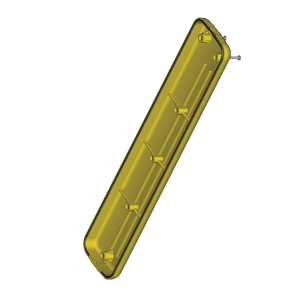
TER SL000168R Lower Cover for 6 Buttons
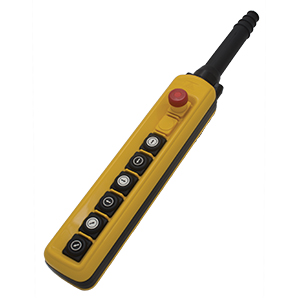
The TER SL000168R Lower Cover for 6 Buttons is a replacement lower enclosure component designed specifically for the 6-button TER NPA pendant control station. Supplied with tightening rubber and screws, the SL000168R provides a manufacturer-specified replacement solution for repairing, maintaining and refurbishing compatible NPA pendant control stations used throughout industrial lifting, material handling and machinery-control applications.
Industrial pendant control stations are frequently exposed to demanding working conditions. Regular handling, accidental impact, vibration, dirt, moisture and general mechanical wear can gradually affect the condition of the pendant enclosure. Where the lower section of a 6-button TER NPA pendant becomes cracked, damaged or otherwise unsuitable for continued service, the SL000168R allows the affected enclosure component to be replaced without automatically replacing the complete pendant control station.
TER identifies the SL000168R specifically as the lower enclosure, tightening rubber and screws for the 6-button NPA pendant. This exact identification is important because the TER NPA range is available in several button configurations, with different enclosure components assigned according to the size and construction of the pendant.
TER Part Number SL000168R
The manufacturer’s product reference for this replacement component is SL000168R.
Using the complete TER part number is particularly important when ordering NPA enclosure spare parts because lower covers for different button configurations have their own individual references.
Maintenance departments, crane service organisations, OEMs and industrial equipment operators can record SL000168R within their spare-parts systems wherever compatible 6-button TER NPA pendant control stations are installed.
Lower Enclosure for the 6-Button TER NPA
The SL000168R forms the lower enclosure section of the 6-button TER NPA pendant control station.
As part of the complete pendant housing, the lower enclosure helps surround and mechanically protect the internal wiring, switches and associated control components while contributing to the physical structure handled by the operator.
Maintaining this enclosure in good condition is therefore an important part of maintaining the complete pendant control station.
Supplied with Tightening Rubber and Screws
TER specifies the SL000168R as a lower enclosure supplied with tightening rubber and screws.
The inclusion of these components provides the corresponding parts required for correct assembly of the replacement lower enclosure rather than requiring maintenance personnel to reuse unsuitable or damaged components from the existing housing.
Using the specified enclosure components helps preserve the intended mechanical arrangement of the TER NPA pendant.
Designed Specifically for the TER NPA
The SL000168R is designed for the TER NPA pendant control station in its 6-button configuration.
The NPA is an industrial pendant-control platform developed for auxiliary machine-control applications and can be configured with different numbers and types of actuators according to the equipment requirements.
For the 6-button NPA version, SL000168R provides the corresponding lower enclosure replacement component.
Correct Pendant Identification Is Essential
Before ordering an SL000168R, the existing pendant should be positively identified as a 6-button TER NPA.
The pendant model, number of control positions and existing equipment documentation should be checked wherever possible.
This is particularly important at sites where several TER pendant sizes or product families are installed, because enclosure components should not be selected purely on visual similarity.
Six-Button NPA Configuration
The 6-button NPA provides a practical control format for machinery requiring several operator commands within a compact handheld pendant.
Depending on the machine design, six control positions can accommodate combinations of lifting, lowering, travel, positioning and auxiliary commands.
The exact electrical and machine functions assigned to these positions depend on the individual equipment configuration.
Replacement Enclosure for Existing TER Equipment
The SL000168R is particularly useful when the lower enclosure of an existing 6-button NPA has been damaged but the remainder of the pendant remains suitable for continued service.
Rather than automatically replacing the complete control station, technicians can inspect the pendant and determine whether replacing the affected lower enclosure provides an appropriate repair.
This modular approach can help retain serviceable pushbuttons, switches, wiring and other pendant components.
Supporting Pendant Refurbishment
Industrial pendant stations can remain in service for extended periods when they are correctly maintained.
During that service life, enclosure components may experience more mechanical damage than internal electrical components because the housing is directly exposed to everyday handling and impact.
The availability of the SL000168R enables refurbishment of the lower section of compatible 6-button NPA pendants where replacement is appropriate.
Mechanical Protection for Internal Components
The pendant enclosure provides important physical protection for the electrical components installed inside the NPA.
Pushbutton contact elements, conductors and electrical connections should remain enclosed and protected during normal operation.
A cracked or damaged lower enclosure can compromise the physical integrity of the pendant and should therefore be inspected rather than treated as a purely cosmetic issue.
Damage from Everyday Industrial Use
Pendant controls are frequently moved and handled throughout the working day.
They may be carried between operating positions, suspended alongside machinery or repeatedly picked up and returned to a storage location.
Over time, this regular use can result in scratches, impact marks, worn fastening points or more significant enclosure damage.
Accidental Pendant Drops
Dropping a pendant is one potential cause of lower enclosure damage.
An impact with a floor or structure can produce cracking, deformation or damage around enclosure fastening locations.
Following a significant impact, the complete pendant should be inspected because damage may extend beyond the SL000168R lower enclosure to internal components, the cable entry or other housing sections.
Impact with Machinery and Structures
A suspended pendant can swing into machinery, structural steel, loads or nearby equipment during operation.
Repeated contact can gradually weaken the enclosure even where a single impact does not immediately produce obvious failure.
Routine visual inspection can help identify this type of deterioration before it develops into more extensive damage.
Cracked Lower Enclosures
Cracking is one of the clearest indications that a lower enclosure may require replacement.
Cracks can develop around edges, corners, screw locations or areas that have experienced direct impact.
Where the damage is confined to the lower enclosure of a compatible 6-button NPA, the SL000168R provides the appropriate TER replacement reference.
Damaged Fastening Points
The lower enclosure must be secured correctly to the adjoining pendant section.
If fastening points become cracked, distorted or otherwise damaged, the enclosure may no longer assemble securely.
Replacing the affected SL000168R component can restore the intended mounting arrangement provided the corresponding mating components remain in suitable condition.
Inspecting Enclosure Mating Surfaces
The surfaces where the lower enclosure meets the adjoining NPA section should remain clean, correctly aligned and free from significant damage.
Contamination, deformation or damaged edges can interfere with correct reassembly.
These areas should therefore be inspected before fitting the replacement SL000168R.
Importance of the Tightening Rubber
The tightening rubber supplied with the SL000168R forms part of the intended enclosure assembly.
It should be positioned correctly and inspected during installation to ensure it is not twisted, pinched, contaminated or damaged.
Correct positioning helps maintain the intended fit between the enclosure components.
Using the Supplied Screws
The screws supplied with the SL000168R provide the corresponding fastening components for installation of the lower enclosure.
Using the specified hardware avoids unnecessary reliance on improvised screws that may have unsuitable dimensions or characteristics.
Fasteners should be installed carefully and in accordance with the appropriate TER assembly and maintenance information.
Avoiding Excessive Tightening
Enclosure fasteners should be tightened correctly without applying unnecessary excessive force.
Overtightening can potentially damage fastening points or distort enclosure components, while insufficient tightening can leave the pendant poorly assembled.
If the enclosure does not fit together naturally, the cause of the misalignment should be investigated rather than forcing the components together.
Six-Button NPA Enclosure Components
The SL000168R forms part of a larger enclosure arrangement used for the 6-button NPA.
TER separately identifies the upper cover for the 6-button NPA as SL000165 and the corresponding central section as PRSL5821PI.
These individual references allow maintenance teams to identify the specific enclosure section requiring replacement rather than treating the entire pendant housing as a single spare part.
SL000168R and SL000165
SL000168R and SL000165 are different enclosure components for the same 6-button NPA configuration.
SL000168R is the lower enclosure supplied with tightening rubber and screws, while SL000165 is the upper cover component specified for the 6-button NPA.
Correct identification of the damaged section helps ensure the appropriate TER spare is ordered.
SL000168R and PRSL5821PI
PRSL5821PI is TER’s central section for the 6-button NPA configuration.
It should not be confused with SL000168R, which is the corresponding lower enclosure component.
During refurbishment, the condition of both components should be assessed because significant impact can affect more than one enclosure section.
Modular NPA Maintenance
The availability of separate upper, central and lower enclosure components supports a modular approach to NPA pendant maintenance.
If only one housing section is damaged, technicians can assess whether replacing that section is sufficient while retaining the remaining serviceable components.
This can reduce unnecessary replacement and help preserve an established pendant configuration.
Maintaining the Original Operator Interface
Using the correct replacement enclosure helps retain the physical arrangement operators already know.
This can be valuable on cranes, hoists and machinery where the pendant layout, control symbols and operating procedures have remained established over many years.
Replacing the lower enclosure does not require changing the machine functions assigned to the existing controls.
Preserving Existing Internal Wiring
Where the pendant’s wiring remains in satisfactory condition, lower enclosure replacement may allow the existing electrical arrangement to remain largely undisturbed.
Care should still be taken during disassembly because the internal conductors can be located close to enclosure surfaces.
Wiring should not be trapped, pinched or damaged when the SL000168R is installed.
Safe Isolation Before Replacement
The machine should be safely isolated before the NPA pendant is opened or enclosure components are removed.
A pendant can contain circuits associated with machine movement, so maintenance must account for both electrical hazards and the possibility of unexpected equipment operation.
Work should be performed by appropriately competent personnel following the applicable machine and workplace isolation procedures.
Opening the Existing Pendant
Once the equipment has been safely isolated, the existing lower enclosure can be removed according to the applicable NPA maintenance procedure.
Care should be taken as the housing sections are separated because internal conductors and switching components may be positioned close to the enclosure.
Components should not be pulled apart forcibly if resistance indicates that wiring or another internal part is interfering.
Recording the Existing Wiring Arrangement
Before moving internal conductors, technicians can record the existing wiring arrangement using photographs, wire identification and machine documentation.
This provides a useful reference during reassembly.
Although a 6-button pendant contains fewer control positions than some larger NPA configurations, it can still contain multiple conductors and contact arrangements that should remain correctly identified.
Inspecting Internal Wiring
Opening the pendant for enclosure replacement provides an opportunity to inspect accessible wiring.
Conductors should be checked for damaged insulation, loose connections, excessive strain or other visible deterioration.
Any electrical defect identified during the repair should be addressed before the new enclosure is installed and the pendant returned to service.
Inspecting Pushbutton Components
The condition of the six pendant control positions should also be considered during refurbishment.
Pushbuttons should operate consistently according to their intended design and should not show excessive mechanical wear or damage.
A new lower enclosure should not be used to conceal defective or unreliable control components.
Inspecting Contact Elements
Electrical contact elements associated with the pendant actuators should remain secure and functional.
Intermittent operation may indicate a contact, terminal or wiring problem rather than an enclosure fault.
Functional testing after reassembly should confirm that each relevant control operates correctly.
Inspecting the Pendant Cable
The pendant cable is subjected to regular movement and flexing and should be included in the inspection process.
The outer sheath can be checked for cuts, abrasion, crushing or other deterioration, particularly near the point where the cable enters the pendant.
A damaged cable requires appropriate attention independently of the SL000168R enclosure replacement.
Six-Button NPA Cable Sleeve Arrangement
TER specifies the cable sleeve holder PRSL9735PI for NPA configurations from 2 to 6 buttons.
This differs from the cable sleeve holder used for the larger 8-to-12-button NPA configurations.
When servicing a 6-button pendant, the cable entry and associated support components should be checked for correct condition and assembly.
Inspecting Cable Strain Relief
The pendant cable should be supported so that external mechanical forces are not unnecessarily transferred to internal terminals or conductors.
Any strain-relief or cable-support components should remain mechanically secure.
Damage identified in this area should be addressed before the pendant returns to service.
Environmental Protection of the Complete NPA
TER specifies the correctly assembled NPA pendant control station with an IP65 degree of protection.
This rating applies to the complete pendant assembly rather than to the SL000168R lower enclosure considered as an isolated component.
Correct assembly of the enclosure sections, tightening rubber and cable-entry components is therefore important when maintaining the environmental protection of the complete NPA.
Understanding the IP65 Rating
The SL000168R should not be marketed as an independently IP65-rated product simply because it forms part of the NPA pendant enclosure.
The IP rating relates to the complete correctly assembled TER NPA configuration.
This distinction provides more accurate technical information for customers selecting a replacement enclosure component.
Protection Against Dust and Moisture
Industrial pendant stations can operate in environments where dust, dirt and moisture are present.
Maintaining the integrity of the complete enclosure helps protect the internal electrical components from these external conditions.
Cracked covers, damaged enclosure joints or incorrectly assembled components should therefore be addressed during maintenance.
TER NPA Operating Temperature
TER specifies the complete NPA pendant control station for an operating temperature range of -25°C to +70°C.
This specification applies to the complete NPA product rather than representing an independent temperature rating for the SL000168R spare enclosure alone.
The lower enclosure supports maintenance of the NPA housing used within these industrial applications.
Class II NPA Construction
TER specifies the complete NPA pendant control station as Class II equipment.
Replacement enclosure work should preserve the intended TER construction and should not introduce unauthorised modifications to the pendant housing.
The SL000168R should therefore be used for its specified NPA application rather than modified for unrelated control equipment.
Avoiding Unauthorised Enclosure Modifications
Drilling additional holes, cutting the housing or otherwise altering the SL000168R can affect the mechanical integrity and performance of the complete pendant assembly.
If a different control configuration is required, the appropriate TER pendant or enclosure configuration should be selected.
Modification should not be used as a substitute for correct product selection.
Crane Control Applications
The TER NPA pendant control station is used in industrial lifting applications where operators require a robust handheld interface for machine commands.
A 6-button configuration can provide a practical arrangement for multiple crane movement functions depending on the electrical and mechanical design of the equipment.
The SL000168R supports maintenance of these installations by providing the corresponding lower enclosure spare.
Overhead Travelling Crane Applications
Overhead travelling crane pendants can experience intensive daily handling in manufacturing plants, workshops, warehouses and material-handling facilities.
Repeated movement and accidental contact with surrounding structures can eventually damage the pendant housing.
For a compatible 6-button NPA, SL000168R provides the TER lower enclosure replacement required for refurbishment.
Gantry Crane Applications
Gantry cranes can operate in demanding industrial environments where pendant controls may be exposed to frequent handling and mechanical impact.
Maintaining the condition of the pendant enclosure helps protect its internal components and preserve the operator interface.
The SL000168R is suitable for the corresponding 6-button NPA pendant configuration used in these applications.
Jib Crane Applications
Jib cranes commonly use compact pendant stations for local lifting and movement control.
A six-position pendant can accommodate several commands while remaining convenient for handheld operation.
Where the lower enclosure of a TER NPA becomes damaged, the SL000168R provides the correct replacement component for the 6-button version.
Hoist Applications
Hoists are a common application for industrial pendant control stations.
A 6-button NPA can provide commands for lifting, lowering and additional movement or auxiliary functions depending on the system design.
Replacing a damaged lower enclosure can help extend the service life of an otherwise functional hoist pendant.
Winch Applications
Winch systems can use pendant controls to provide local commands for winding, unwinding and associated machine functions.
Because these controls are frequently handled, their enclosure condition should form part of routine equipment inspection.
The SL000168R provides a manufacturer-specific spare for compatible 6-button TER NPA installations.
Stage Technology Applications
TER pendant control stations can also support stage technology applications involving powered movement, hoists and winches.
Control equipment used in these environments should remain mechanically sound and clearly organised for the operator.
Replacement enclosure components such as the SL000168R support ongoing maintenance of established NPA installations.
Industrial Machinery Control
Beyond lifting equipment, 6-button pendant stations can be used for local control of industrial machinery and material-handling systems.
The exact command arrangement is determined by the machine designer and may include movement, positioning or auxiliary functions.
The SL000168R provides enclosure support for the compatible TER NPA control station used within these systems.
Preventative Maintenance for NPA Pendants
The condition of the lower enclosure should be checked during routine pendant maintenance rather than only after complete failure occurs.
Small cracks, worn fastening locations or signs of repeated impact can provide early warning that replacement may soon be required.
Planned maintenance can help reduce the risk of an unexpected pendant failure interrupting equipment operation.
Reducing Unplanned Equipment Downtime
A damaged pendant can prevent an otherwise serviceable crane, hoist or industrial machine from operating.
Accurate spare-part identification helps maintenance teams source the correct enclosure component more efficiently.
For installations using the 6-button TER NPA, SL000168R is an important lower enclosure reference to include within maintenance documentation.
Maintaining SL000168R as a Spare Part
Facilities operating several 6-button NPA pendants may choose to maintain an SL000168R within their spare-parts inventory.
The appropriate stock level depends on the number of installed pendants, equipment criticality, operating environment and maintenance history.
Holding the correct enclosure spare can be particularly useful where crane or production downtime has significant operational consequences.
Correct Spare-Part Description
For purchasing and maintenance systems, a useful description is “TER SL000168R Lower Enclosure with Tightening Rubber and Screws – NPA 6 Button.”
This description identifies the manufacturer, exact part number, component type and compatible pendant configuration.
Using detailed product identification helps avoid confusion with other TER NPA lower enclosure components.
SL000168R Versus SL000167R
The SL000168R should not be confused with TER SL000167R.
SL000167R is the lower enclosure for the 4-button NPA configuration, while SL000168R is specified for the 6-button NPA.
The number of control positions should therefore be confirmed before ordering.
SL000168R Versus SL000169R
TER SL000169R is the lower enclosure for the larger 8-button NPA configuration.
Although the two components belong to the same NPA family and have similar functions, they correspond to different pendant sizes.
SL000168R should be selected specifically for the 6-button NPA.
SL000168R Versus PRSL5816PI
PRSL5816PI is TER’s central section for the 4-button NPA and should not be confused with the SL000168R lower enclosure.
TER assigns individual part references according to both enclosure section and pendant size.
This makes exact part-number verification important when refurbishing an NPA pendant.
SL000168R Versus PRSL5821PI
PRSL5821PI is the central section for the 6-button NPA, while SL000168R is the lower enclosure for the same six-button configuration.
These components work within the same pendant assembly but perform different structural roles.
Both should be inspected if the pendant has suffered significant mechanical impact.
Why Choose the TER SL000168R?
The TER SL000168R provides a manufacturer-specified replacement lower enclosure for the 6-button NPA pendant control station.
Its inclusion of tightening rubber and screws supports correct refurbishment, while the exact TER part number gives maintenance and purchasing teams a clear reference for spare-parts management.
For crane service companies, industrial maintenance departments, OEMs and system integrators, SL000168R provides a practical solution for repairing established TER NPA pendant installations.
TER SL000168R for Long-Term NPA Maintenance
The TER SL000168R Lower Cover for 6 Buttons supports the continued maintenance and refurbishment of compatible 6-button TER NPA pendant control stations.
By allowing a damaged lower enclosure to be replaced where the remaining pendant components are still suitable for service, the SL000168R can help preserve existing equipment, reduce unnecessary replacement and simplify long-term spare-parts support.
Correct identification, safe isolation, careful installation and complete functional testing are essential when returning a refurbished NPA pendant to service.
Understanding the Role of the SL000168R Lower Enclosure
The SL000168R lower enclosure performs an important structural role within the complete 6-button TER NPA pendant control station. It forms part of the outer housing that surrounds the pendant’s internal electrical and mechanical components and helps provide the durable handheld structure required for industrial operation.
Although the lower enclosure does not perform a switching function itself, its condition directly affects the physical integrity of the complete pendant assembly. A damaged enclosure can expose internal components to increased mechanical stress and may affect the way the pendant fits together.
For this reason, the lower cover should be treated as a functional part of the control station rather than simply an external cosmetic component.
Protecting Internal NPA Components
The 6-button TER NPA can contain multiple pushbutton contact elements, electrical conductors, terminals and associated control components.
The enclosure provides a physical barrier around these internal parts during normal operation.
Maintaining a sound lower enclosure helps reduce the risk of accidental contact with internal components and supports the intended construction of the complete pendant.
Mechanical Protection During Daily Use
Pendant control stations are exposed to repeated movement throughout their working life.
Operators may carry, reposition, suspend and operate the pendant many times during a shift.
The SL000168R forms part of the housing that must withstand this normal handling while protecting the control components fitted inside the NPA.
Damage Caused by Dropping the Pendant
Accidental drops are a common source of pendant enclosure damage.
A significant impact can produce cracking, deformation or damage around fastening points and enclosure edges.
Where the lower enclosure of a 6-button NPA is affected, SL000168R provides the appropriate replacement reference, subject to inspection of the rest of the pendant.
Inspecting the Complete Pendant After Impact
A damaged lower enclosure can indicate that the pendant has experienced a substantial mechanical impact.
Maintenance personnel should therefore inspect the complete control station rather than replacing only the visibly damaged section.
The upper cover, central section, pushbuttons, internal wiring, cable entry and cable itself should all be checked for associated damage.
Repeated Impact and Long-Term Wear
Not all enclosure damage occurs from one major event.
Repeated minor impacts can gradually weaken the housing and eventually lead to cracking or distortion.
Visible scuffing, impact marks or deterioration around corners can provide an early warning that the pendant is being subjected to excessive mechanical stress.
Identifying Cracking Around Screw Locations
Fastening points are important areas to inspect during pendant maintenance.
Cracks developing around screw locations can affect the ability of the enclosure to remain securely assembled.
Where the lower enclosure fastening points are damaged, replacement of the SL000168R may be appropriate if the corresponding mating sections remain serviceable.
Inspecting Enclosure Edges
The edges of the lower enclosure should remain free from significant damage or distortion.
Damaged edges can interfere with correct mating between enclosure sections and may prevent the pendant from closing as intended.
These surfaces should be carefully checked before fitting the new SL000168R.
Inspecting Mating Surfaces Before Installation
The surfaces where the SL000168R meets the adjoining NPA enclosure section should be clean and correctly aligned.
Dirt, debris or deformation can interfere with correct assembly.
Cleaning and inspection should be completed before the tightening rubber and lower enclosure are positioned.
Importance of the Supplied Tightening Rubber
TER supplies the SL000168R with tightening rubber as part of the replacement assembly.
This component contributes to the intended fit of the lower enclosure within the complete NPA housing.
It should be installed in the correct position and kept free from contamination or damage during reassembly.
Avoiding Twisted or Pinched Rubber
The tightening rubber should not be twisted, folded or trapped incorrectly between enclosure sections.
Poor positioning can interfere with correct assembly and may affect the way the complete pendant housing performs.
Technicians should inspect the full joint before final fastening.
Replacing Old Rubber Components
Older pendant assemblies may contain rubber components that have hardened, cracked or permanently deformed over time.
Where the existing lower enclosure is being replaced, the new tightening rubber supplied with SL000168R provides the corresponding replacement component for reassembly.
Using the supplied component avoids unnecessary reuse of worn material.
Using the Correct Screws
The screws supplied with the SL000168R should be used as the intended fastening components for the replacement enclosure.
Correct screws support secure mechanical assembly and reduce the uncertainty associated with selecting generic hardware.
Fasteners that appear visually similar may not necessarily have the same dimensions or thread characteristics.
Avoiding Incorrect Fasteners
Using an unsuitable screw can damage the enclosure or fail to secure it correctly.
Incorrect thread engagement can also damage fastening points and complicate future maintenance.
The supplied TER screws provide the appropriate starting point for correct reassembly.
Avoiding Cross-Threading
Each fastener should engage smoothly and correctly before tightening begins.
If resistance is experienced immediately, the screw should be removed and alignment checked rather than forced into position.
Cross-threading can damage the enclosure and create unnecessary additional repair work.
Balanced Tightening During Reassembly
The lower enclosure should be brought together with the adjoining housing evenly.
Fasteners should be tightened in a controlled manner so that the enclosure is not pulled together unevenly.
If one side remains raised or misaligned, the cause should be identified before final tightening.
Checking for Trapped Internal Wiring
Before fitting the SL000168R, technicians should ensure that internal conductors are clear of enclosure mating surfaces.
A trapped wire can prevent correct closure and may damage electrical insulation.
Careful wire routing is particularly important where several controls are installed within a relatively compact six-button pendant.
Maintaining Internal Wire Organisation
Internal conductors should remain organised and supported in a way that avoids unnecessary strain.
Wires should not interfere with pushbutton mechanisms or become compressed against enclosure components.
Where the original routing has been disturbed, available machine documentation or photographs can assist with accurate reinstatement.
Recording the Original Wiring
Photographs taken before disassembly can provide a useful reference during refurbishment.
Wire labels, terminal numbers and electrical drawings can also help confirm the correct arrangement.
This is especially valuable if internal components need to be moved while replacing the lower enclosure.
Inspecting Electrical Terminals
Opening the pendant provides an opportunity to inspect accessible terminals and connections.
Loose or damaged connections can produce intermittent operation and may be difficult to identify after the enclosure is reassembled.
Any electrical work should be performed by suitably competent personnel.
Checking for Damaged Insulation
Conductors should be inspected for cuts, abrasions, crushing or other damage to insulation.
Insulation damage can occur through movement, impact or incorrect routing inside the enclosure.
Any defect should be corrected before the pendant is returned to service.
Checking for Signs of Overheating
Discolouration, melted insulation or other signs of excessive heat should be investigated immediately.
These symptoms can indicate an electrical fault that is unrelated to the lower enclosure.
A new SL000168R should not be used to conceal an unresolved electrical problem.
Checking for Moisture Inside the Pendant
Moisture found inside the enclosure should prompt further investigation.
The source may involve another enclosure section, the cable entry, damaged sealing components or incorrect assembly.
Replacing the lower cover alone may not resolve the underlying issue.
Checking for Dust or Contamination
Dust, dirt and industrial contamination can enter a damaged pendant and accumulate around electrical components.
If contamination is discovered during refurbishment, it should be removed using suitable methods compatible with the pendant materials and electrical equipment.
The source of contamination should also be considered before the control station is reassembled.
Cleaning the Pendant Interior
Cleaning should be performed carefully to avoid introducing moisture or aggressive chemicals into the pendant.
Methods should be appropriate for plastic enclosure components, electrical contacts and conductor insulation.
The pendant should be clean and appropriately dry before the SL000168R is installed.
Inspecting All Six Control Positions
The six actuator positions should be checked while the pendant is open.
Each control should remain mechanically secure and should operate according to its intended design.
Visible damage, excessive looseness or abnormal movement should be investigated before reassembly.
Pushbutton Mechanical Inspection
Pushbuttons should move smoothly without binding or rubbing against adjacent components.
Where a pushbutton feels stiff or inconsistent, the cause should be identified rather than assuming the new enclosure will correct the issue.
The actuator and associated contact element may require separate maintenance.
Checking Contact Elements
Contact elements behind the pushbuttons should remain properly mounted and function reliably.
An intermittent machine command can sometimes originate from worn or loose contacts rather than the enclosure.
Electrical testing should be used to distinguish between enclosure damage and control-circuit faults.
Checking Any Selector Switches
Some pendant configurations may incorporate selector controls in addition to standard pushbuttons.
These should move correctly through their intended positions and produce the expected machine response.
The exact arrangement depends on the individual NPA configuration.
Checking Emergency-Stop Controls
If the particular six-button pendant includes an emergency-stop device, that control should be inspected and tested according to the machine’s established safety-maintenance procedure.
Enclosure replacement does not remove the need to verify the safety-related function independently.
The machine should not return to normal service until the required testing is complete.
Inspecting the Cable Entry
The cable entry forms an important interface between the control cable and the pendant housing.
It should remain secure and appropriately assembled.
Damage or deterioration in this area should be addressed separately from the SL000168R lower enclosure.
Inspecting the Cable Sleeve Holder
TER specifies a cable sleeve holder arrangement for NPA configurations from 2 to 6 buttons.
When servicing a six-button pendant, this component should be inspected for mechanical condition and correct installation.
Damage to the cable support can place additional stress on internal wiring.
Inspecting the Pendant Cable
The cable should be checked for cuts, abrasion, crushing, splitting and other visible damage.
Areas near the pendant entry can experience repeated flexing and should receive particular attention.
A damaged cable must be addressed appropriately before the pendant returns to service.
Cable Faults and Intermittent Operation
Intermittent pendant operation is not always caused by pushbuttons or contact elements.
A broken or damaged conductor inside the pendant cable can produce faults that appear only when the cable is moved.
The cable should therefore be included in troubleshooting where commands operate inconsistently.
Maintaining Cable Strain Relief
The pendant cable should be supported so that mechanical loads are not transferred unnecessarily to internal terminals.
Effective strain relief helps protect both the cable and internal connections.
Any loose or damaged support arrangement should be corrected during refurbishment.
Maintaining the Complete NPA IP65 Assembly
TER specifies the complete correctly assembled NPA pendant control station with IP65 protection.
The SL000168R contributes to that enclosure system but should not be described as independently IP65-rated when considered as an isolated spare part.
Correct assembly of the enclosure, tightening rubber and cable-entry components is essential to maintaining the intended protection of the complete pendant.
Why Correct Reassembly Matters
Even the correct lower enclosure cannot perform as intended if the pendant is assembled poorly.
Misaligned enclosure sections, displaced rubber components or trapped wiring can affect the finished assembly.
A careful visual and mechanical inspection should therefore be completed after the SL000168R has been installed.
Visual Inspection After Reassembly
The enclosure joint should appear even around the full perimeter.
There should be no obvious gaps, protruding rubber, trapped conductors or uneven alignment.
Fasteners should remain properly seated and the lower enclosure should appear securely fitted.
Mechanical Inspection After Reassembly
The complete pendant should feel mechanically sound without unintended movement between housing sections.
The cable entry should also remain secure and stable.
Any looseness should be investigated before electrical testing begins.
Functional Testing After Installation
After the pendant is reassembled, its functions should be tested under controlled conditions.
Testing should verify that enclosure replacement has not disturbed internal wiring or switching components.
All relevant machine commands should respond correctly before the pendant is returned to normal operation.
Testing All Six Control Positions
Where practical, each of the six control positions should be tested individually.
This confirms that every relevant actuator and associated circuit remains functional after refurbishment.
Testing is particularly important where internal wiring was moved during the enclosure replacement.
Testing Paired Movement Commands
Crane and hoist pendants often use paired controls for opposing movements such as up and down or forward and reverse.
These functions should be checked carefully to confirm that each button produces the expected machine response.
Any unexpected operation should be investigated before normal service resumes.
Controlled Machine Testing
Machine movement tests should be performed in a controlled environment where the technician can observe the equipment safely.
The applicable site and machine commissioning procedures should be followed.
Equipment should not be released to operators until satisfactory testing has been completed.
Recommissioning Safety-Related Functions
Where the pendant includes safety-related controls, those functions should be tested according to the relevant machine safety procedure.
Physical enclosure repair does not by itself confirm correct safety-system operation.
All required checks should be completed before the equipment is returned to production.
Documenting SL000168R Installation
Maintenance records can identify the installation of a TER SL000168R on the relevant six-button NPA pendant.
The date of replacement, reason for repair and machine or pendant identification can also be recorded.
This information provides useful service history for future maintenance.
Tracking Repeated Lower Enclosure Damage
Maintenance records can reveal whether lower enclosure damage is occurring repeatedly on the same equipment.
Frequent replacement may indicate poor pendant storage, repeated impact or excessive cable stress.
Identifying these patterns can help reduce future damage.
Improving Pendant Storage Practices
A suitable pendant storage position can reduce the likelihood of accidental impact.
The pendant should not be left on the floor or in areas where it can be crushed, struck by loads or driven over by mobile equipment.
Good storage practices can extend the life of the SL000168R and the complete pendant.
Reducing Pendant Swing
Where a pendant repeatedly swings into surrounding structures, the installation arrangement should be reviewed.
Reducing unnecessary impact can help extend enclosure life.
Any modification to the suspension or cable arrangement should remain appropriate for the machine design.
Operator Awareness
Operators can contribute significantly to pendant service life through careful handling.
The pendant should not be used as a pulling handle, dropped intentionally or subjected to unnecessary mechanical force.
Simple handling practices can reduce wear on both the enclosure and cable entry.
Routine Visual Checks
Operators can perform basic visual checks before using the pendant.
Visible cracks, loose enclosure sections, damaged cables or controls that feel abnormal should be reported.
Early reporting can prevent minor damage from developing into a larger fault.
Scheduled Pendant Maintenance
More detailed inspections can be included within scheduled crane, hoist or machine maintenance programs.
The inspection frequency should reflect operating conditions, equipment usage and site requirements.
High-use pendants may require more frequent attention than controls used only occasionally.
SL000168R for Crane Service Workshops
Crane service workshops maintaining TER equipment can identify SL000168R as a specific spare for 6-button NPA pendant repairs.
Correct part-number identification can reduce time spent comparing similar enclosure components.
This can help shorten repair turnaround for customer equipment.
SL000168R for Hoist Maintenance
Hoist service companies may encounter numerous pendant configurations across different customer sites.
Using exact TER references such as SL000168R makes it easier to match the replacement enclosure with the installed six-button NPA.
This supports more efficient spare-parts management.
SL000168R for Industrial Maintenance Teams
Industrial facilities operating their own cranes and machinery can include SL000168R within internal maintenance systems.
Where several identical 6-button NPA pendants are installed, keeping the correct lower enclosure available can reduce downtime after accidental damage.
Stock levels should be determined according to site needs.
SL000168R for OEM Support
OEM machine builders can identify SL000168R within aftermarket spare-parts documentation for equipment supplied with a 6-button TER NPA.
This provides end users with a clear reference if enclosure replacement is required later.
Accurate documentation supports long-term equipment serviceability.
SL000168R for System Integrators
System integrators maintaining existing machines can use SL000168R during refurbishment of compatible TER NPA pendant stations.
Replacing the lower enclosure can preserve the established control layout where the existing electrical arrangement remains appropriate.
Any changes to machine-control logic should be treated separately from the enclosure repair.
Repair Versus Complete Pendant Replacement
The decision to repair the pendant with an SL000168R or replace the complete control station should be based on overall condition.
An isolated lower enclosure defect may justify component replacement, while widespread mechanical and electrical deterioration may make complete replacement more appropriate.
A thorough inspection should guide the maintenance decision.
When SL000168R Replacement Is Appropriate
Individual lower enclosure replacement is most practical where the upper and central housing sections remain sound and the internal controls, cable and wiring are serviceable.
In this situation, the SL000168R can restore the damaged lower section without unnecessary replacement of the remainder of the pendant.
The complete assembly should still be tested after repair.
When Additional Components Should Be Replaced
Additional maintenance may be necessary if inspection reveals worn pushbuttons, damaged cable components, loose terminals or deterioration elsewhere in the enclosure.
Replacing all identified defective components during one planned repair can improve reliability.
The SL000168R should form part of a complete maintenance solution rather than being treated in isolation.
When Complete Pendant Replacement May Be Better
If several enclosure sections are cracked, the cable is badly damaged and multiple controls are worn, complete pendant replacement may provide a more reliable result.
Maintenance history, equipment criticality and expected service life should also be considered.
The objective should be a reliable and correctly configured operator-control system.
Maintaining Original TER Configuration
Using the correct SL000168R helps preserve the physical configuration intended for the 6-button NPA.
This is useful on established machinery where drawings, spare-parts lists and operator procedures are already based on the existing pendant.
A like-for-like enclosure replacement can reduce unnecessary changes to the operator interface.
Accurate Purchasing Information
Purchasing requests should include the complete TER part number SL000168R and identify the component as the lower enclosure for the six-button NPA.
Generic descriptions such as “TER pendant cover” can create uncertainty because multiple enclosure sizes and pendant families exist.
Precise identification helps reduce ordering errors.
Recommended Ordering Description
A suitable purchasing description is “TER SL000168R Lower Enclosure for 6-Button NPA Pendant, with Tightening Rubber and Screws.”
This clearly identifies the product, compatible pendant configuration and supplied components.
The TER part number should remain the principal ordering reference.
Supporting Reliable Pendant Refurbishment
Successful pendant refurbishment depends on selecting the correct parts, completing a thorough inspection and carrying out appropriate testing.
The SL000168R provides the correct TER lower enclosure component for the six-button NPA, while the technician must confirm that the rest of the pendant remains suitable for continued service.
This approach supports reliable, cost-effective maintenance of established industrial equipment.
TER SL000168R as a Practical Maintenance Spare
For sites operating 6-button TER NPA pendant stations, the SL000168R is a useful enclosure spare to identify within maintenance and purchasing systems.
Its exact part number removes uncertainty when the correct pendant model and button configuration are known.
Supplied with tightening rubber and screws, it provides a practical solution for repairing the lower section of a compatible TER NPA pendant.
Industrial Applications for the TER SL000168R
The TER SL000168R Lower Cover for 6 Buttons supports maintenance and refurbishment of compatible TER NPA pendant control stations used across industrial lifting, material-handling and machinery-control applications.
Because pendant control stations are handled frequently and can be exposed to repeated movement, accidental impact and environmental contamination, enclosure components may require replacement even where the internal controls remain serviceable.
The SL000168R provides the correct TER lower enclosure reference for the 6-button NPA configuration.
Overhead Crane Applications
Overhead travelling cranes commonly use pendant control stations to provide direct operator control of lifting and travel functions.
A 6-button pendant can support multiple paired movement commands and auxiliary functions depending on the crane design.
Where the lower enclosure of a TER NPA pendant becomes damaged, the SL000168R allows the affected section to be replaced while retaining serviceable internal components where appropriate.
Gantry Crane Applications
Gantry cranes often operate in industrial environments where pendant controls are exposed to repeated handling and possible contact with structures or equipment.
Maintaining the physical condition of the enclosure helps preserve the integrity of the complete control station.
The SL000168R provides the correct lower enclosure replacement for compatible 6-button NPA pendants used in these applications.
Jib Crane Applications
Jib cranes frequently use compact pendant stations for local lifting and movement control.
A six-position pendant can provide a practical operator interface for multiple commands while remaining easy to handle.
Where the lower section becomes cracked or damaged, SL000168R provides the manufacturer-specified replacement component for the 6-button NPA.
Hoist Applications
Industrial hoists are a common application for pendant control stations.
Depending on the system design, a 6-button NPA may provide commands for lifting, lowering, travel and additional auxiliary functions.
Replacing a damaged SL000168R lower enclosure can help extend the service life of an otherwise functional hoist pendant.
Winch Applications
Winch systems can use pendant controls to provide local commands for winding, unwinding and related machine functions.
These pendants may be handled repeatedly and exposed to mechanical wear throughout their service life.
For compatible 6-button TER NPA installations, the SL000168R provides a practical enclosure spare for repair and refurbishment.
Stage Technology Applications
TER NPA pendant control stations can also support stage technology applications involving powered movement, hoists and winches.
In these environments, reliable handheld controls are important for equipment setup, positioning and operation.
Maintaining a sound enclosure helps preserve the usability and condition of the complete control station.
Industrial Machinery Applications
Beyond lifting equipment, six-button pendant stations can be used for local control of industrial machinery and process equipment.
The exact functions assigned to the six positions depend on the machine design and control architecture.
The SL000168R supports maintenance of the enclosure used within compatible TER NPA installations.
Material Handling Applications
Material-handling systems can require several movement and positioning commands within one operator interface.
A 6-button pendant provides flexibility for these applications while retaining a compact handheld format.
Where enclosure damage occurs, the SL000168R provides the appropriate lower cover replacement for the corresponding NPA configuration.
Maintenance Workshop Applications
Industrial maintenance workshops servicing cranes, hoists and machinery can identify SL000168R as a known spare for six-button NPA pendant repairs.
Accurate part-number identification allows technicians to prepare the required enclosure component before beginning refurbishment work.
This can help reduce delays associated with identifying damaged pendant parts.
Crane Service Company Applications
Crane service organisations may work across fleets containing several TER pendant models and button configurations.
Using the exact SL000168R reference helps distinguish the six-button NPA lower enclosure from similar-looking TER components.
This supports efficient purchasing, inventory management and field servicing.
Hoist Service Company Applications
Hoist service companies can encounter a wide variety of pendant station configurations across customer sites.
Recording the TER part number SL000168R provides a precise reference for the 6-button NPA lower enclosure.
This reduces the risk of ordering a cover intended for another pendant size or family.
OEM Aftermarket Support
Original equipment manufacturers that have supplied machinery using a 6-button TER NPA can include SL000168R within their aftermarket spare-parts documentation.
This gives end users a clear replacement reference if enclosure damage occurs later in the machine’s service life.
Accurate documentation supports long-term equipment serviceability.
System Integrator Support
System integrators maintaining or upgrading machinery fitted with TER pendant controls can use SL000168R during refurbishment of compatible NPA stations.
Where the original pendant arrangement remains suitable, replacing the damaged lower enclosure can preserve the established operator interface.
Any changes to the electrical control system should remain separately engineered and documented.
Preventative Maintenance Programs
The lower enclosure should be included in routine preventative maintenance inspections.
Technicians can check for cracks, deformation, damaged fastening points and signs of repeated impact.
Identifying deterioration early can make it possible to schedule replacement before the pendant becomes unusable.
Daily Operator Inspection
Operators can assist with pendant maintenance by noticing visible defects before use.
Cracks, loose enclosure sections, damaged cables or controls that feel abnormal should be reported promptly.
Early reporting can help prevent minor damage from developing into a larger fault.
Inspecting for Repeated Impact
Scuffing and impact marks can indicate that the pendant is repeatedly striking nearby machinery or structures.
Even if the enclosure has not yet cracked, repeated contact can shorten its service life.
The pendant’s operating and storage arrangements should be reviewed where recurring impact damage is observed.
Improving Pendant Storage
A designated storage position can help protect the pendant when machinery is not in use.
The pendant should be kept away from areas where it could be crushed, struck by moving loads or damaged by vehicles and equipment.
Good storage practices can extend the service life of the SL000168R and the complete pendant.
Reviewing Cable Length and Position
Poor cable positioning can contribute to repeated enclosure impact and unnecessary stress on the pendant.
If the control station regularly drags across surfaces or swings into nearby equipment, the installation arrangement may deserve review.
Any changes should remain appropriate for the machine design and operating requirements.
Reducing Operator-Induced Damage
Operators should avoid using the pendant or its cable as a handle for moving equipment.
The control station should also not be thrown, dropped intentionally or subjected to unnecessary force.
Careful handling can significantly reduce mechanical wear on the enclosure.
Cleaning the SL000168R Lower Enclosure
The exterior of the lower enclosure can be cleaned as part of routine pendant maintenance using methods appropriate for the complete NPA assembly.
Cleaning should remove dirt and contamination without damaging enclosure materials, seals, labels or electrical components.
Aggressive chemicals should be avoided unless their suitability has been confirmed.
Cleaning Around Enclosure Joints
Dirt and contamination can accumulate around enclosure joints and fastening points.
Keeping these areas clean helps make developing cracks and other damage easier to identify.
Cleaning methods should not force contaminants or moisture into the pendant interior.
Inspecting for Chemical Exposure
Some industrial environments expose pendant controls to oils, cleaning agents and process chemicals.
Unusual softening, discolouration or surface deterioration can indicate that the enclosure has been affected by chemical exposure.
Where this occurs repeatedly, the operating environment should be reviewed as part of the maintenance process.
Inspecting for Heat Damage
Warping, abnormal discolouration or deformation can indicate that the pendant has been exposed to excessive heat.
The source of the heat should be investigated before a replacement SL000168R is installed.
Replacing the enclosure without correcting the underlying cause may result in repeated damage.
Inspecting for Outdoor Environmental Wear
Where pendant controls are used outdoors, long-term exposure to environmental conditions can contribute to material ageing.
Surface deterioration, brittleness and cracking should be monitored during routine inspection.
Replacement may be appropriate where this deterioration affects the mechanical condition of the lower enclosure.
Inspecting Fastening Points During Service
The screw locations used to secure the lower enclosure should remain intact and mechanically sound.
Cracking, damaged threads or excessive wear can interfere with correct assembly.
Any such condition should be addressed before the pendant is returned to service.
Inspecting the Tightening Rubber Over Time
Rubber components can deteriorate through age, contamination and repeated disassembly.
The tightening rubber should therefore be inspected whenever the pendant is opened.
The new component supplied with SL000168R supports correct replacement during refurbishment.
Inspecting the Screws After Installation
Fasteners should remain correctly seated during normal operation.
If screws repeatedly loosen, the underlying cause should be investigated rather than relying on repeated retightening.
Possible causes may include vibration, damaged fastening points or incorrect assembly.
Refurbishing an Older 6-Button NPA
An older pendant may benefit from a broader refurbishment when the SL000168R lower enclosure is replaced.
This can include inspection of pushbuttons, contact elements, the cable entry, internal wiring and other enclosure sections.
Addressing several developing issues during one planned repair can improve long-term reliability.
Replacing Multiple Worn Components
Where several pendant components are approaching the end of their useful service life, replacing them during one scheduled maintenance event can be more efficient than repeated individual repairs.
The SL000168R can form part of a wider refurbishment package for the six-button NPA.
The complete pendant should be functionally tested after all maintenance work is complete.
Maintaining the Original Pendant Layout
Using the correct TER lower enclosure helps retain the physical arrangement already familiar to operators.
This can be valuable on machinery where control positions, symbols and operating procedures have remained established for many years.
A like-for-like enclosure repair avoids unnecessary changes to the operator interface.
Supporting Existing Electrical Documentation
Machine drawings and spare-parts lists are often based on the original pendant configuration.
Using SL000168R as the correct lower enclosure for the six-button NPA helps keep the physical equipment aligned with these records.
This can simplify future fault finding and maintenance.
Maintaining Spare-Part Standardisation
Sites operating several identical TER NPA pendants can benefit from standardised spare-parts inventories.
Recording SL000168R for all compatible six-button installations allows maintenance and purchasing teams to use one common replacement reference.
This can reduce ordering errors and unnecessary duplication of stock.
Spare-Part Labelling
Stored SL000168R components should be clearly identified with the TER part number and intended application.
A description such as “6-button NPA lower enclosure” helps distinguish the part from covers used on other NPA sizes.
The tightening rubber and screws should remain with the enclosure until installation.
Spare-Part Storage Conditions
Replacement enclosure components should be stored in a clean, dry area where they are protected from impact and contamination.
They should also be kept away from excessive heat and conditions that could affect the supplied rubber component.
Appropriate storage helps ensure the complete replacement assembly is ready for use when required.
Inventory Planning for Critical Equipment
Where a 6-button NPA is used on production-critical lifting equipment, holding an SL000168R in stock may help reduce downtime following accidental enclosure damage.
The appropriate stock level depends on the number of installed pendants and the operational consequences of equipment downtime.
Maintenance history can also help determine whether the component should be held locally.
Ordering by Exact TER Part Number
The most reliable way to identify the product is by the complete TER part number SL000168R.
Generic descriptions such as “six-button pendant cover” can be ambiguous because several TER pendant families and enclosure sizes are available.
The exact part number should therefore remain the primary purchasing reference.
Confirming the NPA Pendant Family
Before ordering, the existing pendant should be confirmed as a TER NPA.
Other TER pendant families may use different enclosure components even where the number of control positions appears similar.
Correct model identification helps prevent unsuitable part selection.
Confirming the Six-Button Configuration
The pendant should also be confirmed as the six-button version.
TER uses separate lower enclosure references for different NPA sizes.
Checking the button count and available machine documentation helps ensure SL000168R is the correct replacement.
SL000168R Versus Four-Button NPA Covers
The six-button SL000168R should not be substituted with a lower enclosure intended for a four-button NPA.
TER assigns different references according to the pendant size and enclosure arrangement.
The correct component should always be selected by part number and configuration.
SL000168R Versus Eight-Button NPA Covers
The 8-button NPA uses SL000169R rather than SL000168R.
Although both parts perform a similar structural role, they correspond with different pendant sizes.
Visual similarity should not be used as the sole basis for selection.
Fault Diagnosis Before Replacing the Enclosure
If the pendant is malfunctioning, technicians should determine whether the lower enclosure is actually related to the fault.
Electrical problems may originate from pushbuttons, contacts, internal wiring or the pendant cable.
Accurate diagnosis prevents unnecessary enclosure replacement.
When the SL000168R Is the Appropriate Repair
SL000168R replacement is particularly suitable where the lower enclosure is cracked, broken or mechanically damaged while the remainder of the pendant remains in satisfactory condition.
In this situation, the enclosure can be replaced without unnecessary replacement of serviceable internal components.
The complete pendant should still be inspected and tested after repair.
When Electrical Faults Are Also Present
If electrical defects are discovered during enclosure replacement, they should be corrected before reassembly.
Examples can include loose terminals, worn contact elements, damaged conductors or cable faults.
The objective should be to return a fully reliable control station to service.
When Contamination Is Found Inside
Internal moisture, dirt or contamination should be investigated rather than simply removed and ignored.
The source may involve another enclosure section, cable entry deterioration or previous incorrect assembly.
Correcting the underlying issue helps reduce the likelihood of repeated contamination.
When Multiple Enclosure Sections Are Damaged
If the upper cover, central section and lower enclosure are all significantly damaged, individual SL000168R replacement may not provide the most practical repair.
A broader refurbishment or complete pendant replacement may be more appropriate.
The overall condition of the NPA should guide the maintenance decision.
When the Pendant Cable Is Severely Damaged
Severe cable damage requires its own corrective action.
The cable forms part of the electrical connection between the pendant and machine control system and must remain mechanically and electrically sound.
A new lower enclosure cannot compensate for an unsafe or unreliable control cable.
When Pushbuttons Are Heavily Worn
An older pendant may contain several actuators or contact elements showing significant wear.
Where widespread deterioration is present, a more complete refurbishment may provide a better long-term result than replacing only the lower enclosure.
Maintenance decisions should consider reliability, equipment criticality and expected remaining service life.
Recommissioning After SL000168R Replacement
Once the new lower enclosure has been installed and the pendant fully reassembled, the control station should be recommissioned carefully.
Mechanical and electrical checks should confirm that the repair has not introduced any new faults.
The pendant should not return to normal operation until satisfactory testing has been completed.
Testing the Mechanical Assembly
The enclosure should be inspected to confirm that all sections fit together securely.
There should be no visible gaps, loose components or trapped wiring.
The cable entry and fastening points should also remain mechanically sound.
Testing Pushbutton Operation
Each of the six control positions should operate freely without rubbing against the enclosure or adjacent components.
Any stiffness or inconsistent movement identified after reassembly should be investigated.
The enclosure should not interfere with normal actuator operation.
Testing Electrical Operation
Each relevant pendant command should be tested to confirm correct electrical operation.
This is particularly important if internal conductors were moved during enclosure replacement.
Missing, intermittent or unexpected signals should be resolved before machine operation resumes.
Testing Crane and Hoist Movements
Where the pendant controls lifting equipment, movement commands should be tested according to the site’s established safe commissioning procedure.
Each control should correspond with the expected machine movement.
Testing should take place under controlled conditions where unintended movement can be managed safely.
Testing Safety-Related Controls
If the NPA contains an emergency-stop or other safety-related control, it should be tested separately according to the applicable machine safety procedure.
Physical enclosure replacement does not itself confirm correct safety-system operation.
The equipment should not be released for service until all required checks are complete.
Recording the Repair
Maintenance records should identify SL000168R as the replacement component installed.
The date of repair, reason for replacement and machine or pendant identification can also be documented.
This information provides useful service history for future maintenance and spare-parts planning.
Tracking Lower Enclosure Service Life
Recording replacement dates can help maintenance teams understand how long pendant enclosures typically remain in service under site conditions.
Frequent replacement may indicate unusually harsh handling or environmental exposure.
This information can support improvements in maintenance and operator practices.
Supporting Long-Term Equipment Reliability
Pendant control stations are relatively small components within a larger machine system, but their condition directly affects the operator’s ability to control equipment.
Maintaining enclosure integrity helps preserve the control components and supports reliable operation.
The SL000168R contributes to this objective for compatible 6-button TER NPA pendants.
Reducing Avoidable Downtime
A damaged pendant can take an otherwise operational crane, hoist or machine out of service.
Identifying the correct enclosure spare in advance can reduce repair time.
For equipment using the 6-button NPA, SL000168R is therefore a useful component to include in maintenance planning.
Supporting Sustainable Equipment Maintenance
Replacing an individual damaged enclosure component can sometimes avoid discarding a complete pendant that still contains serviceable switches, wiring and other parts.
This modular repair approach can extend the useful life of existing equipment and reduce unnecessary replacement.
The suitability of refurbishment should always be confirmed through inspection.
Control Devices Support for TER NPA Spare Parts
Control Devices supplies TER pendant control stations and associated replacement components for industrial lifting and machinery applications.
Customers maintaining an existing six-button NPA can use the TER part number and pendant configuration to identify the appropriate spare part.
Clear model information and photographs can assist with accurate component selection where required.
Support for Crane and Hoist Maintenance
For crane and hoist servicing, accurate pendant spare-part identification can simplify refurbishment and reduce unnecessary equipment replacement.
This can include enclosure components, pushbuttons, contact elements, cable-entry parts and other TER NPA spares.
Using the correct components helps preserve the intended pendant configuration.
Support for Existing NPA Installations
Established TER NPA pendant stations may remain in service for many years when maintained correctly.
SL000168R provides the specific lower enclosure reference for the six-button version.
Where additional damage is present, the complete pendant configuration should be assessed before ordering further components.
Support for OEM and Retrofit Projects
OEMs and system integrators can use TER NPA components when supporting existing machine designs and refurbishment projects.
Where the original six-button pendant arrangement remains appropriate, replacing the SL000168R lower enclosure can help preserve the existing operator interface.
Any changes to machine controls should remain appropriately engineered and documented.
Information to Provide When Ordering
When ordering the TER SL000168R, customers should provide the complete part number and confirm that the existing pendant is a 6-button TER NPA.
If the configuration is uncertain, photographs and information from the existing pendant can assist with identification.
This is particularly useful at sites using multiple TER pendant models.
Recommended Purchasing Description
A clear purchasing description is “TER SL000168R Lower Cover for 6-Button NPA Pendant, including Tightening Rubber and Screws.”
This identifies the exact manufacturer component, pendant family and configuration.
The TER part number SL000168R should remain the primary ordering reference.
Why Choose the TER SL000168R Lower Cover?
The TER SL000168R provides the correct manufacturer-specified lower enclosure for compatible 6-button NPA pendant control stations.
It supports repair of damaged pendant housings while allowing serviceable internal components to remain in use where appropriate.
The supplied tightening rubber and screws also support correct reassembly using the intended TER components.
A Practical Spare for Industrial Maintenance
For maintenance teams responsible for cranes, hoists, winches and industrial machinery fitted with TER NPA pendants, SL000168R is a useful enclosure spare to identify.
Keeping the exact TER reference within maintenance documentation can reduce ordering uncertainty and help shorten repair times.
This can be particularly valuable where equipment downtime affects production or lifting operations.
Supporting Long-Term TER NPA Service
The modular construction of the TER NPA pendant allows individual enclosure components to be replaced where the overall station remains suitable for continued service.
The SL000168R supports this long-term maintenance strategy by providing the specific lower enclosure required for the 6-button NPA.
Correct identification, safe isolation, careful installation and complete functional testing are essential to achieving a reliable repair.
TER SL000168R Lower Cover for 6 Buttons
The TER SL000168R Lower Cover for 6 Buttons is a replacement lower enclosure designed specifically for the 6-button TER NPA pendant control station.
Supplied with tightening rubber and screws, it provides a practical solution for repairing cracked, damaged or worn lower enclosure sections while maintaining the intended TER pendant configuration.
Suitable for compatible NPA pendants used across cranes, hoists, winches, material-handling systems, stage technology and industrial machinery, the SL000168R gives maintenance teams, OEMs and service organisations a precise spare-part reference for reliable long-term pendant refurbishment and support.