
Description
TER SL000132 Key Mushroom Push Button
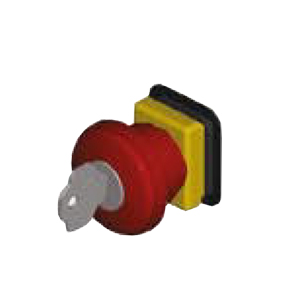
The TER SL000132 Key Mushroom Push Button is a red key-operated mushroom actuator designed for compatible TER SPA industrial pendant control stations. Combining the large, easily accessible operating surface of a mushroom-style push button with key-controlled operation, the SL000132 provides a specialised operator-control solution for machinery and industrial equipment where controlled access to a pendant function is required.
Designed as part of the TER SPA pendant control station system, the SL000132 can be incorporated into industrial operator interfaces used with cranes, hoists, winches, lifting equipment and other machinery. Its distinctive red mushroom actuator provides clear visual and physical identification, while the key-operated mechanism provides an additional level of control over access to the associated function.
The SL000132 should be selected by its TER part number and intended SPA pendant configuration. TER identifies this component specifically as a red key mushroom push button and lists it separately from the standard latched emergency-stop mushroom push button and impulse mushroom push button available within the SPA range.
TER Part Number SL000132
The manufacturer’s product reference for this component is SL000132.
Using the exact TER part number is particularly important when replacing components in an existing pendant control station because the SPA product family supports numerous pushbuttons, selectors, pilot lights, mushroom actuators and accessories.
Recording SL000132 in machine documentation and spare-parts records helps maintenance personnel identify the correct key mushroom push button when future replacement or servicing is required.
Red Key Mushroom Push Button
TER specifies the SL000132 as a red key mushroom push button.
The mushroom-shaped actuator provides a broad operating surface that is visually and physically distinct from conventional pendant pushbuttons.
The addition of key operation distinguishes the SL000132 from ordinary momentary mushroom controls and allows it to be used where access to the associated control function needs to be managed through possession of the appropriate key.
Key-Controlled Operation
Key-operated industrial controls are useful where a machine function should not be freely available to every person who can access the pendant control station.
Depending on the electrical and machine-control design, a key-operated actuator can be incorporated into functions that require authorised operation, controlled reset, maintenance access or another deliberately restricted command.
The exact machine function assigned to the SL000132 is determined by the equipment designer and control circuit in which it is installed.
Controlled Access to Machine Functions
The use of a key can help distinguish a restricted machine command from routine pendant operations such as hoist up, hoist down or travel commands.
This can be useful where only authorised personnel should be able to operate a particular function.
However, the presence of a key does not by itself establish the safety integrity or authorisation strategy of the complete machine. Those requirements must be determined through the overall control-system and machine-safety design.
Large Mushroom-Style Actuator
Mushroom push buttons use an enlarged operating surface compared with conventional pushbutton actuators.
This makes the control visually distinctive and provides an easily identifiable physical interface on the pendant.
Within a multi-function control station, different actuator shapes can help operators distinguish specialised commands from ordinary movement controls.
Red Actuator Identification
The SL000132 uses a red mushroom actuator.
Colour is an important element of industrial operator-interface design because it allows controls to be differentiated quickly.
The meaning assigned to the red actuator must remain consistent with the machine’s control design, operating instructions and applicable standards.
Designed for the TER SPA Pendant Control Station
TER lists the SL000132 within the actuator options available for its SPA pendant control station.
The SPA is a modular pendant-control platform designed for auxiliary control of industrial machinery.
Its flexible configuration allows machine manufacturers and system integrators to combine different control elements within a common pendant enclosure according to the requirements of the application.
Modular Pendant Control Architecture
The TER SPA platform is designed around a modular arrangement of actuators and accessories.
This enables different combinations of pushbuttons, selectors, pilot lights, mushroom actuators and other control components to be incorporated into the pendant.
The SL000132 extends this flexibility by providing a key-operated red mushroom control option for compatible configurations.
Two-Row SPA Pendant Layout
The TER SPA pendant control station arranges its primary control positions across two parallel rows.
This layout allows related or opposing machine commands to be organised logically and provides space for specialised controls alongside conventional movement pushbuttons.
A key mushroom push button such as SL000132 can therefore be incorporated into a broader operator interface containing multiple machine functions.
SPA Pendant Configurations
TER offers the SPA pendant family in configurations accommodating from 2 to 28 actuators.
This broad range allows the SPA platform to be used for relatively simple machinery as well as more complex equipment requiring numerous operator commands.
The SL000132 can be selected where the particular pendant configuration requires the red key mushroom push button option.
Industrial Operator Control
The SL000132 forms part of the physical interface between an operator and the machine control system.
When the actuator is operated, the resulting machine response depends on the associated switching arrangement, wiring and control logic.
The actuator itself should therefore always be considered as one component within the complete pendant and machine-control architecture.
Distinctive Control Identification
One advantage of using a mushroom actuator is its distinctive shape compared with standard pushbuttons and selector controls.
This difference can help operators identify the control by both sight and touch.
When combined with key operation, the SL000132 provides an operator-control format that is clearly distinguishable from routine pendant commands.
Key Mushroom Push Button Versus Standard Push Button
A conventional pendant pushbutton is typically intended for routine machine commands that need to be readily accessible during operation.
The SL000132 provides a different control concept by combining a mushroom actuator with key-controlled operation.
This makes it better suited to applications where the equipment designer specifically requires a key-operated function rather than an unrestricted standard pushbutton.
Key Mushroom Push Button Versus Selector Switch
The TER SPA range also supports selector switches and key selector switches for applications requiring maintained operating positions.
The SL000132 should not be confused with these selector controls.
It is specifically identified by TER as a key mushroom push button, providing a different physical operator interface from a rotary key selector.
SL000132 Versus PRSL3500PI
The TER SL000132 should be distinguished from the PRSL3500PI mushroom push button.
TER identifies PRSL3500PI specifically as the latched mushroom push button for emergency stop within the SPA pendant range.
SL000132, by comparison, is identified as the red key mushroom push button. These are separate TER components and should not be treated as interchangeable descriptions for the same function.
SL000132 Versus PRSL3531PI
TER also lists PRSL3531PI as an impulse mushroom push button for the SPA pendant control station.
This component provides another mushroom-style actuator option but without the SL000132 key-operated configuration.
Correct identification by part number is therefore essential when servicing an existing SPA pendant.
Not Automatically an Emergency-Stop Device
Although the SL000132 has a red mushroom-shaped actuator, it should not automatically be described or specified as an emergency-stop push button solely on the basis of its shape or colour.
TER separately identifies PRSL3500PI as the SPA latched mushroom push button for emergency-stop applications.
Any safety-related use of SL000132 would need to be established by the machine design, switching arrangement, applicable documentation and required safety architecture rather than assumed from the actuator appearance.
Importance of Correct Product Selection
Industrial control components that appear similar can have different operating characteristics and intended functions.
Replacing a control based only on colour or physical appearance can therefore result in an incorrect component being installed.
The TER part number SL000132 provides the clearest reference when the application requires the red key mushroom push button specified for the SPA pendant system.
Replacement Component for Existing SPA Pendants
The SL000132 is suitable as a replacement component where an existing compatible TER SPA pendant is already fitted with the same key mushroom push button configuration.
Like-for-like replacement helps maintain the original operator-interface design and simplifies future equipment documentation.
The existing actuator, associated switching arrangement and pendant configuration should be verified before replacement.
Maintaining Existing TER Pendant Controls
Industrial pendant control stations can remain in service for many years, particularly on cranes and lifting equipment that are maintained throughout a long operating life.
Availability of individual replacement components allows worn or damaged controls to be serviced without automatically replacing the complete pendant station.
The SL000132 provides a specific replacement reference for compatible TER SPA installations requiring the red key mushroom actuator.
Replacement After Mechanical Damage
Pendant control stations are handheld devices and can be exposed to impact, repeated operation and demanding industrial conditions.
If the SL000132 actuator becomes mechanically damaged, its condition should be assessed before the pendant is returned to service.
A damaged key mechanism, mushroom actuator or surrounding mounting arrangement should not be ignored simply because the associated electrical circuit still appears to function.
Inspection of the Key Mechanism
The key mechanism should operate correctly and without excessive force.
A key that is bent, damaged or difficult to operate can indicate wear or damage that requires further inspection.
Operators should not use improvised tools or excessive force to operate a damaged key mechanism.
Checking Mushroom Actuator Movement
The mushroom actuator should move in the manner intended by the installed configuration.
Sticking, excessive looseness or visible mechanical damage may indicate that servicing or replacement is required.
Functional testing should be performed according to the machine manufacturer’s maintenance procedures.
Inspecting the Surrounding Pendant Housing
Damage to a push button can sometimes be accompanied by damage to the surrounding pendant enclosure.
The mounting area should therefore be inspected for cracking, distortion or other deterioration when an SL000132 is being replaced.
The integrity of the complete pendant should be restored before the equipment returns to normal operation.
Industrial Crane Applications
TER SPA pendant control stations are widely suited to industrial lifting and movement applications where operators need a handheld interface for controlling machinery.
Crane systems can require both routine movement commands and specialised auxiliary functions.
The SL000132 can provide a distinctive key-operated control where such a function has been incorporated into the pendant design.
Overhead Travelling Cranes
Overhead travelling cranes commonly use pendant stations to control hoisting, trolley travel and bridge movement.
Additional functions may also be incorporated depending on the crane design and operating environment.
A key-operated mushroom control can be included where the system designer requires restricted access to a particular auxiliary command.
Gantry Crane Applications
Gantry cranes can use pendant controls with similar lifting and travel commands.
Depending on the application, the pendant may contain multiple actuator types to separate routine movement commands from specialised control functions.
The SL000132 provides a TER option where a red key mushroom push button is required within a compatible SPA pendant.
Hoist Control Applications
Industrial hoists frequently use pendant control stations for lifting and lowering operations.
More complex hoist installations can also incorporate speed control, auxiliary functions or controlled operating modes.
The modular TER SPA platform allows these functions to be arranged according to the machine design, including the use of the SL000132 where appropriate.
Winch Control Applications
Winches can use pendant stations to provide direct control of winding, unwinding and associated auxiliary functions.
Where access to a particular command needs to be key controlled, a component such as the SL000132 can provide a clearly differentiated operator interface.
The exact machine response remains dependent on the associated control circuit and logic.
Stage Technology Applications
TER pendant controls can also be used with stage machinery, including suitable hoists and powered movement systems.
These applications may require different operating modes for setup, positioning, maintenance or normal use.
A key-operated pendant control can be useful where the system designer needs to manage access to a particular machine function.
Industrial Machinery Applications
Beyond lifting equipment, modular pendant control stations can be used on industrial machinery where operators need to control equipment from a convenient handheld interface.
The SL000132 can form part of such an interface when a compatible TER SPA pendant and key-operated mushroom control are specified.
Machine suitability should always be determined from the complete control requirements rather than from the actuator alone.
Authorised Operator Functions
One potential use of a key-operated control is to restrict a particular command to personnel who have been issued the appropriate key.
This can support operational procedures where certain machine functions are intended only for trained or authorised personnel.
Key control should be considered one element of the overall operating procedure rather than a substitute for appropriate machine safeguards or access-control systems.
Maintenance Mode Applications
A key-operated control may also be incorporated into machinery where a dedicated maintenance or service function is required.
The exact suitability of SL000132 for such a function depends on the electrical design, switching arrangement and risk assessment of the machine.
The actuator should not be assigned a maintenance or safety function without appropriate system-level engineering.
Controlled Reset Functions
Some industrial systems use key-operated controls where a reset or restart-related command should require deliberate authorised action.
The SL000132’s key-operated mushroom format may be incorporated into such a system where the overall machine design specifies it.
The control logic must ensure that any reset function behaves in accordance with the machine’s applicable safety and operating requirements.
Reset Does Not Mean Automatic Restart
Where a key-operated control is used for a reset function, operation of the control should not be assumed to mean that machinery will automatically restart.
The behaviour of the system is determined by the complete electrical and control architecture.
Machine restart requirements should be established through appropriate safety design and risk assessment.
Machine Mode Control
Industrial machinery may use different operating modes for production, setup, inspection or maintenance.
Key-controlled operator devices can help manage access to these modes where appropriate.
If SL000132 is incorporated into such a design, the resulting operating function should be clearly documented and identified for users.
Clear Function Labelling
The purpose of the SL000132 should be clearly communicated to the operator through the machine’s labels, symbols or operating instructions.
A distinctive actuator is useful, but operators should not be expected to determine a machine function solely from the shape or colour of the control.
Clear identification becomes especially important on SPA pendants containing numerous actuator positions.
Ergonomic Operator Interface
The large mushroom actuator provides an easily identifiable control surface within the pendant.
Combined with the SPA’s organised two-row layout, specialised controls can be positioned separately from frequently used directional commands.
Thoughtful pendant layout can help create an operator interface that is easier to understand and use consistently.
OEM Machine Design
Original equipment manufacturers can specify the SL000132 when designing a TER SPA pendant requiring a red key mushroom push button.
Using the exact TER component reference in the bill of materials provides clarity during production and future service.
The intended machine function, associated switch configuration and wiring should also be documented as part of the complete control design.
Machine Builder Documentation
Accurate documentation is particularly valuable for specialised operator controls.
Machine drawings and component schedules should identify the TER SL000132 and explain the function assigned to it.
This makes future troubleshooting and replacement considerably easier for maintenance personnel who may not have been involved in the original machine design.
Spare-Part Identification
SL000132 should be recorded as the primary spare-part reference wherever the red TER key mushroom push button is installed.
The associated pendant model and machine location can also be recorded in the maintenance system.
This prevents confusion with the other mushroom pushbuttons available for the TER SPA product family.
Keeping SL000132 as a Maintenance Spare
Facilities operating multiple compatible TER SPA pendants may choose to keep SL000132 available as a replacement spare.
The appropriate stock quantity will depend on the number of installed controls, equipment criticality and local maintenance strategy.
Spare components should be stored in a clean and protected location with their TER part numbers clearly identified.
Reducing Maintenance Downtime
Accurate spare-part records can help reduce downtime when a pendant component is damaged.
If maintenance personnel already know that the installed component is SL000132, purchasing and replacement can proceed without having to identify an unknown mushroom actuator after the failure occurs.
This is particularly useful for facilities operating multiple cranes or hoists with similar TER control stations.
Safe Isolation Before Replacement
The machine and relevant pendant-control circuits should be safely isolated before an SL000132 actuator or associated electrical component is removed.
The pendant should not be opened or serviced while hazardous electrical or machine movement conditions remain present.
Replacement work should be completed by appropriately competent personnel using the machine’s established maintenance procedures.
Functional Testing After Replacement
After replacement and reassembly, the SL000132 should be functionally tested under controlled conditions.
The test should confirm that the actuator and key mechanism operate correctly and that the associated machine-control function responds as intended.
Any unexpected operation should be investigated before the equipment is returned to normal service.
Maintaining the TER SPA Pendant
Replacement of the SL000132 should form part of broader pendant maintenance where appropriate.
The enclosure, cable entry, pendant cable, adjacent actuators, labels and fastening points can be inspected while the equipment is out of service.
This helps identify additional wear or damage before it develops into an operational fault.
Preserving Pendant Enclosure Integrity
Any pendant enclosure opened for servicing should be correctly reassembled afterwards.
Seals, covers, cable entries and fasteners should remain in suitable condition and be positioned correctly.
Maintaining the complete enclosure is important for preserving the environmental protection provided by the TER SPA pendant system.
Why Choose the TER SL000132?
The TER SL000132 provides a clearly identified red key mushroom push button for compatible TER SPA pendant control stations.
Its combination of mushroom-style actuation and key-controlled operation makes it suitable for machine designs requiring a specialised, clearly differentiated pendant control.
For OEM machine builders, maintenance teams and industrial service organisations, the SL000132 part number provides a reliable reference for specifying or replacing the correct TER actuator.
TER SL000132 for Industrial Pendant Control Systems
The TER SL000132 Key Mushroom Push Button expands the flexibility of the SPA pendant control station by providing a red key-operated mushroom actuator for specialised industrial control functions.
Suitable for compatible pendant systems used with cranes, hoists, winches and other machinery, it can support applications where a clearly identifiable and key-controlled operator command is required.
Correct application depends on the complete machine-control design, and the SL000132 should always be selected and installed according to the TER pendant configuration and the requirements of the equipment in which it is used.
Key-Controlled Functions in Industrial Machinery
The TER SL000132 Key Mushroom Push Button provides machine designers with a distinctive key-operated control option within compatible TER SPA pendant control stations. Key operation can be useful where access to a particular machine command needs to be intentionally restricted or differentiated from routine operating functions.
The key mechanism can help establish a clear physical distinction between everyday pendant commands and functions intended for authorised or controlled operation. The actual purpose assigned to the SL000132 is determined by the machine designer, electrical circuit and control logic.
It is therefore important to consider the SL000132 as an operator-control component rather than assuming a particular machine function from its red mushroom appearance alone.
Managing Access to Specialised Controls
Industrial machines can include functions that are not intended for routine operation by every user.
A key-operated actuator provides one method of controlling physical access to such a command because operation depends on availability of the corresponding key.
This can complement workplace procedures for maintenance, setup, commissioning or other authorised activities where the overall machine design supports that approach.
Key Control Is Not a Complete Access-Control System
The presence of a key-operated control should not be interpreted as a complete machine access-control solution by itself.
Keys can potentially be shared, duplicated or left in the control depending on workplace practices and the actuator configuration.
Where strict personnel authorisation is required, the complete access-control procedure should be developed according to the operational and safety requirements of the machinery.
Machine Reset Applications
A key-operated mushroom push button may be considered for a machine reset function where the equipment design requires deliberate intervention by an authorised operator.
In such applications, the electrical and programmable control system determines what occurs when the SL000132 is operated.
The suitability of the component for a particular reset architecture must be established by the machine designer and should not be assumed from the actuator type alone.
Reset and Restart Are Different Functions
A reset command and a machine-start command should be considered separately when designing industrial control systems.
Operating a reset control may acknowledge or clear a particular machine condition without necessarily initiating hazardous movement.
The required behaviour depends on the machine design, risk assessment and applicable control-system requirements.
Maintenance Control Applications
Maintenance personnel may require access to functions that are not normally available during standard production operation.
A key-operated control can provide a clearly differentiated physical interface for such functions where the overall system has been designed accordingly.
The SL000132 can therefore be considered as one possible operator-control component within an engineered maintenance or service arrangement.
Setup and Commissioning Functions
Machine setup and commissioning can involve commands that are used infrequently after the equipment enters normal production.
Separating these commands from ordinary pendant controls can help reduce accidental selection.
A key-operated mushroom actuator provides a physically distinctive control option for suitable TER SPA pendant configurations.
Authorised Override Functions
Some machinery includes specialised override functions intended only for trained personnel and controlled operating conditions.
If a key-operated control is used for this purpose, the complete system should ensure that operation does not defeat required machine safeguards or create an uncontrolled hazardous condition.
The SL000132 itself does not determine the safety of an override function; that responsibility belongs to the complete machine-control architecture.
Clear Separation from Routine Movement Commands
Routine crane and hoist commands are commonly operated using conventional pushbuttons arranged logically on the pendant.
A red mushroom actuator with key operation is visually and mechanically different from these standard controls.
This distinction can help the machine designer position a specialised command separately from frequently operated directional controls.
TER SPA Pendant Integration
The modular design of the TER SPA pendant control station allows the SL000132 to be incorporated alongside a variety of other operator controls.
This makes it possible to create a pendant suited to the specific operating requirements of the machine.
The complete configuration can include standard pushbuttons, selectors, pilot lights, mushroom controls and other TER components.
Combining SL000132 with Standard Pushbuttons
A typical industrial pendant may contain standard pushbuttons for commands such as hoist up, hoist down, trolley travel or bridge travel.
The SL000132 can occupy a separate position where a key-controlled auxiliary function is required.
This combination allows routine movement controls and restricted functions to remain within one operator station while still being physically differentiated.
Combining SL000132 with Selector Switches
Selector switches can be used within the SPA pendant for mode selection or other maintained control functions.
The SL000132 can complement these controls where a separate key-operated mushroom command is required.
The function and sequence of each control should be clearly defined in the machine electrical documentation.
Combining SL000132 with Pilot Lights
Pilot lights can provide visual information about machine state or operating conditions.
Where a key-controlled command requires visual confirmation, the pendant or surrounding machine-control system can incorporate appropriate indication according to the equipment design.
The SL000132 and any associated indicator should be treated as separate components within the overall control system.
Combining SL000132 with Emergency-Stop Controls
A TER SPA pendant may contain both an SL000132 key mushroom push button and a dedicated emergency-stop mushroom control.
These controls should remain clearly differentiated in the machine design and operator instructions.
TER identifies the dedicated PRSL3500PI separately as the latched mushroom push button for emergency-stop applications.
Do Not Substitute SL000132 for PRSL3500PI Based on Appearance
The fact that both components use mushroom-style actuators does not make them interchangeable.
The SL000132 is identified as a red key mushroom push button, while PRSL3500PI is specifically identified by TER for the emergency-stop function within the SPA product family.
Correct part selection should be based on the TER product reference and required machine function.
Emergency-Stop System Considerations
Emergency-stop systems are safety-related functions and must be designed as part of the complete machinery safety architecture.
Actuator colour and shape are only part of the overall requirement. Contact behaviour, positive opening where required, control-system architecture, reset behaviour and machine risk assessment must also be considered.
The SL000132 should not be represented as providing emergency-stop functionality unless the specific engineered system and applicable documentation establish such a use.
SL000132 and the Impulse Mushroom Push Button
TER also offers the PRSL3531PI impulse mushroom push button within the SPA pendant range.
This provides another example of why part-number identification is essential when ordering mushroom-style controls.
The SL000132 is specifically differentiated by its key-operated arrangement.
Identifying an Existing SL000132
When servicing an existing TER SPA pendant, technicians should identify the installed component before ordering a replacement.
The machine documentation, TER component reference and physical configuration can all assist with identification.
Where the existing actuator is confirmed as SL000132, the same part number provides the clearest replacement reference.
Do Not Rely Only on Actuator Colour
Red is widely used in industrial control systems, but colour alone does not provide enough information to identify a replacement component.
Several controls can use red actuators while performing very different functions.
The TER part number, actuator type and machine-control function should all be considered.
Do Not Rely Only on Mushroom Shape
Mushroom actuators are available in different operating configurations.
They may be momentary, latched, key operated or designed for another specific function depending on the product.
The presence of a mushroom head therefore does not establish the complete operating characteristics of the control.
Check the Key Arrangement
The key-operated mechanism is a defining feature of the SL000132.
When assessing an existing pendant, technicians should verify that the replacement requires this key-operated configuration rather than a standard mushroom actuator or selector.
The correct key arrangement is important for maintaining the original machine operating procedure.
Check the Existing Machine Function
Before replacing any specialised control, the purpose of the existing actuator should be understood.
Electrical drawings and machine operating documentation can identify the circuit associated with the SL000132.
This helps ensure that replacement work restores the intended function rather than unintentionally altering the operator interface.
Check Associated Contact Operation
The mushroom actuator forms part of a wider switching arrangement within the pendant control station.
When servicing the assembly, the condition and operation of the associated contacts should also be considered.
Correct switching behaviour should be verified before the machine is returned to normal service.
Mechanical Installation Considerations
The SL000132 should be installed in the corresponding compatible position within the TER SPA pendant assembly.
The actuator must be seated and retained correctly so that its mechanical movement is not obstructed.
Incorrect installation can result in poor operation or damage to the control.
Inspecting the Mounting Position
Before installing a replacement SL000132, the surrounding pendant mounting area should be inspected.
Cracks, distortion or impact damage around the actuator opening can prevent the replacement component from being mounted correctly.
Significant enclosure damage should be addressed before the pendant returns to service.
Correct Mechanical Seating
A replacement actuator should sit correctly within the pendant enclosure without unintended movement.
Fastening components should be installed according to the applicable TER arrangement.
Overtightening or forcing components into position should be avoided because this can damage plastic parts or interfere with actuator movement.
Maintaining Free Actuator Movement
After installation, the mushroom actuator should operate freely through its intended movement.
It should not bind against the pendant housing or adjacent controls.
Any resistance or unusual movement should be investigated before electrical testing begins.
Key Insertion and Removal
The key should insert and operate smoothly within the actuator mechanism.
Difficulty inserting or removing the key may indicate mechanical damage, contamination or incorrect component alignment.
The key should not require excessive force during normal operation.
Avoiding Damage to the Key
Industrial control keys can be damaged if excessive force is applied or if the key is used as a lever.
A bent or damaged key should be replaced rather than repeatedly forced into the mechanism.
Operators should also avoid attaching excessive weight to the key while it is installed in the pendant.
Key Management
Where key operation is used to control access to a specialised machine function, key management becomes part of the operating procedure.
The organisation should determine who is authorised to hold or use the key according to the purpose of the control.
This administrative arrangement is separate from the physical functionality of the SL000132 itself.
Spare Key Considerations
Where spare keys are required, they should be managed so that the intended level of operational control is maintained.
Uncontrolled duplication or distribution may undermine the reason a key-operated actuator was selected in the first place.
Machine owners should establish appropriate key-control procedures for their application.
Labelling the Key-Controlled Function
The function associated with the SL000132 should be clearly identified.
A label, legend or symbol can help operators understand what the control does and under what circumstances it should be operated.
This is particularly important where the pendant contains numerous pushbuttons and auxiliary controls.
Operator Training
Operators should understand the purpose of the key mushroom push button before using the machine.
Training should explain the associated function, who is authorised to operate it and what machine response should be expected.
A key-operated actuator should not be treated as self-explanatory simply because it is visually distinctive.
Maintenance Personnel Training
Maintenance technicians should also understand the distinction between SL000132 and the other TER SPA mushroom controls.
This reduces the risk of ordering or installing an incorrect replacement component.
Part numbers and machine drawings should be used whenever available.
Safe Isolation Before Servicing
Before the SL000132 or associated pendant components are removed, the relevant electrical and mechanical hazards should be controlled.
The machine should be isolated according to established site and equipment procedures.
Maintenance should only begin once the equipment is in a safe condition for the required work.
Preventing Unexpected Machine Movement
Servicing a pendant control station can involve circuits that normally command machine movement.
Safe isolation must therefore address the possibility of unexpected operation, not merely electrical contact with live conductors.
The appropriate isolation procedure depends on the machinery and workplace requirements.
Opening the SPA Pendant
Access to internal pendant components may require the SPA enclosure to be opened.
Care should be taken not to damage seals, internal wiring or adjacent control components during disassembly.
The position of wires and components should be recorded where necessary to support correct reassembly.
Inspecting Internal Wiring
Once safe access has been established, the internal wiring associated with the key mushroom function can be inspected.
Loose terminals, damaged conductors or signs of overheating should be investigated.
Any electrical repair should restore the circuit to the intended machine configuration.
Inspecting Adjacent Components
Pendant damage may affect more than one control.
If the SL000132 has been damaged by impact, adjacent pushbuttons, selectors or pilot lights should also be checked.
This broader inspection can identify hidden damage before the equipment is returned to service.
Inspecting the Pendant Cable
The control cable should be included in routine pendant inspection.
Repeated bending and handling can result in sheath wear or internal conductor damage over time.
Problems in the pendant cable can produce symptoms that appear to originate from an individual push button.
Checking Cable Entry and Strain Relief
The point where the cable enters the pendant should remain mechanically secure.
Appropriate strain relief helps prevent pulling forces from being transferred directly to internal electrical connections.
The cable entry also contributes to the integrity of the complete pendant enclosure.
Preserving SPA Environmental Protection
The TER SPA pendant is designed as an industrial control enclosure, and correct assembly is important to maintaining its environmental protection.
Opening the enclosure for replacement of the SL000132 should therefore be followed by careful reassembly.
Seals, covers, cable entries and fastening points should remain correctly positioned and undamaged.
Cleaning Around the Actuator
Dirt and industrial contamination can accumulate around pendant controls.
The area around the SL000132 can be cleaned using methods compatible with the pendant materials and manufacturer requirements.
Aggressive solvents or cleaning methods that could damage plastic components, seals or markings should be avoided.
Preventing Contamination of the Key Mechanism
The key mechanism should be kept free from excessive dirt and contamination.
Foreign material entering the mechanism can interfere with smooth key operation.
Where a pendant operates in a particularly dirty environment, routine inspection can help identify contamination before the control becomes difficult to operate.
Do Not Lubricate Without Manufacturer Guidance
Lubricants should not be applied indiscriminately to the key mechanism or actuator.
An unsuitable lubricant can attract contamination, affect materials or interfere with the internal mechanism.
Any lubrication should only be performed where supported by the applicable manufacturer maintenance instructions.
Troubleshooting a Key That Will Not Turn
If the key will not operate normally, excessive force should not be applied.
The key should first be inspected for bending or damage, and the mechanism should be checked for contamination or visible mechanical deterioration.
If correct operation cannot be restored safely, replacement of the affected component may be required.
Troubleshooting a Sticking Mushroom Actuator
A mushroom actuator that sticks or fails to move correctly should be removed from normal service until the cause is determined.
Possible causes can include contamination, mechanical damage, incorrect mounting or internal wear.
The control should operate consistently before the pendant is returned to the operator.
Troubleshooting Intermittent Electrical Operation
If the associated machine function responds intermittently, the problem may not be confined to the mushroom actuator.
Associated contacts, terminals, internal wiring and the pendant cable should also be considered.
Electrical diagnosis should be performed systematically by competent personnel.
Troubleshooting an Incorrect Machine Response
If operation of the SL000132 produces an unexpected machine response, the equipment should not remain in normal service until the cause is identified.
Incorrect wiring, control-logic changes or component replacement errors can all affect machine behaviour.
The actual response should be compared with the machine documentation and intended control sequence.
Functional Testing After Installation
After a replacement SL000132 has been installed, the pendant should be reassembled and tested under controlled conditions.
The key mechanism, mushroom movement and associated electrical function should all be verified.
Testing should confirm both correct operation and correct release or reset behaviour according to the machine design.
Testing the Complete Operator Function
Testing should extend beyond simply confirming that the actuator moves.
The technician should verify that the corresponding machine-control input changes as expected and that the system produces the intended response.
Any associated indication or interlocking logic should also be checked where relevant.
Documenting Replacement Work
Maintenance records should identify the installed TER SL000132 where practical.
The date of replacement, reason for replacement and machine identification can also be recorded.
This information supports future maintenance planning and can help identify repeated component damage or operational issues.
Recording the Associated Machine Function
Because SL000132 can potentially be assigned to different specialised functions depending on the machine, maintenance records should state what the actuator controls.
This prevents future technicians from having to determine the purpose of the control solely from wiring inspection.
Clear documentation is particularly valuable on older equipment that may have been modified during its service life.
Updating Electrical Drawings
If the pendant configuration has been legitimately modified, the machine electrical drawings should be updated accordingly.
The drawing should identify the installed actuator and associated switching circuit.
Keeping documentation aligned with the physical machine helps improve future fault finding and spare-part selection.
Maintaining a TER SPA Spare-Parts Register
Facilities using several TER SPA pendant stations can benefit from a dedicated spare-parts register.
The register can identify installed pendant models, actuator types and commonly required replacement components.
SL000132 can then be stocked specifically for machines that use the red key mushroom configuration.
Preventing Spare-Part Selection Errors
A spare-parts system should distinguish SL000132 from other TER mushroom actuators.
Descriptions such as “red mushroom button” are not sufficiently specific because they do not identify the key mechanism or intended component.
Using the full TER part number greatly reduces this ambiguity.
Storing Replacement SL000132 Components
Replacement controls should be stored in clean, dry conditions where they are protected from impact and contamination.
The product identification should remain with the component so that it cannot be confused with another actuator.
Keys associated with replacement units should also be stored and managed appropriately.
Pendant Refurbishment Programs
Sites operating multiple cranes or hoists may periodically refurbish pendant control stations rather than waiting for individual components to fail.
During refurbishment, the SL000132 and other actuators can be inspected for wear, damage and correct operation.
Components that no longer meet the required condition can then be replaced before the pendant returns to service.
Assessing Whether to Repair or Replace the Complete Pendant
Replacing an individual SL000132 can be practical where the rest of the pendant remains in good condition.
However, a control station with extensive enclosure damage, degraded wiring, worn cable entries or multiple defective actuators may justify complete replacement.
The decision should consider equipment condition, safety requirements, spare-part availability and the cost of ongoing maintenance.
Long-Term Maintenance of TER Pendant Systems
The modular nature of the TER SPA system supports long-term maintenance by allowing individual components to be identified and serviced.
Accurate part-number records make this process more efficient as equipment ages.
The SL000132 provides a specific reference for maintaining the key-operated red mushroom function in compatible installations.
Benefits for OEM Machine Builders
OEMs can use the SL000132 to create a clearly differentiated key-controlled function within an SPA pendant configuration.
Its TER part number can be incorporated directly into engineering drawings and bills of materials.
This supports consistent production and gives end users a clear spare-part reference for future maintenance.
Benefits for System Integrators
System integrators can incorporate the SL000132 into suitable machine-control projects where a key-operated mushroom interface is required.
The control can be combined with PLC logic, relays and other system components according to the engineered design.
The final machine function and any safety requirements remain the responsibility of the complete control-system design.
Benefits for Maintenance Teams
For maintenance personnel, the primary advantage of SL000132 is precise component identification.
Rather than attempting to match a generic red mushroom actuator, technicians can specify the exact TER part required for the compatible SPA pendant.
This helps maintain the original control arrangement and simplifies future spare-parts management.
Benefits for Crane and Hoist Service Organisations
Crane and hoist service companies often encounter pendant stations with numerous actuator types.
Correctly identifying SL000132 prevents confusion with standard pushbuttons, impulse mushroom controls and dedicated emergency-stop components.
This can make repair and refurbishment work more efficient while preserving the intended pendant configuration.
Maintaining the Intended Operator Interface
Replacing an actuator with the correct component is important not only electrically but also from an operator-interface perspective.
The key mechanism, mushroom shape and red colour all contribute to the way the control is recognised and used.
Maintaining these characteristics helps preserve consistency between the machine, documentation and operator training.
TER SL000132 as a Purpose-Specific Pendant Component
The TER SL000132 should be viewed as a purpose-specific component within the wider SPA pendant-control platform.
Its value comes from combining a distinctive mushroom actuator with key-controlled operation in a configuration intended for compatible TER pendant systems.
Correct selection, installation and documentation allow the component to support reliable long-term operation of the machine interface.
Supporting Reliable Industrial Control
Reliable industrial control depends on more than the operation of individual components. Correct component selection, wiring, documentation, maintenance and operator understanding all contribute to the performance of the complete system.
The SL000132 provides the physical key mushroom interface, while the surrounding TER pendant and machine-control system determine how that interface is used.
For compatible TER SPA applications, this makes SL000132 a useful solution where a clearly identifiable and key-controlled industrial pendant function is required.
Industrial Applications for the TER SL000132
The TER SL000132 Key Mushroom Push Button is designed for use within compatible TER SPA pendant control stations installed on industrial machinery and lifting equipment.
Its combination of a red mushroom actuator and key-controlled operation makes it particularly suitable for specialised machine functions that need to be clearly distinguished from routine operator commands.
The exact role of the SL000132 depends on the machine-control architecture, but it can support a wide range of applications where authorised or deliberately controlled actuation is required.
Crane Pendant Applications
Crane pendant control stations commonly contain multiple movement commands together with auxiliary controls.
The SL000132 can be incorporated where the crane designer requires a key-operated mushroom command in addition to standard hoist, trolley or bridge controls.
Its distinctive shape and key mechanism help separate the function from routine directional pushbuttons.
Overhead Travelling Cranes
Overhead travelling cranes may use TER SPA pendants for lifting, lowering, cross travel and long travel.
Additional pendant positions can be allocated to specialised functions depending on the crane design.
The SL000132 provides a suitable TER actuator option where one of these functions is intended to require key-controlled operation.
Gantry Crane Applications
Gantry cranes often use similar operator-control arrangements to overhead cranes, with commands for lifting and machine travel grouped within a handheld pendant.
A key mushroom push button can provide a clearly differentiated interface for an auxiliary command.
The SL000132 allows this function to remain integrated within the same TER SPA pendant platform.
Jib Crane Applications
Jib cranes may use compact pendant stations for raising, lowering and other movement functions.
Where a particular auxiliary command should be restricted to authorised users, the SL000132 can provide a key-controlled physical interface within the pendant.
The associated electrical function must still be engineered and documented appropriately.
Hoist Applications
Industrial hoists frequently use pendant controls for lifting and lowering operations.
More advanced systems may include additional operating modes, auxiliary controls or maintenance-related functions.
The SL000132 can be incorporated where one of these functions requires a red key mushroom actuator within the TER SPA control station.
Winch Applications
Winches can use pendant stations to control winding, unwinding and associated auxiliary operations.
Key-controlled functions can help separate restricted or infrequently used commands from normal winch movement controls.
The SL000132 provides a clearly identified TER component for this type of pendant arrangement.
Stage Technology Applications
Stage machinery can involve hoists, winches and powered movement systems that require operator control during setup, positioning or production.
Some functions may only be intended for technicians or authorised personnel.
A key-operated mushroom actuator can support this type of controlled operating arrangement when incorporated into an appropriately designed TER SPA pendant system.
Industrial Automation Applications
The TER SPA pendant platform can also be used in industrial machinery and automation applications that require a handheld operator interface.
The SL000132 can provide a specialised key-operated command alongside standard pushbuttons and selectors.
This can be useful where an operator needs access to both routine controls and a clearly differentiated authorised function from one pendant station.
Machine Tool Applications
Machine tools and production equipment can require temporary setup, maintenance or auxiliary commands in addition to standard production controls.
A key-operated mushroom actuator can provide a physical means of separating these functions where the overall machine design supports it.
The SL000132 offers this capability within a compatible TER SPA pendant configuration.
Material Handling Systems
Material handling systems often include conveyors, lifting devices, transfer equipment and other mechanisms operated from local control stations.
A key-controlled actuator can be useful where a specialised command should not be freely available during normal production.
SL000132 can form part of such an operator interface when used with the appropriate TER SPA pendant and control logic.
Maintenance and Service Functions
One potential application for a key-operated actuator is controlled access to maintenance or service functions.
This can help separate commands used by maintenance personnel from routine operator controls.
The complete machine design must still ensure that maintenance functions cannot create unacceptable hazards or bypass required safeguards.
Setup Mode Functions
Setup modes are often used when adjusting or preparing industrial machinery.
Where a machine design requires deliberate access to such a mode or command, a key-operated actuator can help provide a clearly controlled operator interface.
The SL000132 may be incorporated where this function is compatible with the machine’s electrical and safety architecture.
Authorised Reset Applications
Some systems may use a key-operated push button for an authorised reset function.
This can be useful where restoration of a machine condition should require deliberate intervention by a designated person.
Any reset function must be designed so that it does not automatically initiate hazardous machine movement unless the complete control system has been specifically engineered for that behaviour.
Machine Enable Functions
A key-controlled mushroom actuator may also be used as part of a machine-enable or permission function where appropriate.
In this type of application, possession of the key can help restrict access to the command.
The actual enabling logic and safety performance are determined by the surrounding control system rather than by the SL000132 actuator alone.
Auxiliary Control Functions
Industrial machines frequently include auxiliary functions in addition to their primary movement commands.
These can include service functions, mode changes, acknowledgements or other machine-specific operations.
The SL000132 provides a distinctive TER actuator option where one of these functions is intended to be key controlled.
Clear Differentiation from Directional Controls
Directional commands such as up, down, left and right are typically operated frequently and should be easy to identify.
The large red mushroom form of the SL000132 is visually different from standard directional pushbuttons.
This distinction can help users recognise that the associated function requires special consideration before operation.
Operator Interface Design
Good operator-interface design considers control location, shape, colour, labelling and frequency of use.
The SL000132 contributes a distinctive mushroom and key-operated format that can be positioned appropriately within the pendant layout.
The final arrangement should be logical and consistent with the machine’s operating procedures.
Placement Within the SPA Pendant
The position of the SL000132 within the pendant should be selected according to the function it controls.
Specialised commands may benefit from being separated from frequently operated movement controls.
This can reduce the likelihood of accidental selection and improve overall pendant usability.
Function Labelling and Legends
The SL000132 should be accompanied by a clear label, symbol or legend explaining its purpose.
Red colour and mushroom shape alone should not be relied upon to communicate the exact machine function.
Clear labelling helps ensure that operators understand when and why the key-controlled function should be used.
Operator Procedures
Where the SL000132 controls a restricted or specialised function, operating procedures should describe who may use it and under what conditions.
These procedures should align with the machine’s control design and workplace practices.
The key mechanism can support the procedure, but it does not replace appropriate operator training and supervision.
Key Management Procedures
Organisations using key-controlled machinery should consider how keys are issued, stored and controlled.
If every person has unrestricted access to the key, the operational benefit of a key-controlled function may be reduced.
A simple key-management procedure can help maintain consistency with the intended use of the SL000132.
Spare Key Control
Spare keys should also be managed in accordance with the purpose of the control.
They should remain available for maintenance or replacement where required without becoming uncontrolled copies that undermine authorised access.
The appropriate approach depends on the site’s operational procedures and the significance of the function being controlled.
Maintenance Inspection of the SL000132
The SL000132 should be included in routine pendant inspections.
Technicians can check actuator movement, key operation, mounting security and the general condition of the surrounding enclosure.
Early identification of wear or damage can prevent a minor control issue from becoming an operational problem.
Inspecting for Mechanical Wear
Repeated operation can eventually produce wear in any mechanical actuator.
Signs such as excessive looseness, inconsistent movement or damage to the mushroom surface should be investigated.
If the actuator no longer operates reliably, replacement should be considered.
Inspecting the Key Barrel
The key barrel should be checked for smooth and consistent operation.
Difficulty turning the key, abnormal looseness or visible mechanical damage can indicate wear.
Where the mechanism becomes unreliable, continued use may lead to further deterioration or unexpected control behaviour.
Inspecting the Key
The key itself should also be examined for bending, wear or damage.
A damaged key can place additional load on the lock mechanism and may eventually become difficult to remove.
Replacement keys should correspond with the intended TER actuator arrangement.
Inspecting the Mushroom Actuator Surface
The mushroom surface should remain intact and clearly identifiable.
Cracks, severe abrasion or impact damage can indicate that the actuator has been subjected to excessive mechanical stress.
Any damaged component should be evaluated before the machine returns to service.
Inspecting the Mounting Area
The surrounding pendant housing should remain free from cracks and deformation.
A mechanically damaged mounting area can prevent the SL000132 from being retained correctly.
Where enclosure damage is significant, replacement of the entire pendant section or complete control station may be necessary.
Inspecting Adjacent Controls
If the SL000132 has been damaged by impact, nearby pushbuttons, selectors and pilot lights should also be checked.
An external blow to the pendant can affect several components at the same time.
Inspecting the complete operator station reduces the likelihood of hidden damage remaining in service.
Electrical Functional Inspection
Mechanical inspection should be complemented by verification of the associated electrical operation.
Operating the SL000132 should produce the expected input or machine-control response under controlled test conditions.
Any inconsistent response can indicate a problem with contacts, wiring, terminals or the wider control circuit.
Internal Wiring Inspection
Where maintenance requires the pendant to be opened, internal wiring can be inspected for loose terminals, damaged insulation or excessive mechanical strain.
Connections associated with the SL000132 should remain secure and correctly identified.
Repairs should restore the original circuit design unless an authorised engineering modification has been approved.
Pendant Cable Condition
The pendant cable is subject to frequent flexing during normal operation.
Damage within the cable can create faults that appear to originate at an individual actuator.
If the SL000132 behaves intermittently along with other controls, the cable should be included in the diagnostic process.
Cable Entry and Strain Relief
The point where the control cable enters the SPA pendant should remain secure and correctly supported.
Effective strain relief helps prevent external pulling forces from reaching internal terminals.
A damaged or loose cable entry should be addressed as part of pendant maintenance.
Pendant Refurbishment
Older TER SPA pendants can often be evaluated for refurbishment where the enclosure and overall system remain serviceable.
Worn actuators, damaged keys or other individual components can be replaced as needed.
The SL000132 allows the key mushroom function to be renewed without replacing the complete pendant where a like-for-like repair is appropriate.
When to Replace Only the SL000132
Individual replacement is appropriate where the SL000132 is defective but the surrounding pendant, wiring and associated contacts remain in satisfactory condition.
This approach preserves the existing control station and can reduce maintenance cost and downtime.
The replacement should be tested before the pendant returns to operational use.
When to Replace the Complete Pendant
Complete pendant replacement may be preferable where the enclosure has extensive damage, several actuators are worn or the internal wiring has deteriorated significantly.
Repeated failures can also indicate that the control station has reached a point where refurbishment is no longer economical.
The decision should consider equipment condition, safety, spare-part availability and maintenance history.
Troubleshooting a Non-Responsive SL000132
If operation of the actuator produces no response, the technician should first establish whether the problem is mechanical or electrical.
The key and mushroom mechanism should be checked for correct operation, followed by inspection of the associated switching and wiring.
Control-system logic may also need to be reviewed if the physical input is functioning correctly.
Troubleshooting Intermittent Operation
Intermittent operation can result from worn contacts, loose wiring, damaged terminals or cable faults.
The actuator may appear to operate mechanically while the electrical signal is unreliable.
Systematic testing helps avoid replacing a component without correcting the actual cause of the fault.
Troubleshooting a Jammed Key
A key that becomes difficult to turn or remove should not be forced.
The mechanism should be inspected for contamination, damage or wear.
Continued use of a failing key mechanism can make future removal more difficult and may damage the actuator further.
Troubleshooting a Sticking Mushroom
A mushroom actuator that fails to move smoothly should be taken seriously.
Possible causes include contamination, mechanical damage, misalignment or internal wear.
The pendant should not return to normal service until correct movement and associated control operation have been confirmed.
Post-Replacement Testing
After a new SL000132 is installed, the pendant should be fully reassembled and tested.
The key mechanism should function correctly, the mushroom actuator should move as intended and the associated electrical command should respond consistently.
Testing should be performed under controlled conditions before normal machine operation resumes.
Testing the Intended Machine Function
The final test should confirm more than simple actuator movement.
The machine should interpret the SL000132 input correctly according to the intended control sequence.
Any related interlock, indicator or permission logic should also be verified where applicable.
Documenting the Replacement
Maintenance records can identify the installation of a new SL000132 together with the date, reason for replacement and machine location.
This provides useful information for future fault analysis and spare-parts planning.
Repeated actuator replacement may indicate an underlying environmental, mechanical or operational issue that deserves further investigation.
Recording the Machine Function
The function controlled by the SL000132 should be clearly recorded in the equipment documentation.
This is particularly important because the same actuator type can potentially be assigned to different functions on different machines.
Future technicians can then understand the intended behaviour without relying solely on physical inspection.
OEM Machine Builder Applications
Original equipment manufacturers can specify the SL000132 when designing a new TER SPA pendant that requires a key-operated red mushroom control.
Using the exact part number in the bill of materials supports consistent production and simplifies future service.
The machine documentation should also define the associated switching arrangement and intended operator function.
System Integrator Applications
System integrators can incorporate the SL000132 into suitable pendant-control projects where a distinct key-operated interface is needed.
The actuator can be connected to the wider machine-control system through the appropriate electrical architecture.
Any interlocking, authorisation or safety functions must be engineered at system level.
Crane Service and Modernisation
Crane service companies may encounter existing TER SPA pendants during repair or modernisation work.
Where the installed actuator is confirmed as SL000132, a like-for-like replacement can help retain the original pendant layout.
This can be especially useful where the rest of the control station remains in good serviceable condition.
Hoist Maintenance and Refurbishment
Hoist maintenance teams can use the SL000132 as a specific spare-part reference for compatible TER pendant installations.
Accurate identification reduces the chance of substituting a standard mushroom button or emergency-stop actuator in error.
The part number should be verified before ordering.
Spare-Parts Planning
Facilities operating multiple TER SPA pendants can improve maintenance efficiency by recording which machines use SL000132.
This enables replacement stock to be held only where the component is actually installed.
The resulting spare-parts list can also distinguish SL000132 from other TER mushroom pushbutton options.
Recommended Spare-Part Description
For maintenance and purchasing systems, the product can be recorded as “TER SL000132 Key Mushroom Push Button – Red – SPA Pendant.”
This gives purchasing personnel a clearer reference than a generic description such as “red mushroom switch.”
The exact TER part number should remain the primary identifier.
Storing Replacement Components
Spare SL000132 actuators should be stored in a clean, dry environment where the mushroom head and key mechanism are protected from impact or contamination.
Associated keys should remain with the correct replacement component or be managed according to the site’s key-control procedure.
Packaging and part identification should be retained where possible.
Avoiding Incorrect Substitution
One of the most important maintenance considerations is avoiding substitution with a visually similar but functionally different actuator.
The TER SPA range contains several mushroom-style controls with different intended functions.
SL000132 should therefore be ordered and installed specifically where the red key mushroom push button is required.
SL000132 Is Not the Dedicated Emergency-Stop Mushroom
The red mushroom appearance should not lead technicians or customers to assume that SL000132 is the dedicated TER SPA emergency-stop device.
TER identifies PRSL3500PI separately as the latched mushroom push button for emergency-stop applications.
This distinction should remain clear in product listings, bills of materials and maintenance documentation.
SL000132 Is Not the Impulse Mushroom Push Button
TER also offers PRSL3531PI as an impulse mushroom push button.
This is another separate actuator configuration within the SPA range.
The key-operated mechanism of SL000132 is the defining characteristic that differentiates it from this standard impulse mushroom control.
Control Devices Product Support
Control Devices supplies industrial control components and replacement parts for machinery, lifting equipment and automation applications.
For customers maintaining TER SPA pendant control stations, Control Devices can assist with identifying suitable TER actuators and related spare parts based on the existing pendant configuration and product codes.
Providing the TER part number and photographs or details of the existing control station can assist with correct component identification.
Support for TER SPA Spare Parts
The SL000132 is one component within the wider TER SPA pendant control system.
Depending on the condition of the equipment, customers may also require pushbuttons, contact elements, selectors, pilot lights, emergency-stop components, enclosures or other pendant accessories.
Correct identification of each component helps maintain the original machine-control arrangement.
Support for Existing Machines
Where an existing machine uses a TER SPA pendant, Control Devices can assist with spare-part identification for maintenance and refurbishment.
Machine model, pendant configuration, existing part numbers and photographs can all be useful during component selection.
This helps reduce the risk of ordering a similar-looking but incompatible actuator.
Support for New OEM Projects
Machine builders developing new equipment can also use the TER SPA platform to create customised pendant-control layouts.
The SL000132 can be considered where a red key mushroom push button is required as part of the engineered operator interface.
The final control function should be defined through the complete electrical and machine-control design.
Information to Provide When Ordering
When ordering the TER SL000132, the most important information is the complete part number.
Customers should also confirm that the required component is the red key mushroom push button for the compatible TER SPA pendant rather than a standard mushroom or dedicated emergency-stop actuator.
Details of the existing pendant and machine application can provide additional confirmation where necessary.
Why Choose the TER SL000132 Key Mushroom Push Button?
The TER SL000132 provides a specific key-operated mushroom control solution for compatible SPA pendant control stations.
Its red mushroom actuator offers strong visual differentiation, while the key mechanism supports controlled access to specialised machine commands.
The exact TER part number also gives OEMs, service companies and maintenance teams a reliable reference for replacement and spare-parts management.
A Practical Component for Long-Term Pendant Maintenance
Industrial pendant control stations can remain in service for many years when correctly maintained.
The ability to identify and replace individual components such as the SL000132 supports economical refurbishment and repair of existing TER SPA systems.
This can reduce unnecessary replacement of otherwise serviceable pendant assemblies.
TER SL000132 Key Mushroom Push Button
The TER SL000132 Key Mushroom Push Button is a red key-operated mushroom actuator designed for compatible TER SPA industrial pendant control stations.
It provides a clearly differentiated operator-control solution for applications where a specialised machine function requires deliberate key-controlled actuation, while remaining integrated within the flexible modular SPA pendant platform.
Suitable for compatible crane, hoist, winch, stage and industrial machinery applications, the SL000132 offers OEMs, maintenance teams and system integrators a precise TER component reference for new designs, replacement, refurbishment and long-term spare-parts support.