
Description
TER Heavy Duty Warning Lights – Industrial Warning Lights and Sirens for Harsh Environments
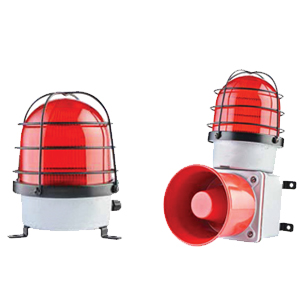
TER Heavy Duty Warning Lights are designed for demanding industrial applications where highly visible signalling, robust construction and dependable operation are required. Developed for use in severe industrial conditions, the range combines industrial warning lamps, illuminated sirens and electronic sirens to provide flexible visual and audible signalling for machinery, cranes, material handling systems, automation equipment and infrastructure.
Industrial warning equipment often operates in environments where dust, moisture, temperature changes, vibration, machinery noise and exposure to demanding working conditions are part of normal operation. TER Heavy Duty Warning Lights have been developed specifically for these applications, providing a robust signalling platform suitable for machine builders, system integrators, maintenance organisations and industrial end users.
The TER Heavy Duty range includes seven principal series: TERMHD01 and TERMHD02 Heavy Duty Warning Lights, TERMHD03 and TERMHD05 Heavy Duty Warning Sirens, and TERMHD04, TERMHD06 and TERMHD07 Heavy Duty Beacon Sirens. This broad product family allows the warning system to be configured according to whether visual indication, audible warning or a combination of both functions is required.
Across the range, TER specifies a 125 mm polycarbonate lens, ABS or metal housing construction, IP65 protection and an operational ambient temperature range from -20°C to +50°C. The visual signalling system uses 3 W Power LED technology with a published LED life of approximately 50,000 hours.
Available light colours include red, green, yellow, blue and white, while model-dependent light functions include steady, flashing, strobing and rotary effects. Audible versions provide 7 or 10 melodies and sound output across applicable configurations ranging from approximately 90 to 133 dB.
Heavy Duty Industrial Warning for Demanding Applications
The term heavy duty is particularly relevant to industrial signalling equipment because warning devices are often installed in exposed positions. They may be mounted on machinery frames, crane structures, loading areas, conveyors, outdoor equipment or other locations where environmental protection and mechanical durability are important.
TER has designed the Heavy Duty Warning Light family for severe industrial operating conditions. The range provides protection against water and dust and is designed with resistance to heat and UV exposure as part of its environmental characteristics.
This makes the product family suitable for consideration across a wide variety of industrial environments where a conventional light-duty indicator may not provide the required construction or environmental protection.
The exact suitability of a particular TERMHD configuration should still be assessed against the complete application. IP rating, operating temperature, mounting arrangement, electrical supply, chemical exposure and mechanical conditions all need to be considered during product selection.
Seven Heavy Duty Warning Light and Siren Series
TER divides the Heavy Duty Warning Light family into seven principal series, allowing designers to select between dedicated warning lights and combined audible-visual signalling devices.
The TERMHD01 and TERMHD02 series are identified as Heavy Duty Warning Lights and focus on prominent visual signalling. TERMHD03 and TERMHD05 are Heavy Duty Warning Sirens, providing audible warning capability for demanding industrial applications.
TERMHD04, TERMHD06 and TERMHD07 are Heavy Duty Beacon Sirens, combining beacon-style visual indication with audible signalling in a single industrial assembly.
This range structure provides significant flexibility. A machine requiring only visual status indication can use a warning-light configuration, while equipment requiring personnel to be alerted through both sight and sound can use an appropriate beacon-siren configuration.
TERMHD01 Heavy Duty Warning Lights
The TERMHD01 series forms part of TER’s dedicated Heavy Duty Warning Light range. It provides a robust visual signalling solution for industrial machinery and installations where clear indication needs to remain visible in demanding operating conditions.
The series benefits from the broader Heavy Duty family characteristics, including industrial construction, LED-based illumination and environmental protection suited to challenging machinery applications.
TERMHD01 can be considered where a dedicated visual warning is preferred rather than a combined beacon and audible siren. This can be useful where the machine already has a separate audible alarm or where visual indication alone is appropriate for the defined operating state.
The exact colour, voltage, mounting and operating characteristics should always be confirmed against the selected TERMHD01 part number before installation.
TERMHD02 Heavy Duty Warning Lights
TERMHD02 provides another dedicated warning-light option within TER’s Heavy Duty family, expanding the available configurations for industrial visual signalling.
Having multiple Heavy Duty Warning Light series enables machine designers to select the configuration most appropriate to the physical installation and required signalling function rather than relying on one universal beacon design.
Applications can include industrial machinery, crane systems, automated equipment, control installations and other equipment where prominent visual warning is required.
As with the TERMHD01 series, selection should be based on the exact technical configuration required for the machine, including supply voltage, visual function, mounting method and environmental conditions.
TERMHD03 Heavy Duty Warning Sirens
The TERMHD03 series introduces audible signalling into the TER Heavy Duty range. Heavy Duty Warning Sirens are designed for applications where personnel need to be alerted acoustically to a machine, process or equipment condition.
Audible warning is particularly valuable where personnel may not be looking directly toward the equipment when an alarm occurs. In busy industrial environments, sound can attract attention before the operator identifies the relevant visual indicator or machine display.
TER provides multiple melody options across applicable Heavy Duty audible configurations, allowing the warning sound to be selected according to the required signalling strategy.
Where high acoustic output is used, the location of personnel and workplace noise exposure should be considered as part of the overall system design.
TERMHD04 Heavy Duty Beacon Sirens
TERMHD04 combines visual beacon signalling and audible warning into a Heavy Duty industrial assembly. This provides two complementary methods of attracting attention from one device.
The visual beacon can identify the active warning location, while the audible siren attracts attention when personnel are not facing the equipment. This combination can be particularly useful on large machinery, crane installations, conveyors and automated systems.
A combined beacon siren can also simplify machine design by reducing the need to mount completely separate visual and audible warning devices.
Where separate control of light and sound is provided by the selected configuration, designers can develop more sophisticated signalling sequences based on the machine condition.
TERMHD05 Heavy Duty Warning Sirens
The TERMHD05 series provides an additional Heavy Duty Warning Siren option within the TER range. It is intended for applications requiring robust audible signalling in demanding industrial environments.
The availability of several Heavy Duty siren configurations gives system designers greater flexibility when matching acoustic warning requirements to machinery and infrastructure.
High sound output can be important across large industrial spaces, but acoustic performance should always be selected according to the required coverage rather than simply choosing the maximum available volume.
Ambient noise, personnel distance, barriers, machine structures and building acoustics can all influence how effectively an industrial siren is perceived.
TERMHD06 Heavy Duty Beacon Sirens
TERMHD06 provides another combined beacon-and-siren configuration within TER’s Heavy Duty signalling family. The integration of visual and audible functions makes this type of product useful where a warning needs to be both seen and heard.
This is particularly relevant in industrial environments where background machinery noise can affect audible warning or where personnel may be positioned outside the immediate line of sight of the beacon.
By combining both forms of indication, a Heavy Duty Beacon Siren can provide a more comprehensive signalling approach than a visual or audible device used alone.
The final effectiveness of the warning still depends on correct positioning, appropriate sound level, suitable light mode and a clearly understood alarm philosophy.
TERMHD07 Heavy Duty Beacon Sirens
TERMHD07 completes the principal seven-series TER Heavy Duty Warning Light family and provides an additional beacon-siren solution for industrial applications.
Like the other combined configurations, it can provide visual and audible warning from one installation point, supporting machinery and systems where prominent alarm indication is required.
The different TERMHD series should not be treated as electrically or functionally identical simply because they belong to the same Heavy Duty range. Model-specific voltage, sound and visual characteristics should be confirmed when specifying the final product.
This approach ensures that the selected TER warning device matches the control system and intended warning function of the equipment.
3 W Power LED Technology
TER Heavy Duty Warning Lights use 3 W Power LED technology for visual signalling. Power LEDs provide a highly effective light source while supporting the long operating life required in industrial equipment.
LED technology is particularly useful in warning applications because the device may operate repeatedly over many years. Reducing dependence on conventional replaceable lamps can lower routine maintenance requirements and improve long-term availability.
The 3 W Power LED arrangement supports the range’s steady, flashing, strobing and rotary visual functions, depending on the selected configuration.
LED technology also allows different warning colours to be offered within the same broader product family, helping designers create a consistent visual signalling system across multiple machines.
Approximately 50,000 Hours of LED Life
TER specifies an LED life duration of approximately 50,000 hours for the Heavy Duty Warning Light range. This provides a long-life visual signalling solution suitable for industrial machinery and infrastructure.
Long LED life can be particularly valuable where warning devices are mounted in locations that are inconvenient to access, such as crane structures, elevated machinery or large automated installations.
Reducing the frequency of lamp replacement can simplify preventative maintenance and reduce the amount of planned access required around the signalling device.
The complete warning light should still be inspected periodically. Long LED life does not eliminate the need to check the lens, housing, mounting hardware, wiring and correct operation of the signalling functions.
125 mm Polycarbonate Lens
TER specifies a 125 mm diameter polycarbonate lens for the Heavy Duty Warning Light family. The substantial lens size provides a prominent visual signalling surface suitable for industrial equipment.
Polycarbonate is commonly suited to industrial signalling applications because it combines optical performance with useful mechanical characteristics. The lens protects the internal LED system while allowing the selected warning colour and light pattern to remain visible.
Lens condition should form part of routine maintenance. Dust, oil and other industrial contamination can reduce the apparent visibility of any warning light if allowed to accumulate on the lens.
Cleaning procedures should use methods and products compatible with the lens material and the complete warning-light assembly.
ABS and Metal Housing Options
TER specifies ABS and metal housing construction across the Heavy Duty Warning Light family. This provides different construction options within a product range intended for severe industrial operating conditions.
The housing supports and protects the internal signalling components while providing the mechanical interface between the warning device and the machine or mounting structure.
The appropriate construction should be selected according to the particular TERMHD configuration and installation requirements.
Mechanical protection of the complete device should also be considered where the warning light is exposed to potential impact from loads, equipment or material handling operations.
Anti-Shock Protection Cage Options
TER’s Heavy Duty Warning Light family includes versions available with an anti-shock protection cage. This feature provides additional physical protection around the warning assembly where accidental impact is a foreseeable installation concern.
A protective cage can be particularly useful where the beacon is installed around heavy machinery, material handling equipment, loading areas or other locations where contact with moving objects could occur.
The cage protects the warning device while allowing the visual signal to remain observable and the audible function to operate on applicable configurations.
The need for anti-shock protection should be assessed during installation planning, particularly when the warning device is positioned at lower levels or close to moving machinery and materials.
Red Heavy Duty Warning Lights
Red is available as one of the visual colours within the TER Heavy Duty Warning Light range. It can be used where the machine or facility signalling philosophy assigns red to a defined warning or alarm state.
Red provides a highly recognisable industrial indication, but the meaning of the colour should be established by the overall machine-control and signalling strategy.
The colour should not be selected independently of other indicators on the equipment. Consistency across stack lights, warning beacons, control-panel indicators and Heavy Duty Warning Lights helps personnel interpret machine conditions more clearly.
Where the visual indication represents an important condition, an audible Heavy Duty siren or beacon-siren configuration can also be considered where appropriate.
Yellow Heavy Duty Warning Lights
Yellow is another available colour within the TER range and can provide a highly visible indication for machine and process signalling.
Applications can use yellow according to the signalling convention established for the equipment or facility. The exact meaning should be documented so that operators and maintenance personnel understand the required response.
Combining colour selection with different light modes can further differentiate machine conditions where the selected TER model provides the required functionality.
For example, a steady indication and a flashing indication can communicate different states even when the same general colour family is used, provided the meaning remains clear to personnel.
Green, Blue and White Warning Light Options
TER also provides green, blue and white light options within the Heavy Duty Warning Light family. This expands the range beyond conventional red and yellow warning indication and supports more comprehensive industrial signalling strategies.
Different colours can be assigned to specific equipment conditions according to the requirements of the machine, facility and applicable signalling conventions.
The broad colour selection is particularly useful to OEM machine builders who want to maintain a consistent TER signalling platform while configuring equipment for different functions.
Colour alone should not be relied upon where a condition requires additional methods of attracting attention. Audible signalling or different light behaviour can be incorporated where required by the application.
Steady Light Mode
A steady light provides continuous visual indication for as long as the relevant signal remains active. This can be useful for machine conditions that need to remain clearly visible without the increased attention generated by a flashing or strobing effect.
Steady illumination can form part of a structured signalling hierarchy in which different light behaviours correspond to different levels or types of machine information.
The substantial 125 mm lens and Power LED system provide a prominent visual indication while the device is active.
The meaning assigned to a steady indication should remain consistent with the rest of the equipment’s visual signalling system.
Flashing Heavy Duty Warning Lights
Flashing operation provides a changing visual signal designed to attract greater attention than a continuously illuminated light in many industrial environments.
TER includes flashing functionality among the available operating modes across applicable Heavy Duty Warning Light configurations.
This can be useful for equipment alarms, machine-state changes or other conditions where personnel need to notice the signal promptly.
The use of flashing indication should remain purposeful. If every machine state uses a flashing warning, it can become more difficult for personnel to distinguish the conditions that genuinely require increased attention.
Strobing Light Mode
Strobing provides another highly noticeable visual effect within the TER Heavy Duty Warning Light range. The rapidly changing light pattern can provide a prominent signal where increased visual attention is required.
A strobing signal should be incorporated carefully into the overall warning philosophy. Its purpose should be clearly defined and differentiated from routine machine-status indication.
Environmental and personnel considerations should also form part of the selection process when prominent flashing or strobing visual effects are used.
The availability of multiple light modes gives designers flexibility, but the most effective signalling system is generally one in which each mode has a clear and consistent meaning.
Rotary LED Warning Effect
TER Heavy Duty Warning Lights also provide a rotary visual mode on applicable configurations. This creates the appearance of a rotating warning signal using the LED-based signalling system.
Rotary-style indication is familiar across many industrial and mobile-equipment applications and can provide an easily recognisable visual warning.
Using LED technology allows this type of visual effect to be produced within a modern industrial warning-light platform.
The rotary mode can be selected where it best suits the required signalling function, while steady, flashing and strobing modes provide alternatives for other machine conditions.
IP65 Protection for Industrial Environments
TER specifies IP65 protection for the Heavy Duty Warning Light range. This provides a strong level of enclosure protection against dust and water ingress under the conditions represented by the IP classification.
IP65 is particularly useful for industrial signalling equipment because warning lights are frequently installed outside protected electrical cabinets and directly on machinery or structures.
The IP rating does not establish compatibility with every possible chemical, cleaning process, pressure-washing condition or environmental exposure. These factors should be assessed separately when selecting the device.
Correct mounting and electrical installation are also important to maintaining the intended environmental performance of the completed installation.
Operating Temperature from -20°C to +50°C
TER specifies an operational ambient temperature range of -20°C to +50°C for the Heavy Duty Warning Light family. This supports use across a broad range of industrial environments.
Temperature capability is important for warning devices installed in exposed machinery areas, warehouses, infrastructure and outdoor-associated industrial equipment where ambient conditions may vary considerably.
The specified range relates to the warning device itself and should be considered alongside other environmental factors such as direct solar exposure, nearby process heat and enclosure conditions.
Where the expected temperature can exceed the published limits, an alternative installation arrangement or product selection should be considered.
Surface and Wall Mounting Options
TER Heavy Duty Warning Lights support surface and wall mounting, providing flexibility when integrating the device into industrial machinery, structures and facilities.
Surface mounting can suit machine tops, control enclosures and horizontal structures, while wall mounting can provide effective positioning on vertical machinery frames, building structures and industrial installations.
The selected mounting position should provide clear visibility of the light while allowing audible output to propagate effectively where a siren is included.
Mechanical security, cable routing and access for inspection should also be considered when determining the final mounting location.
Heavy Duty Signalling for Severe Industrial Conditions
TER Heavy Duty Warning Lights provide a versatile platform for industrial applications requiring robust visual and audible signalling. The seven-series TERMHD family allows designers to select dedicated warning lights, Heavy Duty Warning Sirens or combined Heavy Duty Beacon Sirens according to the needs of the equipment.
With IP65 protection, a -20°C to +50°C operating range, 125 mm polycarbonate lenses, ABS or metal housings and available anti-shock protection, the range has been developed for demanding industrial environments.
Long-life 3 W Power LEDs provide approximately 50,000 hours of published LED life, while red, green, yellow, blue and white colour options and steady, flashing, strobing and rotary light modes provide substantial flexibility for visual signalling.
For applications requiring audible warning, applicable TER Heavy Duty configurations extend the system with selectable melodies, adjustable sound output and powerful acoustic performance, creating a comprehensive industrial warning solution for machinery, cranes, automation and infrastructure.
Heavy Duty Audible Warning for Industrial Environments
Where visual indication alone is not sufficient, TER Heavy Duty Warning Sirens and Beacon Sirens provide powerful audible signalling designed to attract attention across demanding industrial environments. Audible warning can be particularly important where personnel are not facing the warning light or where machinery, structures and equipment restrict direct visibility.
The Heavy Duty range includes dedicated siren and combined beacon-siren configurations, allowing the audible function to be selected according to the requirements of the equipment. Depending on the model, TER provides sound outputs ranging from approximately 90 dB through to powerful configurations reaching up to approximately 133 dB.
This broad acoustic range enables the warning system to be matched more closely to the application. A machine located close to an operator station may require a different sound level from a crane, loading area or large industrial installation where warnings need to be recognised across a greater distance.
Sound output should always be selected with consideration for ambient noise, personnel proximity, warning distance and workplace noise exposure rather than automatically choosing the highest available level.
Sound Output up to 133 dB
Applicable TER Heavy Duty audible configurations provide sound output reaching approximately 133 dB, giving the range substantial acoustic capability for demanding industrial warning applications.
High-output warning can be valuable in locations containing large machinery, material handling systems, production equipment and other significant sources of background noise. In these environments, an audible warning needs to remain recognisable when the facility is operating normally.
However, high acoustic output also requires careful system design. Personnel located close to the device may experience substantially greater sound exposure than personnel positioned at the outer edge of the required warning area.
The appropriate warning arrangement may therefore involve adjusting the sound level, changing the mounting position or using multiple strategically positioned devices rather than relying on one horn operating continuously at maximum output.
7 and 10 Melody Warning Configurations
TER provides 7 or 10 melodies across applicable Heavy Duty Warning Siren and Beacon Siren configurations. Multiple audible tones give equipment designers additional flexibility when developing an alarm strategy.
Different sounds can help personnel distinguish between defined machine conditions where the selected model and control arrangement support the required functionality. This can be useful in facilities containing several pieces of equipment or multiple types of alarm.
For example, machinery movement, process alarms and equipment faults may require distinguishable warning characteristics. The actual assignment of sounds should be developed according to the machine design and site operating procedures.
Multi-melody capability is most effective when the resulting alarm system remains straightforward. Personnel should be able to recognise the meaning of important signals without needing to memorise an unnecessarily large number of similar sounds.
Adjustable Volume for Industrial Warning
Volume adjustment is available across applicable TER Heavy Duty audible configurations, allowing the acoustic output to be matched to the installation.
This provides an important advantage when the same warning-device family is used across machines operating in different environments. A warning siren installed inside a relatively quiet production area may not require the same acoustic output as a device installed around heavy material handling equipment.
Adjustment also provides greater flexibility during commissioning. The warning can be evaluated while surrounding machinery is operating and the output can then be set to an appropriate level for the actual environment.
The objective is to create a signal that is clearly recognisable when required without producing unnecessary acoustic intensity.
Separate Sound and Light Control
Applicable TER Heavy Duty Beacon Siren configurations allow separate control of the audible and visual functions. This provides significant flexibility when integrating the warning device into machinery or automation systems.
A machine can use the visual beacon for ongoing status indication while activating the audible siren only when additional attention is required. Alternatively, both functions can operate together for a defined high-priority condition.
Separate control can also support alarm acknowledgement strategies where the audible signal is silenced after personnel respond while the visual indication remains active until the underlying condition has been cleared, where appropriate to the application.
The exact control possibilities should be verified for the selected TERMHD model and incorporated into the machine’s electrical documentation and control logic.
Developing an Effective Audible and Visual Alarm Hierarchy
The combination of multiple LED colours, several light effects and selectable audible melodies allows TER Heavy Duty Warning Lights to support structured industrial alarm systems.
Routine machine information can be communicated using a steady visual indication, while conditions requiring increased attention may use flashing or rotary light. A higher-priority event can then activate both a prominent visual effect and an audible siren.
This type of hierarchy can help personnel distinguish between normal status information and conditions requiring a response.
The specific colour, light pattern and sound combinations should be developed according to the machinery, site procedures and applicable requirements. Consistency across equipment is particularly valuable where operators work with several machines.
Power Supply Options for Industrial Integration
The TER Heavy Duty Warning Light family is available in multiple electrical configurations to support integration into different industrial machinery and infrastructure systems.
Depending on the selected TERMHD series and part number, low-voltage and higher-voltage configurations are available. This allows machine builders to select a warning device suited to the electrical architecture already used by the equipment.
The exact voltage capability should always be confirmed for the selected part number before installation. Products within the same physical family should not be assumed to have identical electrical characteristics.
Available supply capacity, switching arrangements, circuit protection and cable requirements should also be considered as part of the complete electrical design.
24 V Industrial Control System Integration
Low-voltage warning-light configurations can be particularly useful for machinery operating with 24 V industrial control systems. Twenty-four-volt control architectures are widely used across automation, machine building and material handling equipment.
Using a warning device compatible with the machine’s auxiliary or control supply can simplify electrical integration and reduce the need for additional voltage conversion equipment.
Where audible and visual functions are controlled separately, the control system can activate each function according to the required machine state.
The electrical load and switching requirements should still be verified before connection, particularly when the warning device is controlled from a PLC or electronic output.
PLC Control of TER Heavy Duty Warning Lights
TER Heavy Duty Warning Lights can form part of PLC-controlled industrial machinery, allowing visual and audible warnings to respond automatically to programmed machine conditions.
The PLC can activate a warning when a defined input, fault, operating state or process condition occurs. On suitable configurations, separate outputs can control different signalling functions.
The interface between the PLC and warning device should be designed according to the electrical requirements of the selected TERMHD configuration. A warning light or siren should not automatically be connected directly to a controller output without confirming voltage, current and switching characteristics.
Where required, relays or suitable interface modules can be incorporated between the PLC and warning device.
Heavy Duty Warning Lights for Overhead Cranes
Overhead travelling cranes are a key application for robust industrial warning equipment. Crane movement can occur above machinery, workstations and personnel, making clear signalling an important part of the overall equipment design.
A TER Heavy Duty Warning Light can provide prominent visual indication from the crane structure, while a Heavy Duty Beacon Siren can add an audible warning where the application requires both forms of signalling.
The 125 mm lens provides a substantial visual signalling surface, while high-output audible configurations can help attract attention across larger crane bays.
Selection should consider crane height, travel area, ambient noise, visibility from the working floor, available electrical supply and environmental exposure.
Gantry Crane Warning Applications
Gantry cranes can operate across large industrial areas, workshops, loading facilities and outdoor-associated environments. TER Heavy Duty Warning Lights can provide a robust visual indication during defined crane conditions, while beacon-siren versions provide combined audible and visual warning.
The warning device should be positioned so that the light remains visible from the intended operating area and the acoustic output is not unnecessarily obstructed by the crane structure.
Where a gantry crane travels across a substantial distance, warning coverage should be evaluated throughout its operating path rather than from only one position.
Environmental exposure should also be considered, particularly where the crane operates partly or completely outside a protected building.
Jib Crane Warning Lights and Sirens
Jib cranes typically operate within a more localised area than large overhead or gantry cranes, but they can still require prominent warning when the crane or suspended load moves through a working zone.
A TER Heavy Duty Warning Light can provide a clear visual signal from the crane, while an audible configuration can attract the attention of personnel who are not looking toward the equipment.
Mounting position should take account of the rotating or travelling movement of the crane so that the warning remains effective throughout the intended operating area.
Sound output should also be appropriate for the size of the working zone and proximity of personnel.
Tower and Harbour Crane Applications
TER identifies tower and harbour cranes among the applications for its Heavy Duty signalling products. These installations can require highly visible and robust warning equipment capable of operating in demanding industrial conditions.
Large crane structures can place warning devices at significant heights and expose them to changing environmental conditions. Mechanical mounting, visibility, electrical supply and environmental protection therefore become particularly important.
Where audible signalling is required, the distance between the warning device and personnel should be considered carefully when determining the necessary acoustic output.
Product suitability for the exact outdoor, coastal or industrial environment should be verified during selection rather than relying on the IP rating alone.
Warning Lights for Conveyor Systems
Industrial conveyor systems can extend across large production and material handling areas. Visual and audible warning may be required at start-up, during a fault or when another defined process condition occurs.
TER Heavy Duty Warning Lights can provide local visual indication at conveyor sections, transfer points or control locations. Where audible warning is required, Heavy Duty Sirens and Beacon Sirens can attract attention before or during a defined event.
Large conveyor installations may require several signalling devices because machine structures, walls, stored materials and equipment can obstruct visibility and affect sound propagation.
Warning-device positioning should therefore be developed around the actual conveyor layout and the areas in which personnel require notification.
Forklift and Material Handling Applications
Forklifts and material handling equipment operate in environments where vehicles, machinery and personnel may share the same working area. TER identifies forklifts among the applications for its Heavy Duty Warning Light range.
A robust warning light can provide highly visible indication from the equipment, while applicable audible configurations can add a strong acoustic warning when required by the machine design.
Mobile-equipment installations should consider vibration, supply voltage, mounting security, visibility and exposure to dust, water or other environmental conditions.
The warning device forms only one part of the overall equipment and traffic-management approach and should not be treated as a substitute for other required controls.
Heavy Duty Warning Lights for AGVs
Automated Guided Vehicles and other mobile automated equipment can benefit from clear visual and audible signalling because the machine may operate without continuous direct operator control.
A TER Heavy Duty Warning Light can indicate a defined operating state, while a combined beacon-siren configuration can provide additional audible warning when personnel attention is required.
Different LED colours and light modes can potentially represent different vehicle conditions where the selected configuration and control system provide the necessary functionality.
The signalling arrangement should be designed so that personnel can understand the meaning of the indications consistently across the automated vehicle fleet.
Warning Solutions for Aerial Platforms
TER identifies aerial platforms among the applications for its Heavy Duty Warning Light range. Equipment operating at varying heights can require warning devices that remain prominent while the machine changes position.
The robust construction and IP65 protection of the Heavy Duty family provide useful characteristics for this type of machinery.
Mounting should account for equipment movement so that the warning light remains visible and protected from foreseeable mechanical interference.
Electrical supply, vibration and the intended audible warning level should also be assessed according to the particular aerial platform design.
Earthmoving Equipment Warning Applications
Earthmoving machinery operates in environments that can contain dust, moisture, vibration and changing outdoor conditions. TER includes earthmoving equipment among the potential applications for Heavy Duty Warning Lights.
A highly visible warning light can help indicate equipment operation or another defined machine state, while audible configurations can provide additional attention where required.
IP65 protection and heavy-duty construction provide useful characteristics for challenging equipment environments, but the complete installation conditions should still be assessed.
Particular attention should be given to mounting security, vibration, potential impact, electrical supply and the possibility of direct exposure to severe cleaning or process conditions.
Agricultural Machinery and Equipment
Agricultural machinery can operate in dusty, wet and exposed environments, making robust warning equipment important where visual or audible signalling is required.
TER Heavy Duty Warning Lights can be considered for agricultural equipment where the selected model’s environmental, electrical and mechanical characteristics suit the application.
Visual signalling can provide an indication of machinery operation, movement or other defined conditions, while combined beacon-siren versions can provide an additional audible warning.
The installation should be evaluated for vibration, weather exposure, debris and potential mechanical contact with vegetation, equipment or materials.
Loading Dock Warning Lights
Loading docks bring together vehicles, loading equipment, doors, dock systems and personnel, creating an environment where clear signalling can support efficient operation.
TER Heavy Duty Warning Lights can provide visual indication associated with defined loading or equipment conditions. Beacon-siren configurations can add audible warning when personnel need to be alerted immediately.
The large 125 mm lens can provide prominent visual indication around loading areas, while the Heavy Duty construction supports use in demanding industrial environments.
Where several loading bays are positioned alongside one another, each warning signal should be clearly associated with the relevant bay or equipment to avoid confusion.
Oil and Gas Industrial Signalling Applications
TER identifies oil and gas among the potential application sectors for its Heavy Duty Warning Light range. These industries can require robust visual and audible signalling across machinery, process areas and industrial infrastructure.
It is important to distinguish heavy-duty environmental construction from hazardous-area certification. A standard Heavy Duty Warning Light should not be assumed to be explosion protected simply because it is robust or IP65 rated.
Where the installation is classified as a hazardous or potentially explosive atmosphere, the selected signalling device must have the appropriate certification for that specific zone and application.
TER’s dedicated explosion-proof signalling products should be considered where hazardous-area approval is required.
Warning Lights for Wind Turbine Applications
Wind turbines are another application identified by TER for its Heavy Duty signalling products. Industrial equipment associated with wind-energy systems can require clear warning indication during maintenance, operation or other defined equipment states.
The installation environment can include changing temperature, vibration and exposure to demanding conditions, making product selection particularly important.
The Heavy Duty range provides useful characteristics including IP65 protection, robust construction and long-life LED technology.
The exact mounting location and environmental exposure should still be assessed to confirm suitability for the specific turbine or associated equipment.
Railway and Infrastructure Signalling Applications
TER also identifies railway signalling among the possible application areas for its Heavy Duty Warning Light family. Robust visual and audible signalling can be useful around maintenance equipment, infrastructure and industrial systems associated with rail operations.
Applications in this sector can have specific regulatory, electrical and operational requirements. The suitability of the selected TER product therefore needs to be confirmed for the particular installation.
The general Heavy Duty characteristics provide a strong industrial signalling platform, but they do not replace application-specific approvals where these are required.
System designers should evaluate the complete technical and regulatory requirements before incorporating the warning device into railway-related equipment.
Industrial Automation and Machine Tool Applications
TER Heavy Duty Warning Lights can also be integrated into automated machinery and machine tools where highly visible indication is required in a demanding production environment.
Visual-only models can provide machine-state or alarm indication, while beacon-siren versions can attract attention when a more prominent warning is necessary.
PLC control allows the warning functions to be coordinated with machine operating states, alarms and process conditions.
The Heavy Duty range is particularly useful where the signalling device is exposed directly to the production environment rather than being protected inside a control enclosure.
Protecting Warning Lights from Mechanical Impact
Warning devices are often mounted in prominent positions to maximise visibility, but these positions can also expose them to accidental contact from loads, tools, vehicles or other equipment.
TER offers Heavy Duty configurations with an anti-shock protection cage, providing additional physical protection around the warning assembly.
This can be particularly valuable around loading docks, material handling areas, heavy machinery and other environments where accidental impact is foreseeable.
Physical protection should be considered alongside visibility. The warning light should remain readily observable while the protective arrangement reduces the likelihood of mechanical damage.
Testing Warning Performance Under Real Operating Conditions
Commissioning should include testing the TER Heavy Duty Warning Light while the surrounding facility or machine is operating under representative conditions.
Visual performance should be evaluated from the positions where personnel normally work, including different viewing angles and lighting conditions. Audible configurations should be assessed against normal background machinery noise.
This process can identify locations where structures obstruct the light or where sound coverage is reduced by machinery, walls or stored materials.
If necessary, the mounting position, sound level or number of warning devices can then be adjusted to provide more effective coverage.
Heavy Duty Signalling Across Modern Industrial Equipment
TER Heavy Duty Warning Lights provide much more than a conventional industrial beacon. The range combines dedicated warning lights, powerful sirens and integrated beacon-siren configurations within a robust product family designed for demanding applications.
Sound outputs reaching up to approximately 133 dB on applicable configurations, 7 or 10 melody options, adjustable volume and separate light and sound control provide considerable flexibility for audible warning.
Combined with 3 W Power LED technology, multiple colours, steady, flashing, strobing and rotary visual effects, IP65 protection and heavy-duty construction, the range can support a broad variety of industrial signalling requirements.
From overhead cranes, gantry cranes and conveyors to forklifts, AGVs, aerial platforms, loading docks, automation systems and heavy machinery, TER Heavy Duty Warning Lights provide a versatile platform for creating prominent and clearly defined industrial warnings.
Selecting the Correct TER Heavy Duty Warning Light
Selecting the correct TER Heavy Duty Warning Light begins with understanding exactly what the warning device needs to communicate. The TERMHD range includes dedicated visual warning lights, audible warning sirens and combined beacon sirens, allowing the signalling system to be configured according to the requirements of the machinery or installation.
Important selection considerations include whether visual, audible or combined signalling is required, the preferred light colour and operating mode, required sound output, available supply voltage, mounting position and environmental conditions. The location of personnel and the size of the area requiring warning coverage should also be considered.
TER provides the TERMHD01 through TERMHD07 series with different functional configurations. Rather than selecting a product solely by appearance, the exact series and part number should be matched to the required electrical and signalling functions.
Careful selection during the design stage can provide a more effective warning system and simplify installation, commissioning and future maintenance.
Choosing Between Warning Lights, Sirens and Beacon Sirens
A dedicated TER Heavy Duty Warning Light is appropriate where prominent visual indication is required without an integrated audible alarm. This can be particularly useful where a separate siren already exists or where the relevant machine state requires visual indication only.
Heavy Duty Warning Sirens provide a dedicated acoustic solution for applications where personnel need to be alerted through sound. These products can complement other visual indicators already installed on the equipment.
Heavy Duty Beacon Sirens combine the two functions into one assembly, providing both a highly visible warning light and powerful audible signalling. This can simplify installation while helping personnel identify both the presence and location of an active warning.
The correct approach depends on the equipment, alarm philosophy and risk assessment rather than assuming that every machine condition requires both sound and light.
Selecting the Correct Warning Light Colour
TER Heavy Duty Warning Lights are available with red, green, yellow, blue and white visual indications across applicable configurations. This range allows designers to select colours according to the signalling philosophy established for the machinery or facility.
Colour selection should remain consistent across related equipment wherever practical. If a particular colour communicates one machine state on one production line, using the same colour for a substantially different condition on neighbouring equipment can create confusion.
Multi-device installations should therefore be considered as one coordinated signalling system rather than as a collection of independent warning lights.
The meaning of each colour should be documented in machine operating information and communicated to personnel who need to respond to the signals.
Selecting Between Steady, Flashing, Strobing and Rotary Modes
TER provides steady, flashing, strobing and rotary visual effects across applicable Heavy Duty Warning Light configurations. Each operating mode can create a different level or style of visual attention.
A steady signal can provide continuous indication of an active machine condition. Flashing operation can attract greater attention, while strobing provides a particularly prominent changing visual effect. Rotary LED operation provides a familiar rotating-style warning indication using modern LED technology.
The most visually dramatic mode is not automatically the best option for every condition. A structured system in which different light behaviours have clearly defined meanings is generally easier for personnel to interpret.
Where prominent flashing or strobing effects are used, the working environment and personnel considerations should also form part of the selection process.
Selecting the Appropriate Audible Output
Applicable TER Heavy Duty Warning Sirens and Beacon Sirens provide sound outputs across a broad range, reaching approximately 133 dB on high-output configurations.
Sound level should be selected according to the actual installation. Background machinery noise, warning distance, building acoustics, physical barriers and the location of personnel can all affect the performance required from an audible warning.
Using the maximum available sound level is not necessarily the most effective solution. Where the required area is large, several appropriately positioned warning devices may provide better coverage than one extremely loud siren.
Where personnel can work close to a high-output device, workplace noise exposure should be considered carefully as part of the overall installation design.
Using Multiple Melodies to Differentiate Warnings
TER provides 7 or 10 melody options on applicable Heavy Duty audible configurations. This gives system designers the ability to distinguish between different warning conditions using recognisable acoustic patterns.
Different sounds can be useful where several pieces of machinery operate in the same area or where a single machine needs to communicate more than one type of alarm.
However, audible signalling should remain easy to understand. Assigning too many similar sounds to minor events can make it difficult for personnel to identify which alarms require immediate attention.
The selected melodies should form part of a documented alarm philosophy that also considers visual colours, light modes and other machine indicators.
Planning the Warning Light Mounting Position
Mounting position has a significant influence on warning performance. A highly capable warning light can still be ineffective if installed where machine structures, walls or other equipment obstruct the visual signal.
The 125 mm polycarbonate lens should be positioned so that it remains visible from the areas where personnel are expected to receive the indication. Where a siren is included, the position should also allow the audible signal to propagate effectively.
Machine movement needs to be considered on cranes, aerial platforms, mobile machinery and other equipment where the warning device changes position during operation.
Installation planning should also provide suitable cable routing and reasonable access for inspection and maintenance.
Surface Mounting TER Heavy Duty Warning Lights
Surface mounting provides a practical installation arrangement for machine tops, enclosures, structures and other suitable horizontal or angled surfaces.
Mounting the warning light above surrounding equipment can improve visibility, particularly where personnel approach the machinery from several directions.
The supporting structure should be sufficiently robust for the warning device and the operating environment. Vibration and mechanical movement should be considered where the light is mounted directly onto machinery.
Suitable fasteners and cable routing should be selected according to the installation so that the completed assembly remains secure during normal operation.
Wall Mounting for Industrial Facilities
Wall mounting can be particularly useful where the Heavy Duty Warning Light is associated with a fixed machine, loading area, conveyor section or industrial process zone.
A wall-mounted warning device can provide a clearly defined signalling location and may offer good visibility across the intended operating area.
Where an audible configuration is used, the wall or surrounding structure should not unnecessarily obstruct the siren output.
The position should also avoid locations where stored materials, temporary equipment or machinery could later block the light from view.
Using Anti-Shock Protection in High-Risk Locations
TER offers Heavy Duty configurations with an anti-shock protection cage, providing additional physical protection around the warning device.
This can be useful where the light is mounted close to material handling activities, loading operations or machinery where accidental contact is foreseeable.
A protective cage can help reduce the likelihood of damage to the lens and housing while maintaining the visibility required from the warning light.
Where impact risk is substantial, the complete mounting location should also be reviewed. Physical protection is valuable, but positioning the device outside likely impact paths may provide an even more effective engineering solution where practical.
Electrical Integration with Industrial Machinery
The electrical installation of a TER Heavy Duty Warning Light should be based on the specifications of the exact TERMHD configuration being used.
Supply voltage, electrical load, switching method and any separate connections for light and sound functions should be verified before installation. Appropriate circuit protection should be incorporated into the machine or facility electrical design.
Where the device is integrated into automated machinery, the electrical documentation should clearly identify how each warning function is controlled.
This information is particularly valuable during troubleshooting and future maintenance when technicians need to confirm whether a fault originates in the warning device, control system, wiring or power supply.
Control Through PLC and Automation Systems
PLC-controlled equipment can use TER Heavy Duty Warning Lights to communicate machine states automatically. The control program can activate visual and audible functions when defined process conditions, alarms or operating states occur.
On configurations supporting separate sound and light control, the PLC can manage each function according to the required warning sequence.
For example, a visual indication may remain active throughout a machine condition while the audible siren operates only during the initial alarm or another defined stage.
The electrical interface should be engineered correctly. Relays or other suitable interface devices may be required depending on the voltage, current and switching characteristics of the selected warning device and controller.
Commissioning Heavy Duty Warning Lights
Commissioning should verify the complete performance of the installed warning system. Simply confirming that the LED illuminates or the siren produces sound does not establish that the warning is effective across the required working area.
The visual signal should be checked from normal operator positions, access routes and other locations where personnel need to recognise the indication. Different ambient lighting conditions should be considered where relevant.
Audible warnings should be evaluated while the surrounding machinery is operating under representative conditions. This helps determine whether the selected sound level and mounting position provide appropriate coverage.
Where several colours, melodies or light modes are used, each programmed condition should also be tested to confirm that the correct output is generated.
Documenting the Warning and Alarm Strategy
Industrial signalling is most effective when personnel understand what each indication means. Machine documentation should therefore identify the purpose of the warning colours, light patterns and audible signals used on the equipment.
Where multiple melodies are configured, the meaning of each required sound should be documented. The same applies to steady, flashing, strobing and rotary visual modes.
Clear documentation also assists maintenance personnel when troubleshooting the warning system or replacing components.
For OEM machinery, maintaining a consistent signalling philosophy across different machine models can simplify operator training and support.
Preventative Maintenance of TER Heavy Duty Warning Lights
TER Heavy Duty Warning Lights should be incorporated into the preventative-maintenance program for the machinery or installation.
Periodic functional testing can confirm that the LED warning operates correctly and, where applicable, that the audible siren remains operational. Configurations using several light or sound functions should have the required functions checked during scheduled maintenance.
The housing, lens, mounting hardware, protective cage and electrical connections should also be inspected for damage, looseness or deterioration.
This is particularly important for warning devices that activate only during abnormal conditions because a fault may otherwise remain unnoticed for an extended period.
Maintaining the 125 mm Polycarbonate Lens
The polycarbonate lens should remain clean enough for the LED warning to be clearly visible. Dust, oil, grease and other industrial contamination can accumulate over time and reduce the apparent intensity of the visual signal.
Routine cleaning should use methods compatible with the polycarbonate lens and the complete warning-light construction.
The lens should also be inspected for cracking, substantial scratching, discolouration or other damage that could affect visual performance or enclosure integrity.
Maintaining a clean lens is a straightforward but important part of preserving the effectiveness of the warning system.
Inspecting Audible Warning Performance
Where a TER Heavy Duty Warning Siren or Beacon Siren is installed, the audible function should be tested periodically under controlled conditions.
Maintenance personnel should confirm that the required sound operates correctly and that the output has not been significantly affected by damage, obstruction or contamination.
If adjustable volume is used, the setting should also be checked where there is a possibility that it has been changed unintentionally.
Any significant change to machinery layout or ambient noise conditions should prompt a review of whether the original audible-warning arrangement remains appropriate.
Long-Life LED Technology and Reduced Lamp Maintenance
TER specifies approximately 50,000 hours of LED life for the Heavy Duty Warning Light family. This long expected operating life can reduce the maintenance associated with conventional replaceable lamps.
The benefit can be particularly significant where warning devices are mounted on cranes, elevated structures or equipment that requires planned isolation before maintenance access.
Long LED life does not mean that the complete device is maintenance-free. Mechanical condition, lens cleanliness, electrical connections and functional operation still require periodic attention.
However, the use of Power LED technology can help reduce routine light-source replacement across industrial installations.
Retrofitting Older Industrial Warning Beacons
TER Heavy Duty Warning Lights can provide a modern LED-based option when upgrading older industrial warning equipment.
Legacy machinery may contain conventional rotating beacons, filament lamps or ageing audible warning devices. A retrofit provides an opportunity to review not only the warning-light technology but also the complete signalling strategy.
Changes in factory layout, machine use, ambient noise or personnel movement may mean that the original warning position or acoustic output is no longer ideal.
Electrical compatibility, mounting dimensions and control arrangements should be checked carefully rather than assuming that a modern LED warning device is a direct electrical replacement for an older beacon.
Replacing Separate Beacon and Siren Assemblies
Where existing machinery uses separate visual and audible devices, a TER Heavy Duty Beacon Siren may provide an opportunity to combine the two functions into one assembly.
This can reduce the number of separate mounting locations and may simplify the physical signalling arrangement around the equipment.
The existing control strategy should still be reviewed, particularly if the original horn and beacon were operated independently.
Applicable TER configurations offering separate sound and light control can retain useful independent functionality while providing the two warning methods within one product family.
OEM Integration into New Machinery
For original equipment manufacturers, TER Heavy Duty Warning Lights can be incorporated into the machine design from an early stage. This allows the warning position, mounting arrangement, electrical supply and control logic to be planned together.
OEMs can select from dedicated visual lights, sirens and combined beacon sirens depending on the requirements of each machine platform.
Multiple LED colours and operating modes provide additional flexibility when standardising the signalling philosophy across different equipment models.
The broad TERMHD family can therefore support a consistent warning-device approach while still allowing individual machine configurations to be tailored to their application.
Using Multiple Warning Devices Across Large Machinery
Large machines and industrial installations may require several warning devices to provide effective coverage. Visual signals depend on line of sight, while audible signals can be affected by structures, machinery and building geometry.
Several strategically positioned TER Heavy Duty Warning Lights can provide clearer coverage than relying on one device mounted at a central location.
On conveyors or large production systems, individual lights can also identify particular machine sections or alarm zones.
Where multiple devices are used, their signalling functions should be coordinated so that personnel receive consistent information rather than conflicting colours, sounds or light patterns.
Heavy Duty Warning Lights for Australian Manufacturing
TER Heavy Duty Warning Lights provide a versatile signalling option for Australian manufacturing facilities, machine builders and industrial automation projects.
Applications can include CNC and production machinery, automated manufacturing systems, conveyors, overhead cranes, material handling equipment, loading facilities and custom industrial equipment.
The IP65 enclosure protection, robust construction and Power LED technology provide characteristics well suited to many demanding industrial environments.
Final selection should always consider the actual operating conditions, required electrical configuration, warning coverage and applicable machinery or workplace requirements.
Australian Crane and Material Handling Applications
Crane and material handling applications are a particularly relevant area for TER Heavy Duty Warning Lights. Overhead travelling cranes, gantry cranes, jib cranes and associated equipment can require prominent signalling across busy industrial workplaces.
Visual warning lights can provide a clear indication from the crane structure, while combined beacon-siren models can add powerful audible warning where required by the application.
Material handling facilities can also use Heavy Duty Warning Lights around conveyors, loading areas, automated equipment and other machinery.
The required warning strategy should be determined according to the equipment, operating environment and site risk assessment.
Heavy Duty Warning Lights for Harsh Outdoor Applications
The TER Heavy Duty range is designed for severe industrial operating conditions and includes IP65 protection, resistance to water and dust and construction intended to withstand heat and UV exposure.
These characteristics support consideration for equipment operating in demanding or partially exposed environments.
However, the exact environmental conditions should always be reviewed. IP65 alone does not establish universal suitability for every outdoor, marine, corrosive, high-pressure washdown or chemically aggressive environment.
Where environmental exposure is severe, the complete material compatibility, mounting arrangement and relevant product approvals should be confirmed before installation.
Important Considerations for Hazardous Areas
Heavy-duty construction and an IP65 enclosure rating do not mean that a warning light is automatically suitable for use in a potentially explosive atmosphere.
Where machinery operates in a classified hazardous area, the signalling equipment must have the appropriate hazardous-area certification for the specific installation.
TER manufactures dedicated explosion-protected signalling and control products for applications requiring specialised certification.
Product selection should therefore distinguish clearly between a robust Heavy Duty Warning Light for severe industrial environments and equipment specifically certified for hazardous or explosive atmospheres.
Integrating Heavy Duty Warning Lights with Other TER Signals
TER Heavy Duty Warning Lights can be integrated alongside other TER signalling products to create a coordinated machine communication system.
Stack lights can provide continuous machine-status information, Multi-colour RGB Warning Lights can offer flexible visual indication, LED Warning Horns can combine compact visual and audible warning, and Motor & Alarm Sirens can provide dedicated acoustic signalling.
Heavy Duty Warning Lights add a robust option where a larger visual device or heavy-duty audible and visual assembly is appropriate for the operating environment.
Using related signalling products within a consistent strategy can make equipment conditions easier for personnel to understand across an industrial facility.
TER Heavy Duty Warning Lights from Control Devices Australia
Control Devices supplies TER industrial signalling and control products for Australian OEMs, system integrators, maintenance organisations and industrial end users.
When selecting a TER Heavy Duty Warning Light, useful application information includes the required visual colour, preferred light mode, need for audible warning, desired sound output, available supply voltage, mounting location and environmental conditions.
For crane or machinery applications, information about the equipment layout, warning distance and background noise can also assist with product selection.
Control Devices can assist with the selection of TER Heavy Duty Warning Lights and complementary TER signalling products for new machinery, replacement equipment and industrial upgrade projects.
Why Choose TER Heavy Duty Warning Lights?
TER Heavy Duty Warning Lights provide a comprehensive industrial signalling platform designed for demanding operating conditions. The TERMHD01 through TERMHD07 family includes dedicated warning lights, Heavy Duty Warning Sirens and combined Heavy Duty Beacon Sirens.
Visual configurations use 3 W Power LED technology with approximately 50,000 hours of published LED life and a substantial 125 mm polycarbonate lens. Available colours include red, green, yellow, blue and white, with steady, flashing, strobing and rotary visual functions across applicable models.
Audible configurations expand the system with 7 or 10 melodies, adjustable volume and sound outputs reaching approximately 133 dB on applicable models. Separate control of light and sound is also available on relevant configurations.
Combined with IP65 protection, a -20°C to +50°C operating temperature range, ABS or metal housing options and available anti-shock protection, these characteristics make the TER Heavy Duty range a strong solution for robust industrial signalling.
Reliable Heavy Duty Warning for Modern Industrial Equipment
Industrial warning equipment needs to remain clear, recognisable and dependable in the environment where machinery actually operates. TER Heavy Duty Warning Lights provide the visual and audible flexibility required to develop signalling systems for demanding machinery, automation and infrastructure applications.
The range can support overhead and gantry cranes, conveyors, forklifts and AGVs, aerial platforms, earthmoving equipment, agricultural machinery, loading docks, automation systems, machine tools and other industrial installations.
By selecting the appropriate TERMHD configuration, designers can match the required visual colour, light behaviour, acoustic output and electrical characteristics to the equipment while maintaining a consistent Heavy Duty signalling platform.
For Australian OEM machinery, industrial upgrades and replacement warning systems, TER Heavy Duty Warning Lights provide a robust combination of long-life LED technology, high-visibility indication, powerful audible signalling and flexible industrial integration.
Contact Control Devices for assistance selecting a TER Heavy Duty Warning Light, Heavy Duty Warning Siren or Heavy Duty Beacon Siren suited to the visual, audible, electrical and environmental requirements of your application.