
Description
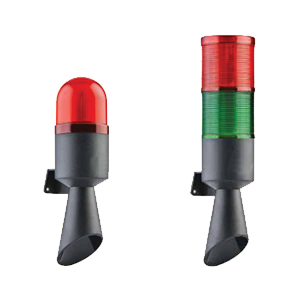
TER LED Warning Horns – Industrial Audible and Visual Warning Devices
TER LED Warning Horns combine powerful audible alarms with high-visibility LED signalling in a single industrial warning device. Designed for machinery, cranes, material handling equipment, automation systems and industrial facilities, the range provides an effective method of attracting attention through both sound and light when an important machine or process condition occurs.
Industrial environments frequently contain high background noise, large working areas, moving equipment and multiple machines operating simultaneously. Under these conditions, relying entirely on either an audible or visual signal may not always provide the most effective warning. TER LED Warning Horns address this challenge by integrating both functions into one compact signalling assembly.
The range includes multiple configurations for different applications, with sound outputs reaching up to 130 dB on applicable models and selectable multi-sound operation. Depending on the model, TER provides 2, 7 or 16 sound options, allowing the audible signal to be configured according to the required warning function.
The visual element uses long-life SMD LED technology with a published LED life of approximately 50,000 hours. Available light colours include red, green, yellow, blue and white, while model-dependent lighting functions include steady, flashing, strobing and rotary effects.
With IP65 protection, robust ABS housings, polycarbonate lenses and a broad selection of electrical configurations, TER LED Warning Horns provide a flexible industrial signalling solution for machine builders, system integrators and operators requiring coordinated audible and visual warning.
Combined Audible and Visual Industrial Signalling
The principal advantage of a TER LED Warning Horn is the ability to provide two different forms of signalling from a single device. The audible horn attracts attention through sound, while the integrated LED provides a highly visible indication of the warning condition.
This combination can be particularly valuable where personnel may not always be facing the machine or where high ambient noise makes visual confirmation useful. Conversely, an audible warning can attract attention when the visual indicator is outside a person’s immediate field of view.
Using sound and light together can therefore provide a more comprehensive warning than relying on one signalling method alone. The exact warning strategy should still be determined according to the machine, workplace and risk assessment.
TER offers configurations in which the audible and visual functions can be controlled separately, allowing the device to provide different levels of warning according to the machine condition.
Powerful Audible Warning up to 130 dB
TER LED Warning Horns are available with high-output audible signalling, with applicable models reaching sound levels of up to approximately 130 dB. This provides strong acoustic performance for demanding industrial environments where warnings need to remain prominent against machinery and process noise.
High-output signalling can be particularly useful across large manufacturing facilities, crane bays, material handling areas and other industrial environments where personnel may be located at varying distances from the warning device.
However, the loudest available horn is not automatically the correct selection for every application. Sound level should be matched to the ambient noise, required warning area, mounting position and proximity of personnel.
Where very high sound levels are considered, workplace noise exposure and the potential effect on nearby personnel should form part of the overall system design.
Adjustable Volume for Application-Specific Warning
TER provides volume adjustment by potentiometer on applicable LED Warning Horn configurations. This allows the sound level to be adjusted more closely to the requirements of the installation rather than operating permanently at the maximum available output.
Volume adjustment is particularly useful where the same warning-horn family is used across different machines or working environments. A device installed on equipment in a relatively quiet production area may not require the same acoustic output as one used in a large material handling facility.
The appropriate setting should provide a clearly recognisable warning without creating unnecessarily excessive noise.
Final adjustment should ideally be assessed under representative operating conditions, including normal machinery noise, rather than evaluating the horn only when the surrounding equipment is switched off.
Multiple Selectable Alarm Sounds
Different TER LED Warning Horn models provide 2, 7 or 16 selectable sound options. Multi-sound capability gives machine designers greater flexibility when developing an industrial alarm strategy.
Different sounds can potentially be associated with different machine states or warning priorities where the selected model and control arrangement permit this functionality. This can help personnel distinguish between different conditions rather than hearing the same alarm for every event.
For example, an equipment movement warning may require a different audible characteristic from a machine fault or another defined alarm condition. The exact sound assignment should be documented and communicated clearly to personnel.
Providing multiple sounds is most effective when the alarm philosophy remains simple and understandable. Excessive numbers of similar alarms can make it difficult for personnel to recognise the required response.
SMD LED Technology for Long-Life Visual Warning
The visual signalling component of TER LED Warning Horns uses SMD LED technology. LEDs provide an efficient and long-life method of producing prominent visual indication while allowing the complete warning device to remain compact.
TER specifies an approximate LED service life of 50,000 hours for the range. This supports long-term industrial use and can help reduce routine lamp replacement compared with older warning devices using conventional replaceable light sources.
Long LED life is particularly useful when the warning device is mounted on cranes, machinery or other equipment where access for maintenance may require additional planning.
The LED assembly should still be included in normal equipment inspection. Lens condition, mounting, wiring and correct operation remain important even when the light source itself has a long expected service life.
Red, Green, Yellow, Blue and White LED Options
TER LED Warning Horns are available with multiple visual signalling colours, including red, green, yellow, blue and white depending on the selected configuration.
This allows the visual signal to be matched to the intended machine or process indication. In a properly designed signalling system, different colours can communicate different states or levels of attention.
Colour selection should be consistent with the signalling philosophy used across the machine or facility. Personnel should not be required to interpret the same colour differently on neighbouring equipment without a clear operational reason.
Where multi-colour TER configurations are used, the device can provide additional visual flexibility without requiring several separate warning lights around the machine.
Steady LED Warning Mode
A steady light provides continuous visual indication while the relevant signal is active. This can be useful for machine states that need to remain clearly identifiable without the additional visual urgency associated with a flashing or strobing signal.
Steady indication can form part of a broader signalling hierarchy in which different light behaviours correspond to different operating conditions.
When combined with the audible horn, a steady LED can provide visual confirmation of which machine or area is generating the sound.
The appropriate light mode should be selected according to the intended warning function and the capabilities of the specific TER LED Warning Horn model.
Flashing LED Warning Mode
Flashing light is particularly effective for attracting visual attention because the changing light condition is easier to notice than a continuously illuminated source in many environments.
TER provides flashing operation on applicable LED Warning Horn configurations, allowing the visual warning to reinforce the audible alarm during conditions requiring increased attention.
Flashing indication can be particularly useful on industrial machinery, conveyors and material handling systems where personnel need to identify quickly which equipment has generated an alarm.
As with sound selection, flashing behaviour should form part of a consistent site or machine signalling strategy rather than being applied indiscriminately to every operating condition.
Strobing and Rotary Visual Effects
Depending on the selected model, TER LED Warning Horns can also provide strobing and rotary visual effects. These modes create additional options for distinguishing higher-priority or different machine conditions.
A strobing effect provides a highly noticeable visual signal, while a rotary effect can provide the appearance of movement without requiring the traditional mechanical rotating mechanism used in older warning beacons.
LED-based effects reduce dependence on moving components while providing strong visual signalling capability.
Where several lighting modes are available, designers can select the behaviour that best communicates the intended condition while avoiding unnecessary visual complexity.
Single-Colour LED Warning Horns
Single-colour LED Warning Horns provide a straightforward solution where one primary visual warning colour is required. These configurations are useful for machinery where the combined device has a specific and clearly defined alarm function.
For example, the horn may activate together with a red visual warning when a particular fault or hazardous machine condition occurs.
A single-colour device can simplify the machine interface because personnel only need to understand one visual function associated with the horn.
Where multiple operating states need to be represented, TER also provides multi-colour configurations that extend the signalling capability of the same general product family.
Two-Colour LED Warning Horn Configurations
Two-colour LED Warning Horns provide additional signalling flexibility by allowing two visual colours to be incorporated into the warning assembly.
This can be useful where the same device needs to indicate more than one defined machine state while retaining audible warning capability.
The control system can use the available visual functions according to the machine’s signalling strategy, reducing the number of separate devices required on the equipment.
Machine builders should verify the control and wiring characteristics of the selected TER model so that each visual and audible function is integrated correctly.
Three-Colour LED Warning Horn Configurations
TER also provides three-colour LED Warning Horn configurations within the range. These products allow several visual states to be communicated from a compact device while maintaining the integrated audible alarm.
Multi-colour capability is particularly useful for machinery where space is limited but the operator needs more than one visual indication.
The colours can be incorporated into a structured machine-status philosophy so that personnel receive consistent visual information across different operating conditions.
The available functions should be selected carefully. Providing additional colours is useful only when each indication has a clear meaning and expected response.
TERMWH04 LED Warning Horn Series
The TERMWH04 series forms part of TER’s LED Warning Horn range and provides combined visual and audible signalling for industrial applications.
This product family is designed around the same fundamental objective as the broader range: creating a prominent warning through high-output sound combined with LED visual indication.
The TERMWH04 series can be integrated into machinery, material handling equipment and industrial warning systems where a compact combined device is preferable to separate horn and beacon assemblies.
Exact electrical supply, sound selection and visual characteristics should be confirmed against the specific TERMWH04 part number being considered.
TERMWH05, TERMWH06 and TERMWH07 Series
The TERMWH05, TERMWH06 and TERMWH07 series expand the TER LED Warning Horn family with additional signalling configurations, including one-, two- and three-colour arrangements.
This progression allows equipment designers to select a warning device according to the amount of visual information that needs to be communicated.
A machine requiring one primary alarm state may use a simpler configuration, while equipment with several warning conditions can benefit from multi-colour functionality.
The ability to combine multiple visual indications with powerful audible warning makes these TER models particularly useful where installation space and signalling clarity are both important.
Mini Universal LED Warning Horns
TER Mini Universal LED Horns provide a compact solution for applications where installation space is restricted but combined audible and visual warning is still required.
Compact industrial machinery, control panels and smaller equipment can have limited available surface area for signalling devices. Combining the light and horn functions in one assembly helps reduce the number of individual components that need to be mounted.
Despite the compact format, the Mini Universal concept retains the core advantage of providing both visual and audible indication from the same warning location.
The exact sound output, electrical supply, colour and operating functions should be selected according to the requirements of the specific application.
Universal LED Warning Horns
TER Universal LED Horns provide a versatile combined warning solution for a broad range of industrial equipment. Their design supports applications where machine builders require a highly visible LED signal together with a prominent audible alarm.
The universal range can be considered for machinery, automation, material handling and other industrial installations where a combined warning device simplifies the signalling arrangement.
Available electrical and functional configurations allow the product to be matched to different machine architectures rather than requiring the complete system to be designed around one fixed warning-horn specification.
This flexibility is particularly valuable to OEMs building multiple machine variants for different customers or markets.
LED Industrial Crane Horns
Crane applications are a particularly strong area for TER LED Warning Horns. Overhead travelling cranes, gantry cranes, jib cranes and other lifting equipment often require prominent warning when equipment is moving or when another defined operating condition occurs.
A combined horn and LED light provides both an audible warning and a visible indication from the crane or associated equipment.
This can be useful in busy industrial environments where personnel may be exposed to background machinery noise or may not always be looking directly toward the crane.
The correct horn should be selected according to the crane, warning area, mounting location, electrical supply and applicable machinery or site requirements.
IP65 Protection for Industrial Applications
TER specifies IP65 protection for its LED Warning Horn range. This provides a strong level of enclosure protection for industrial equipment exposed to dust and moisture.
IP65 protection is particularly valuable for devices installed on machinery, cranes, conveyors and material handling equipment where ordinary indoor signalling products may not provide adequate environmental protection.
The IP rating should still be considered together with the complete operating environment. Chemical exposure, temperature, vibration, direct mechanical impact and cleaning procedures may create additional requirements beyond the IP classification.
Correct installation, including suitable cable entry and electrical connections, is also important for maintaining the intended environmental protection of the warning device.
Robust ABS Housing and Polycarbonate Lens
TER LED Warning Horns use an ABS housing combined with a polycarbonate lens. This provides a practical industrial construction for the audible and visual signalling assembly.
The housing protects the internal electronics and provides the structural connection to the machine or supporting surface, while the polycarbonate lens allows the LED warning signal to remain clearly visible.
These materials contribute to a compact and durable warning device suitable for integration into industrial equipment.
As with other machine-mounted components, the housing, lens and mounting arrangement should be inspected periodically to confirm that the warning horn remains securely installed and in good condition.
Industrial Warning for Demanding Machinery
TER LED Warning Horns provide a highly flexible approach to industrial signalling by combining powerful audible output with long-life LED visual indication.
With sound levels reaching up to approximately 130 dB on applicable configurations, 2, 7 or 16 selectable sounds, multiple LED colours and a selection of steady, flashing, strobing and rotary light modes, the range can support a wide variety of machine-warning strategies.
IP65 protection, robust ABS construction, polycarbonate lenses and approximately 50,000 hours of published LED life provide characteristics suited to demanding industrial applications.
From cranes and material handling equipment to automation systems, conveyors and industrial machinery, TER LED Warning Horns provide a compact method of combining two essential signalling functions into one integrated warning device.
TER LED Warning Horns for Overhead Travelling Cranes
Overhead travelling cranes operate above personnel, machinery and production areas, making clear warning signals an important part of the overall crane operating environment. TER LED Warning Horns provide a combined audible and visual signalling solution that can be integrated into crane equipment to attract attention when a defined operating condition occurs.
The audible horn can provide a prominent warning to personnel who may not be looking toward the crane, while the LED signal provides visual confirmation of the active warning. This combination is particularly useful in busy manufacturing environments where background machinery noise and restricted lines of sight can influence how easily a warning is noticed.
The appropriate TER LED Warning Horn should be selected according to the crane configuration, electrical supply, ambient noise, mounting location and required warning area. High sound output should be used where justified by the application rather than simply selecting the loudest available model.
Where the horn is associated with crane movement or another operating condition, the control logic should be designed so that personnel receive a clear and consistent warning without creating unnecessary or confusing alarm activity.
Gantry, Jib, Tower and Harbour Crane Applications
TER identifies a broad range of crane applications for its industrial signalling equipment, including gantry cranes, jib cranes, tower cranes and harbour cranes. Each of these applications presents different requirements for warning coverage and device installation.
Gantry and harbour cranes can operate across large areas where personnel and mobile equipment may be distributed at significant distances from the signalling device. A prominent audible warning combined with a visible LED indication can help attract attention to crane activity.
Jib cranes may operate across a smaller area but can still require clear signalling where loads or crane structures move through personnel-accessible working zones.
Tower and harbour applications may also introduce more demanding environmental conditions. Product suitability should therefore be assessed against the complete installation, including weather exposure, vibration, electrical requirements and the protection provided by the selected TER model.
Audible and Visual Warning for Conveyor Systems
Conveyor systems can extend across substantial areas and may include multiple drive sections, loading points, transfer stations and personnel access locations. TER LED Warning Horns can provide combined audible and visual indication when a conveyor is about to start, when a defined alarm occurs or when another operating condition requires personnel attention.
The audible component helps attract attention along the conveyor route, while the LED signal can help identify the location of the warning device or affected section.
Large conveyor installations may require several warning devices rather than relying on one horn to cover the complete system. Equipment layout, walls, stored material and surrounding machinery can all affect how sound travels through the facility.
Warning-device quantity and positioning should therefore be established according to the actual conveyor layout and required warning coverage.
Material Handling Equipment and Industrial Warning
Material handling environments frequently combine fixed machinery with moving equipment and personnel. Conveyors, cranes, lifting systems, automated transport equipment and loading machinery may all operate within the same facility.
TER LED Warning Horns can provide a clear local warning from machinery or equipment when personnel need to be made aware of a particular operating condition.
Combining light and sound can be particularly valuable in these environments because personnel may be facing away from the equipment or exposed to changing levels of background noise.
The signalling strategy should remain consistent across the facility so that personnel understand what each horn, light colour and operating pattern represents.
Warning Applications for Forklifts and Industrial Vehicles
TER identifies forklifts and industrial material handling equipment among the broad applications for its signalling products. Combined audible and visual warning can support equipment where a prominent signal is required during a defined operating condition.
Vehicle-mounted applications introduce additional considerations including vibration, available supply voltage, mounting security and exposure to the operating environment.
The warning device should be positioned so that its acoustic output is not unnecessarily obstructed and the visual indicator remains visible from the intended directions.
Any warning horn used on mobile equipment should be selected and installed as part of the complete vehicle or machinery design and should not be assumed to replace other required warning devices or operational controls.
LED Warning Horns for Automated Guided Vehicles
Automated Guided Vehicles and other automated mobile platforms can operate without continuous direct operator control, making clear machine-to-person signalling particularly important.
A TER LED Warning Horn can provide both an audible alert and visible machine-status indication from the same device. Depending on the selected configuration and control strategy, different visual or audible functions can be associated with defined vehicle states.
For example, signalling may be required during movement, at particular operating transitions or when the vehicle detects a condition requiring attention. The precise warning philosophy should be determined through the equipment design and risk assessment.
Compact Mini Universal LED Horn configurations can also be useful where available mounting space on automated equipment is limited.
Industrial Automation and Assembly Line Applications
Automated production lines often contain many machines operating together, creating a need for clear and structured signalling. TER LED Warning Horns can be integrated into automation systems to provide prominent indication when a machine or process condition requires attention.
The visual signal helps personnel identify the source of an alarm, while the audible component attracts attention even when the operator is not looking directly toward the machine.
Multi-colour configurations can provide additional flexibility where several machine conditions need to be represented. Different colours or light behaviours can be assigned according to the site’s established signalling philosophy.
The multi-sound capability available on TER models can further differentiate warning conditions, provided the resulting alarm scheme remains simple enough for personnel to recognise reliably.
Integrating TER LED Warning Horns with PLC Systems
TER LED Warning Horns can be incorporated into PLC-controlled machinery and automation systems. The PLC can activate the required warning functions according to programmed machine conditions, alarms or process states.
The electrical interface should be designed according to the selected warning-horn model. Designers should verify the operating voltage, current requirements and switching arrangement rather than assuming every configuration can be connected directly to a PLC output.
Where required, an appropriate relay, interface module or other switching device can be used between the controller and warning horn. This allows the control system to operate the signalling device while maintaining an appropriate electrical interface.
Electrical documentation should clearly identify the horn and light functions so that future maintenance personnel can understand how each signal is controlled.
Separate Control of Sound and Light
Separate sound and light control is available on relevant TER LED Warning Horn configurations. This is a particularly useful feature for machinery where the visual indication needs to remain active without requiring the audible horn to operate continuously.
For example, a visual signal may indicate an ongoing machine condition, while the audible alarm is activated only when the condition first occurs or when a higher level of attention is required.
Separating the functions gives control-system designers greater flexibility when developing an alarm hierarchy. It can also help reduce unnecessary noise while maintaining visible indication of the active condition.
The exact control possibilities depend on the selected TER model, so the wiring and functional characteristics should be confirmed before finalising the machine-control program.
Building a Clear Alarm Hierarchy
An effective industrial warning system should communicate different conditions according to their importance. If every machine event produces the loudest horn and most prominent flashing light, personnel can find it difficult to distinguish routine notifications from conditions requiring immediate attention.
TER’s combination of selectable sounds, multiple LED colours and different light modes provides useful flexibility for creating a structured alarm hierarchy.
A lower-priority condition might use visual indication alone, while a more important condition could combine flashing light with an audible signal. A separate, clearly defined signal can then be reserved for the highest-priority warning where appropriate.
The exact hierarchy should be established according to the machine risk assessment, operational requirements and site procedures rather than applying a universal colour or sound sequence to every installation.
Reducing Unnecessary Alarm Noise
Industrial facilities can contain numerous alarms, horns and signalling devices. If audible warnings activate too frequently or without a clear operational reason, personnel may become less responsive to them over time.
The flexible control capabilities of TER LED Warning Horns can help designers avoid unnecessary audible operation. Where separate sound and light control is available, the visual indication can remain active while the horn is controlled according to the required alarm sequence.
Adjustable volume also allows the acoustic output to be matched to the application rather than automatically operating at maximum sound level.
The objective is to create a warning that is prominent when required and meaningful to personnel, rather than simply producing the greatest possible amount of sound.
Selecting the Appropriate Sound Level
Sound output should be selected according to the environment in which the warning horn will operate. Important considerations include background machinery noise, distance between the horn and personnel, physical barriers and the acoustic characteristics of the building or work area.
TER provides high-output configurations reaching approximately 124 to 130 dB across applicable LED Warning Horn models, giving designers substantial acoustic capability for demanding applications.
These sound levels require careful consideration. A horn intended to alert personnel across a large crane bay may require different acoustic performance from a device mounted close to an operator workstation.
Where personnel can approach the horn closely, workplace noise exposure should be considered as part of the installation design.
Evaluating Warning Performance Under Operating Conditions
The effectiveness of an audible warning should be evaluated while the surrounding equipment is operating normally. A horn that appears extremely prominent in a quiet workshop may perform differently once motors, extraction equipment, conveyors, machining processes and other production equipment are running.
Similarly, the LED warning should be assessed under representative lighting conditions. Strong factory lighting, daylight from open doors or outdoor installation can influence the apparent visibility of a signal.
Commissioning provides an opportunity to confirm that both the sound and light functions can be recognised from the intended locations.
If warning coverage is inadequate, designers can review device position, orientation, volume or the number of warning devices rather than simply assuming that a higher-output horn is the only solution.
12–24 V AC/DC LED Warning Horn Configurations
TER provides 12–24 V AC/DC configurations within the LED Warning Horn family. These low-voltage options are particularly useful for machinery and mobile equipment where low-voltage control and auxiliary power systems are already available.
The ability to operate across an AC/DC voltage range provides flexibility for OEM machine builders producing equipment with different electrical architectures.
Before installation, the exact voltage range and electrical characteristics of the selected part number should be verified. Designers should also ensure that the available power supply has sufficient capacity for the complete warning device.
Appropriate circuit protection and switching should be incorporated according to the machine electrical design.
40–250 V AC/DC Warning Horn Configurations
Selected TER LED Warning Horn configurations support a broad 40–250 V AC/DC supply range. This can simplify product selection where equipment may be produced for different industrial electrical systems.
A wide input range can also reduce the number of separate voltage-specific warning products that OEMs need to manage across multiple machine variants.
The actual supply capability depends on the selected TER series and part number, so the broad range should not be assumed to apply to every LED Warning Horn.
Electrical compatibility should always be verified from the current TER technical documentation before connecting the warning device.
24 V AC/DC and 220 V AC Options
TER also provides specific 24 V AC/DC and 220 V AC configurations across relevant parts of the LED Warning Horn range. This further expands the ability to match the signalling device to different machinery and industrial installations.
A 24 V configuration can integrate naturally with many industrial control systems, while a higher-voltage configuration may be appropriate where the installation provides that supply directly.
Machine designers should avoid selecting the product solely by its physical appearance because visually similar warning horns can have substantially different electrical requirements.
The full part number and associated technical data should be confirmed before ordering and installation.
Positioning an LED Warning Horn for Maximum Effectiveness
Mounting position has a major influence on the effectiveness of both the audible and visual functions. The horn should be located where surrounding machinery or structures do not unnecessarily obstruct the acoustic output.
The LED lens should also remain visible from the locations where personnel are expected to receive the warning. Installing a combined device behind a large machine structure may significantly reduce the benefit of the visual indicator.
Where possible, positioning should be considered during the original machine design rather than after the equipment has already been constructed.
OEM integration allows the mounting surface, cable routing and warning coverage to be developed as part of the complete equipment layout.
Using Multiple Warning Horns Across Large Areas
Large industrial facilities may require more than one warning device. Sound can be affected by walls, equipment, stored materials and the geometry of the building, while visual signals are naturally limited by line of sight.
Several strategically positioned TER LED Warning Horns can provide more consistent warning coverage than relying on a single extremely high-output device.
Multiple devices can also identify different machine zones or conveyor sections, helping personnel determine where a warning originated.
Where several warning horns are used, their control logic should be coordinated so that the resulting alarm pattern remains understandable rather than creating unnecessary acoustic and visual confusion.
IP65 Protection for Crane and Machinery Installations
The IP65 protection specified for TER LED Warning Horns provides strong resistance to dust and water ingress under the conditions represented by the rating. This makes the range suitable for consideration across many demanding machinery and industrial installations.
However, IP65 should not automatically be interpreted as universal suitability for every outdoor, washdown, marine or chemically aggressive environment.
Installation conditions including direct weather exposure, cleaning processes, chemicals, temperature and mechanical impact should be considered separately.
Correct cable entry, mounting and electrical installation are also necessary to maintain the intended protection of the completed warning assembly.
LED Warning Horns for Control Panels
TER LED Warning Horns can be incorporated into industrial control-panel installations where operators need a prominent local indication of alarms or equipment conditions.
Combining the LED and horn functions reduces the number of separate signalling devices required around the panel while still providing both visual and audible indication.
Multi-colour configurations can provide additional status information, while selectable sounds allow different audible signals to be incorporated where appropriate.
The device should be positioned so that the visual signal is not obstructed by surrounding equipment and the sound can propagate effectively into the intended operator area.
Coordinating LED Warning Horns with Stack Lights
TER LED Warning Horns can complement stack lights and other machine-status indicators rather than necessarily replacing them. Each signalling product can perform a different role within the overall machine interface.
A stack light may provide continuous visual information about normal machine status, while an LED Warning Horn activates when a condition requires more immediate attention.
This approach allows routine status information to remain visible without continuously using audible alarms.
When a higher-priority condition occurs, the combined horn and LED signal can attract attention while the stack light provides additional status information.
Coordinating Warning Horns with RGB Signal Lights
Multi-colour RGB warning lights can provide highly flexible visual machine-status indication, while TER LED Warning Horns add prominent audible capability where required.
Used together, these devices can create a comprehensive signalling system in which routine process information is communicated visually and selected conditions activate an audible alarm.
The control system can coordinate the signals so that colours, flashing patterns and sounds correspond to defined machine states.
Consistency is important. Operators should be able to understand the relationship between visual and audible indications without needing to interpret a different signalling scheme for every machine.
Clear Industrial Signalling Through Light and Sound
TER LED Warning Horns provide machine builders with considerable flexibility for developing clear industrial warning systems. Multiple sound options, adjustable volume, high acoustic output and several LED colours and operating modes allow the warning device to be configured around the application.
Separate control of sound and light on relevant configurations further expands this flexibility, allowing visual indication to remain active without requiring continuous audible operation.
The range of supply options, including 12–24 V AC/DC, 24 V AC/DC, 40–250 V AC/DC and selected 220 V AC configurations, supports integration into a broad variety of industrial equipment.
For overhead cranes, conveyors, material handling systems, automated equipment, control panels and production machinery, TER LED Warning Horns provide a compact solution for combining highly visible LED signalling with powerful audible warning.
Selecting the Correct TER LED Warning Horn
Selecting the correct TER LED Warning Horn requires consideration of both the audible and visual requirements of the application. The appropriate device depends on factors including ambient noise, required warning distance, available supply voltage, number of visual states, required sound functions, mounting position and environmental conditions.
TER provides several LED Warning Horn configurations rather than a single universal model. Options include industrial crane horns, TERMWH04 models, TERMWH05, TERMWH06 and TERMWH07 series, Mini Universal LED Horns and Universal LED Horns. This allows machine builders and system integrators to select a device that more closely matches the signalling requirements of the equipment.
Applications requiring one clearly defined alarm may only need a single-colour configuration, while machinery with several operating conditions can benefit from two- or three-colour models. Similarly, the availability of 2, 7 or 16 sound options across applicable configurations allows the audible function to be selected according to the complexity of the warning system.
The objective should be to select the functions that improve communication with personnel rather than automatically specifying every available feature.
Choosing Between Single and Multi-Colour Warning Horns
A single-colour TER LED Warning Horn provides a simple and easily understood visual signal where the device has one primary warning function. This can be particularly effective for equipment where the combined horn and light are activated only for a defined alarm condition.
Two- and three-colour configurations provide additional flexibility where several machine states need to be represented from the same warning device. This can reduce the number of separate signal lights required around the equipment while retaining powerful audible warning capability.
Colour selection should follow the established signalling philosophy of the machinery or facility. Where several machines operate in the same workplace, consistent use of colours can make indications easier for personnel to interpret.
Multi-colour capability should not result in unnecessary complexity. Each colour should have a clear purpose and personnel should understand the action associated with the indication.
Selecting the Appropriate Audible Alarm
TER’s multi-sound configurations allow designers to choose between several audible warning characteristics. Depending on the selected model, 2, 7 or 16 sounds may be available.
Multiple sounds can help distinguish between different equipment conditions, particularly where personnel need to identify the type or priority of a warning without immediately viewing the machine interface.
However, too many similar audible alarms can make a signalling system difficult to understand. A smaller number of clearly differentiated sounds may provide more effective communication than assigning a unique alarm to every minor machine event.
Sound selection should therefore form part of the complete alarm philosophy, including the meaning of visual colours, flashing modes and other machine-status indicators.
Using Adjustable Volume Effectively
The volume-adjustment capability available on applicable TER LED Warning Horns allows acoustic output to be matched more closely to the installation.
This is particularly useful because industrial noise conditions can vary substantially. A warning horn installed in a relatively quiet automated production area may require a very different setting from one installed in a large crane bay or material handling facility.
The volume should be sufficient for the warning to remain recognisable against representative background noise without creating unnecessarily excessive sound levels.
Commissioning should therefore include evaluation of the audible warning while surrounding machinery is operating under normal conditions.
Understanding High-Output Industrial Warning
Applicable TER LED Warning Horn configurations provide very high acoustic output, with models reaching approximately 124 to 130 dB. This makes the range suitable for consideration in demanding industrial environments where strong audible warning is required.
High acoustic output needs to be applied carefully. Personnel distance, workplace noise exposure, building acoustics and the position of the horn can all influence the effect of the warning.
A 130 dB horn should not automatically be selected simply because it represents the highest available output. In some applications, a lower setting or several strategically positioned warning devices may provide more appropriate coverage.
The final system should balance effective warning with the broader requirements of the workplace and personnel working around the equipment.
Mounting TER LED Warning Horns for Effective Coverage
The mounting position influences both the audible and visual performance of a combined warning device. The horn should be positioned so that machine structures do not unnecessarily obstruct the acoustic output, while the LED lens should remain visible from the areas where personnel are expected to receive the warning.
On cranes and large machinery, installation height can provide excellent visual coverage but may also influence the sound level experienced at floor level. The complete operating area should therefore be considered during positioning.
The mounting structure should provide a secure mechanical connection suitable for the equipment and operating environment. Applications exposed to continuous vibration require particular attention to mounting hardware and cable routing.
Where possible, the warning-device position should be incorporated into the original machine design rather than selected only after construction has been completed.
Maintaining Clear Visibility of the LED Signal
The visual warning should remain clearly visible from the locations where personnel normally work or travel. Machine structures, racking, walls and other equipment can obstruct the signal if the device is positioned poorly.
Viewing direction is particularly important for fixed machinery because personnel may approach the equipment from several sides. A suitable mounting position can improve the number of locations from which the warning remains visible.
Where one device cannot provide adequate visual coverage, additional signalling equipment may be required at other positions around the machine or facility.
The effectiveness of the final installation should be evaluated during commissioning rather than assuming visibility solely from the mounting height or manufacturer’s light specification.
Maintaining Effective Audible Coverage
Sound distribution within industrial buildings can be complex. Machinery, structural columns, walls, stored materials and enclosed areas can all influence how an audible warning is perceived.
Positioning a horn behind a substantial obstruction can reduce its effectiveness even when the device itself has a high sound output.
Large facilities may therefore benefit from several warning devices distributed across the required area. This can provide more consistent coverage and potentially reduce the need for extreme sound levels from a single location.
The completed system should be evaluated from the locations where personnel need to receive the warning, including areas where background noise is greatest.
Electrical Installation and Supply Selection
TER LED Warning Horns are available in several electrical configurations across the product family, including applicable 12–24 V AC/DC, 24 V AC/DC, 40–250 V AC/DC and 220 V AC arrangements.
The supply capability of the exact selected part number should always be confirmed before installation. Similar-looking products within the family may have different electrical requirements.
The available machine or facility supply should be checked for voltage compatibility and sufficient electrical capacity. Suitable circuit protection and switching should be incorporated into the system design.
Electrical installation should follow the technical information for the selected TER product and the applicable requirements of the complete machinery or installation.
PLC Integration and Output Interface Design
PLC-controlled machinery can use TER LED Warning Horns to provide automatic signalling according to machine states, faults or programmed events.
The PLC program can determine when the visual signal activates, when the audible horn operates and, on applicable configurations, which colour, sound or operating mode is required.
The electrical interface should be designed according to the characteristics of the selected device. Designers should not assume that a warning horn can always be driven directly from a standard PLC output.
Where necessary, relays or suitable interface devices can provide switching between the controller and warning horn while allowing the signalling logic to remain under PLC control.
Taking Advantage of Separate Sound and Light Control
Separate control of sound and light on applicable TER models can significantly improve the flexibility of the warning system.
A machine condition can initially trigger both the horn and LED signal to attract attention. Once the alarm has been acknowledged, the control system may be designed to silence the audible warning while leaving the visual indication active until the underlying condition is resolved, where appropriate to the application.
This type of arrangement can help reduce prolonged alarm noise while still providing personnel with a visible reminder that the machine condition remains active.
The exact acknowledgement and reset philosophy should be developed according to the machinery requirements and should not compromise any required warning or safety function.
Commissioning TER LED Warning Horns
Commissioning should verify the complete warning function rather than simply confirming that the horn makes a sound and the LED illuminates.
Each intended machine condition should be tested to confirm that the correct visual and audible functions activate. Where multiple colours, sounds or light modes are used, the programmed combinations should correspond with the machine documentation.
Volume should be assessed under representative operating conditions, and visual indication should be checked from the normal working locations around the equipment.
Commissioning also provides an opportunity to confirm mounting security, electrical connections and the correct operation of any relays, PLC outputs or interface devices associated with the warning system.
Preventative Maintenance of LED Warning Horns
TER LED Warning Horns should be included in the preventative-maintenance program for the machinery or facility. Warning devices may operate relatively infrequently, meaning a fault can otherwise remain unnoticed until the alarm is required.
Periodic functional testing can confirm that both the horn and LED operate correctly. Where multiple colours or sounds are used, each required function should be tested according to the maintenance procedure.
The mounting arrangement, electrical connections, housing and polycarbonate lens should also be inspected for damage or deterioration.
Regular testing is particularly important where the warning device performs an important role in communicating machinery movement, alarms or abnormal operating conditions.
Maintaining the Polycarbonate Lens
The condition of the polycarbonate lens directly influences the visibility of the LED warning. Dust, oil, process contamination and environmental residue can gradually reduce the apparent brightness of the signal.
Cleaning should therefore be included in routine maintenance where contamination is present. Cleaning products and methods should be compatible with the lens and housing materials.
The lens should also be inspected for physical damage or deterioration that could affect visibility or the environmental integrity of the device.
Keeping the lens clean is a simple but important part of ensuring that the warning device continues to provide the visual performance intended by the original system design.
OEM Integration into New Machinery
TER LED Warning Horns provide OEM machine builders with a compact method of incorporating both audible and visual warning into new equipment.
Considering the warning device during the design stage allows the mounting location, electrical supply, cable routing and control logic to be planned as part of the complete machine rather than added later.
OEMs can select between single- and multi-colour configurations, different sound capabilities and appropriate voltage options according to the requirements of the equipment.
This flexibility is particularly useful for manufacturers producing several machine variants because different TER configurations can be selected while maintaining a consistent overall signalling philosophy.
Retrofitting Existing Industrial Machinery
Existing machinery can also benefit from upgrading to a combined TER LED Warning Horn. Older equipment may use separate conventional beacons and horns, obsolete warning devices or signalling that no longer suits the current working environment.
A retrofit provides an opportunity to review the complete warning arrangement rather than simply replacing the existing device with the nearest equivalent.
Changes in factory layout, machinery noise, personnel movement and operating procedures may mean that a different sound level, mounting position or visual configuration is now more appropriate.
Electrical compatibility should be verified carefully, particularly where the replacement warning device has a different supply voltage or control arrangement from the original equipment.
Warning Horns for Warehouses and Distribution Facilities
Warehouses and distribution facilities can contain conveyors, cranes, automated transport equipment, loading systems and personnel operating simultaneously across large areas.
TER LED Warning Horns can provide prominent signalling when a machine or material handling system requires attention. The audible component attracts attention while the LED indication helps personnel identify the relevant machine or zone.
Large facilities may require several warning locations because racking and stored goods can obstruct both sound and line of sight.
A coordinated system using appropriately positioned devices can provide clearer warning coverage than relying on one central horn or beacon.
Warning Solutions for Heavy Industrial Environments
Heavy industrial facilities can present demanding conditions for signalling equipment. High background noise, large machinery and substantial working areas can require strong audible and visual warning performance.
TER LED Warning Horns provide high acoustic output on applicable models, combined with prominent SMD LED visual signalling and IP65 enclosure protection.
These characteristics make the range suitable for consideration across demanding machinery and industrial applications, subject to verifying the specific environmental and electrical requirements of the installation.
Where very high acoustic output is required, the location of personnel and workplace noise exposure should remain important elements of the engineering assessment.
Creating a Coordinated TER Signalling System
TER LED Warning Horns can operate as part of a broader industrial signalling system alongside stack lights, RGB warning lights, industrial signal lights, universal signal beacons and other TER warning products.
Each type of device can be assigned a specific role. Stack lights can provide continuous machine-status information, RGB lights can communicate flexible visual states and LED Warning Horns can provide a stronger combined signal when a condition requires increased attention.
This structured approach can create a clearer human-machine interface than using high-priority audible alarms for every machine event.
Consistent colour, sound and light-mode conventions across equipment can also help personnel interpret machine conditions more quickly.
Australian Industrial Applications
TER LED Warning Horns are suitable for consideration across Australian manufacturing, material handling, automation, crane and industrial machinery applications.
Potential uses include overhead travelling cranes, gantry cranes, conveyors, automated production systems, warehouses, material handling equipment, machine tools and custom OEM machinery.
Australian installations can vary considerably in operating environment. Indoor manufacturing facilities, outdoor machinery, ports and heavy industrial locations can place very different requirements on signalling equipment.
The specific TER model should therefore be selected according to the actual application, electrical supply, environmental exposure, acoustic requirements and required visual functions.
TER LED Warning Horns from Control Devices Australia
Control Devices supplies TER industrial signalling and control products for Australian OEMs, system integrators, maintenance organisations and industrial end users.
When selecting a TER LED Warning Horn, useful application information includes the machinery type, required sound output, available voltage, number of required LED colours, preferred light mode, environmental conditions and mounting location.
Providing these details can help identify an appropriate configuration from the TER range rather than selecting solely according to maximum sound output or physical appearance.
Control Devices can also assist with complementary TER signalling products, allowing audible warning, visual indication and machine-status signalling to be developed as a coordinated system.
Why Choose TER LED Warning Horns?
TER LED Warning Horns combine two important industrial signalling functions in one compact device: powerful audible warning and highly visible LED indication.
Depending on the selected configuration, the range provides 2, 7 or 16 sound options, adjustable volume, multiple LED colours and steady, flashing, strobing or rotary visual effects.
Applicable models provide high acoustic output reaching approximately 124 to 130 dB, while SMD LED technology delivers a published LED life of approximately 50,000 hours.
IP65 protection, ABS housing construction and a polycarbonate lens provide characteristics suited to demanding industrial environments, while multiple supply-voltage options support integration into a wide variety of machinery and control systems.
Powerful Audible and Visual Warning from TER
Effective industrial signalling depends on communicating important equipment conditions in a way that personnel can recognise quickly. TER LED Warning Horns combine sound and light to provide a prominent warning across machinery, cranes, conveyors, automated systems and material handling equipment.
The availability of multiple sounds, LED colours, light effects and electrical configurations gives machine builders substantial flexibility when developing a warning system. Separate sound and light control on applicable models further allows audible and visual functions to be coordinated according to the requirements of the equipment.
Correct selection should consider ambient noise, warning distance, personnel proximity, required visual coverage, electrical supply, environmental conditions and the signalling philosophy of the machine or facility.
For overhead cranes, automation systems, conveyors, warehouses, material handling equipment and industrial machinery, TER LED Warning Horns provide a versatile solution for combining powerful audible alarms with long-life LED visual warning.
Contact Control Devices for assistance selecting a TER LED Warning Horn suited to the acoustic, visual, electrical and environmental requirements of your industrial application.