
Description
TER Obstruction Lights – Low-Intensity Aviation Obstruction Lighting
TER Obstruction Lights provide highly visible LED signalling for structures and equipment that need to be clearly identified to aircraft, particularly during periods of darkness or reduced ambient light. Designed as low-intensity Type B obstruction lights and manufactured in compliance with ICAO Annex 14 standards, the TER range provides a specialised lighting solution for applications including towers, wind turbines, tall structures and industrial installations where effective obstacle marking is required.
Unlike general-purpose industrial warning beacons, obstruction lights perform a specialised visibility function. Their purpose is to make an elevated structure or potential obstruction clearly identifiable from the surrounding environment, helping aircraft recognise the presence and position of the structure. TER combines LED illumination, industrial construction and a range of mounting configurations to provide obstruction lighting suitable for demanding installations.
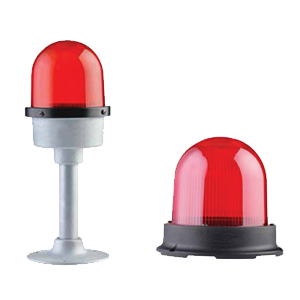
The TER range includes 100 mm and 125 mm obstruction lights as well as base-mounted, single-arm and dual-arm configurations. This variety allows designers and installers to select an arrangement appropriate for the physical structure and installation requirements rather than relying on a single mounting format.
TER Obstruction Lights can also respond automatically to changing ambient light conditions, activating in darkness and deactivating during daylight. This makes the lighting system particularly useful for installations requiring automatic operation without routine manual switching.
Low-Intensity Type B Obstruction Lighting
TER Obstruction Lights are classified as low-intensity Type B obstruction lights. This distinction is important because aviation obstruction lighting is different from ordinary industrial status indication. The lighting must be selected according to the structure, its location, applicable aviation requirements and the overall obstruction-lighting design.
TER manufactures the obstruction-light range in compliance with ICAO Annex 14 standards. ICAO Annex 14 addresses aerodrome design and operations and includes requirements associated with the marking and lighting of obstacles. For designers and operators, the TER product provides a purpose-developed obstruction-lighting solution rather than adapting a conventional machine beacon for an aviation-related application.
The appropriate obstruction-lighting arrangement for a particular structure should always be established according to applicable regulatory and project requirements. Factors such as structure height, position, surrounding environment and aviation considerations can influence the number, location and type of lights required.
For this reason, the TER Obstruction Light should be treated as one component within the complete obstruction-marking system. Correct product selection, positioning, electrical installation and maintenance all contribute to the effectiveness of the finished installation.
Designed to Improve the Visibility of Elevated Structures
Tall structures can become difficult to distinguish from their surroundings, particularly after sunset, during low-light conditions or when viewed against a dark background. Obstruction lighting creates a clearly identifiable visual reference that indicates the presence of the structure.
TER identifies applications for its obstruction lights including skyscrapers, towers and wind turbines. The same fundamental requirement can arise across a variety of elevated industrial structures where aviation obstruction marking is required by the relevant authority or project specification.
The TER range provides 360-degree visibility, allowing the light to be observed around the structure rather than being limited to one narrow viewing direction. The published product information specifies a visibility distance of up to 10 kilometres for the range.
This combination of wide-angle visibility and long-distance identification is particularly important for obstruction marking because aircraft may approach a structure from different directions. The lighting arrangement therefore needs to be considered as part of the complete structure rather than solely from the perspective of personnel working at ground level.
Automatic Day and Night Operation
A particularly useful feature of TER Obstruction Lights is their ability to respond to ambient light conditions. TER states that the obstruction lights can activate in darkness and deactivate in daylight, enabling automatic operation according to the surrounding light level.
Automatic operation reduces the need for personnel to manually switch the obstruction lighting according to sunrise, sunset or changing environmental conditions. Once correctly installed and configured, the system can provide the required operating behaviour as ambient light levels change.
The product information also describes logic intended to avoid reacting to temporary reductions in light of less than approximately 30 seconds. This is useful because a short-lived shadow or temporary change in surrounding illumination should not necessarily be interpreted in the same way as the transition from daylight to darkness.
For remote structures, wind-energy installations and other difficult-to-access locations, automatic light-level operation can be especially valuable. It enables the obstruction-lighting system to perform its normal switching function without requiring routine attendance at the installation.
LED Technology for Long Operating Life
TER Obstruction Lights use SMD LED technology. LEDs are particularly suited to obstruction-lighting applications because they combine efficient illumination with long operating life and do not depend on conventional filament-based lamps.
The published TER product specifications state an LED service life of approximately 50,000 hours. Long LED life can be an important consideration where obstruction lights are installed at height because accessing the equipment for maintenance may require specialised personnel, lifting equipment or temporary interruption of operations.
Reducing the frequency of routine light-source replacement can therefore provide benefits beyond the cost of the lamp itself. Maintenance on towers, wind turbines and elevated industrial structures can involve access planning, working-at-height procedures and operational coordination.
LED technology also allows the obstruction-lighting assembly to provide a compact and consistent visual output. As with any critical lighting installation, however, the condition and operation of the system should still be included in an appropriate inspection and maintenance program.
100 mm and 125 mm Obstruction Light Options
The TER obstruction-lighting range includes models with 100 mm and 125 mm lens diameters. These options allow the lighting equipment to be selected according to the required product configuration and installation.
The lens is manufactured from polycarbonate, while the housing incorporates ABS and metal materials depending on the configuration. These materials are used within an enclosure designed for industrial outdoor environments where the equipment may be exposed to changing weather and environmental conditions.
TER also provides different physical arrangements within the obstruction-light family, including base-mounted lights and single-arm and dual-arm versions. This range of configurations provides greater flexibility when integrating the lights with different structures.
A base-mounted configuration may be appropriate where the light can be installed directly onto a suitable horizontal mounting point, while an arm-mounted arrangement can provide additional positioning flexibility. The final configuration should be selected according to the mechanical installation, required visibility and relevant obstruction-lighting design.
Single-Arm and Dual-Arm Configurations
The availability of single-arm and dual-arm TER Obstruction Lights provides additional options for installations where the light assembly needs to be positioned away from the primary mounting surface or where a particular structural arrangement is required.
A single-arm arrangement provides one obstruction-light unit on the mounting structure, while dual-arm configurations provide an alternative physical arrangement incorporating multiple light units. The correct configuration depends on the design requirements of the installation and should not be selected solely on appearance.
For structures where continued signalling availability is particularly important, project designers may specify redundant or multiple-light arrangements according to the applicable system requirements. The exact redundancy philosophy and switching arrangement should be determined as part of the complete obstruction-lighting design.
The variety of TER mounting configurations can therefore assist designers working with towers, industrial structures and other applications where installation geometry differs significantly from project to project.
IP65 Protection for Industrial Installations
TER Obstruction Lights are specified with an IP65 protection rating. This provides enclosure protection appropriate to industrial installations where the equipment may be exposed to dust and water.
Outdoor obstruction lighting can encounter substantially different environmental conditions from signalling equipment installed inside a protected control cabinet. Rain, airborne contamination, dust, changing temperatures and prolonged outdoor exposure all need to be considered during product selection and installation.
TER identifies the obstruction-light range as resistant to water, dust, heat and UV exposure. Correct installation remains essential, particularly around electrical connections, cable routing and mounting points, because the overall reliability of an installation depends on more than the enclosure specification of the light itself.
The specified operational ambient temperature range is -20°C to +50°C, providing a broad operating range for many industrial and infrastructure applications. Actual site conditions should always be checked against the specification of the particular TER model before installation.
Multiple Electrical Supply Options
Industrial and infrastructure projects can use significantly different control and power architectures, so flexibility in supply voltage can simplify the integration of obstruction lighting into a wider electrical system.
TER Obstruction Lights are available in several voltage configurations. Published options include 12 V DC, 24 V DC, 48 V DC and 85–250 V AC/DC, depending on the selected model and configuration.
This range allows obstruction lighting to be considered for both low-voltage DC installations and systems where a broader AC/DC supply range is preferred. The exact electrical rating must be confirmed from the documentation associated with the selected TER part number before wiring or commissioning.
Electrical installation should also consider appropriate circuit protection, isolation, cable selection, earthing where applicable and the requirements of the wider obstruction-lighting control system.
Monitoring Light Output and Power Conditions
An obstruction light performs an important visibility function, making the ability to identify a failed or degraded light valuable within the overall system design. TER product information specifies normally open and normally closed relay outputs associated with significant light loss and power failure conditions.
The published information identifies relay signalling in the event of approximately 30 percent light loss or a power failure. This functionality can provide the wider control or monitoring system with an indication that the obstruction-lighting installation requires attention.
Depending on the project architecture, these relay outputs may potentially be incorporated into an alarm, control panel, remote monitoring system or other suitable supervisory equipment. The detailed connection method should be established from the technical documentation for the selected TER configuration.
For remotely located equipment, this type of monitoring capability can be especially useful. Rather than relying solely on visual inspection from the ground, the system can provide electrical feedback when a defined lighting or power condition is detected.
Applications for Towers and Tall Structures
Towers are a natural application for aviation obstruction lights because their height and relatively narrow profile can make them difficult to identify under certain viewing conditions. TER Obstruction Lights can be incorporated into tower-lighting systems where low-intensity Type B obstruction marking is appropriate to the project requirements.
Potential applications can include industrial towers, communications structures, tall building installations and other elevated structures. The required quantity and mounting height of the lights should be established by the project designer or relevant authority according to the structure and applicable requirements.
The availability of surface, wall, base and arm-mounted arrangements provides flexibility when incorporating the lights into different structural designs. This is particularly useful where mounting locations are constrained by existing steelwork, access platforms or other equipment.
Because maintenance access to tower-mounted equipment can be difficult, the long operating life of the LED system and the ability to monitor defined failure conditions can provide practical advantages throughout the service life of the installation.
Obstruction Lighting for Wind Turbines
Wind turbines are another application specifically identified for TER Obstruction Lights. Their height and location can make appropriate aviation visibility an important consideration, particularly where wind farms contain multiple elevated structures across a wide geographic area.
Obstruction-lighting equipment installed on wind turbines must operate in an exposed environment while remaining clearly visible according to the requirements of the project. The TER range combines LED technology, automatic light-level operation and industrial enclosure protection to provide a solution for these applications where the selected low-intensity Type B classification is appropriate.
TER also lists wireless functionality as an option specifically associated with solar obstruction-light configurations. This provides an additional solution for applications where conventional infrastructure or wiring arrangements may not be practical.
The final lighting arrangement for a wind turbine or wind farm should always be determined according to applicable aviation, regulatory and project-specific requirements rather than assuming that one obstruction-light configuration is suitable for every installation.
Purpose-Designed Aviation Obstruction Signalling
TER Obstruction Lights combine specialised aviation obstruction signalling with the industrial construction expected from equipment intended for exposed installations. The range provides low-intensity Type B lighting, ICAO Annex 14 compliance, SMD LED technology, automatic day and night operation, 360-degree visibility and multiple mounting and voltage configurations.
These characteristics make the range suitable for designers and operators requiring a purpose-developed solution for identifying elevated structures to passing aircraft. Applications can include towers, wind turbines, tall structures and other installations where low-intensity aviation obstruction lighting is specified.
With multiple lens sizes and physical mounting configurations available, TER provides designers with options for integrating obstruction lighting into a variety of structural layouts while retaining a consistent signalling platform.
Installation and Positioning of TER Obstruction Lights
Correct installation and positioning are essential to the effectiveness of any aviation obstruction-lighting system. Although the TER Obstruction Light provides the visible signal, the complete installation must ensure that the light can be observed from the required directions without unnecessary obstruction from surrounding structures, equipment or building features.
The required location and quantity of obstruction lights depend on the structure being marked and the applicable aviation, regulatory and project requirements. Structure height, dimensions, surrounding terrain, nearby buildings and the nature of aviation activity in the area can all influence the overall obstruction-lighting design.
TER provides several physical configurations to assist with different installation requirements, including 100 mm and 125 mm models together with base-mounted, single-arm and dual-arm arrangements. This allows the lighting equipment to be incorporated into different structural designs while maintaining the required visibility.
Installation planning should also consider future maintenance access. Obstruction lights are frequently positioned at height, so a mounting location that is straightforward during initial construction may become significantly more difficult to access after the structure has entered service. Appropriate consideration of inspection and maintenance requirements during the design stage can help reduce future servicing difficulties.
Maintaining 360-Degree Visibility
TER specifies 360-degree visibility for its obstruction-light range. This is particularly important for aviation obstruction marking because an aircraft may approach an elevated structure from different directions.
The physical installation should therefore avoid unnecessarily blocking the light output. Structural steelwork, antenna equipment, machinery, access platforms, handrails or other objects positioned around the light may potentially interfere with visibility from particular directions.
Where the geometry of the structure makes complete visibility from a single mounting point difficult, the obstruction-lighting design may require additional lights or an alternative arrangement. TER’s range of mounting configurations provides flexibility, but the final layout should always be determined according to the requirements of the installation.
The published visibility distance of up to 10 kilometres further demonstrates the intended role of the TER product as a specialised obstruction-lighting device rather than a conventional local machine indicator. Actual visibility in service will naturally depend on installation conditions, atmospheric conditions and other environmental factors.
Automatic Photocell Operation
TER Obstruction Lights can incorporate automatic operation according to ambient light conditions. This allows the light to switch on as darkness approaches and switch off when sufficient daylight returns, reducing the need for manual intervention.
This feature is especially useful for installations operating continuously throughout the year. Sunrise and sunset times change seasonally, and weather conditions can affect ambient illumination. An automatic light-sensitive control allows the obstruction-lighting system to respond to the surrounding conditions rather than relying on a fixed daily switching schedule.
TER also incorporates logic intended to prevent short temporary reductions in ambient light from unnecessarily changing the operating state. Published product information indicates that temporary darkness lasting less than approximately 30 seconds is disregarded by the automatic switching system.
This can help prevent brief shadows or short-lived environmental changes from being interpreted as a genuine transition between daytime and nighttime conditions. The result is a more practical automatic operating system for outdoor applications.
Monitoring Light Loss and Power Failure
One of the important technical features available within the TER Obstruction Light range is monitoring for defined lighting and electrical conditions. TER specifies normally open and normally closed relay outputs associated with significant light loss and power failure.
The published specification identifies an alarm condition at approximately 30 percent light loss. This provides a method of detecting a meaningful reduction in the performance of the obstruction light rather than depending entirely on periodic visual inspection.
Power failure monitoring provides another useful indication. If electrical supply to the obstruction light is lost, the relay output can provide information that may be used by a suitable monitoring or control system.
These outputs can be particularly valuable for obstruction lights installed on remote or difficult-to-access structures. Depending on the electrical design, the relay signals may be incorporated into a local alarm system, control panel, PLC, telemetry system or other supervisory equipment.
The exact wiring and interpretation of the monitoring outputs should always follow the documentation for the selected TER model. Where obstruction lighting forms part of a regulated aviation installation, monitoring requirements should also be considered as part of the complete project design.
Remote Monitoring for Difficult-to-Access Installations
Many structures requiring aviation obstruction lighting are inherently difficult to access. Towers, wind turbines and elevated industrial structures may require trained personnel, fall-protection systems or specialised access equipment before maintenance technicians can physically inspect the light.
Remote condition monitoring can therefore provide significant operational advantages. Rather than climbing a structure simply to determine whether the obstruction light is functioning correctly, personnel can use available electrical status information as part of the wider monitoring strategy.
This does not eliminate the requirement for physical inspection and preventative maintenance, but it can provide an earlier indication that attention may be required. A monitored light-loss or power-failure condition can prompt maintenance personnel to investigate the installation before the next scheduled inspection.
For geographically dispersed installations, the benefit can become even greater. Wind farms, communications infrastructure and other remote facilities may contain multiple elevated structures separated by significant distances. Incorporating obstruction-light status into a central monitoring system can assist operators in managing these assets more efficiently.
Environmental Protection for Outdoor Applications
Obstruction lights are frequently exposed directly to outdoor conditions, making environmental protection an important selection consideration. TER Obstruction Lights are specified with IP65 enclosure protection, providing protection against dust ingress and water jets when correctly installed.
TER also identifies resistance to water, dust, heat and UV exposure as characteristics of the obstruction-light range. These factors are particularly relevant for equipment mounted at height, where there may be little protection from surrounding buildings or structures.
Outdoor equipment can experience substantial environmental variation throughout its operating life. Direct sunlight, rainfall, airborne dust and changing ambient temperatures may all affect exposed electrical equipment. Selection of a purpose-designed obstruction light helps ensure that these conditions have been considered within the product design.
The published operating ambient temperature range of -20°C to +50°C makes the TER range suitable for a broad variety of industrial and infrastructure environments. Site-specific conditions should nevertheless be checked before installation, particularly where extreme temperatures or unusual environmental exposure may occur.
Polycarbonate Lens and Industrial Housing Construction
The optical lens of the TER Obstruction Light is manufactured from polycarbonate. Polycarbonate is widely used in industrial signalling equipment because it combines optical properties with good mechanical characteristics for exposed applications.
The housing incorporates ABS and metal components depending on the selected configuration. Together, these materials form the physical structure supporting and protecting the LED signalling system.
The mechanical installation should still be designed to minimise unnecessary impact or physical damage. Even robust industrial equipment can be damaged if positioned where it is likely to be struck by tools, moving equipment or other structural components.
On towers and elevated structures, cable entry and mounting arrangements should also be carefully installed to preserve the intended environmental protection of the overall assembly. The integrity of an IP-rated device depends not only on the enclosure itself but also on correct installation.
Long-Life SMD LED Technology
TER uses SMD LED technology within its obstruction-light range, with a published LED service life of approximately 50,000 hours. Long operating life is particularly beneficial in obstruction-lighting applications because the equipment is often installed in locations where replacement is considerably more complicated than changing a conventional lamp at ground level.
Maintenance on an elevated structure can involve access equipment, working-at-height controls, trained personnel and coordination with normal site operations. Extending the operating life of the primary light source can therefore help reduce the frequency of maintenance interventions associated specifically with lamp replacement.
LED technology also provides rapid illumination and efficient electrical operation, making it well suited to automatic obstruction-lighting systems that switch according to ambient light conditions.
Long LED life should not, however, be interpreted as eliminating maintenance requirements. The complete obstruction-light installation should remain subject to appropriate inspection, functional testing and maintenance throughout its service life.
Electrical Supply Flexibility
TER offers obstruction-light configurations for several different electrical supply arrangements. Published voltage options include 12 V DC, 24 V DC, 48 V DC and a wide-range 85–250 V AC/DC configuration, depending on the particular model.
This flexibility allows designers to select a version compatible with the electrical infrastructure available at the installation. Low-voltage DC versions may suit battery, control-system or renewable-energy applications, while the wider AC/DC option can provide greater flexibility in conventionally powered infrastructure projects.
The electrical supply should be selected as part of the overall system design rather than simply according to convenience. Voltage drop, cable length, power-source reliability, circuit protection and monitoring requirements may all need consideration, especially when the light is installed a significant distance from the main electrical supply.
The exact current, power consumption, connection arrangement and electrical characteristics should be confirmed against the technical documentation for the specific TER model before finalising the installation.
Solar-Powered Obstruction Lighting Applications
TER’s obstruction-light range includes options associated with solar-powered configurations, providing a useful solution where conventional mains power may be difficult or uneconomical to provide.
Solar obstruction lighting can be particularly relevant for remote towers, isolated structures and infrastructure located away from established electrical distribution. By combining a suitable solar-energy system with low-power LED obstruction lighting, designers may be able to provide autonomous operation without installing extensive power cabling.
Any solar-powered system needs to be designed around the complete energy requirement of the installation. Solar-panel capacity, battery storage, local solar conditions, operating hours, electrical losses and required autonomy during periods of limited sunlight should all be considered.
The availability of a solar option can therefore expand the range of applications in which TER Obstruction Lights can be deployed, particularly when infrastructure constraints make a conventional power supply difficult.
Wireless Functionality for Solar Configurations
TER also lists wireless functionality as an option associated specifically with its solar obstruction-light configuration. This can provide additional flexibility for applications where physical communication wiring between individual lights or monitoring equipment is impractical.
Wireless capability can be valuable on remote structures because communication cables may be difficult to install across large distances or complex structural layouts. Depending on the selected TER configuration and system architecture, wireless functionality can form part of the broader monitoring or control strategy.
As with any wireless industrial system, the suitability of the communication method should be evaluated according to the installation environment, required reliability and project requirements. The specific capabilities of the TER wireless arrangement should be confirmed against current technical documentation during system design.
TER Obstruction Lights for Crane Applications
Large cranes can represent significant elevated structures, particularly tower cranes, harbour cranes, gantry cranes and other lifting equipment operating at substantial heights. Where aviation obstruction marking is required, suitable obstruction lights can help make the crane structure identifiable during darkness or reduced ambient light.
TER’s experience in crane and material handling controls makes its obstruction-lighting products a natural consideration alongside the manufacturer’s other equipment used in lifting applications. A crane installation may incorporate TER pendant controls, joysticks, rotary limit switches, signalling devices and other components according to the machine design.
Obstruction lighting on a crane requires careful consideration because the structure may contain moving sections and may change configuration during operation. The required light positions and electrical installation should therefore be established according to the crane design and applicable requirements.
Where the crane is temporary, such as a tower crane used during construction, the obstruction-lighting arrangement may also need to account for changes in height or configuration as construction progresses.
TER Obstruction Lights for Wind Energy Infrastructure
Wind turbines are specifically identified by TER as an application for its obstruction-lighting products. Modern wind turbines can extend to significant heights and may be installed in remote or geographically exposed locations, making effective aviation visibility and dependable operation important design considerations.
The combination of LED technology, automatic light-level switching, IP65 protection and monitoring functionality provides useful characteristics for this type of infrastructure. Solar and wireless options can further expand the possibilities for specialised installations.
For wind farms containing multiple turbines, obstruction lighting should be considered as part of the wider site design rather than as a collection of unrelated individual lights. Applicable aviation requirements may determine which structures require lighting and how the overall site should be marked.
Monitoring can also be particularly useful in these applications because individual turbines may be located considerable distances apart. Integrating light-condition information into an appropriate monitoring architecture can assist maintenance planning and operational oversight.
Applications on Towers and Communications Infrastructure
Communications towers, radio masts and other elevated infrastructure may require aviation obstruction marking depending on their height, location and applicable requirements. TER Obstruction Lights provide a purpose-designed low-intensity Type B option for projects where this classification is appropriate.
These installations can benefit from the long operating life of LED technology because access to communications towers is often carefully controlled. Reducing unnecessary maintenance interventions can help minimise exposure to working-at-height activities while maintaining the required lighting system.
Automatic day/night switching can also simplify operation at unmanned sites, while available monitoring outputs provide a means of integrating obstruction-light status with the broader site-control or alarm system.
The range of base-mounted and arm-mounted configurations allows the product to be incorporated into different tower structures while taking visibility and access requirements into account.
Inspection and Preventative Maintenance
Despite the long operating life of LED obstruction lighting, regular inspection remains an important part of maintaining an effective system. Inspection procedures should be developed according to the installation, manufacturer recommendations, applicable requirements and the criticality of the lighting system.
Visual inspection can include checking the physical condition of the lens and housing, verifying that the light remains securely mounted and confirming that there is no contamination or obstruction significantly affecting visibility.
Electrical inspection may include checking connections, cable condition, protective devices and the operation of monitoring outputs where provided. Any electrical work should be performed by appropriately qualified personnel in accordance with the requirements applicable to the installation.
The automatic light-sensitive switching function should also be periodically verified. A system that operates correctly electrically but fails to activate under the intended ambient-light conditions may not provide the required obstruction indication.
Building a Dependable Obstruction-Lighting System
TER Obstruction Lights provide the visible component of an obstruction-marking installation, but dependable operation ultimately depends on the design of the complete system. Power supply, circuit protection, cable installation, mounting, monitoring, environmental exposure and maintenance procedures all contribute to long-term performance.
For remote or critical installations, designers may also consider redundancy, backup power and remote alarm functions according to the project requirements. The availability of different TER mounting configurations, supply voltages, monitoring outputs and solar options provides flexibility when developing these systems.
When correctly selected and installed, TER low-intensity Type B obstruction lights provide a specialised solution for improving the visibility of towers, cranes, wind turbines and other elevated structures where aviation obstruction marking is required.
Understanding ICAO Annex 14 Obstruction Lighting
One of the most important characteristics of TER Obstruction Lights is their specialised design for aviation obstruction marking. TER identifies these products as low-intensity Type B obstruction lights manufactured in compliance with ICAO Annex 14 standards, distinguishing them from conventional industrial warning lights and machine-status beacons.
ICAO Annex 14 addresses the design and operation of aerodromes and includes provisions relating to the marking and lighting of obstacles. Obstruction lighting helps make structures that may represent an aviation obstacle more readily identifiable, particularly during darkness and other conditions where the structure itself may be difficult to distinguish from the surrounding environment.
The classification of a TER product as a low-intensity Type B obstruction light does not mean that this particular light type is automatically appropriate for every tall structure. The required obstruction-lighting system depends on factors including the structure, its height, location and applicable aviation requirements.
Designers, asset owners and installers should therefore determine the requirements for each project before selecting the lighting arrangement. TER Obstruction Lights can then be specified where low-intensity Type B lighting is appropriate to those requirements.
Obstruction Lighting Is Different from General Warning Lighting
It is important to distinguish aviation obstruction lighting from general-purpose industrial warning lights. Although both use highly visible illumination, they are designed to communicate different information and may be subject to different technical requirements.
An industrial warning beacon may indicate that machinery is operating, a process condition has changed or personnel need to exercise caution around equipment. An aviation obstruction light, by comparison, identifies the presence of a structure or obstacle to aircraft.
TER manufactures products for both industrial signalling and specialised obstruction-lighting applications. Selecting the correct product therefore begins with understanding the intended function rather than choosing equipment based solely on appearance, colour or physical dimensions.
Where aviation obstruction marking is required, purpose-designed equipment such as TER’s low-intensity Type B obstruction lights provides a more appropriate solution than attempting to use a conventional industrial signal lamp for a function for which it was not designed.
Planning an Obstruction-Lighting Installation
A successful obstruction-lighting project requires more than selecting an individual light. The complete installation should be planned around the structure, electrical infrastructure, visibility requirements, environmental conditions, maintenance access and applicable project requirements.
One of the first considerations is determining where the lights need to be positioned. The structure itself can potentially obstruct visibility if lighting equipment is installed behind structural members, machinery, platforms or other equipment. Mounting positions should therefore be selected as part of the overall obstruction-marking design.
Electrical supply is another important consideration. TER offers several supply-voltage options depending on the selected model, providing flexibility for different infrastructure and control architectures. The required voltage should be determined before ordering so that the selected obstruction light is compatible with the intended electrical system.
Designers should also determine whether automatic day/night operation, light-loss monitoring, power-failure monitoring, solar power or other available features are required. Establishing these requirements early in the project can help ensure that the selected configuration suits the complete installation.
Considering System Redundancy
Some obstruction-lighting installations may require additional consideration of system availability and redundancy. If maintaining continuous visual marking is particularly important, the overall system can be designed so that failure of a single component does not unnecessarily compromise the intended lighting arrangement.
TER’s availability of single-arm and dual-arm configurations provides designers with different physical options when developing obstruction-lighting systems. However, a dual-light arrangement should not automatically be interpreted as providing a particular level of redundancy unless the complete electrical and control system has been designed accordingly.
True system redundancy may require consideration of independent power paths, switching arrangements, protective devices, monitoring and backup power in addition to multiple light sources. These requirements should be established according to the project specification and applicable regulations.
Where redundancy is required, the obstruction light should therefore be considered as one component within a wider engineered system.
Power Supply and Backup Considerations
Dependable electrical supply is fundamental to obstruction-light operation. A high-quality LED light cannot provide an aviation visual signal if its electrical supply is unavailable, so power architecture should form an important part of system planning.
Depending on the installation, designers may need to consider dedicated circuits, battery backup, solar power or other suitable arrangements. The appropriate solution depends on the location of the structure, availability of electrical infrastructure and the operational requirements of the project.
TER offers obstruction lights in several voltage configurations, including low-voltage DC options and wide-range AC/DC versions depending on the model. This flexibility allows the lighting equipment to be matched more readily to different power architectures.
Where solar power is used, sufficient generation and energy storage should be provided for the expected operating conditions. Battery capacity, solar-panel performance, seasonal variations and periods of reduced sunlight should all be considered when determining the complete energy system.
Light-Loss Detection as Part of System Monitoring
TER’s monitoring functionality provides an important advantage for applications where obstruction-light condition needs to be supervised. Published TER specifications include normally open and normally closed relay outputs associated with approximately 30 percent light loss and power-failure conditions.
This allows the obstruction light to provide more than visual output alone. The electrical status signal can potentially be incorporated into an appropriate PLC, alarm system, telemetry unit or remote monitoring architecture.
For asset owners responsible for numerous elevated structures, this information can assist maintenance planning. Instead of relying solely on scheduled physical inspections, a defined failure indication can alert personnel that an installation requires investigation.
Monitoring does not replace regular inspection or maintenance, but it can provide an additional layer of information that helps operators identify abnormal conditions sooner.
Reducing Maintenance Requirements at Height
Maintenance access is an especially important consideration for obstruction lighting because the equipment is commonly installed in locations that are difficult to reach. Accessing the top of a tower, wind turbine or tall industrial structure can require specialist equipment and carefully controlled working-at-height procedures.
The approximately 50,000-hour published service life of the TER SMD LED system can help reduce the frequency of interventions associated specifically with replacement of the primary light source.
This can provide practical lifecycle benefits. The cost of replacing a light source at height includes much more than the replacement component itself; access equipment, qualified personnel, planning and possible operational disruption can represent a significant proportion of the maintenance effort.
Routine inspections remain necessary to identify issues such as physical damage, contamination, loose mounting, deteriorated cabling or other conditions that may affect performance. Long LED life should therefore be viewed as a means of reducing one maintenance requirement rather than eliminating maintenance altogether.
Obstruction Lights for Construction Cranes
Construction cranes can reach substantial heights and may require aviation obstruction marking depending on their location and applicable requirements. Tower cranes are a particularly important example because their height may increase as construction progresses and their jib extends horizontally across a large area.
TER Obstruction Lights can provide low-intensity Type B marking where this classification is appropriate to the project. The available mounting arrangements provide flexibility for incorporating lighting into different crane structures.
Because cranes contain moving components, the obstruction-lighting design should account for the geometry and operating movement of the equipment. Electrical wiring should also be routed and protected appropriately for the crane installation.
The lighting requirements for a crane should be determined through the relevant project and aviation assessment rather than assuming that a single light positioned at the highest point will necessarily satisfy all requirements.
Industrial Towers, Chimneys and Elevated Structures
Industrial sites can contain numerous tall structures that may require consideration from an aviation perspective. Towers, chimneys, stacks and other elevated installations can extend significantly above surrounding buildings and terrain.
TER Obstruction Lights provide a purpose-designed option for installations requiring low-intensity Type B obstruction marking. Their 360-degree visibility, LED technology, IP65 protection and automatic ambient-light operation provide useful characteristics for exposed industrial applications.
Different TER mounting configurations can assist with integration onto structural steelwork, platforms and other suitable mounting locations. Installation planning should ensure that the required light output is not unnecessarily blocked by the structure itself.
Where multiple lights are installed at different positions or elevations, the complete arrangement should be designed as one coordinated obstruction-lighting system.
Telecommunications and Infrastructure Applications
Telecommunications towers, radio masts and other infrastructure structures may also require obstruction marking according to their height, location and relevant requirements. These assets are frequently unmanned, making automatic operation and remote condition monitoring particularly useful.
The TER ambient-light switching capability allows the obstruction light to operate automatically as surrounding light levels change. Available relay outputs can also provide status information for integration with a wider site-monitoring system.
Where conventional power infrastructure is limited, solar-powered configurations may provide an alternative solution. Wireless functionality associated with TER solar configurations can further increase flexibility in specialised remote applications.
These characteristics make TER Obstruction Lights suitable for consideration across a wide range of infrastructure projects where reliable low-intensity aviation obstacle marking is required.
Selection Considerations for TER Obstruction Lights
Before selecting a TER Obstruction Light, several key project requirements should be established. These include the required obstruction-light classification, physical mounting arrangement, supply voltage, environmental conditions, monitoring requirements and maintenance strategy.
The required lens and mounting configuration should be chosen according to the structure and installation design. TER offers 100 mm and 125 mm options together with base-mounted, single-arm and dual-arm configurations, providing several possibilities for different structural arrangements.
The available electrical supply should then be matched to the appropriate product version. Published TER options include 12 V DC, 24 V DC, 48 V DC and 85–250 V AC/DC configurations, depending on the model.
Designers should also determine whether monitoring outputs, automatic day/night switching, solar operation or wireless functionality are required. Confirming these details before ordering can help ensure that the selected product matches the intended system architecture.
Installation and Commissioning Considerations
Once the appropriate TER Obstruction Light has been selected, correct installation and commissioning are necessary to achieve the intended performance. Mechanical mounting should be secure and appropriate for the structure, while the electrical installation should comply with manufacturer instructions and applicable electrical requirements.
After installation, the system should be functionally tested. This can include confirming correct illumination, automatic light-level operation where applicable, monitoring outputs and the visibility of the installed lights.
Where the system communicates with a PLC, remote alarm or telemetry platform, each defined alarm condition should also be verified during commissioning so that maintenance personnel can be confident that the monitoring architecture responds correctly.
Installation records, product information and maintenance requirements should be retained as part of the equipment documentation to support future inspection and servicing.
TER Obstruction Lights for Australian Applications
TER Obstruction Lights can be considered for Australian industrial, construction and infrastructure projects where low-intensity Type B aviation obstruction lighting is required. Potential applications include cranes, towers, wind-energy infrastructure, telecommunications structures and other elevated installations.
Australian projects should always determine the applicable aviation and regulatory requirements for the particular structure and location before finalising the obstruction-lighting design. The presence of an ICAO-compliant light does not by itself determine the complete requirements for an individual Australian installation.
This project-specific approach is particularly important because obstruction-marking requirements can depend on factors beyond the physical height of the structure, including location and its relationship to aviation operations.
Once the required lighting classification and arrangement have been established, the appropriate TER configuration can be selected according to the project’s electrical, environmental and mounting requirements.
Why Choose TER Obstruction Lights?
TER combines specialised obstruction-lighting capability with extensive experience in industrial control and signalling equipment. The obstruction-light range provides a combination of features suited to demanding elevated installations, including low-intensity Type B classification, ICAO Annex 14 compliance, SMD LED technology and automatic day/night operation.
Additional characteristics include IP65 protection, a published operating temperature range of -20°C to +50°C, approximately 50,000 hours of LED service life, 360-degree visibility and a published visibility distance of up to 10 kilometres.
Different voltage and mounting configurations provide flexibility when integrating the product into existing or new infrastructure. Monitoring outputs for defined light-loss and power-failure conditions can further support installations where remote supervision is desirable.
Solar and wireless options broaden the application possibilities for remote projects where conventional power and communications infrastructure may be difficult to provide.
TER Obstruction Lights from Control Devices Australia
Control Devices supplies TER industrial control and signalling products for Australian machinery, infrastructure and material handling applications. Customers requiring TER Obstruction Lights can work with Control Devices to identify an appropriate product configuration according to the technical requirements of the project.
Important information to establish when making an enquiry includes the intended application, required obstruction-light classification, mounting arrangement, available supply voltage, environmental conditions and any monitoring or solar-power requirements.
Providing this information helps identify the most appropriate TER configuration and reduces the risk of selecting an obstruction light that does not match the electrical or mechanical requirements of the installation.
Control Devices can also assist with other TER signalling and industrial control products, providing access to a broader product range for machinery manufacturers, system integrators, maintenance organisations and infrastructure projects.
Reliable Low-Intensity Aviation Obstruction Lighting
TER Obstruction Lights provide a specialised solution for improving the visibility of elevated structures where low-intensity Type B aviation obstruction marking is required. Designed in compliance with ICAO Annex 14 standards, the range combines purpose-developed optical signalling with industrial construction and flexible installation options.
With SMD LED technology, approximately 50,000 hours of published LED life, IP65 protection, automatic ambient-light operation and available light-loss and power-failure monitoring, TER Obstruction Lights provide features particularly suited to remote and difficult-to-access installations.
The range can be considered for towers, cranes, wind turbines, telecommunications infrastructure and other elevated structures, with 100 mm and 125 mm options and base-mounted, single-arm and dual-arm configurations available to accommodate different installation requirements.
Multiple voltage options, together with available solar and wireless configurations, provide additional flexibility when designing obstruction-lighting systems for conventional industrial sites or remote infrastructure.
Correct product selection remains essential. The applicable obstruction-lighting requirements should first be established for the individual structure and location, after which the TER product configuration can be matched to the project’s electrical, environmental, mounting and monitoring requirements.
For assistance selecting TER Obstruction Lights for an Australian industrial, construction or infrastructure project, contact Control Devices to discuss the required application and suitable TER obstruction-lighting configuration.
;