
Description
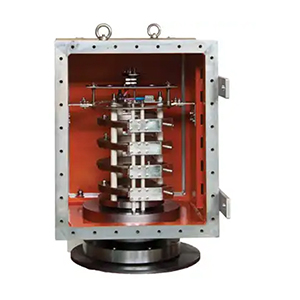
TER Pegasus Ex Proof Explosion Proof Slip Ring Collector
The TER Pegasus Ex Proof Slip Ring Collector is a highly configurable industrial rotary electrical interface designed for the reliable transfer of electrical power, control signals and data between stationary and rotating equipment operating in potentially explosive environments. Developed for demanding industrial applications where continuous rotation must be maintained without interrupting electrical connections, Pegasus Ex Proof provides a specialised solution for hazardous-area machinery including cranes, hoists, winches, silos and equipment used throughout the oil and gas sector.
Slip ring collectors perform an essential function in rotating machinery by allowing electrical energy and control information to pass from a fixed supply point to a rotating structure. Without a suitable rotary electrical connection, conventional cables would twist as the equipment rotates, eventually limiting movement or creating unacceptable mechanical stress. The Pegasus Ex Proof collector overcomes this limitation by maintaining electrical continuity across the rotating interface.
What distinguishes Pegasus Ex Proof from a conventional industrial slip ring collector is its suitability for potentially explosive areas. TER has developed the product specifically for applications where explosive atmospheres may be present, combining the functionality of a modular power and signal collector with an enclosure and construction designed around hazardous-area requirements.
The Pegasus Ex Proof range is available in two principal versions: Pegasus Ex Proof 150A and Pegasus Ex Proof 638A. Depending on the selected configuration, rated operational current can reach up to 150 A or 638 A, while rated operational voltage can reach up to 1000 Vac or 6000 Vac. This broad electrical capability allows the product family to support applications ranging from combined control and data transmission through to demanding high-power rotating machinery.
Explosion Proof Slip Ring Collector for Hazardous Areas
Industrial facilities handling flammable gases, vapours or other substances can create environments where electrical equipment requires specialised explosion-protection measures. Electrical components installed in these areas must be selected according to the hazardous-area classification and the characteristics of the potentially explosive atmosphere.
The TER Pegasus Ex Proof has been developed specifically for this type of operating environment. TER identifies the collector for use in potentially explosive areas, including applications associated with Zone 1 and Zone 2 hazardous locations.
This makes the Pegasus Ex Proof particularly relevant to industrial sectors where rotating electrical connections are required but the use of a conventional unprotected slip ring collector would not be appropriate.
Designed for Zone 1 and Zone 2 Applications
TER specifies the Pegasus Ex Proof for industrial sectors where a potential explosion risk exists in Zone 1 and Zone 2 environments.
Zone classification is an important element of hazardous-area equipment selection because it relates to the likelihood and duration of an explosive atmosphere being present. The suitability of any particular Pegasus Ex Proof configuration should therefore be confirmed against the hazardous-area classification of the installation and the requirements of the complete system.
Machine builders, engineers and system integrators should evaluate the equipment marking, environmental conditions and installation requirements before incorporating the collector into hazardous-area machinery.
ATEX Certified Explosion Protection
The TER Pegasus Ex Proof is designed in accordance with the ATEX framework applicable to equipment and protective systems intended for use in potentially explosive atmospheres.
TER specifies conformity with ATEX Directive 2014/34/EU and identifies applicable standards from the EN 60079 series for explosive-atmosphere electrical equipment.
This provides designers of hazardous-area machinery with a slip ring collector specifically developed around recognised explosion-protection requirements rather than attempting to adapt a conventional industrial collector to an unsuitable environment.
Ex db Flameproof Protection
The Pegasus Ex Proof carries the marking II 2G Ex db IIB T5 Gb with an ambient temperature range of -40°C to +60°C.
The Ex db designation relates to flameproof enclosure protection. In this type of protection concept, equipment is designed so that an internal ignition event is contained by the enclosure and does not propagate into the surrounding potentially explosive atmosphere under the conditions covered by the certification.
Correct installation is essential. The certified product, its cable connections, associated equipment and installation practices must be compatible with the hazardous-area requirements of the complete system.
IECEx Certification
In addition to ATEX requirements, TER identifies the Pegasus Ex Proof with IECEx certification under the COC IECEx Scheme.
IECEx provides an internationally recognised framework for equipment intended for use in explosive atmospheres. This can be particularly important for machinery manufacturers supplying equipment into international markets or projects where IECEx certification forms part of the technical specification.
The combination of ATEX and IECEx credentials makes Pegasus Ex Proof particularly suitable for industrial projects where hazardous-area compliance forms a fundamental part of equipment selection.
Transfer of Power from a Stationary to Rotating Structure
The fundamental purpose of the Pegasus Ex Proof is to transfer electrical current from a stationary supply point to a rotating structure.
This function is essential wherever machinery must rotate while remaining continuously connected to electrical power, control circuits or data networks.
The stationary portion of the electrical system remains connected to the fixed machine structure, while the slip ring collector provides the rotating electrical interface required by the moving section.
This arrangement eliminates the need for conventional cables to twist continuously with the rotating equipment and enables machinery to perform rotary movement while maintaining the required electrical connections.
Continuous Electrical Connection During Rotation
A properly specified slip ring collector provides electrical continuity while relative rotational movement occurs between fixed and rotating sections of the machine.
This capability can be critical in equipment such as cranes, rotating structures, winches and specialised material-handling systems where the moving assembly requires continuous electrical power or control communication.
The Pegasus Ex Proof extends this principle into hazardous-area applications where the rotating electrical connection must also satisfy specific explosion-protection requirements.
Combined Power and Signal Transmission
One of the major advantages of the TER Pegasus Ex Proof is its ability to combine power and signal transmission within the same collector system.
Industrial rotating machinery frequently requires more than a simple electrical power supply. Motors, actuators, sensors, limit devices, control systems and communication equipment can all require separate electrical circuits between the stationary and rotating parts of the machine.
Pegasus Ex Proof can be configured to accommodate combinations of power and signal circuits, reducing the need for separate rotary interfaces for different electrical functions.
Power Transmission Through the Slip Ring Collector
Power circuits can be incorporated into the Pegasus Ex Proof according to the electrical requirements of the application.
The range includes configurations capable of rated operational current up to 150 A and, for the higher-capacity Pegasus Ex Proof 638A version, up to 638 A.
This capability makes the range suitable for significantly more demanding electrical loads than slip ring collectors intended exclusively for instrumentation or low-current signal transmission.
The correct current capacity should always be selected according to the connected load, operating conditions, conductor requirements and complete electrical design of the machinery.
Control Signal Transmission
Alongside power transmission, the Pegasus Ex Proof can carry control signals between stationary and rotating machine sections.
This allows the collector to form part of the control architecture for complex rotating equipment. Signals associated with sensors, switches, actuators and other control devices can be transferred across the rotating interface without requiring a separate external cable arrangement.
Combining power and control signals within a purpose-designed collector can simplify the electrical architecture of rotating machinery and provide a more integrated installation.
Analogue Signal Transmission
The TER Pegasus Ex Proof is suitable for transmitting analogue control signals to rotating units.
Analogue signals remain widely used in industrial systems for the transmission of continuously variable process and control information. Depending on the equipment architecture, these signals may be associated with measurement, positioning, monitoring or process-control functions.
The ability to combine analogue signal paths with power circuits gives machine designers greater flexibility when configuring the electrical interface between fixed and rotating equipment.
Digital Signal Transmission
Digital signals can also be transmitted through the Pegasus Ex Proof collector.
Modern industrial machinery increasingly relies on digital control, status and communication signals. Providing suitable circuits within the rotary collector allows this information to pass between stationary and rotating sections while maintaining continuous machine movement.
This capability is especially valuable for sophisticated machinery where the rotating assembly contains sensors, electronic control equipment or intelligent devices that must communicate with the stationary machine control system.
Industrial Data Communication
In addition to conventional power and control circuits, TER identifies the Pegasus Ex Proof as suitable for industrial communication applications.
The collector can be configured for data and signal requirements associated with established industrial communication systems, allowing machine builders to integrate rotating equipment into modern automated control networks.
This capability allows the Pegasus Ex Proof to serve not simply as an electrical power collector but as a comprehensive rotary interface between the stationary and moving sections of an industrial machine.
Profinet Applications
TER identifies Profinet among the signal applications supported by the Pegasus Ex Proof.
Profinet is widely used throughout industrial automation for communication between controllers, remote I/O, drives and other intelligent automation devices.
Where a rotating machine section contains equipment connected to a Profinet architecture, a suitably configured rotary interface can allow the required communication to continue across the rotating boundary.
The exact collector configuration should be engineered for the electrical and communication requirements of the intended system.
Profibus Applications
Profibus applications can also be accommodated within the Pegasus Ex Proof configuration.
Profibus remains established in many industrial automation and material-handling systems, making support for this communication technology valuable when integrating new rotary equipment into existing installations.
A correctly configured collector can allow communication circuits to pass between fixed and rotating sections without restricting the mechanical rotation of the equipment.
CAN Bus Applications
TER also identifies CAN bus among the signal technologies that can be incorporated into the Pegasus Ex Proof.
CAN-based networks are used extensively in mobile machinery, lifting equipment and industrial control applications because of their robust communication characteristics.
For rotating machinery incorporating CAN-connected devices, the Pegasus Ex Proof can provide the required electrical path across the rotating interface as part of a suitably engineered collector configuration.
Fully Modular Construction
A defining characteristic of the TER Pegasus Ex Proof is its fully modular construction system.
Rather than providing one fixed arrangement of electrical circuits, the collector can be configured according to the power, control and signal requirements of the machinery.
This modular approach is particularly useful for specialised industrial equipment because different machines can require substantially different combinations of voltage, current, control signals and communication circuits.
The collector can therefore be engineered around the application instead of forcing the machine electrical design to conform to a predetermined slip ring arrangement.
High Degree of Customisation
TER describes the Pegasus Ex Proof as offering a high degree of customisation.
This is an important advantage in heavy industrial machinery where slip ring collectors are often application-specific components. The number of circuits, electrical ratings, signal requirements and physical arrangement can vary significantly from one machine to another.
By using a modular system, the Pegasus Ex Proof can be configured to match the electrical architecture of the rotating equipment more closely.
Power and Signal Combinations
Power and signal compositions are available within the Pegasus Ex Proof range.
This allows a single collector assembly to incorporate circuits with different functions rather than requiring independent collectors for power and control.
For example, a rotating machine may require substantial electrical power for motors or auxiliary equipment while simultaneously transmitting low-power control information and industrial communication signals.
The modular Pegasus Ex Proof architecture allows these different requirements to be considered within one engineered collector solution.
Pegasus Ex Proof 150A
The Pegasus Ex Proof 150A is designed for configurations requiring rated operational current up to 150 A.
TER specifies a rated operational voltage of up to 1000 Vac for this version, providing substantial electrical capability for industrial rotating machinery.
The 150A version can be configured according to the required combination of power and signal circuits, allowing it to support both energy transmission and machine-control communication within the same overall collector system.
Pegasus Ex Proof 638A
For applications requiring substantially greater electrical capacity, TER provides the Pegasus Ex Proof 638A.
This version supports rated operational current up to 638 A and rated operational voltage up to 6000 Vac.
The higher current and voltage capability extends the Pegasus Ex Proof platform into demanding heavy-industry applications where significant electrical power must be transferred to rotating machinery.
Detailed electrical selection should be based on the exact requirements of the equipment, including load, voltage, current, circuit composition and hazardous-area requirements.
Up to 6000 Vac Operational Voltage
The Pegasus Ex Proof 638A can support rated operational voltage up to 6000 Vac.
This capability demonstrates the heavy-industrial nature of the Pegasus Ex Proof range and distinguishes it from smaller rotary electrical interfaces intended primarily for low-voltage signal applications.
High-voltage collector applications require careful engineering, and the complete system must be designed according to the electrical characteristics, insulation requirements, installation environment and applicable standards.
Up to 638 A Operational Current
The maximum rated operational current of up to 638 A available with the Pegasus Ex Proof 638A enables the collector to support demanding rotating power applications.
This makes the product particularly relevant where substantial electrical loads must be supplied across a rotating interface while maintaining the required hazardous-area protection.
The required collector should always be selected according to the actual continuous and operational electrical requirements of the machinery rather than simply choosing the maximum available rating.
IP65 and IP66 Protection
The TER Pegasus Ex Proof is classified with IP65/IP66 ingress protection.
This provides a high degree of protection against the entry of dust and water under the conditions defined by the applicable ingress-protection classifications.
Such protection is particularly valuable in heavy industrial environments where electrical equipment can be exposed to airborne contamination, weather and demanding operating conditions.
The complete installation, including cable entries and associated components, must be carried out correctly to maintain the intended environmental and explosion-protection performance.
Protection Against Dust
Dust can create significant reliability problems for electrical equipment, particularly in industrial facilities involving bulk materials, processing operations and outdoor machinery.
The IP65/IP66 classification of the Pegasus Ex Proof provides a high level of protection against dust ingress, supporting its use in demanding industrial environments.
This characteristic is particularly relevant to applications such as silos and material-handling equipment where airborne particulate contamination can form part of the normal operating environment.
Protection Against Water and Oils
TER specifies that the high-quality materials and components used in Pegasus Ex Proof help protect the equipment against water, dust and oils.
This is important for equipment installed in heavy-industry locations where moisture, lubrication systems and environmental contamination may be present around machinery.
The actual suitability of the collector should nevertheless be evaluated against the specific liquids, exposure conditions and environmental requirements of each installation.
Resistance to Shock and Wear
The materials and components used within the Pegasus Ex Proof are selected to provide reliability, durability and resistance to shock and wear.
Rotating machinery can generate vibration and mechanical stresses throughout normal operation, while equipment used in lifting, port and heavy-industrial applications may experience particularly demanding service conditions.
Robust construction helps the collector maintain dependable electrical performance throughout its intended operating life when correctly selected, installed and maintained.
Extreme Temperature Resistance
The Pegasus Ex Proof is designed for an ambient operating temperature range from -40°C to +60°C.
This broad temperature capability allows the collector to be considered for industrial installations exposed to demanding climatic and environmental conditions.
Low-temperature capability is particularly relevant for outdoor cranes, lifting systems and exposed industrial equipment, while the upper temperature limit supports installations where elevated ambient temperatures may occur.
The actual temperature at the collector should remain within the certified range specified for the equipment.
Reliable Operation in Heavy Industrial Environments
The combination of hazardous-area certification, robust materials, IP65/IP66 protection and a -40°C to +60°C ambient temperature range makes the Pegasus Ex Proof particularly well suited to demanding industrial machinery.
Applications such as port equipment, cranes, bulk-material systems and oil and gas installations can expose electrical equipment to dust, moisture, temperature variation and continuous mechanical operation.
Pegasus Ex Proof has been developed to provide the rotating electrical interface required by these systems while addressing the additional requirements associated with potentially explosive areas.
Slip Ring Collectors for Crane Applications
Crane systems are a natural application for rotary electrical collectors because rotating crane structures can require continuous electrical connection between stationary and moving sections.
Depending on the crane design, power may be required for drives, motors, auxiliary equipment and control systems located on the rotating structure.
At the same time, control signals and industrial data may need to pass continuously between the rotating machinery and the stationary control system.
The ability of Pegasus Ex Proof to combine power and signal transmission makes it particularly valuable for sophisticated crane installations operating in hazardous environments.
Suitable for Winches and Hoists
TER identifies winches and hoists among the applications for the Pegasus Ex Proof.
These systems can require reliable electrical transmission to rotating components while operating in demanding industrial environments.
Where a potential explosive atmosphere is present, the hazardous-area design of Pegasus Ex Proof provides a specialised alternative to a conventional industrial slip ring collector.
Overhead Travelling and Gantry Crane Applications
Pegasus Ex Proof is also identified for overhead travelling cranes and gantry cranes.
These machines are widely used throughout manufacturing, bulk handling, ports and heavy industrial facilities. Depending on the machine architecture, rotating assemblies may require a combination of power, auxiliary control and communication circuits.
The modular collector can be configured around these electrical requirements while providing the explosion-protection characteristics required for suitable hazardous-area applications.
Tower Crane Applications
TER includes Pegasus Ex Proof within its range of solutions for tower crane applications.
Tower cranes can involve substantial rotation while requiring uninterrupted electrical and control connections between fixed and rotating sections.
A slip ring collector allows this rotation to occur without conventional electrical cables winding around the rotating structure.
For tower cranes installed in locations where hazardous-area requirements apply, Pegasus Ex Proof provides an engineered explosion-protected collector solution.
Harbour Crane Applications
Harbour and port cranes operate in particularly demanding environments where large rotating structures, high electrical loads and complex control systems are common.
TER identifies harbour cranes as an application for Pegasus Ex Proof, reflecting the product’s combination of substantial electrical capacity, environmental protection and modular signal capability.
Where hazardous materials are handled or potentially explosive atmospheres may occur, appropriate explosion-protected equipment becomes an important part of the complete crane electrical system.
Hydraulic Crane Applications
Hydraulic cranes are another application identified by TER for the Pegasus Ex Proof collector.
Although hydraulic power may perform the primary mechanical work, the rotating crane structure can still require electrical connections for controls, valves, sensors, monitoring systems and other auxiliary equipment.
A rotary collector allows these electrical circuits to remain connected while the crane rotates, and the modular construction of Pegasus Ex Proof allows the circuit composition to be adapted to the machine.
Silo and Bulk Material Applications
TER identifies silos as another application for the Pegasus Ex Proof.
Bulk-material handling systems can incorporate rotating machinery and may operate in environments where hazardous-area considerations are important.
Electrical equipment for these installations must be selected according to the actual hazardous material, area classification and equipment certification requirements.
Where a rotating electrical interface is required in an appropriately classified application, Pegasus Ex Proof provides a purpose-designed industrial solution.
Oil and Gas Applications
The oil and gas sector represents one of the most important application areas for explosion-protected electrical equipment.
TER specifically identifies oil and gas among the applications for the Pegasus Ex Proof collector. Equipment within these environments can require reliable power and communication while also being subject to strict hazardous-area requirements.
The combination of ATEX and IECEx certification, modular power and signal capability, IP65/IP66 protection and robust industrial construction makes Pegasus Ex Proof particularly relevant to specialised rotating machinery within oil and gas installations.
Designed for Custom Industrial Machinery
Slip ring collectors are frequently engineered around the machinery into which they are installed rather than selected as a completely standardised component.
The Pegasus Ex Proof addresses this requirement through a fully modular construction system that provides a high degree of customisation.
Machine designers can define the required power circuits, signal circuits and communication requirements before establishing an appropriate collector configuration.
Overall dimensions consequently depend on factors including the collector configuration, voltage, amperage, cable dimensions and cable length.
A Complete Rotary Power and Signal Interface
The TER Pegasus Ex Proof is more than a conventional electrical rotary connector. Its ability to combine substantial power transmission with analogue signals, digital signals and industrial communication technologies allows it to function as a comprehensive electrical interface between fixed and rotating machinery.
Configurations can incorporate Profinet, Profibus and CAN bus applications alongside power circuits, while the fully modular construction system allows the collector to be tailored to individual machinery requirements.
With versions providing rated operational current up to 150 A or 638 A and rated operational voltage up to 1000 Vac or 6000 Vac, Pegasus Ex Proof covers a broad range of demanding industrial electrical requirements.
Engineered for Potentially Explosive Industrial Environments
The TER Pegasus Ex Proof combines the functionality required from a modern industrial slip ring collector with specialised protection for potentially explosive environments.
ATEX and IECEx credentials, Ex db flameproof construction, IP65/IP66 protection and an ambient temperature capability from -40°C to +60°C provide a strong foundation for hazardous-area machinery.
Its modular design allows power and signal requirements to be combined within an application-specific configuration, while support for analogue and digital signals, Profinet, Profibus and CAN bus enables integration with modern industrial automation systems.
For cranes, winches, hoists, bulk-material equipment, silos, oil and gas machinery and other rotating industrial systems where explosion protection and continuous electrical transmission are required, the TER Pegasus Ex Proof provides a highly configurable and robust rotary electrical solution.
Technical Configuration of the TER Pegasus Ex Proof Slip Ring Collector
The TER Pegasus Ex Proof Slip Ring Collector is designed as a configurable electrical interface rather than a single fixed collector arrangement. This allows the product to be engineered according to the power, control, signal and industrial communication requirements of individual rotating machinery.
Two principal electrical platforms are available within the Pegasus Ex Proof range: the Pegasus Ex Proof 150A and the higher-capacity Pegasus Ex Proof 638A. The 150A version provides rated operational current up to 150 A and rated operational voltage up to 1000 Vac, while the 638A version extends the range to rated operational current up to 638 A and rated operational voltage up to 6000 Vac.
This broad electrical capability allows Pegasus Ex Proof to be considered for applications ranging from complex low-voltage power and control arrangements through to demanding heavy-industrial installations requiring substantially higher current and voltage capability.
Pegasus Ex Proof 150A Platform
The Pegasus Ex Proof 150A provides a versatile foundation for rotating machinery requiring power transmission together with control and communication circuits.
With rated operational current up to 150 A and rated operational voltage up to 1000 Vac, this version can support substantial industrial loads while retaining the modular characteristics of the wider Pegasus collector family.
The actual collector can be configured according to the number and type of circuits required by the machinery. This makes the 150A platform suitable for equipment where a combination of power, control, analogue, digital and communication connections must cross the rotating interface.
Rated Operational Current up to 150 A
The 150A version provides rated operational current up to 150 A, giving machine designers considerable flexibility when supplying rotating electrical equipment.
Actual circuit requirements should be established before the collector is specified. Different components on the rotating structure may require different currents, and signal circuits can have completely different electrical requirements from power circuits.
The modular architecture allows these requirements to be considered individually when establishing the complete collector configuration.
Rated Operational Voltage up to 1000 Vac
TER specifies rated operational voltage up to 1000 Vac for the Pegasus Ex Proof 150A.
This voltage capability allows the platform to accommodate a broad range of industrial electrical systems. The actual permitted voltage of each circuit should be determined by the final collector configuration and the requirements of the installation.
Voltage selection should be considered together with insulation requirements, circuit separation, current, cable characteristics and hazardous-area requirements.
Pegasus Ex Proof 638A Platform
The Pegasus Ex Proof 638A extends the collector family into substantially higher electrical power applications.
TER specifies rated operational current up to 638 A and rated operational voltage up to 6000 Vac for this version.
These ratings make the 638A platform particularly relevant to heavy industrial machinery where large electrical loads must be transferred continuously between stationary and rotating sections.
The higher-capacity collector retains the modular philosophy of the Pegasus range, allowing power transmission to be combined with the control and communication requirements of sophisticated rotating equipment.
Rated Operational Current up to 638 A
Rated operational current up to 638 A allows the higher-capacity Pegasus Ex Proof to support demanding electrical loads.
This can be important on large lifting, material-handling and specialised industrial systems where significant electrical power is required on the rotating section of the machinery.
The maximum available current rating should not be used as a substitute for detailed electrical design. Each application should be assessed according to its actual load profile, conductor requirements, duty cycle, environmental conditions and electrical protection architecture.
Rated Operational Voltage up to 6000 Vac
The Pegasus Ex Proof 638A provides rated operational voltage up to 6000 Vac, significantly expanding the range of industrial power systems that can be considered.
High-voltage rotating electrical transmission requires careful engineering. Appropriate insulation, separation, termination, protection and installation practices must be incorporated into the complete collector and machine design.
The exact configuration should therefore be established using the electrical specifications of the equipment together with the applicable TER technical documentation.
Choosing Between the 150A and 638A Versions
Selection between the Pegasus Ex Proof 150A and 638A should be driven by the electrical requirements of the machinery rather than simply choosing the platform with the highest available rating.
For applications operating within the lower current and voltage range, the 150A platform can provide an appropriate combination of power and signal capability. Where substantially higher electrical capacity is required, the 638A version extends the available current and voltage range.
Other factors including the number of circuits, communication requirements, cable dimensions, installation space and hazardous-area specification should also form part of the selection process.
ATEX Directive 2014/34/EU
The TER Pegasus Ex Proof is designed for use in potentially explosive atmospheres and TER identifies conformity with ATEX Directive 2014/34/EU.
ATEX establishes requirements for equipment and protective systems intended for use in potentially explosive atmospheres within the applicable European regulatory framework.
For machine manufacturers and system integrators, this means the Pegasus Ex Proof is specifically developed as hazardous-area equipment rather than as a conventional collector placed inside a general-purpose enclosure.
ATEX Equipment Marking
TER identifies the Pegasus Ex Proof with the hazardous-area marking II 2G Ex db IIB T5 Gb, with an ambient temperature range from -40°C to +60°C.
This marking communicates important information about the intended equipment category, explosive-atmosphere application, protection concept, gas group and temperature classification.
The complete marking should be reviewed by the responsible hazardous-area engineer when determining whether a particular Pegasus Ex Proof configuration is appropriate for the classified location.
Equipment Group II
The Group II designation within the ATEX marking relates to equipment intended for potentially explosive atmospheres other than underground mining applications covered by Group I.
This aligns with the industrial applications TER identifies for Pegasus Ex Proof, including lifting equipment, port machinery, silos and oil and gas installations.
The area classification and complete equipment marking should always be considered together during product selection.
Category 2G Equipment
The 2G designation indicates equipment intended for gas, vapour or mist explosive atmospheres within the relevant ATEX equipment category.
This supports the application of Pegasus Ex Proof in suitable Zone 1 environments, subject to the complete equipment marking and installation requirements.
Equipment suitable for Zone 1 can also be relevant to appropriate Zone 2 installations, although the actual product selection should always be confirmed against the project hazardous-area specification.
Ex db Flameproof Enclosure
The Ex db portion of the marking identifies flameproof enclosure protection.
This protection concept is designed so that an explosion occurring within the protected enclosure is contained and does not ignite the external potentially explosive atmosphere under the conditions defined by the applicable standards and certification.
The mechanical integrity of the enclosure and its flamepaths are therefore fundamental to the explosion-protection concept.
Unauthorised modification, incorrect assembly or damage to certified enclosure components can compromise the intended protection and should not be treated as ordinary mechanical alterations.
IIB Gas Group
The IIB designation identifies the gas subdivision associated with the certified explosion-protection characteristics of the Pegasus Ex Proof.
Gas groups form an important part of hazardous-area equipment selection because different gases and vapours can present different ignition characteristics.
The gas group present at the installation should be compared directly with the certified marking of the selected collector before the equipment is specified.
T5 Temperature Class
The T5 designation is the temperature class included in the Pegasus Ex Proof hazardous-area marking.
Temperature classification is critical in explosive atmospheres because the maximum surface temperature of electrical equipment must remain compatible with the ignition characteristics of the hazardous substance.
The complete T5 classification and specified ambient temperature range should therefore be considered as part of the hazardous-area assessment.
Equipment Protection Level Gb
The Gb designation identifies the Equipment Protection Level associated with the certified Pegasus Ex Proof configuration.
Equipment Protection Levels provide another method of describing the level of protection associated with equipment intended for explosive atmospheres.
The required EPL should be determined from the hazardous-area assessment and compared with the marking of the equipment being installed.
EN IEC 60079-0
TER identifies EN IEC 60079-0 among the applicable standards for Pegasus Ex Proof.
This standard establishes general requirements for the construction, testing and marking of electrical equipment intended for use in explosive atmospheres.
It forms a fundamental part of the wider 60079 series and works in conjunction with standards addressing individual explosion-protection concepts.
EN 60079-1 Flameproof Protection
TER also identifies EN 60079-1 among the standards applicable to the Pegasus Ex Proof.
EN 60079-1 addresses equipment protected by flameproof enclosure techniques and is directly relevant to the Ex db protection concept used by the collector.
Compliance with the applicable standards forms part of the certified hazardous-area design of the product.
IECEx Certification
The Pegasus Ex Proof is also identified by TER with IECEx certification under the IECEx Certified Equipment Scheme.
IECEx provides an internationally recognised certification framework for equipment intended for explosive atmospheres.
For international OEMs and engineering projects, IECEx certification can be particularly valuable where equipment is supplied into markets or facilities that specify IEC-based hazardous-area requirements.
Hazardous-Area Certification and Complete Machine Compliance
Using a certified explosion-protected slip ring collector is an important part of hazardous-area machine design, but the certification of one component does not establish compliance of the entire machine or installation.
Cables, glands, junction equipment, motors, sensors and other electrical components must also be suitable for their respective installation conditions where required.
Installation practices, earthing, mechanical protection and maintenance procedures can also affect the integrity of the complete hazardous-area system.
Power Circuit Engineering
The power circuits within a Pegasus Ex Proof collector should be selected according to the electrical loads installed on the rotating machinery.
Individual loads may include motors, actuators, heaters, pumps, lighting or other electrical equipment depending on the machine.
Current, voltage, duty cycle and protection requirements should be established for each circuit before the collector composition is finalised.
Signal Circuit Engineering
Signal circuits require different design considerations from power circuits.
Sensors, switches, feedback devices and electronic equipment can operate at comparatively low current while requiring reliable transmission and appropriate separation from higher-power electrical circuits.
The modular Pegasus Ex Proof system allows signal requirements to be incorporated into the overall collector composition alongside the necessary power circuits.
Analogue Signal Integration
Analogue signal transmission is available for applications requiring continuously variable measurement or control information to pass across the rotating interface.
Depending on the machine, analogue signals may originate from position sensors, pressure transducers, process instrumentation or other measurement devices installed on the rotating structure.
The signal requirements should be identified during system design so that the collector can be configured appropriately.
Digital Signal Integration
Digital circuits can also be incorporated into the Pegasus Ex Proof.
These may include discrete control commands, status signals, interlocks and other binary information required by the machine control system.
Combining digital control signals with power circuits within the same rotary collector can reduce the need for separate rotating electrical interfaces.
Profinet Communication
TER identifies Profinet among the communication applications supported by the Pegasus Ex Proof.
Profinet is widely used for industrial Ethernet communication between programmable controllers, distributed I/O, drives and other automation equipment.
Where suitable Profinet-connected devices are located on a rotating assembly, an appropriately configured collector can maintain the required communication path between rotating and stationary equipment.
Profibus Communication
Profibus compatibility provides another option for established industrial automation systems.
Many cranes, material-handling systems and process installations continue to use Profibus networks for reliable industrial communication.
The ability to incorporate the required communication circuit into Pegasus Ex Proof can be valuable when upgrading or extending existing machinery while retaining its established automation architecture.
CAN Bus Communication
CAN bus capability is particularly relevant to lifting equipment, mobile machinery and other industrial systems where CAN-based networks are widely used.
Controllers, sensors and other intelligent devices installed on a rotating structure may need to communicate continuously with equipment on the stationary portion of the machine.
A suitably configured Pegasus Ex Proof can provide this communication path while permitting continuous mechanical rotation.
Power and Data Within One Collector
The ability to combine electrical power and industrial data transmission is one of the strongest characteristics of the Pegasus Ex Proof platform.
Traditional rotating equipment may use separate solutions for power, control and communication. A modular collector allows these requirements to be considered as one integrated rotary interface.
This can simplify machine architecture, reduce the number of separate rotating assemblies and provide a more organised electrical installation.
Separation of Different Circuit Types
Power and signal circuits can have substantially different electrical characteristics, making correct circuit arrangement an important part of collector engineering.
Higher-voltage and higher-current circuits must be appropriately coordinated with lower-level control and communication circuits according to the requirements of the final configuration.
This is another reason why the Pegasus Ex Proof should be specified as an engineered assembly rather than selected only by overall current rating.
Modular Collector Composition
TER describes the Pegasus Ex Proof as using a completely modular construction system.
This allows the collector composition to be developed according to the electrical architecture of the machinery.
The number of required power circuits, control signals and communication connections can be considered together when establishing the complete unit.
This flexibility is particularly valuable for custom cranes and heavy industrial machines where no two electrical systems are necessarily identical.
Customised Power and Signal Compositions
Power and signal compositions can be configured according to the application.
A machine may require several substantial power circuits together with numerous lower-current control signals. Another application may place greater emphasis on industrial communication and instrumentation while requiring fewer power circuits.
The Pegasus modular system allows these differing requirements to be addressed within the same product family.
Configuration-Dependent Overall Dimensions
The overall dimensions of the Pegasus Ex Proof depend on the final collector configuration.
TER identifies factors including configuration, voltage, amperage, cable dimensions and cable length as variables that can affect the physical dimensions of the finished collector.
For this reason, a single generic dimensional specification should not be assumed to represent every Pegasus Ex Proof assembly.
Machine designers should work from the dimensional information associated with the actual configured collector when establishing mounting space and mechanical interfaces.
Cable Dimension Considerations
Cable dimensions can become significant on collectors handling substantial current or high operating voltage.
The conductors must be appropriately sized for the electrical requirements while also being compatible with the physical cable entry and termination arrangement of the configured collector.
Cable dimensions can consequently influence the overall collector design and should be established early in the engineering process.
Cable Length Considerations
TER also identifies cable length as one of the variables affecting the final Pegasus Ex Proof configuration.
The required cable length should be determined according to the physical installation and connection points on the machinery.
Specifying this requirement accurately can help avoid unnecessary joints or modifications during machine assembly.
IP65 and IP66 Ingress Protection
Pegasus Ex Proof provides IP65/IP66 ingress protection, supporting installation in demanding industrial environments.
This high degree of protection is particularly important for collectors installed on outdoor machinery, port equipment, bulk-material systems and heavy industrial installations where dust and moisture can be present.
The final installation must preserve the required enclosure integrity, including correct treatment of cable entries and associated connections.
Operating Temperature from -40°C to +60°C
The specified ambient temperature range for Pegasus Ex Proof extends from -40°C to +60°C.
This wide range supports applications in challenging climatic conditions, including outdoor lifting equipment and industrial machinery exposed to substantial seasonal temperature variation.
Because the temperature range also forms part of the hazardous-area marking, operation should remain within the certified ambient limits.
Mechanical Rotation and Electrical Continuity
Throughout machine rotation, the Pegasus Ex Proof maintains the required electrical interface between the stationary and rotating sections.
This eliminates the cable winding that would occur if fixed wiring were used directly between the two structures.
For equipment capable of repeated or continuous rotation, this functionality can be fundamental to the machine architecture rather than simply an optional accessory.
Collector Selection for Cranes
Crane applications can place particularly complex demands on a slip ring collector.
Large cranes may require power for motors and auxiliary equipment while simultaneously carrying control signals, safety information and industrial network communication.
The Pegasus Ex Proof platform allows these requirements to be considered within one configurable rotating interface for suitable hazardous-area crane applications.
Collector Selection for Oil and Gas Equipment
Oil and gas machinery requires careful coordination between mechanical design, electrical requirements and hazardous-area certification.
The Pegasus Ex Proof provides an explosion-protected rotary interface capable of carrying power and signals while operating within its certified environmental conditions.
The exact collector configuration should be established according to the site’s hazardous-area classification, electrical system and equipment specification.
Collector Selection for Silo Applications
Silo and bulk-material systems can present challenging environments for electrical equipment, particularly where rotating machinery and potentially hazardous atmospheres occur together.
The IP65/IP66 protection and explosion-protected construction of Pegasus Ex Proof make it relevant to appropriately classified applications where power or control signals must cross a rotating interface.
The actual hazardous material and zone classification should always be established before equipment selection.
Engineering the Correct Pegasus Ex Proof Configuration
Specifying the correct Pegasus Ex Proof begins with a clear understanding of the machine’s electrical architecture.
The required operating voltage, current for each power circuit, number of control circuits, analogue and digital signals, communication protocols and cable requirements should all be established.
The hazardous-area classification, gas group, temperature requirements and environmental conditions must then be considered alongside these electrical requirements.
Electrical Information Required for Selection
When selecting a Pegasus Ex Proof collector, useful electrical information includes the supply voltage, maximum current for each circuit, number of power circuits, number and type of control circuits and any industrial communication requirements.
Where Profinet, Profibus or CAN bus is required, this should be identified during the configuration process rather than treated as an addition after the collector has been specified.
Providing complete electrical information helps establish a collector composition that matches the actual machinery.
Mechanical Information Required for Selection
Mechanical information is equally important when configuring the collector.
Available installation space, mounting arrangement, cable routing, cable dimensions and required cable lengths can all influence the finished assembly.
Because overall dimensions depend on the configuration, the collector and surrounding machine structure should be engineered together rather than leaving the slip ring selection until the end of the project.
Hazardous-Area Information Required for Selection
For an explosion-protected collector, the hazardous-area information is fundamental to product selection.
The zone classification, gas group, required Equipment Protection Level, ambient temperature and applicable project standards should be confirmed before finalising the collector.
This information can then be compared with the certified marking and operating limits of the Pegasus Ex Proof.
High-Capacity Rotary Electrical Transmission
The combination of up to 638 A rated operational current and up to 6000 Vac rated operational voltage gives the Pegasus Ex Proof family substantial capability for heavy industrial rotating equipment.
At the same time, support for analogue and digital signals together with Profinet, Profibus and CAN bus means the collector can address the increasingly complex control requirements of modern machinery.
This combination of high-power and sophisticated signal transmission makes Pegasus Ex Proof suitable for applications where the rotary interface must handle much more than a simple electrical supply.
A Modular Solution for Modern Hazardous-Area Machinery
The TER Pegasus Ex Proof brings together hazardous-area protection, modular electrical construction and modern industrial communication capability within one slip ring collector platform.
The 150A version provides rated operational current up to 150 A and rated operational voltage up to 1000 Vac, while the 638A version extends capability to 638 A and 6000 Vac for demanding heavy-industrial installations.
ATEX and IECEx certification, Ex db flameproof construction, IIB gas classification, T5 temperature class, Gb Equipment Protection Level and IP65/IP66 environmental protection provide the foundation for appropriately engineered installations in potentially explosive areas.
Combined with configurable power circuits, analogue and digital signals and industrial communication options including Profinet, Profibus and CAN bus, Pegasus Ex Proof provides machine builders with a highly adaptable rotary electrical interface for sophisticated hazardous-area machinery.
Industrial Applications for the TER Pegasus Ex Proof Slip Ring Collector
The TER Pegasus Ex Proof Slip Ring Collector is designed for rotating machinery operating in potentially explosive environments where electrical power, control signals and data must be transmitted continuously between stationary and rotating sections.
Its combination of high electrical capacity, modular power and signal configurations, hazardous-area certification and IP65/IP66 environmental protection makes it suitable for demanding applications across lifting, material handling, bulk storage and oil and gas industries.
TER identifies applications including winches, hoists, overhead travelling cranes, gantry cranes, tower cranes, harbour cranes, hydraulic cranes, silos and oil and gas equipment. These applications reflect the collector’s role as a specialised rotary electrical interface for heavy industrial machinery.
Winch Applications
Winches can require electrical power and control information to pass continuously to rotating drums or associated assemblies. In hazardous-area applications, this electrical connection must also meet the requirements associated with the surrounding potentially explosive atmosphere.
The Pegasus Ex Proof provides a purpose-designed rotating electrical interface that can combine power circuits, control signals and industrial communication within one modular collector assembly.
This can simplify the overall electrical architecture of hazardous-area winch systems while reducing the need for multiple separate rotary interfaces.
Hoist Applications
Hoisting systems often combine motors, brakes, limit devices, sensors and control components that require dependable electrical continuity during movement.
Where rotation is part of the machine design, a slip ring collector allows electrical connections to be maintained without winding conventional cables around the moving structure.
The Pegasus Ex Proof can therefore provide an appropriate solution for suitable hoist installations where hazardous-area protection and continuous electrical transmission are both required.
Overhead Travelling Crane Applications
Overhead travelling cranes are widely used throughout manufacturing, heavy industry, ports and material-handling facilities.
Depending on the crane design, rotating components may require power, auxiliary control, status monitoring and communication signals. These requirements can be combined within the Pegasus Ex Proof collector configuration.
For installations located in potentially explosive areas, the certified hazardous-area construction provides an important advantage over conventional slip ring assemblies.
Gantry Crane Applications
Gantry cranes can operate in outdoor, industrial and port environments where machinery is exposed to demanding mechanical and environmental conditions.
The IP65/IP66 protection, shock and wear resistant construction and -40°C to +60°C operating range of Pegasus Ex Proof support use in challenging machinery environments when correctly selected and installed.
Its modular construction also allows the collector to be configured according to the exact electrical requirements of the crane rather than relying on one fixed circuit arrangement.
Tower Crane Applications
Tower cranes require reliable electrical transfer between stationary and rotating structures while allowing substantial rotational movement.
A rotary slip ring collector enables this movement without conventional cable winding and can provide continuous power and control transmission to rotating crane equipment.
Where a tower crane operates in a hazardous industrial location, the Pegasus Ex Proof provides a specialised explosion-protected solution for the rotary electrical interface.
Harbour Crane Applications
Harbour cranes operate in demanding environments where large rotating structures, high electrical loads and complex automation systems are common.
The Pegasus Ex Proof is particularly well suited to these applications because its modular configuration can combine substantial power capability with analogue signals, digital signals and industrial communication networks.
Its IP65/IP66 environmental protection is also valuable in port environments where moisture, airborne contamination and changing weather conditions may affect electrical equipment.
Hydraulic Crane Applications
Hydraulic cranes may rely on hydraulic power for their primary mechanical movement, but the rotating structure can still contain substantial electrical equipment.
Sensors, solenoid valves, controllers, lighting, monitoring equipment and communication devices may all require electrical connections across the rotating interface.
The Pegasus Ex Proof can provide these connections while allowing continuous or repeated crane rotation in appropriately classified hazardous-area installations.
Oil and Gas Applications
Oil and gas facilities are among the most important environments for explosion-protected electrical equipment.
Rotating machinery used in these facilities may require reliable power and communication while operating in areas where flammable gases or vapours can be present.
The Pegasus Ex Proof combines Ex db flameproof construction, ATEX and IECEx certification, IP65/IP66 protection and modular power and signal capability to address these demanding applications.
Rotating Equipment in Hazardous Process Areas
Hazardous process environments can include rotating loading systems, transfer equipment, cranes, lifting devices and specialised machinery.
Where electrical circuits must cross a rotating boundary, conventional cable arrangements can restrict movement or introduce mechanical stress.
A correctly engineered slip ring collector allows the electrical connection to remain continuous while the equipment rotates, making it an essential component in some hazardous-area machine designs.
Silo Applications
TER also identifies silos among the applications for Pegasus Ex Proof.
Silo installations can incorporate rotating machinery associated with loading, discharge, distribution and material handling. Depending on the stored material and surrounding process, the installation may also be subject to hazardous-area requirements.
The Pegasus Ex Proof can provide the rotating electrical interface for suitable applications where the collector’s certified gas protection characteristics match the hazardous-area classification.
Bulk Material Handling Applications
Bulk material systems frequently expose machinery to dust, vibration and continuous mechanical operation.
The rugged construction and high ingress protection of Pegasus Ex Proof support use in heavy industrial environments where electrical equipment must remain protected from contamination and moisture.
Where a potentially explosive gas atmosphere is also present, the certified explosion-protection characteristics provide an additional level of suitability for appropriately classified installations.
Combining High Power and Control Signals
One of the main engineering advantages of Pegasus Ex Proof is the ability to combine high-power circuits and lower-level control signals within the same collector assembly.
Heavy industrial machinery can require substantial current for motors and actuators while simultaneously relying on sensors, switches and communication systems.
The modular collector architecture allows these different requirements to be considered together within one rotary electrical interface.
Industrial Network Integration
Modern cranes, process systems and specialised industrial machines increasingly rely on industrial communications rather than simple point-to-point control wiring.
Pegasus Ex Proof can be configured for Profinet, Profibus and CAN bus applications, allowing communication to continue across the rotating machine interface.
This makes the collector particularly useful for intelligent machinery where controllers and distributed devices are installed on both stationary and rotating structures.
Profinet in Rotating Machinery
Profinet communication allows industrial Ethernet devices to exchange data throughout modern automation systems.
Where intelligent equipment is located on a rotating structure, the rotary interface must preserve the required communication path while mechanical movement continues.
An appropriately configured Pegasus Ex Proof can form part of this communication architecture in hazardous-area machinery.
Profibus in Existing Industrial Systems
Many established industrial machines continue to use Profibus networks for communication between controllers, drives and remote I/O.
The ability to configure Pegasus Ex Proof for Profibus can therefore be valuable when upgrading existing machinery or integrating new rotating equipment into established plants.
This helps preserve existing control architecture while introducing an explosion-protected rotary electrical interface.
CAN Bus in Lifting and Mobile Machinery
CAN-based communication is widely used in cranes, lifting systems and mobile machinery.
A rotating section can contain intelligent sensors, controllers and other devices that must remain connected to the stationary machine network.
The Pegasus Ex Proof can provide the required connection while maintaining the mechanical rotation of the machine.
Correct Hazardous-Area Assessment
Selection of an explosion-protected slip ring collector begins with a correct assessment of the hazardous area.
The zone classification, gas group, temperature class, Equipment Protection Level and ambient temperature should be confirmed before product selection.
These values must then be compared with the certified marking of the Pegasus Ex Proof to determine whether the selected configuration is suitable for the installation.
Understanding the II 2G Ex db IIB T5 Gb Marking
The Pegasus Ex Proof marking II 2G Ex db IIB T5 Gb provides important information about its intended hazardous-area application.
The marking identifies the equipment group and category, flameproof Ex db protection concept, IIB gas group, T5 temperature class and Gb Equipment Protection Level.
Each of these elements should be reviewed against the site hazardous-area requirements before installation.
Ambient Temperature Requirements
The Pegasus Ex Proof is specified for an ambient temperature range from -40°C to +60°C.
This temperature range forms part of the certified operating conditions and should not be treated only as a general environmental specification.
The collector should be installed so that its actual operating environment remains within the certified ambient limits.
Maintaining Flameproof Integrity
Flameproof equipment relies on the mechanical integrity of the certified enclosure and associated flamepaths.
Components forming part of the explosion-protection system should not be modified, machined or altered without appropriate manufacturer approval and engineering assessment.
Damage, corrosion or incorrect assembly of flameproof enclosure components can compromise the intended protection and should be addressed before the equipment is returned to service.
Cable Entries and Hazardous-Area Installation
Cable entries form an important part of the complete hazardous-area installation.
Glands, cables and associated termination components should be selected according to the electrical requirements and the hazardous-area certification requirements of the system.
Incorrect cable entry components can compromise both environmental protection and explosion-protection performance.
Electrical Earthing and Bonding
Correct earthing and bonding should form part of the electrical installation of hazardous-area rotating machinery.
The machine manufacturer or system integrator should ensure that all relevant conductive components are incorporated into the required protective earthing and bonding arrangement.
Electrical continuity, fault protection and hazardous-area requirements should be addressed as part of the complete installation design.
Mechanical Installation Considerations
The Pegasus Ex Proof should be mounted so that the collector is mechanically aligned with the rotating equipment.
Incorrect alignment can introduce unnecessary mechanical loads into the collector and associated drive components.
Mounting structures should be rigid enough to support the collector while allowing access for inspection and maintenance.
Allowing Adequate Installation Space
Because the dimensions of the Pegasus Ex Proof depend on the final electrical configuration, the collector should be incorporated into the machinery layout during the engineering stage.
Space should be provided for the collector body, cables, mounting arrangement and safe maintenance access.
Leaving the slip ring selection until late in the machine design can create unnecessary installation constraints.
Configuration-Dependent Dimensions
The overall dimensions of the Pegasus Ex Proof vary according to the collector composition, electrical ratings and cable requirements.
Voltage, current, cable dimensions and cable length can all affect the final assembly.
Machine builders should therefore work from the dimensional information associated with the specific configured collector rather than using a generic dimension from another Pegasus arrangement.
Specifying Power Circuits
The required power circuits should be identified before the collector configuration is finalised.
For each circuit, the engineer should establish operating voltage, maximum current, connected load and duty requirements.
This information helps determine whether the 150A or 638A platform is appropriate and how the individual power circuits should be arranged.
Specifying Control Circuits
Control circuits should be identified separately from the higher-power electrical loads.
These circuits may include limit switches, relays, valve controls, interlocks and other auxiliary functions located on the rotating structure.
The number and electrical characteristics of these control circuits should be included in the collector specification.
Specifying Analogue Signals
Any analogue signals passing through the rotating interface should be identified during the design stage.
Pressure, position, load, speed and process instrumentation are examples of signals that may need to be transmitted from the rotating portion of the machinery.
Including these requirements early helps ensure that the final collector composition is compatible with the complete control system.
Specifying Digital Signals
Digital inputs and outputs should also be considered when defining the collector.
Discrete machine status, alarms, control commands and interlocks may all need to cross the rotary interface.
The required number of signal channels should be determined from the machine electrical schematic before ordering the collector.
Specifying Industrial Communications
Where the machine uses Profinet, Profibus or CAN bus, the communication protocol should be identified clearly during product selection.
Industrial data circuits can have requirements that differ substantially from conventional low-voltage control wiring.
Correctly defining the network requirements helps ensure that the collector is configured appropriately for the intended communication system.
Selecting Between 150A and 638A
The Pegasus Ex Proof 150A is suited to configurations requiring rated operational current up to 150 A and rated operational voltage up to 1000 Vac.
For more demanding applications, the Pegasus Ex Proof 638A extends capability to rated operational current up to 638 A and rated operational voltage up to 6000 Vac.
The correct platform should be selected according to the actual electrical requirements rather than simply choosing the largest available version.
Environmental Protection
The IP65/IP66 classification provides strong protection against dust and water ingress under the relevant test conditions.
This is particularly beneficial for outdoor cranes, port machinery, bulk material systems and other industrial equipment exposed to demanding environments.
Correct installation of the enclosure and cable entries is essential to preserve the intended ingress-protection performance.
Inspection of the Collector Assembly
Periodic inspection should form part of the maintenance strategy for any industrial slip ring collector.
The assembly should be checked for visible damage, unusual wear, contamination, loose components and deterioration of external cables or mounting hardware.
Inspection frequency should reflect the operating duty, environmental conditions and criticality of the equipment.
Hazardous-Area Maintenance
Maintenance on explosion-protected equipment should be performed only by personnel competent in hazardous-area electrical systems.
Work should be carried out in accordance with the applicable instructions, site procedures and standards governing electrical equipment in explosive atmospheres.
The certified characteristics of the enclosure and associated components must be preserved throughout servicing.
Avoiding Unauthorised Modifications
Unauthorised modifications should not be made to the Pegasus Ex Proof collector.
Changes to certified enclosure components, flamepaths, cable entries or other explosion-protection features can invalidate the basis on which the equipment was certified.
Where modification appears necessary, appropriate technical guidance should be obtained before any work is undertaken.
Preventive Maintenance Planning
The collector should be incorporated into the preventive maintenance schedule of the machine.
Inspection intervals can be based on operating hours, rotational cycles, environmental conditions and manufacturer recommendations.
Regular inspection can help identify wear or deterioration before it develops into a reliability or safety problem.
Monitoring Electrical Performance
Changes in electrical behaviour can indicate developing issues within a rotating electrical interface.
Unexpected voltage drop, unstable signals, communication faults or abnormal heating should be investigated rather than treated as normal operating variation.
Where a fault is suspected, the collector should be assessed by appropriately qualified personnel before continued operation.
Maintaining Clean Operating Conditions
Although Pegasus Ex Proof is designed for demanding environments, excessive contamination around the installation should still be controlled where practical.
Accumulated dust, oils or other process materials can interfere with inspection and may contribute to deterioration of external cables, mounting hardware or surrounding equipment.
Routine housekeeping around the collector can therefore support long-term reliability.
Benefits for OEM Crane Manufacturers
For crane manufacturers, the Pegasus Ex Proof provides a highly configurable rotary electrical platform that can be engineered around the electrical architecture of the crane.
Power, control, instrumentation and industrial communication requirements can be considered together within a single collector assembly.
This can simplify machine integration and provide a consistent approach to hazardous-area rotary power and signal transmission across different crane models.
Benefits for Heavy Industrial OEMs
Heavy industrial OEMs often develop machinery with application-specific electrical requirements.
The modular Pegasus Ex Proof platform allows the collector to be configured according to the exact number and type of circuits required by the machine.
This flexibility can reduce the need for compromises associated with standard off-the-shelf slip ring arrangements.
Benefits for System Integrators
Automation and electrical system integrators can use Pegasus Ex Proof as the rotary interface between stationary control systems and rotating field equipment.
The ability to support analogue signals, digital signals, Profinet, Profibus and CAN bus provides flexibility across both traditional and modern machine architectures.
Correct integration should be based on the full electrical, mechanical and hazardous-area requirements of the system.
Why Slip Ring Selection Matters
A slip ring collector is a critical part of any machine that depends on continuous electrical transmission across a rotating interface.
Incorrect collector selection can lead to inadequate current capacity, insufficient voltage rating, unsuitable signal performance, mechanical installation problems or incompatibility with the hazardous-area classification.
For this reason, the collector should be specified as an engineered component of the machine rather than treated as a simple electrical accessory.
Information Required for Product Selection
Useful information for selecting a Pegasus Ex Proof includes hazardous-area classification, ambient temperature, required operating voltage, current for each power circuit, number of power circuits, number of signal circuits and communication protocol requirements.
Mechanical details such as mounting space, cable dimensions and required cable lengths should also be supplied.
The more complete the application information, the easier it is to establish an appropriate collector configuration.
TER Pegasus Ex Proof from Control Devices
Control Devices supplies specialised industrial control, sensing and operator-interface equipment for machinery, automation and heavy industrial applications.
The TER Pegasus Ex Proof Slip Ring Collector provides a specialised solution for customers requiring rotary transmission of power, control signals and industrial data within potentially explosive environments.
Control Devices can assist with technical product information and configuration guidance to help identify a Pegasus Ex Proof arrangement suited to the electrical, mechanical and hazardous-area requirements of the application.
Support for Application-Specific Configurations
Because Pegasus Ex Proof is a modular and highly configurable collector, correct product selection depends on more than simply choosing between the 150A and 638A versions.
Power circuits, signal requirements, communication protocols, cable details and hazardous-area information should all be considered together.
Control Devices can help customers work through these requirements and identify the technical information needed to support configuration and product selection.
Why Choose the TER Pegasus Ex Proof?
The TER Pegasus Ex Proof combines robust mechanical construction, substantial electrical capacity and certified explosion protection in a highly configurable rotary electrical platform.
Its two principal versions provide rated operational current up to 150 A or 638 A and rated operational voltage up to 1000 Vac or 6000 Vac, allowing the family to address a wide range of industrial power requirements.
Support for analogue signals, digital signals, Profinet, Profibus and CAN bus allows the collector to integrate with sophisticated automation and monitoring systems.
ATEX and IECEx certification, Ex db flameproof construction, IIB gas classification, T5 temperature class, Gb Equipment Protection Level and IP65/IP66 protection support use in appropriately classified hazardous industrial environments.
A Complete Explosion Proof Rotary Electrical Solution
The TER Pegasus Ex Proof provides a comprehensive solution for applications where electrical power, control and communication must be transmitted continuously across a rotating interface in potentially explosive areas.
Its modular architecture allows individual machines to be configured according to their actual electrical requirements rather than adapting the machine to a fixed collector design.
From cranes, winches and hoists to port equipment, bulk material systems, silos and oil and gas machinery, Pegasus Ex Proof provides a robust and flexible rotary electrical interface for demanding industrial applications.
For OEMs, machine builders and system integrators requiring explosion-protected power and signal transmission across rotating machinery, the TER Pegasus Ex Proof Slip Ring Collector offers high electrical capability, modern communication compatibility and application-specific configurability within a certified hazardous-area platform.