
Description
TER Stack Lights – Industrial Visual Signalling Solutions
TER Stack Lights provide a practical and highly visible signalling solution for industrial machinery, material handling systems, automation equipment and other applications where operators need to quickly identify machine status or changing operating conditions. Designed as part of TER’s extensive range of industrial control and signalling equipment, stack lights can provide clear visual communication between machinery and personnel, helping operators recognise operating states, warnings and conditions from a distance.
In modern industrial environments, effective machine signalling is an important part of efficient operation. Operators may need to determine whether equipment is running normally, waiting for intervention, experiencing a fault or requiring attention without approaching the machine or accessing a control interface. A strategically positioned stack light provides an immediate visual indication that can be recognised across a workshop, production area, warehouse or machinery installation.
TER has extensive experience developing equipment for industrial and material handling applications, including control stations, rotary limit switches and joysticks. TER’s product range is designed around the demanding requirements encountered in machinery and handling applications, where control and signalling components must provide dependable operation as part of the wider machine control system.
Clear Visual Communication for Industrial Machinery
The primary purpose of a stack light is to convert an electrical control signal into an easily understood visual indication. Instead of requiring an operator to continually check a control panel, display or human-machine interface, a stack light can communicate machine status using illuminated signalling elements positioned where they can be readily observed.
Different illuminated sections can be assigned to different machine conditions according to the requirements of the application and the control philosophy established by the machine designer. This makes stack lights particularly useful in environments containing multiple machines or workstations, as personnel can identify equipment requiring attention while moving through the facility.
For example, a machine builder may configure individual light elements to represent normal operation, standby conditions, operator requests, warnings or faults. The exact meaning assigned to each indication should always be established by the machine manufacturer or system integrator and documented as part of the operating procedures for the equipment.
This flexibility makes industrial stack lights suitable for both relatively simple equipment and more sophisticated automated machinery. Rather than being limited to one particular machine function, the signalling system can become part of the overall machine interface and provide operators with continuous visual feedback about equipment status.
Designed for Industrial and Material Handling Applications
TER products are strongly associated with industrial machinery and material handling control applications. The manufacturer describes its range as providing solutions for handling control and offers equipment including control stations, rotary limit switches and industrial joysticks.
Within this type of environment, stack lights can complement other TER control components by providing a visible indication of information generated by the machine control system. A pendant control station, joystick or limit switch may provide an operator input or machine-position signal, while a signalling device can communicate the resulting operating condition to personnel.
This makes stack lights applicable to a broad range of industrial equipment, including cranes, hoists, lifting systems, production machinery, automated equipment, conveyor systems, manufacturing cells, warehouse equipment and material handling installations. Their usefulness is particularly evident where machinery operates across a large physical area or where an operator may not remain immediately beside the primary control station.
On overhead cranes and other lifting equipment, for example, visual signalling may be incorporated into the overall machine system to indicate selected operating conditions to personnel within the working area. In automated manufacturing, stack lights may provide production personnel with an immediate indication that a machine requires attention. On conveyors and handling equipment, visual indicators can assist operators in identifying different sections of a system and responding to changes in machine state.
Improving Machine Status Awareness
One of the major advantages of an industrial stack light is the ability to communicate information without requiring direct interaction with the machine. When correctly positioned, the illuminated signal can potentially be observed from multiple locations around the installation, improving awareness of machine conditions across the working area.
This is especially valuable in busy industrial environments where operators may supervise several pieces of equipment simultaneously. Instead of walking to each machine and checking its control interface, personnel can use the visual indicators as an initial indication of equipment status.
Machine status awareness can also support faster responses to conditions requiring attention. If a visual indication identifies a machine that has stopped or requires operator intervention, personnel can recognise the condition sooner and investigate the cause. In production environments where equipment availability and workflow are important, reducing the time between a machine condition occurring and an operator becoming aware of it can contribute to improved operational efficiency.
Stack lights should therefore be considered more than simply an illuminated accessory. When integrated correctly, they form part of the communication interface between the machine and the people responsible for operating, supervising and maintaining it.
Flexible Status Indication
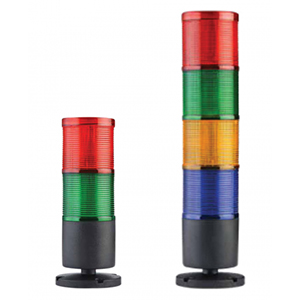
The stacked arrangement of an industrial signal tower allows multiple indications to be presented from a single mounting position. This provides an efficient method of communicating several machine conditions without installing numerous independent indicator lamps around a control enclosure or machine frame.
The machine designer can determine how individual visual signals are incorporated into the control system according to the specific operating requirements of the equipment. This allows signalling logic to be adapted to the application rather than forcing the machinery to conform to a single fixed signalling arrangement.
Typical machine conditions that may be represented through a stack-light system include equipment running, equipment stopped, standby mode, process complete, operator assistance required, warning conditions and machine faults. These are application examples rather than fixed TER colour assignments; the final signalling logic should be determined during machine design and commissioning.
This distinction is important because colour conventions and signalling requirements can vary depending on machinery type, workplace procedures, applicable standards and the function being communicated. Correct system design should therefore consider both visibility and the meaning assigned to each indication.
Integration with Machine Control Systems
Industrial stack lights operate as part of a wider electrical control architecture. Signals generated by a PLC, relay system, controller or other suitable control device can be used to activate the required indication according to the machine’s operating logic.
This integration allows visual signalling to respond automatically to changes in equipment status. For example, the machine controller may activate a particular indication when a process begins, change the indication when operator intervention is required and provide another signal when a fault condition is detected.
Because the visual indication is linked to the machine control logic, the stack light can provide real-time information without requiring the operator to manually change the signal. This is particularly beneficial in automated applications where equipment may move through numerous operating states during a production cycle.
System integrators can also incorporate visual signalling into broader machine-control strategies involving pushbutton stations, sensors, limit switches, encoders, joysticks and other industrial control devices. The result is a coordinated control and indication system in which operator commands, machine feedback and visual status information work together.
Suitable for Crane and Hoist Systems
Material handling equipment is one area where highly visible machine signalling can be particularly valuable. Cranes, hoists and lifting systems often operate across relatively large working areas, and the operator or surrounding personnel may not always be positioned beside the main electrical control enclosure.
A suitably located stack light can therefore provide an additional visual communication point on the equipment. Depending on the control system design, signalling can be associated with selected machine states or operating conditions, giving personnel a readily identifiable visual reference.
TER’s wider portfolio includes equipment specifically intended for handling-control applications, reinforcing the suitability of its control and signalling products for machinery operating in these demanding industrial environments. TER’s configurable equipment also demonstrates the manufacturer’s emphasis on adapting industrial control components to different machine requirements rather than relying exclusively on fixed configurations.
Industrial Signalling for Automated Production Equipment
Stack lights are equally useful in automated production environments. Manufacturing equipment can contain numerous operating modes and fault conditions, and operators need an efficient way to identify which machines require attention.
When positioned above a machine enclosure or another clearly visible location, a stack light can provide status information that remains visible even when the primary control panel is facing away from the operator. This can be particularly beneficial in facilities containing rows of machinery, robotic cells, assembly stations or automated production lines.
Maintenance personnel can also benefit from clear visual machine-status information. A visible fault or warning indication can help direct attention toward equipment requiring investigation, while production supervisors can gain a rapid overview of operating conditions across a group of machines.
For machine builders and system integrators, TER Stack Lights therefore provide a useful component for developing a clear and professional machine interface. Combined with appropriately designed control logic and documented signalling conventions, they can improve the way equipment communicates operating information to the people working around it.
Industrial Construction for Demanding Applications
Industrial signalling equipment is often installed in environments where components may be exposed to vibration, repeated machine operation, dust, changing temperatures and other conditions associated with manufacturing and material handling equipment. For this reason, the selection of a stack light should consider not only its visual performance but also its suitability for the environment in which it will operate.
TER Stack Lights are intended to complement industrial machinery and control installations where dependable signalling is required as part of the overall machine interface. The physical installation, electrical supply and environmental conditions should always be assessed against the specifications of the selected TER configuration before installation.
This is particularly important when signalling equipment is fitted to cranes, hoists, conveyors or mobile sections of machinery. Components installed on these systems may experience vibration and movement that would not normally occur in a stationary control cabinet. Correct mounting and electrical installation therefore play an important role in maintaining dependable operation.
For machine builders, selecting industrial signalling equipment from a manufacturer experienced in material handling and machine control can also help create a more coordinated control system. TER manufactures a broad portfolio of products for industrial control applications, allowing signalling components to be incorporated alongside other TER equipment used throughout the machine.
Modular Stack Light Configuration
The fundamental advantage of a stack light design is its ability to combine multiple visual indications into a compact signalling assembly. Individual illuminated sections can be arranged vertically so that several machine states can be communicated from one clearly identifiable location.
This arrangement can reduce the need to install separate indicator lamps at different points around a machine. It can also create a cleaner and more consistent operator interface, particularly where several machines throughout a facility use the same signalling philosophy.
Depending on the specific TER Stack Light configuration selected, the required signalling arrangement can be chosen to suit the machine and its control strategy. When specifying the product, designers should verify the available modules, colours, electrical characteristics and accessories against current TER technical documentation.
The number of indications required should be determined by the complexity of the machine and the amount of information that needs to be communicated. A relatively simple piece of equipment may require only a small number of machine states, while a larger automated system may benefit from several distinct indications.
Choosing Appropriate Signal Colours
Colour is one of the most important aspects of visual machine signalling because it allows operators to distinguish between conditions quickly. However, colours should not be selected purely for appearance. Each colour should have a clearly defined purpose within the machine’s operating philosophy and should be applied consistently throughout the installation.
For example, a machine designer may use different colours to distinguish between normal operating conditions, conditions requiring operator awareness and situations requiring intervention. The exact meaning assigned to each colour should be determined according to the machine design, applicable standards, risk assessment and workplace operating procedures.
Consistency becomes particularly important in facilities containing multiple machines. If the same indication represents different conditions on neighbouring equipment, operators may misunderstand the information being communicated. Establishing a consistent signalling convention can therefore make the stack-light system easier to interpret.
Where a stack light is being incorporated into new machinery, the signalling philosophy should ideally be considered during the control-system design stage rather than added as an afterthought. This allows the machine’s PLC logic, operator controls, HMI messages and visual indicators to communicate information in a coordinated way.
Optimising Visibility and Mounting Position
A stack light can only communicate effectively when personnel can see it. Mounting position is therefore an important consideration during installation. The assembly should generally be positioned where its indications are visible from the locations in which operators, supervisors or maintenance personnel are expected to work.
Mounting the stack light above machinery or a control enclosure can improve visibility where surrounding equipment might otherwise obstruct the operator’s line of sight. The final position should take into account machine dimensions, surrounding structures, access routes and the normal working positions of personnel.
In large production areas, the required viewing distance should also be considered. A signal that is easily visible beside a machine may be less effective when viewed across a large workshop or warehouse. Ambient lighting, structural obstructions and other illuminated equipment within the facility can influence how readily an individual signal can be identified.
The mounting location should also protect the signalling assembly from unnecessary mechanical impact wherever practical. Positioning a stack light where it can be struck by moving loads, tools, lifting equipment or other machinery may reduce service life and create avoidable maintenance requirements.
Electrical Integration and Control Logic
TER Stack Lights can form part of the electrical control system of a machine, with individual indications activated according to signals generated by the equipment’s control logic. Depending on the application, these commands may originate from programmable logic controllers, relays or other suitable control devices.
This arrangement enables the stack light to respond automatically as the machine moves between operating states. Rather than relying on an operator to manually activate an indicator, the control system can determine which visual signal should be displayed according to machine conditions.
For example, sensors or switches may provide information to a controller, which then evaluates the machine state and activates the appropriate indication. In this way, the stack light becomes the visible output of information gathered from elsewhere within the control system.
This concept can be particularly useful in automated machinery. A PLC may monitor numerous inputs simultaneously, including position sensors, limit switches, safety-system status, process sensors and operator commands. Relevant conditions can then be communicated through the machine’s HMI and visual signalling equipment.
When designing the electrical installation, the selected stack light must be matched to the available supply and control arrangement. Wiring, protection and connection methods should comply with the manufacturer’s instructions and applicable electrical requirements. Electrical ratings should always be confirmed from the documentation for the exact TER model or configuration being installed.
Integration with TER Industrial Control Products
One advantage of specifying TER Stack Lights is the ability to incorporate them into machinery that may already use other TER industrial control products. TER develops equipment for applications including cranes, hoists, lifting systems and industrial machinery, with products designed to perform different control, positioning and signalling functions.
A crane installation, for example, may incorporate pendant control stations for operator commands, rotary limit switches for monitoring machine movement and signalling equipment for communicating operating conditions. While each component performs a different function, together they contribute to the overall control architecture of the machine.
Similarly, production machinery may combine operator controls, switches, sensors and visual indicators to create a complete human-machine interface. The operator provides commands through the control devices, the machine monitors operating conditions through sensors and switches, and the signalling equipment communicates selected information back to personnel.
Using purpose-designed industrial components throughout these systems can help machine builders develop installations suited to the operational requirements of industrial environments.
Supporting Faster Operator Response
One of the practical benefits of highly visible industrial signalling is the potential to reduce the time between a machine condition occurring and personnel recognising that attention is required. In production environments, even relatively short delays in identifying a stopped machine can contribute to unnecessary downtime.
A clearly visible stack light allows operators to recognise a change in machine state without continuously watching the primary control interface. If a machine changes from normal operation to a condition requiring attention, the corresponding visual indication can draw the operator’s attention toward the equipment.
This can be particularly useful where one person is responsible for supervising multiple machines. Rather than remaining beside a single control panel, the operator can move throughout the work area while retaining a general visual awareness of equipment status.
Maintenance teams may also use machine-status indications as an initial reference when responding to equipment issues. The stack light does not replace diagnostic information provided by a controller or HMI, but it can help identify which machine requires investigation before more detailed troubleshooting begins.
Reducing Unnecessary Machine Checks
Without effective visual signalling, operators may need to physically approach machinery simply to confirm its operating condition. Across a large production area containing numerous machines, these repeated checks can consume valuable time.
Stack lights provide a straightforward way to make selected status information visible from a greater distance. Personnel can identify equipment operating normally and focus their attention on machinery displaying a condition that requires intervention.
This capability can be especially beneficial in automated facilities where machines may operate independently for extended periods. Operators can concentrate on production tasks while using visual signals to identify equipment requiring attention.
The result is a more informative working environment in which machinery actively communicates selected operating information rather than requiring personnel to continually interrogate individual control interfaces.
Applications Across Manufacturing and Material Handling
The versatility of industrial stack lights allows them to be used across many different machinery types. Potential applications include automated manufacturing equipment, assembly machinery, packaging systems, conveyors, warehouse handling systems, lifting equipment, cranes, hoists, process machinery and specialised OEM equipment.
Machine builders can incorporate stack lights into new equipment as part of the original control-system design, while system integrators may use them when developing or upgrading industrial automation installations. Where an existing machine control system provides suitable outputs, visual signalling may also be incorporated as part of a carefully engineered retrofit.
In manufacturing cells, a stack light can communicate the operating condition of an individual workstation. On conveyor installations, visual signalling can help identify a particular section requiring attention. On lifting and material handling equipment, the signal can provide a visible indication associated with selected machine conditions.
This broad application range makes TER Stack Lights a practical choice for designers seeking industrial visual signalling equipment that can be integrated into different control-system architectures.
Supporting Preventative Maintenance and Troubleshooting
Visual signalling can also contribute to maintenance workflows by helping personnel recognise equipment conditions sooner. Where the control system has been programmed to identify maintenance-related or abnormal conditions, an appropriate visual indication can alert operators that further investigation is required.
For example, a controller may detect that a process has not completed correctly or that a monitored machine condition has moved outside its expected operating state. The stack light can then display an assigned indication while more detailed diagnostic information remains available through the machine’s HMI or control system.
This layered approach to machine communication is useful because different interfaces serve different purposes. A stack light provides rapid visual awareness, while an HMI or diagnostic system provides the detailed information required to determine the cause of the condition.
When combined effectively, these systems can assist operators and maintenance personnel in responding to machinery issues in a structured and efficient manner.
A Practical Component of the Human-Machine Interface
Although stack lights are relatively straightforward devices compared with sophisticated control systems, their role within the human-machine interface should not be underestimated. Industrial machinery needs to communicate information clearly, and visual signalling provides one of the fastest methods of presenting selected machine states to personnel.
TER Stack Lights can provide machine builders, automation specialists and material handling system designers with a practical way to incorporate visible status indication into industrial equipment. When correctly specified, positioned and integrated, they can improve machine-state awareness and complement the other control and feedback devices used throughout the installation.
For Australian industrial applications, Control Devices can assist customers in identifying suitable TER products and determining the appropriate configuration for the intended machinery and operating environment.
Selecting the Correct TER Stack Light
Selecting the appropriate TER Stack Light requires consideration of the machinery, control system, installation environment and information that needs to be communicated to personnel. While the basic purpose of a stack light is straightforward, the effectiveness of the finished installation depends on choosing a configuration that suits the electrical and operational requirements of the application.
The first consideration should be the number of machine conditions that need to be displayed. Designers should identify the information that operators genuinely need to recognise quickly and determine how those conditions will be represented through the visual signalling system. Creating too many indications can make a signalling system unnecessarily complicated, while too few may not provide sufficient information for efficient operation.
The electrical characteristics of the selected stack light must also correspond with the machine control system. Available supply voltage, controller outputs, switching arrangement and wiring requirements should all be reviewed before installation. Specifications can vary between product versions and configurations, so the technical documentation associated with the exact TER product being supplied should always be used when finalising the electrical design.
Environmental conditions should also form part of the selection process. Installation location, exposure to dust or moisture, operating temperature, vibration, potential mechanical impact and whether the equipment is installed indoors or in a more exposed location can all influence product selection and mounting arrangements.
Considerations for New Machinery and OEM Designs
TER Stack Lights are well suited to integration into original equipment manufacturer projects where visual signalling can be considered from the beginning of the machine design process. Incorporating signalling during the initial electrical and mechanical design stages allows the stack light to become an integral part of the human-machine interface rather than an accessory added after the equipment has been completed.
OEM designers can determine the required signalling logic alongside the development of the PLC program, operator control system and machine operating sequence. This provides an opportunity to ensure that visual indications correspond logically with information presented through other interfaces such as control panels and HMIs.
The physical mounting position can also be incorporated into the mechanical design. Appropriate consideration can be given to visibility, cable routing, protection from mechanical damage and accessibility before fabrication of the machine structure or electrical enclosure is completed.
For manufacturers producing multiple examples of the same machine, establishing a standard stack-light configuration can also improve consistency between units. Operators familiar with one machine can more easily understand another when control and signalling conventions remain consistent across the equipment range.
Visual Signalling for Machinery Upgrades
Industrial visual signalling may also be considered when existing machinery or control systems are being modernised. Older equipment may provide limited external indication of operating status, requiring personnel to approach the control panel to determine whether the machine is running, waiting or experiencing an abnormal condition.
Where the existing control architecture can provide appropriate output signals, a suitably engineered stack-light installation may improve the visibility of selected machine conditions. This can be particularly useful when an older relay-based system is upgraded to a PLC or when a new electrical control panel is installed as part of a machinery refurbishment.
Any modification to existing industrial machinery should be assessed as part of the overall machine design rather than treated simply as the installation of an indicator. Electrical compatibility, control logic, wiring, mounting and the effect of modifications on the machine should all be reviewed by appropriately qualified personnel.
When upgrading a signalling system, it is also a useful opportunity to review the existing colour and status conventions. Clearly documented and consistent indications can make the finished system easier for operators and maintenance personnel to interpret.
Machine Signalling in Crane and Lifting Applications
TER has a strong presence in industrial control equipment used within lifting and material handling applications. Stack lights can complement this type of equipment by providing a visible output for selected machine conditions within the overall control system.
Overhead cranes, gantry cranes, hoists and other lifting machinery can cover significant operating areas. Depending on the application, personnel may need to understand particular machine conditions without being positioned directly beside the primary controller or electrical enclosure. A correctly positioned visual signal can provide an additional communication point that remains readily identifiable within the working area.
Stack lights may be incorporated alongside other industrial control components such as pendant stations, joysticks, limit switches and associated control equipment. Each device performs its own function: operator controls generate commands, switches and sensors can provide machine feedback, the controller processes the information and signalling equipment communicates selected conditions back to personnel.
The exact role of the stack light should always be established as part of the machinery control and risk-assessment process. Visual status indication should not be confused with a safety function unless the complete system has specifically been engineered, assessed and validated for that purpose.
Applications in Automated Manufacturing
Automated production equipment represents another important application for TER Stack Lights. Modern manufacturing facilities may contain numerous machines operating simultaneously, making efficient communication between equipment and production personnel increasingly important.
A stack light mounted in a clearly visible location can allow operators to identify changes in machine condition while supervising a wider production area. Instead of relying entirely on information presented through individual HMIs, selected machine states can be communicated visually across the factory floor.
This can be particularly valuable for automated assembly machinery, packaging equipment, production cells, processing systems and specialised manufacturing equipment. When a machine requires operator intervention, the corresponding visual indication can help attract attention to the relevant workstation.
Supervisors may also benefit from the ability to visually assess equipment status across several machines. While detailed production information may be provided through supervisory systems or manufacturing software, stack lights provide immediate local indication directly at the equipment.
Applications for Conveyor and Materials Handling Systems
Conveyor installations and materials handling systems can extend across substantial areas, making it difficult for personnel to identify the source of a machine condition from a single central location. Strategically positioned visual indicators can assist operators in identifying individual sections or equipment requiring attention.
A stack light can be associated with a conveyor section, transfer station, loading area or other part of the handling system. The control logic determines which condition is displayed, allowing visual signalling to be adapted to the operating requirements of the installation.
For larger systems, consistent signalling conventions become particularly important. Operators should be able to interpret the same indication consistently throughout the installation rather than learning a different meaning for every machine or conveyor section.
This approach can contribute to a clearer and more organised operator interface while complementing the sensors, switches, controllers and other components responsible for operating the materials handling system.
Maintenance and Inspection Considerations
Like other components installed on industrial machinery, stack lights should be included within appropriate inspection and maintenance procedures. The required maintenance activities will depend on the exact product configuration, installation environment, operating conditions and recommendations provided by TER.
Routine inspection can include checking that the signalling assembly remains securely mounted, that the visual indications operate correctly and that there are no obvious signs of physical damage. Wiring and electrical connections should be inspected in accordance with applicable maintenance procedures and only by appropriately qualified personnel where electrical work is involved.
The visibility of the signalling equipment should also be maintained. Accumulated contamination or changes to the machinery layout can reduce how easily an indicator can be observed. If new structures, guards or equipment are installed around a machine, the original viewing position of the stack light should be reconsidered.
Any damaged or incorrectly operating signalling component should be investigated rather than ignored. If operators become accustomed to an unreliable indicator, the effectiveness of the overall machine signalling system can be reduced.
Creating Consistent Signalling Across a Facility
For facilities operating multiple machines, one of the greatest opportunities presented by industrial stack lights is the ability to establish a consistent visual signalling philosophy. Rather than allowing every machine to use different colour meanings and operating conventions, a site can develop a coordinated approach where appropriate.
This can make equipment easier for personnel to understand when moving between production areas or different machines. New employees can also be trained using a more consistent set of machine-status conventions.
Standardisation can be especially beneficial when a facility is progressively expanding or replacing machinery. Specifying appropriate industrial stack lights as part of the preferred machine-control architecture can help maintain consistency as additional equipment is introduced.
Any site-wide signalling philosophy should still consider the requirements of individual machines, applicable standards and the findings of machinery risk assessments. Standardisation should improve clarity without overriding application-specific requirements.
TER Industrial Control and Signalling Solutions
TER specialises in industrial control products for machinery and material handling applications. Its wider product portfolio includes equipment designed to support operator control, machine positioning and signalling requirements across a variety of industrial systems.
This broader experience is particularly relevant to machine builders and system integrators who require multiple control components within a project. Stack lights can form one part of a complete control solution alongside TER pendant control stations, joysticks, rotary limit switches and other specialised equipment.
By selecting products intended for industrial control environments, designers can develop systems in which the various control and signalling components are chosen according to the demands of machinery operation rather than relying on general-purpose equipment.
For cranes, hoists, automated production systems, conveyors and specialised industrial machinery, TER products provide designers with options for developing practical and clearly structured control solutions.
Why Use Stack Lights for Industrial Machine Status Indication?
The continuing use of stack lights across industrial automation demonstrates the value of simple, immediate visual communication. Even as machinery becomes increasingly connected and sophisticated, operators still benefit from being able to look across a production area and quickly recognise the condition of equipment.
A stack light does not replace an HMI, diagnostic display or supervisory control system. Instead, it complements these technologies by presenting selected information in a format that can be recognised rapidly and from a distance.
This combination is particularly effective because each interface performs a different task. The stack light draws attention to the machine and communicates a broad condition, while the HMI or diagnostic system can provide the detailed information required for further investigation.
When appropriately integrated into the control system, TER Stack Lights can therefore contribute to improved machine-status awareness, efficient operator response and a more informative industrial working environment.
TER Stack Lights from Control Devices Australia
Control Devices supplies TER industrial control and signalling products for Australian machinery, automation and material handling applications. Customers requiring TER Stack Lights can work with Control Devices to identify an appropriate product configuration for their equipment and operating requirements.
When selecting a stack light, important considerations can include the required visual indications, electrical supply, machine control architecture, mounting arrangement, environmental conditions and intended application. Confirming these requirements before ordering helps ensure that the selected product is appropriate for the installation.
Control Devices can also assist customers working with other TER products, making it possible to source complementary industrial control equipment for new machinery, maintenance requirements, equipment upgrades and OEM projects.
Applications may range from individual machines and control panels through to cranes, hoists, conveyors, automated manufacturing equipment and complete material handling systems. The flexibility of industrial visual signalling allows TER Stack Lights to be incorporated into many different machine-control architectures.
Reliable Visual Signalling for Modern Industrial Machinery
TER Stack Lights provide a practical solution for communicating machine status in industrial and material handling environments. By converting electrical control signals into clearly visible indications, stack lights allow operators, supervisors and maintenance personnel to recognise selected equipment conditions without continuously accessing the primary machine interface.
Their application extends across automated manufacturing machinery, production equipment, cranes, hoists, conveyor systems, material handling installations and specialised OEM machinery. When properly selected and integrated, a stack light can become an important part of the machine’s human-machine interface.
Effective visual signalling begins with correct system design. The required indications should be clearly defined, the signalling logic should be consistent, the equipment should be mounted where it can be readily observed and the electrical characteristics of the selected TER product should be confirmed against the machine control system.
Combined with TER’s broader range of industrial control equipment, TER Stack Lights provide machine builders and system integrators with a versatile solution for improving machine-status communication across demanding industrial applications.
For assistance selecting TER Stack Lights for industrial machinery, cranes, hoists, automation systems or material handling equipment, contact Control Devices to discuss the requirements of your application and the appropriate TER product configuration.