
Description
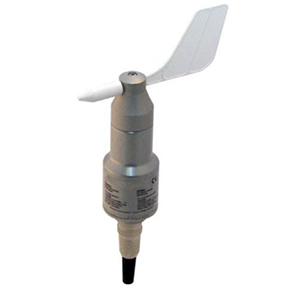
TER Vayu Series Wind Direction Sensor – Industrial Wind Vane Anemoscope
The TER Vayu Series Wind Direction Sensor is a robust industrial wind vane designed to provide reliable directional wind measurement in demanding machinery, crane and environmental monitoring applications. Part of TER’s Vayu family of industrial wind sensing equipment, the directional Vayu configuration provides an effective solution where operators or control systems need to determine not only the presence of wind, but the direction from which it is travelling.
Designed for industrial installations, the Vayu wind direction sensor combines a mechanically robust construction with a magnetic sensing system and 4-20 mA analogue output. This allows wind direction information to be transmitted to compatible industrial displays, PLCs, data acquisition equipment and monitoring systems using a familiar industrial current-loop signal.
TER offers Vayu wind monitoring equipment with robust metallic construction, including anodised aluminium and electropolished AISI 316 stainless steel configurations. These material options make the Vayu family particularly suitable for demanding installations where durability, environmental resistance and dependable long-term operation are important considerations.
The TER Vayu Series Wind Direction Sensor can be incorporated into wind monitoring systems for applications including cranes, lifting machinery, ports, industrial facilities, renewable energy installations and exposed infrastructure. When combined with a compatible wind speed sensor and display, it can form part of a complete system capable of providing operators with both wind speed and directional information.
Industrial Wind Direction Measurement
Wind direction can be an important environmental measurement in applications where machinery, structures or suspended loads are exposed to changing wind conditions. While a conventional cup anemometer measures wind speed, a wind direction sensor identifies the direction of the airflow.
The Vayu wind direction sensor uses a vane arrangement that responds to the direction of the surrounding airflow. As the wind direction changes, the vane rotates and the sensing system converts its angular position into an electrical signal that can be interpreted by compatible monitoring equipment.
This allows the wind direction to be communicated to an operator display or industrial control system rather than relying on visual observation of the vane itself.
For applications requiring a more complete understanding of environmental conditions, wind direction measurement can be combined with wind speed measurement to provide two complementary pieces of information.
Vayu Industrial Wind Vane
The directional Vayu configuration is an industrial wind vane, also commonly referred to as an anemoscope or wind direction sensor.
Unlike the cup-style Vayu anemometer used primarily for wind speed measurement, the directional sensor uses the aerodynamic behaviour of a vane to follow the prevailing direction of the airflow.
This distinction is important when specifying a TER Vayu system. A wind speed sensor and wind direction sensor perform different measurement functions, although they may be installed together as part of the same wind monitoring system.
The wind direction sensor provides angular information, while the associated wind speed sensor determines the velocity of the airflow. Together, these measurements can provide operators and monitoring systems with a more complete representation of local wind conditions.
Magnetic Wind Direction Sensing Technology
TER specifies the advanced Vayu wind vane anemoscope with magnetic sensing technology. The magnetic sensing system provides the electrical measurement required to convert the physical angular position of the vane into an output suitable for industrial monitoring.
Using a magnetic sensor avoids relying on the cup-anemometer optical pulse principle used in other Vayu configurations. This allows the directional Vayu model to be purpose-designed around angular wind direction measurement.
The resulting measurement can then be transmitted through the sensor’s analogue output to compatible receiving equipment.
For system designers, this provides a practical interface between a mechanically responsive outdoor wind vane and modern electronic monitoring equipment.
4-20 mA Analogue Wind Direction Output
The TER Vayu wind direction sensor provides a 4-20 mA analogue output for communicating the measured vane position.
The 4-20 mA current loop is one of the most widely established signal standards used in industrial instrumentation. It allows a physical measurement to be represented by a controlled electrical current that can be received by compatible analogue instrumentation.
For wind direction monitoring, the angular position measured by the Vayu sensor is converted into the corresponding current-loop signal. Compatible receiving equipment can then scale that signal back into meaningful directional information.
This makes the Vayu wind direction sensor suitable for integration with PLC analogue inputs, compatible TER wind displays, data acquisition systems and other industrial monitoring equipment designed to accept the appropriate signal.
Benefits of 4-20 mA Wind Direction Measurement
Using a 4-20 mA output offers several practical benefits for industrial wind monitoring systems.
The signal format is familiar to industrial control engineers and can be incorporated into many existing PLC and instrumentation architectures. This can simplify integration where the facility already uses analogue current loops for other process and environmental measurements.
A current-loop signal is also useful when the sensing point and receiving equipment are separated by a cable run, provided the installation remains within the electrical requirements specified for the equipment.
The Vayu wind direction sensor can therefore be positioned at an appropriate outdoor measurement point while the associated display or PLC remains within a protected operator station or control enclosure.
Wind Direction Sensor for PLC Integration
The 4-20 mA output makes the Vayu Series Wind Direction Sensor particularly suitable for applications where wind direction needs to be incorporated into an industrial PLC system.
A compatible PLC analogue input can receive the sensor signal and scale it according to the wind direction measurement range. The resulting value can then be presented on an HMI, recorded by a supervisory system or used as part of a broader environmental monitoring arrangement.
This provides considerably more flexibility than a purely local mechanical wind indicator because directional information can be transmitted, displayed and recorded at another location.
The exact PLC scaling and electrical configuration should be established using the technical documentation for the selected Vayu model and the analogue input specifications of the receiving controller.
Wind Direction Display Integration
Not every installation requires integration into a full PLC or SCADA system. In many applications, the primary requirement is to provide wind information directly to an operator.
The Vayu wind direction sensor can be combined with compatible wind monitoring displays capable of interpreting and presenting directional information.
A dedicated display allows operators to see wind conditions directly without needing to access a separate automation interface. Where wind speed and direction are both monitored, an appropriate display can provide these measurements together in a convenient operator-facing format.
This type of arrangement is particularly useful in crane cabins, control rooms and machinery operator stations.
Compatible with TER Wind Monitoring Displays
TER provides compatible display equipment for its industrial wind monitoring range. The appropriate display should be selected according to whether the application requires wind speed only or both wind speed and wind direction information.
For applications requiring comprehensive wind information, TER’s graphical wind display solutions can provide wind speed and direction indication when connected to compatible sensing equipment.
This allows the Vayu wind direction sensor to operate as part of a coordinated TER system rather than as an isolated field instrument.
When specifying a complete system, compatibility between the exact Vayu sensor version, display input and required measurement functions should always be confirmed.
Integration with the TER WM44-EV011 V3 Wind Display
The TER WM44-EV011 V3 provides a particularly useful display option for systems requiring both wind speed and wind direction information.
The WM44-EV011 V3 uses a backlit 128 x 64 pixel graphical LCD and can provide numerical wind speed information together with wind direction indication in degrees and cardinal points when used with the appropriate sensing configuration.
Combining the Vayu wind direction sensor with suitable TER wind speed sensing equipment and a compatible graphical display can therefore create a comprehensive operator-facing wind monitoring solution.
This arrangement is useful where personnel need more than a simple high-wind alarm and instead require direct information about changing environmental conditions.
Wind Direction in Degrees
Wind direction is commonly represented as an angular measurement relative to North. This provides a precise numerical method of identifying the direction associated with the measured airflow.
In a conventional directional reference system, North corresponds to 0 degrees, East to 90 degrees, South to 180 degrees and West to 270 degrees, with intermediate angular values representing the directions between these principal compass points.
Compatible monitoring equipment can convert the analogue signal from the Vayu wind direction sensor into this type of meaningful directional information.
Using degrees is particularly useful for PLCs, data acquisition systems and technical monitoring applications because it provides a numerical value that can be displayed, logged or trended.
Wind Direction in Cardinal Points
For operators, cardinal and intercardinal directions can sometimes provide a more intuitive indication than a numerical angle alone.
Directions such as North, North-East, East, South-East, South, South-West, West and North-West allow personnel to understand the general airflow direction quickly.
A compatible display system may therefore present the directional information as degrees, cardinal points or a combination of both.
This can be particularly useful where the direction of the wind relative to machinery, structures or operational areas is relevant to the site’s procedures.
Importance of Correct North Orientation
Correct physical orientation is essential when installing any wind direction sensor. The electrical measurement can only provide meaningful compass information when the sensor has been installed with the correct directional reference.
The Vayu wind direction sensor should therefore be aligned according to TER’s installation instructions and the required North reference during commissioning.
If the sensor is installed with an angular offset, the resulting measurement will contain a corresponding directional offset unless that difference is deliberately compensated elsewhere in the monitoring system.
Correct orientation should therefore be verified during installation rather than assuming that the mechanical mounting automatically provides the required reference.
Anodised Aluminium Construction
The Vayu family is available with robust metallic construction, including anodised aluminium configurations.
Aluminium provides a useful combination of strength and relatively low weight, making it well suited to outdoor sensing equipment where structural durability is required without unnecessary mass.
Anodising provides additional surface protection and contributes to the suitability of the Vayu equipment for industrial environmental monitoring.
This construction distinguishes the Vayu family from lighter-duty plastic-bodied wind sensing solutions and makes it particularly attractive for demanding machinery and infrastructure installations.
AISI 316 Stainless Steel Options
TER also provides Vayu equipment using electropolished AISI 316 stainless steel construction.
AISI 316 stainless steel is widely selected for industrial equipment where corrosion resistance is an important consideration. This can make it particularly useful for installations in demanding outdoor, coastal and industrial environments.
The availability of aluminium and stainless-steel configurations gives system designers additional flexibility when matching the wind sensor construction to the expected environmental conditions.
Material selection should consider the actual installation environment, including exposure to moisture, contaminants and potentially corrosive atmospheres.
Wind Direction Monitoring in Coastal Environments
Coastal and port environments can place significant demands on exposed instrumentation. Moisture, salt-laden air and changing weather conditions can all influence the selection of suitable sensing equipment.
The robust construction options available within the Vayu family make it particularly relevant to industrial installations where environmental resistance is a key consideration.
For harbour crane and port applications, wind direction measurement can provide useful information about the direction of airflow relative to large structures and handling operations.
The complete installation should nevertheless be assessed according to its environmental conditions, including mounting hardware, cables, connectors and any associated display equipment.
Environmental Protection for Industrial Applications
TER designs the Vayu range for exposed industrial wind monitoring applications, with the family providing IP65/IP66 protection depending on the exact configuration.
This level of environmental protection supports installation in locations where wind sensing equipment may be exposed to dust and weather conditions.
The exact IP rating of the selected Vayu configuration should be confirmed when specifying the product, particularly where the installation has defined environmental protection requirements.
The protection of the complete installation also depends on correct assembly, cable termination, connectors and mounting practices.
Wide Operating Temperature Capability
The Vayu family is designed for operation across demanding industrial temperature conditions. TER specifies an operating ambient temperature range from -20°C to +85°C for standard Vayu equipment, with heated versions within the broader family capable of operation from -40°C to +85°C.
This broad temperature capability allows Vayu wind monitoring equipment to be considered for machinery and infrastructure operating in environments where temperatures may vary considerably throughout the year.
When specifying a wind direction system, the environmental requirements of the exact sensor configuration and all associated components should be considered together.
Designed for Demanding Industrial Wind Monitoring
The combination of metallic construction, industrial analogue signalling and environmental protection makes the TER Vayu Series particularly suited to applications where a robust wind monitoring solution is required.
Unlike simple consumer weather instrumentation, Vayu equipment is designed around industrial applications and integration with machinery monitoring equipment.
This makes the wind direction sensor suitable for installations where measurement information needs to be transmitted reliably to a control panel, operator display or industrial automation system.
Wind Speed and Wind Direction as Complementary Measurements
Wind speed and wind direction provide different but complementary information.
A wind speed sensor determines how fast the air is moving, while the Vayu wind direction sensor identifies its direction. In applications where environmental conditions need to be understood in greater detail, measuring both parameters can provide significantly more useful information than either measurement alone.
A Vayu wind speed anemometer and Vayu wind direction sensor can therefore be incorporated into the same broader monitoring architecture, with appropriate receiving equipment providing the required operator information.
This combination is particularly relevant to cranes, ports, exposed industrial machinery, renewable energy systems and other installations where changing wind conditions are operationally significant.
A Robust Wind Direction Sensor for Industrial Applications
The TER Vayu Series Wind Direction Sensor provides a robust approach to industrial directional wind measurement. Its wind vane arrangement responds to changing airflow direction, while magnetic sensing converts the mechanical vane position into an electrical measurement suitable for industrial monitoring.
A 4-20 mA analogue output provides straightforward integration with compatible displays, PLCs and data acquisition systems, while anodised aluminium and electropolished AISI 316 stainless steel construction options support demanding installation environments.
When incorporated into a complete TER wind monitoring system, the Vayu wind direction sensor can operate alongside compatible wind speed sensing and display equipment to provide operators with a clearer understanding of changing wind conditions.
For cranes, lifting equipment, ports, renewable energy installations and industrial infrastructure, the Vayu Series provides a durable platform for applications requiring reliable wind direction measurement and integration with industrial monitoring systems.
Electrical Integration of the TER Vayu Wind Direction Sensor
The TER Vayu Series Wind Direction Sensor is designed to integrate wind direction measurement into industrial monitoring and automation systems. Its 4-20 mA analogue output provides a familiar industrial interface that can be connected to compatible wind displays, PLC analogue inputs, data acquisition equipment and other monitoring devices.
This allows the wind vane itself to be positioned at an appropriate outdoor measurement point while the receiving equipment remains within a control cabinet, crane cabin, control room or other protected location.
When designing the electrical installation, the complete signal loop should be considered, including the sensor power supply, cable length, conductor selection, receiving input and any applicable loop resistance requirements. Installation should follow the technical documentation for the exact Vayu configuration being supplied.
Understanding the 4-20 mA Wind Direction Signal
A 4-20 mA current loop represents the measured parameter by varying the current flowing through the signal circuit. In the case of the Vayu wind direction sensor, the signal represents the angular position detected by the wind vane.
The receiving instrument interprets this current and converts it into a meaningful wind direction value. Depending on the monitoring system, that information can then be displayed as an angular measurement, translated into cardinal directions or recorded for later analysis.
This approach provides a practical method of transferring directional information from an exposed field-mounted sensor to industrial instrumentation located elsewhere on the machinery or site.
Integrating the Vayu Sensor with a PLC
PLC integration is one of the key advantages of a 4-20 mA wind direction transmitter. Where a PLC has a compatible analogue input, the Vayu sensor signal can be incorporated directly into the control or monitoring architecture.
The PLC analogue channel can be scaled so that the measured current corresponds with the wind direction represented by the sensor. Once converted into an engineering value, the direction can be displayed on an HMI, communicated to another system or recorded by a supervisory platform.
The precise scaling should be configured according to TER’s documentation for the exact sensor model rather than assuming that all wind direction transmitters use identical electrical mapping.
Displaying Wind Direction in Degrees
For technical monitoring applications, wind direction can be represented as an angle in degrees.
A conventional compass reference uses 0 degrees for North, 90 degrees for East, 180 degrees for South and 270 degrees for West. Intermediate values identify the directions between these principal points.
A numerical degree value is particularly useful in PLC, HMI and data logging applications because it provides a continuous variable that can be displayed, trended and processed by the monitoring system.
The receiving system should be configured to handle the transition around the North reference correctly, since the directional scale wraps between the upper end of the angular range and 0 degrees.
Displaying Wind Direction as Compass Points
Although degrees provide precise numerical information, operators may find compass points easier to interpret quickly.
A PLC or compatible display can translate the measured angular value into directions such as North, North-East, East, South-East, South, South-West, West and North-West.
More detailed interfaces may divide the compass into additional sectors such as North-North-East, East-South-East or West-North-West.
The choice between numerical degrees, compass directions or a combination of both depends on the application and the information required by the operator.
Correct North Alignment During Installation
Physical orientation is fundamental to accurate wind direction measurement. The Vayu wind direction sensor must be installed using the correct North reference specified for the sensor.
If the sensor is physically rotated away from the intended reference, the resulting measurement will contain a corresponding angular offset. For example, a mounting error of several degrees can cause every reported direction to be displaced by approximately the same amount.
Correct alignment should therefore be established during installation and verified as part of commissioning.
Where the sensor is installed on moving or rotating machinery, the required reference system should be considered carefully as part of the overall monitoring design.
Wind Direction Measurement on Moving Machinery
Installing a wind direction sensor on moving machinery requires additional consideration because the orientation of the machine itself may change relative to geographic North.
If the Vayu sensor rotates with the machinery, its local directional reference may also rotate. Whether this is acceptable depends on whether the application requires wind direction relative to the machine or absolute direction relative to a fixed geographic reference.
Where absolute geographic wind direction is required from a sensor mounted on rotating equipment, the overall monitoring system may need additional information about machine orientation so that the measured direction can be interpreted correctly.
This is a system engineering consideration rather than a limitation unique to the Vayu sensor and should be addressed during the design stage.
Choosing an Appropriate Sensor Location
Correct sensor location is just as important as correct electrical integration. A wind direction sensor should be positioned where the airflow is representative of the conditions that need to be monitored.
Large structures can disturb airflow considerably. Crane booms, buildings, walls, roofs, machinery and other obstacles can create turbulence, shielding and localised airflow patterns.
A sensor positioned directly behind an obstruction may therefore indicate a local turbulent direction rather than the broader wind direction affecting the equipment.
Where practical, the Vayu sensor should be installed in an exposed position with suitable clearance from structures likely to interfere with airflow.
Mounting the Vayu Wind Direction Sensor
The mounting arrangement should hold the Vayu wind direction sensor securely while allowing the vane to respond freely to changing airflow.
The support structure should be sufficiently rigid to prevent unnecessary movement or vibration of the complete sensor assembly. Excessive mounting movement can affect the stability of the measurement and may place additional mechanical stress on the installation.
The sensor should also be positioned so that the vane can rotate without contacting nearby structures, cables or mounting hardware.
Installation should follow TER’s mounting requirements for the selected Vayu configuration.
Mounting on Cranes and Lifting Equipment
Crane installations can present particular challenges because the wind sensor may need to be positioned at an elevated and exposed point while remaining protected from physical damage.
The mounting position should provide representative airflow without interfering with normal crane movement, maintenance access or other equipment.
For tower cranes, gantry cranes and harbour cranes, the selected location should consider the height and geometry of the structure as well as the operating positions of the machinery.
Where the crane changes orientation relative to North, the required interpretation of wind direction should also be established during system design.
Wind Direction Monitoring for Tower Cranes
Tower cranes operate at heights where wind conditions can differ substantially from those at ground level. A wind direction sensor mounted at an appropriate elevated position can provide information about the airflow affecting the upper crane structure.
When combined with a compatible wind speed anemometer, the Vayu direction sensor can form part of a more comprehensive wind monitoring system.
The resulting information can be displayed to the operator or incorporated into an appropriate industrial monitoring system.
The sensor provides environmental measurement information; permissible operating limits and required actions remain subject to crane manufacturer requirements, engineering assessment and site procedures.
Wind Direction Monitoring for Gantry Cranes
Outdoor gantry cranes can be exposed to changing wind conditions across large open areas such as storage yards, manufacturing sites and material handling facilities.
Wind direction information can help personnel understand how the airflow is approaching the crane structure and working area, particularly when used alongside measured wind speed.
The Vayu sensor’s industrial construction and analogue output make it suitable for integration into a dedicated wind monitoring arrangement for this type of equipment.
Sensor positioning should account for the crane structure itself to minimise unnecessary airflow disturbance at the measurement point.
Harbour Crane and Port Installations
Port environments are among the demanding applications for industrial wind sensing equipment. Harbour cranes and material handling machinery can be exposed to strong winds, salt-laden air, moisture and changing weather conditions.
The robust metallic construction options within the Vayu family are particularly relevant to these installations. Where increased corrosion resistance is required, the availability of an electropolished AISI 316 stainless steel configuration provides an option for demanding environments.
Wind direction measurement can complement wind speed monitoring by providing additional information about the conditions affecting large crane structures and handling operations.
AISI 316 Stainless Steel for Demanding Environments
AISI 316 stainless steel is widely used for industrial equipment exposed to challenging environmental conditions because of its corrosion resistance.
The availability of an electropolished AISI 316 Vayu construction provides an option for installations where the environmental demands may exceed those of a conventional general industrial location.
Potential examples include coastal infrastructure, ports and other locations where moisture or corrosive contaminants may be present.
The suitability of the material should nevertheless be assessed for the actual chemical and environmental exposure expected at the installation.
Anodised Aluminium Vayu Construction
Anodised aluminium provides an alternative Vayu construction where a robust metallic sensor is required without the same material selection considerations as stainless steel.
Aluminium combines useful mechanical strength with relatively low mass, while the anodised finish provides additional surface protection.
This makes the aluminium Vayu configuration suitable for a broad range of industrial machinery, crane and infrastructure applications.
The choice between aluminium and AISI 316 stainless steel should consider environmental exposure, project specifications and installation requirements.
IP65 and IP66 Environmental Protection
The Vayu family provides industrial environmental protection, with TER specifying IP65 or IP66 protection depending on the exact product configuration.
This supports installation of the field sensing equipment in exposed environments where dust and weather conditions are expected.
When specifying a particular Vayu wind direction sensor, the exact IP rating should be confirmed from the applicable product documentation rather than applying one family-level rating to every configuration.
Environmental protection also depends on correct installation, including appropriate cable entries, connectors, seals and mounting practices.
Operating Temperature Considerations
TER specifies a broad operating temperature capability across the Vayu family. Standard configurations are designed for ambient temperatures from approximately -20°C to +85°C, while heated equipment within the broader Vayu range extends the low-temperature capability to approximately -40°C.
This makes Vayu equipment suitable for consideration across a wide range of industrial climates.
The exact temperature rating of the selected wind direction configuration should always be verified before specifying equipment for particularly hot or cold environments.
Understanding Ice and Low-Temperature Conditions
Temperature rating alone does not guarantee that a mechanically moving wind sensor will remain operational when ice forms on its moving components.
Ice accumulation can restrict the movement of a wind vane and therefore interfere with directional measurement even if the ambient temperature remains within the electrical operating range of the equipment.
For installations exposed to freezing precipitation or icing conditions, the environmental requirements of the complete wind monitoring system should be considered carefully.
Where a heated configuration is required, compatibility and availability should be confirmed for the exact sensor arrangement being specified.
Cable Selection for 4-20 mA Wind Direction Signals
Cabling is an important component of the measurement system because the analogue signal must travel reliably from the field-mounted sensor to the receiving equipment.
The cable should be suitable for the electrical requirements, installation length and environmental conditions. Outdoor cable routes may require resistance to ultraviolet exposure, moisture and mechanical damage.
Where the cable is installed on moving machinery, repeated flexing and movement should also be considered when selecting the cable type and routing method.
Electrical installation should follow the wiring requirements published for the exact Vayu configuration.
Protecting Sensor Cables on Industrial Machinery
Wind sensors are often installed at exposed locations, which can result in long cable runs across machinery structures.
Cables should be routed away from sharp edges, high-temperature surfaces and areas where they could be crushed or damaged by moving equipment.
Appropriate mechanical protection, strain relief and secure cable support can help maintain the integrity of the installation.
Where the signal cable passes through electrical cabinets or junction boxes, cable entries should maintain the required environmental protection of the enclosure.
Reducing Electrical Interference
Industrial sites can contain motors, variable frequency drives, contactors and high-current power circuits capable of generating electrical noise.
Good instrumentation wiring practice can help minimise unwanted interference. Signal cables should be routed appropriately and separated from high-power conductors where required by the electrical design.
Shielding and grounding arrangements should follow the recommendations for the sensor, receiving equipment and overall control system.
The use of a 4-20 mA current loop provides a well-established industrial interface for transmitting measurement information in these environments.
Combining Vayu Wind Speed and Wind Direction Sensors
A complete wind monitoring installation may require both wind speed and direction.
In this arrangement, a compatible Vayu wind speed anemometer measures airflow velocity while the Vayu wind direction sensor measures the directional component.
The two measurements can then be communicated to compatible receiving equipment, allowing operators or automation systems to understand both how fast the wind is moving and the direction from which it is approaching.
This can provide a more complete environmental picture for cranes, lifting equipment, ports and exposed industrial installations.
Integration with the TER WM44-EV011 V3
The TER WM44-EV011 V3 Wind Display is particularly suited to applications requiring both wind speed and wind direction information.
Its graphical display can present wind information to the operator while providing additional monitoring functionality within a dedicated industrial enclosure.
When combined with compatible Vayu sensing equipment, the display can form the operator interface of a broader TER wind monitoring system.
This creates a coordinated arrangement in which the field-mounted sensors measure environmental conditions and the display presents that information at a convenient operator location.
Wind Direction Data Logging
Where wind direction is connected to a PLC, SCADA or compatible data acquisition system, the measurement can be recorded over time.
Historical directional information can help organisations review changing environmental conditions and compare them with other operational data.
For example, recorded wind speed and direction may help identify recurring environmental patterns at an exposed industrial site.
The logging capability depends on the receiving equipment rather than the Vayu sensor itself, which provides the measurement signal for the external system to process.
Commissioning the Vayu Wind Direction Sensor
Commissioning should verify both the mechanical and electrical operation of the complete wind direction measurement system.
The vane should first be checked to confirm that it can move freely without obstruction. The mounting arrangement should be secure and the directional reference correctly aligned.
The electrical connection should then be verified, including power supply, 4-20 mA signal wiring and receiving equipment configuration.
Finally, the indicated direction should be compared with known physical sensor positions to confirm that the display or PLC scaling corresponds with the installed orientation.
Checking North Alignment During Commissioning
North alignment should receive particular attention during commissioning because a directional offset can otherwise remain unnoticed while the sensor appears to operate normally.
The installation should be checked against a reliable directional reference and the sensor positioned according to TER’s mounting instructions.
Once alignment is established, the receiving display or PLC should be checked to confirm that the corresponding directional information is reported correctly.
This verification provides confidence that the complete measurement chain is using the intended reference.
Routine Inspection of the Wind Vane
Periodic inspection can help maintain dependable wind direction measurement over the service life of the equipment.
The vane should remain free to move and should not show signs of physical damage or obstruction. Accumulated contamination should be addressed according to the manufacturer’s maintenance guidance.
The mounting structure, fasteners and cable should also be inspected for deterioration or damage.
Inspection frequency should reflect the severity of the environment and the operational importance of the wind monitoring system.
Maintaining Free Movement of the Sensor
A wind direction sensor relies on free mechanical response to changing airflow. Anything that restricts vane movement can affect measurement performance.
Potential causes include physical damage, contamination, ice, nearby cables or changes to surrounding structures.
Maintenance personnel should therefore consider both the condition of the sensor itself and the space around it.
Modifications to machinery after the original installation should also be reviewed to ensure they have not introduced new obstructions around the measurement point.
A Complete Industrial Wind Direction Monitoring Solution
The TER Vayu Series Wind Direction Sensor provides more than a visual indication of vane position. Its magnetic sensing technology and 4-20 mA analogue output allow directional information to become part of an industrial measurement and monitoring architecture.
The sensor can be integrated with compatible PLCs, dedicated wind displays and data acquisition equipment while remaining installed at an exposed field measurement point.
Robust aluminium and AISI 316 stainless steel construction options support demanding installations, while the broader Vayu range allows wind speed and direction sensing to be combined where both measurements are required.
With correct mounting, North alignment, electrical integration and commissioning, the Vayu wind direction sensor provides a practical platform for industrial applications requiring reliable directional wind information.
Industrial Applications for the TER Vayu Series Wind Direction Sensor
The TER Vayu Series Wind Direction Sensor is designed for industrial applications where reliable information about the direction of airflow is required. Its robust metallic construction, magnetic sensing technology and 4-20 mA analogue output make it particularly suitable for integration into machinery monitoring, environmental measurement and industrial automation systems.
Wind direction measurement can be especially valuable when combined with wind speed information. While an anemometer identifies how fast the air is moving, the Vayu wind direction sensor identifies its direction. Together, these measurements provide operators and monitoring systems with a more complete representation of local wind conditions.
TER identifies industrial applications for its wind monitoring equipment including overhead travelling cranes, gantry cranes, tower cranes, harbour cranes, wind turbines, photovoltaic systems, hangars and loading or unloading areas. The exact wind monitoring arrangement should be selected according to the equipment, environment and operational requirements of each installation.
Overhead Travelling Crane Applications
Overhead travelling cranes can operate in outdoor or partially exposed industrial environments where wind conditions vary throughout the working day. Where wind direction is relevant to the operation, a Vayu wind direction sensor can provide a continuous measurement that can be transmitted to compatible monitoring equipment.
The sensor can be positioned at an appropriate measurement point on or around the crane installation while its 4-20 mA output communicates the directional measurement to a remote display or control system.
When combined with an appropriate wind speed sensor, personnel can be provided with both the velocity and direction of the wind rather than relying solely on a single environmental measurement.
The sensor provides measurement information to support established operating procedures. The permissible wind conditions for crane operation should always be determined from the crane manufacturer requirements, engineering assessment, load characteristics and applicable site procedures.
Gantry Crane Wind Direction Monitoring
Gantry cranes are frequently installed in open yards, manufacturing facilities, ports and material handling areas where large structures are exposed to changing weather conditions.
A Vayu wind direction sensor can form part of a gantry crane wind monitoring system, providing information about the direction of airflow relative to the installation.
This information can complement measured wind speed and provide additional environmental context to operators or supervisory personnel.
Correct sensor positioning is particularly important because the crane structure itself can disturb airflow. The wind vane should therefore be installed at a representative measurement location with suitable clearance from structural components that could unnecessarily shield or redirect the wind.
Tower Crane Wind Direction Monitoring
Tower cranes operate at elevated heights where local wind conditions can differ considerably from those experienced at ground level. Measuring conditions at an appropriate elevated position can therefore provide more relevant information about the wind affecting the upper crane structure.
The Vayu wind direction sensor can be installed as part of a tower crane monitoring arrangement where directional information is required.
Where the sensor rotates with part of the crane structure, the relationship between the sensor reference and geographic North should be considered carefully. The required system design depends on whether the operator needs wind direction relative to the crane or an absolute geographic wind direction.
This distinction should be established during engineering and commissioning so that the displayed directional information has the intended meaning.
Harbour Cranes and Port Equipment
Ports and harbours represent demanding environments for exposed industrial instrumentation. Wind, moisture, salt-laden air and rapidly changing weather conditions can all influence equipment selection.
The Vayu family is particularly relevant to these applications because TER offers robust metallic configurations, including electropolished AISI 316 stainless steel options.
A wind direction sensor can provide additional information about the airflow affecting harbour cranes, container handling machinery and other exposed port infrastructure.
When paired with compatible wind speed sensing and display equipment, the Vayu wind direction sensor can form part of a coordinated monitoring system that provides operators with both speed and directional information.
Loading and Unloading Areas
Wind conditions can also be relevant around industrial loading and unloading areas, particularly where large objects, suspended loads or exposed handling equipment are involved.
A fixed Vayu wind direction sensor can provide information about the prevailing airflow direction at the site, while a compatible wind speed sensor provides the corresponding velocity measurement.
These measurements can be communicated to a control room, operator display or industrial monitoring system using appropriate instrumentation.
Where wind information is incorporated into operational procedures, alarm limits and required responses should be determined specifically for the equipment and activity concerned.
Wind Turbine Applications
Wind speed and direction are fundamental environmental measurements in wind energy applications. Directional information can be useful for local monitoring, supporting infrastructure and other industrial measurement requirements associated with wind turbine installations.
The Vayu Series Wind Direction Sensor provides a robust field instrument capable of transmitting directional information through a 4-20 mA analogue signal to compatible monitoring equipment.
The suitability of the sensor for a particular wind turbine application should be determined according to the required measurement performance, system architecture, environmental conditions and project specifications.
Photovoltaic and Solar Installations
TER also identifies photovoltaic systems among the applications for its industrial wind monitoring equipment.
Large solar installations can occupy substantial exposed areas, and environmental monitoring may form part of the site’s broader instrumentation strategy.
The Vayu wind direction sensor can provide directional information to compatible monitoring or data acquisition equipment, while a separate wind speed sensor can provide the corresponding velocity measurement.
This allows wind information to be incorporated alongside other environmental parameters where required by the project.
Hangars and Large Industrial Buildings
Large hangar doors and industrial building openings can be exposed to changing wind conditions. Dedicated wind monitoring can provide site personnel with measured information rather than relying entirely on subjective assessment.
A Vayu sensor can be mounted externally at a representative measurement point while the receiving display or PLC remains within a protected internal environment.
Where both wind speed and direction are monitored, the resulting information can provide a clearer picture of conditions around large doors, openings and exposed structures.
Industrial Infrastructure and Outdoor Machinery
The Vayu wind direction sensor can also be considered for other exposed industrial infrastructure where directional wind information needs to be incorporated into a monitoring system.
Potential applications include outdoor machinery, industrial yards, material handling installations and environmental monitoring points.
The 4-20 mA output is particularly useful in these environments because it provides a standard industrial interface that can be incorporated into compatible PLC, display and data acquisition systems.
Combining Vayu Wind Speed and Wind Direction Measurement
One of the strongest applications for the Vayu family is the creation of a combined wind speed and wind direction monitoring system.
A Vayu wind speed anemometer measures airflow velocity, while the Vayu wind direction sensor determines the direction of the wind. These are separate measurements performed by appropriately selected sensing equipment.
When both signals are connected to compatible receiving equipment, operators can be provided with a more complete representation of the local wind conditions.
This is particularly useful in industrial environments where the effect of wind may depend not only on its speed but also on the direction from which it approaches machinery, structures or operational areas.
Integration with the TER WM44-EV011 V3 Wind Display
The TER WM44-EV011 V3 Wind Display provides a useful operator interface for applications requiring comprehensive wind monitoring.
When used with compatible sensing equipment, the graphical display can present wind speed and wind direction information to operators. This provides a convenient central location for viewing environmental conditions without requiring access to a separate PLC or SCADA interface.
The WM44-EV011 V3 also provides additional monitoring capabilities that can make it suitable for applications requiring more comprehensive information than a simple numerical wind speed display.
A system combining Vayu wind speed and direction sensing with an appropriate TER display can therefore provide a coordinated wind monitoring solution using components from the same broader product family.
Vayu or Paka Wind Direction Sensor?
TER’s Vayu and Paka families provide different approaches to industrial wind monitoring, and the appropriate range should be selected according to the requirements of the application.
The Paka family provides a compact and practical industrial wind monitoring solution with robust technical plastic and aluminium construction. It is well suited to many general industrial, crane and machinery applications.
Vayu provides a more substantial metallic construction, including anodised aluminium and electropolished AISI 316 stainless steel configurations. This makes the Vayu family particularly attractive for demanding environments where material construction and environmental resistance are major selection considerations.
Neither range should be selected solely because one is assumed to be universally superior. The correct sensor depends on the installation environment, required output, mechanical construction, mounting requirements and overall system architecture.
When to Select a Vayu Wind Direction Sensor
The Vayu wind direction sensor is particularly suited to applications requiring robust metallic construction and a conventional industrial analogue interface.
Its 4-20 mA output allows integration with compatible PLCs, industrial displays and data acquisition systems, while aluminium and stainless-steel material options allow the sensor construction to be selected according to environmental requirements.
Vayu is therefore a strong candidate for crane, port, infrastructure and industrial installations where long-term outdoor exposure and integration into an industrial control system are important considerations.
Selecting Aluminium or AISI 316 Stainless Steel
The choice between anodised aluminium and electropolished AISI 316 stainless steel should be based on the expected environmental conditions and project requirements.
Anodised aluminium provides a robust metallic construction with relatively low mass and is suitable for a broad range of industrial installations.
AISI 316 stainless steel provides increased corrosion resistance and may be preferable in demanding coastal, port or industrial environments where exposure conditions warrant the additional material performance.
Other installation components, including brackets, fasteners, cables and connectors, should also be selected with the environment in mind. Specifying a corrosion-resistant sensor alone does not protect the remainder of an unsuitable installation.
Selecting the Correct 4-20 mA Receiving Equipment
The Vayu wind direction sensor should be connected to equipment capable of correctly interpreting its analogue output.
Where a PLC is used, the analogue input should be electrically compatible with the sensor and correctly scaled according to TER’s specified directional output.
Where a dedicated wind display is used, the exact sensor and display compatibility should be confirmed before ordering.
This is particularly important when combining products from different ranges or revisions because physical connection alone does not necessarily guarantee correct signal interpretation.
Wind Direction Monitoring Through a PLC and HMI
A PLC-based system can provide considerable flexibility in the way Vayu wind direction information is presented.
The analogue signal can be scaled into degrees and then converted by the control software into compass directions where required. The value can also be displayed graphically on an HMI.
Where wind speed is measured simultaneously, the HMI can present both values on the same operator screen.
External data logging or SCADA systems can also record the information over time, allowing historical wind conditions to be reviewed where required.
Using Wind Direction Information Responsibly
Wind direction data can provide valuable situational information, but it should be interpreted within the context of the complete application.
The Vayu sensor measures environmental conditions; it does not independently determine whether a crane, lifting operation or other machinery can safely continue operating.
Operational wind limits should be based on equipment manufacturer instructions, engineering assessments, site-specific procedures and relevant regulatory requirements.
Factors such as load shape, exposed surface area and machinery configuration can affect how wind influences an operation, so a generic wind value should not be treated as universally applicable.
Routine Inspection of the Vayu Wind Direction Sensor
Routine inspection can help ensure that the wind vane continues to respond freely to changing airflow.
The sensor should be checked for visible damage, contamination, obstruction and deterioration of the mounting arrangement.
Fasteners should remain secure, and cables should be inspected where accessible for damage or degradation.
Inspection frequency should be established according to the environmental severity, equipment usage and operational importance of the wind monitoring system.
Checking Sensor Alignment Over Time
Wind direction measurement depends on the sensor maintaining the correct reference orientation.
Maintenance activities, impact, vibration or modification of the mounting arrangement can potentially alter the physical orientation of the sensor.
Periodic verification of alignment may therefore be appropriate, particularly in installations where accurate geographic direction is important.
If the sensor has been removed for maintenance, correct orientation should be reconfirmed when it is reinstalled.
Maintaining a Representative Measurement Location
The environment around a wind sensor can change during the service life of an installation.
New structures, machinery, barriers or equipment modifications can alter airflow around the measurement point even though the Vayu sensor itself has not changed.
Periodic review of the sensor location can therefore be useful to confirm that it remains representative of the conditions the system is intended to monitor.
This is particularly relevant at evolving industrial sites where new structures or equipment may be installed near an existing wind monitoring system.
Benefits of the TER Vayu Series Wind Direction Sensor
The Vayu Series combines industrial mechanical construction with an electrical interface designed for modern monitoring systems.
Its magnetic sensing technology provides directional measurement while the 4-20 mA analogue output allows the information to be transmitted to compatible PLCs, displays and data acquisition equipment.
Robust anodised aluminium and electropolished AISI 316 stainless steel options allow the sensor construction to be matched to a range of industrial environments.
When combined with compatible wind speed sensing equipment, the Vayu direction sensor can form part of a complete system providing both wind speed and directional information.
Why Choose TER Vayu Wind Monitoring Equipment?
TER develops industrial control and monitoring equipment for demanding machinery applications, with the Vayu range designed specifically around robust wind sensing.
The availability of different sensing configurations allows wind speed and wind direction to be addressed using equipment suited to each measurement.
Vayu’s metallic construction differentiates it from lighter wind sensing solutions, while industrial electrical outputs allow the equipment to be incorporated into modern automation and monitoring architectures.
This combination makes the range particularly relevant to cranes, ports, industrial infrastructure and other applications requiring durable field-mounted wind instrumentation.
TER Vayu Wind Direction Sensors from Control Devices
Control Devices supplies TER Vayu wind monitoring equipment for Australian crane, lifting, material handling and industrial applications.
The Vayu Series Wind Direction Sensor can be supplied as part of a broader wind monitoring solution incorporating compatible wind speed sensing, TER display equipment and industrial system integration.
When selecting a Vayu wind direction sensor, useful application information includes the machinery type, environmental conditions, required construction material, available power supply, receiving equipment, cable distance and whether wind speed measurement is also required.
Providing this information can assist with identifying the appropriate sensor and associated monitoring equipment for the installation.
Building a Complete TER Vayu Wind Monitoring System
A complete wind monitoring system should be considered as a combination of sensing, installation, electrical integration, display and maintenance requirements.
The Vayu wind direction sensor provides the directional measurement, while an appropriate Vayu wind speed sensor can provide airflow velocity where required.
Compatible TER display equipment can provide an operator-facing interface, while 4-20 mA signals can also allow wind information to be incorporated into PLC, HMI or data acquisition systems.
Correct sensor positioning and North alignment are essential to obtaining meaningful directional information, while appropriate cabling and commissioning help ensure the measurement reaches the receiving system correctly.
TER Vayu Series Wind Direction Sensor – Robust Industrial Wind Measurement
The TER Vayu Series Wind Direction Sensor provides a durable solution for applications requiring reliable industrial wind direction measurement. Designed around a responsive wind vane, magnetic sensing technology and a 4-20 mA analogue output, the sensor converts changing airflow direction into a signal suitable for compatible industrial monitoring equipment.
Anodised aluminium and electropolished AISI 316 stainless steel construction options provide flexibility for installations ranging from general industrial machinery to demanding coastal and port environments.
The sensor can be integrated with compatible PLCs, HMIs, data acquisition equipment and TER wind displays, allowing wind direction to be presented as meaningful information to operators and supervisory systems.
When combined with compatible wind speed sensing equipment, the Vayu wind direction sensor can form part of a comprehensive monitoring system for overhead travelling cranes, gantry cranes, tower cranes, harbour cranes, wind turbines, photovoltaic installations, hangars and exposed industrial infrastructure.
Correct installation remains fundamental to system performance. The sensor should be positioned in representative airflow, aligned to the required directional reference, mounted securely and commissioned with the receiving equipment to confirm correct measurement interpretation.
For demanding industrial applications requiring robust metallic construction and straightforward 4-20 mA integration, the TER Vayu Series Wind Direction Sensor provides a practical platform for incorporating directional wind information into modern industrial monitoring systems.
Contact Control Devices for further information, technical assistance and product selection support for TER Vayu wind direction sensors, compatible Vayu wind speed sensors, TER wind displays and complete industrial wind monitoring solutions.