
Description
TER Apollo Cable and Hose Reels – Motor and Spring Driven Industrial Reels
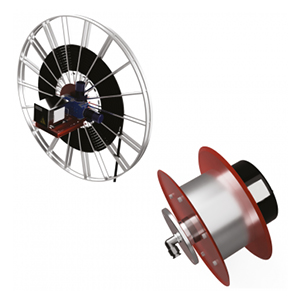
TER Apollo Cable and Hose Reels are heavy-duty motor-driven and spring-driven reeling systems designed to supply electrical power, control signals, data and fluid energy to mobile industrial equipment and tools. Developed for demanding machinery and industrial environments, the Apollo range provides a highly configurable solution for applications where cables or hoses must extend and retract as equipment moves through its operating range.
The TER Apollo family combines robust mechanical construction with a modular design that allows the reel to be configured around the requirements of the application. Electrical versions can transmit power together with analogue and digital control signals, while hose reel configurations can be used for fluid energy including compressed air, gases and hydraulic oils.
Available as both motor-driven and spring-driven systems, Apollo reels can be selected according to working travel, cable or hose characteristics, installation orientation, machinery speed and operating environment. This makes the range suitable for applications extending from cranes, hoists and conveyor systems through to workshops, railway equipment, ports, airports, wind turbines, machine tools and other mobile industrial machinery.
Rather than treating cable or hose management as an accessory to the machinery, Apollo provides an engineered approach to controlling the connection between a fixed supply point and moving equipment. Correctly configured reeling equipment helps maintain an organised cable or hose path throughout machinery movement while protecting the connection from unnecessary mechanical stress and uncontrolled movement.
Industrial Cable and Hose Reels for Mobile Equipment
Mobile machinery creates a fundamental challenge for electrical and fluid connections. The equipment must move, but power, control signals, data, compressed air or hydraulic fluid may still need to travel between the moving machine and a fixed supply point.
A cable or hose reel provides a practical method of managing this connection. As the machinery moves away from the reel or feed point, the required cable or hose is deployed. As the machinery returns, the reel recovers and stores it in a controlled arrangement.
The TER Apollo range is designed around this principle while providing the mechanical strength and configuration flexibility required by industrial applications.
By matching the reel to the movement of the machine, the cable or hose can remain appropriately managed throughout the working travel rather than being left loose around the operating area.
TER Apollo Motor-Driven Cable Reels
Apollo motor-driven cable reels provide a powered reeling solution for applications where machinery travel, cable size, operating speed or duty requirements call for active cable management.
TER motor reels use a three-phase torque electric motor to provide the reeling action. The motorised arrangement enables the reel to manage cable as the associated machine moves through its operating range.
Motor-driven reels are particularly useful for applications involving substantial working travel or larger electrical cables where the dynamic characteristics of the system need to be carefully controlled.
The final reel configuration depends on the cable, travel, machinery speed, acceleration and physical arrangement of the installation.
Three-Phase Torque Motor Drive
The motor-driven Apollo design uses a three-phase torque electric motor rather than relying solely on stored spring energy for cable recovery.
Torque-motor operation provides a practical industrial solution for controlling the reel as cable is paid out and recovered during machinery travel.
The motor and reel must be selected together according to the mechanical requirements of the cable system. Cable mass, drum dimensions, travel distance and machine movement all influence the torque required by the application.
For this reason, Apollo motor reels are best treated as engineered components of the complete moving machine rather than selected solely according to cable length.
Apollo Motor Reel Electrical Performance
TER Apollo motor cable reels are available for demanding electrical power applications. Depending on the selected configuration, the motor reel range provides rated operational current up to 400 A and rated operational voltage up to 690 Vac.
These capabilities allow Apollo motor reels to be considered for substantial industrial loads as well as applications combining power with control and signal circuits.
The actual allowable electrical load depends on the selected reel, cable, collector arrangement and operating conditions. The maximum published ratings should therefore not be interpreted as the rating of every Apollo configuration.
Electrical selection should consider the connected equipment, cable length, conductor cross-section, voltage drop, operating duty and the thermal behaviour of the cable while wound onto the reel.
Up to 400 A Rated Operational Current
The availability of motor reel configurations rated up to 400 A makes the Apollo family suitable for heavy industrial electrical applications where substantial power must be supplied to moving machinery.
However, current capacity is only one part of cable reel selection. The conductor arrangement, cable type, working travel and mechanical demands must also be evaluated.
A cable reel carrying a high-current power cable may require significantly different drum dimensions and drive characteristics from a reel carrying a smaller control cable.
The complete system should therefore be selected according to both its electrical and mechanical requirements.
Up to 690 Vac Motor Reel Configurations
TER specifies rated operational voltage up to 690 Vac for Apollo motor cable reel configurations.
This supports integration into a range of industrial power distribution and machinery applications.
The actual operating voltage of the selected reel must remain within the ratings of the collector, cable, connectors and other electrical components incorporated into the complete assembly.
Applicable electrical standards and machinery requirements should also be considered during system design and installation.
IP65 Protection for Apollo Motor Cable Reels
TER specifies Apollo motor cable reels with protection up to IP65, depending on configuration.
This supports their use in industrial environments where equipment can be exposed to dust and water.
The protection of the complete installation also depends on correct assembly, cable entries, connectors and associated equipment.
For this reason, the IP rating applicable to the exact selected configuration should be confirmed during specification.
Motor Reel Operating Temperature
Standard Apollo motor cable reels are specified for operation from -15°C to +40°C.
Ambient temperature should be considered during selection because environmental conditions can influence electrical and mechanical equipment performance.
Where the installation is expected to operate outside the standard temperature range, an appropriate special configuration should be discussed during application engineering.
The specified temperature range of the exact supplied reel and cable should always be confirmed before installation.
TER Apollo Spring-Driven Cable Reels
Apollo spring-driven cable reels provide an alternative to powered motor reeling for applications where a mechanically self-retracting system is appropriate.
TER uses Archimedes spiral springs to provide the retraction force required to recover the cable as machinery returns through its working travel.
As cable is pulled from the reel, energy is stored within the spring system. When the cable is released or the machinery moves back towards the reel, the spring mechanism provides the force required for controlled recovery.
The spring arrangement is selected according to the cable dimensions, cable weight, travel and installation geometry.
Archimedes Spiral Spring Technology
The Archimedes spiral spring system is central to the operation of Apollo spring reels.
The spring mechanism allows the reel to store mechanical energy as the cable is unwound and use that energy during cable recovery.
This eliminates the need for a separate powered reel drive in suitable applications and provides a practical solution for many industrial machines and tools.
Correct spring selection is important because the reel needs sufficient recovery force to manage the cable without applying unnecessary tension to the cable or its termination.
Apollo Spring Reel Electrical Performance
TER Apollo spring cable reels are available with rated operational current up to 250 A, depending on the selected configuration.
The range supports rated operational voltages of 400 Vac or 1000 Vac according to configuration, providing considerable flexibility for different industrial electrical systems.
As with the motor reel range, these are maximum family specifications rather than universal ratings for every Apollo spring reel.
The actual electrical capacity must be confirmed for the selected cable, slip-ring collector and reel arrangement.
Up to 250 A Spring Cable Reel Configurations
With configurations available up to 250 A, Apollo spring reels can manage significantly more than lightweight control wiring.
This allows the spring-driven platform to be considered for industrial power applications where the cable dimensions, travel and required retraction force remain suitable for spring operation.
For each application, the required current should be considered together with conductor size, cable diameter and cable mass.
Increasing cable size can significantly affect both reel capacity and the mechanical force required for reliable cable recovery.
400 Vac and 1000 Vac Spring Reel Options
TER specifies Apollo spring cable reels with rated operational voltage options of 400 Vac and 1000 Vac depending on configuration.
This provides flexibility for industrial machinery operating at different electrical system voltages.
The exact voltage rating should always be verified for the specific reel assembly being supplied.
Cable insulation, slip-ring collector configuration, connectors and associated electrical components must all be appropriate for the operating voltage of the system.
IP65 and IP67 Spring Reel Protection
Apollo spring cable reels are available with IP65 or IP67 protection depending on the selected configuration.
This makes the spring reel family particularly useful for demanding industrial environments where dust and water exposure must be considered.
The appropriate IP rating should be selected according to the installation conditions rather than automatically specifying the highest available rating.
Environmental protection of the complete installation also depends on correct mounting, cable entry and connection arrangements.
Wide Operating Temperature for Spring Reels
Standard Apollo spring cable reels are specified for operation from -20°C to +60°C.
TER also identifies special configurations available on request for operation down to -40°C, providing options for installations exposed to particularly low ambient temperatures.
The selected cable and other associated equipment must also be suitable for the environmental conditions.
Low-temperature applications should therefore be identified at the quotation and engineering stage rather than treated as a standard installation after the reel has been supplied.
Electrical Slip-Ring Collector
A key component within an electrical Apollo cable reel is the slip-ring collector. The collector allows electrical energy and signals to pass between the stationary electrical connection and the rotating reel assembly.
This enables the drum to rotate repeatedly while maintaining electrical continuity to the cable wound onto the reel.
TER positions the electrical collector outside the drum and configures it according to the power, auxiliary and signal circuits required by the application.
This makes Apollo suitable for machinery requiring more than a simple single-purpose power connection.
Up to 42 Slip Rings
Depending on the selected configuration, Apollo electrical collectors can incorporate up to 42 rings.
The collector arrangement can include bronze-alloy power rings, brass auxiliary rings and gold- or silver-plated signal rings.
This combination allows the reel to be configured around different electrical functions, including power transmission and analogue or digital control signals.
The number and type of rings required should be established from the electrical architecture of the connected machinery.
Power Transmission Through the Apollo Reel
Apollo cable reels can supply electrical power to equipment that needs to move relative to its fixed electrical source.
The cable reel manages the flexible electrical cable while the slip-ring collector maintains the connection through the rotating assembly.
This arrangement is useful for cranes, hoists, travelling machinery, conveyor equipment, industrial tools and other applications where a fixed cable installation cannot accommodate the required movement.
The power system should be designed according to the electrical load and mechanical duty of the application.
Analogue and Digital Control Signals
TER Apollo electrical collectors are designed to transmit both analogue and digital control signals in addition to power.
This allows the cable reel to support increasingly sophisticated mobile equipment incorporating sensors, control devices and automation systems.
Power, auxiliary and signal circuits can be considered when the collector arrangement is specified.
Where signal integrity is important, the cable and collector configuration should be selected specifically for the electrical and communication requirements of the application.
Low-Friction Sliding Contacts
TER uses sliding electrical contacts within the Apollo collector system to provide electrical transfer between stationary and rotating components.
The design is intended to maintain low friction and control heating at the contact points and terminals.
Material selection within the collector varies according to whether the circuit is intended for power, auxiliary functions or signals.
Correct maintenance and inspection of the collector assembly contribute to reliable long-term operation.
Industrial Data Transmission
Modern mobile machinery often requires data communication alongside conventional electrical power and control wiring.
Apollo’s configurable collector and cable arrangements allow the reel system to be engineered around applications where data must remain connected while the machine moves.
This makes the range relevant to automation, machine tools, handling equipment and other machinery incorporating electronic control systems.
The exact data protocol and cable requirements should be identified during application engineering to ensure that the selected system is appropriate for the intended communication network.
Round and Flat Reeling Cables
TER Apollo cable reels can be supplied with round or flat cables specifically designed for reeling applications.
The choice between round and flat cable depends on factors including electrical requirements, drum arrangement, working travel and installation geometry.
Because reeling cable is repeatedly bent, wound and unwound, it must be designed for dynamic operation rather than treated as an ordinary fixed-installation cable.
Correct cable selection is essential to both electrical performance and mechanical service life.
Power, Control and Mixed Reeling Cables
Apollo reels can be configured with power cables, control cables or mixed cable arrangements according to the needs of the mobile equipment.
A power cable can supply the primary electrical load, while control conductors can carry commands and feedback between fixed and moving portions of the machinery.
Mixed configurations can help consolidate multiple functions into an engineered cable management system where technically appropriate.
The conductor arrangement, cable size and collector configuration should be defined according to the complete electrical system.
TER Apollo Hose Reels
The Apollo family extends beyond electrical cable management. TER also manufactures motor- and spring-driven hose reel configurations for supplying fluid energy to mobile equipment and tools.
This makes Apollo a particularly versatile industrial reeling platform for facilities where machinery movement requires controlled management of either electrical cables or flexible hoses.
The hose reel should be selected according to the fluid, operating pressure, flow requirements, hose characteristics and mechanical travel of the application.
Compatibility between the hose material and the fluid being transferred is an essential part of system selection.
Compressed Air Hose Reel Applications
Compressed air is widely used throughout industrial workshops, production facilities and maintenance operations.
An Apollo hose reel can provide controlled storage and deployment of an appropriate compressed-air hose while allowing tools or mobile equipment to move through the required operating area.
The reel helps keep unused hose stored while making the required working length available during operation.
Pressure rating, hose size and flow requirements should be matched to the pneumatic equipment being supplied.
Gas Hose Reel Applications
TER identifies gases among the fluid-energy applications supported by its cable and hose reel range.
Gas service requires careful consideration of the specific gas, hose material, pressure, fittings and applicable installation requirements.
A hose should never be selected solely because it physically fits the reel; compatibility with the intended medium and operating conditions must be established.
Where potentially explosive atmospheres or hazardous gases are involved, additional equipment and installation requirements may apply and should be assessed separately.
Hydraulic Oil Hose Reels
Apollo hose reels can also be configured for hydraulic oil applications.
Hydraulic systems can require flexible connections to moving tools or machinery, making controlled hose management important for maintaining an organised installation.
The selected hose and fittings must be appropriate for the hydraulic fluid, pressure, temperature and required flow rate.
Mechanical movement and minimum bend requirements should also be considered when configuring the reel.
Motor and Spring Hose Reel Options
As with the electrical cable reel range, TER offers both motor-driven and spring-driven Apollo hose reel solutions.
The appropriate drive principle depends on the working travel, hose dimensions, installation geometry and movement requirements.
A spring-driven reel can provide automatic mechanical recovery for suitable applications, while a motor-driven reel can address installations requiring powered reeling.
The drive arrangement should be selected as part of the complete hose management design.
Modular Construction for Application-Specific Solutions
One of the major strengths of the TER Apollo family is its modular construction.
Industrial cable and hose reel applications vary considerably, and a configuration suitable for one machine may be inappropriate for another. Cable diameter, conductor size, hose dimensions, working travel, operating speed, installation orientation and environmental exposure can all influence the required reel.
Apollo’s modular design allows these parameters to be considered during configuration.
This provides engineers and machine builders with a flexible platform that can be adapted around the application rather than relying on a limited fixed reel design.
Heavy-Duty Industrial Construction
TER designs Apollo cable and hose reels for demanding industrial environments where reliability, mechanical durability and resistance to wear are important.
High-quality materials and components are used throughout the system, while galvanic treatments on appropriate components provide additional resistance to corrosion.
This construction supports applications exposed to repeated movement and challenging industrial conditions.
The exact materials and protective treatments depend on the selected reel configuration and environmental requirements.
AISI 316L Stainless Steel Marine Versions
For applications requiring increased resistance to corrosive environments, TER offers Apollo versions manufactured in AISI 316L stainless steel for marine applications.
Stainless-steel construction can be particularly valuable where the reel is exposed to aggressive environmental conditions and conventional material configurations may not provide the required corrosion resistance.
Marine or highly corrosive environments should be identified during specification so that the appropriate construction and associated components can be selected.
The environmental suitability of the cable, hose, connectors and mounting equipment should also be considered alongside the reel itself.
Optional Apollo Reel Accessories
The modular Apollo platform can be supplied with a variety of accessories according to the application.
TER identifies options including limit switches, anti-condensation heaters, sockets or connectors, spring dampers, cable guides and other equipment used to adapt the reel to specific installation requirements.
Accessories should be selected according to the movement, cable or hose path and environmental conditions of the machinery.
Integrating these requirements during the original reel selection generally provides a more effective solution than attempting to adapt the system after installation.
A Versatile Industrial Reeling Platform
TER Apollo Cable and Hose Reels provide a flexible solution for supplying moving equipment with electrical power, control signals, data or fluid energy while managing the associated cable or hose throughout machinery movement.
Motor-driven cable reels offer electrical configurations reaching up to 400 A and 690 Vac with protection up to IP65, while spring-driven electrical reels are available up to 250 A with 400 Vac or 1000 Vac configurations and IP65/IP67 protection.
Electrical slip-ring collectors with up to 42 rings enable combinations of power, auxiliary and signal circuits, while round, flat, power, control and mixed reeling cables allow the system to be configured around different machine requirements.
With spring and motor drive options, electrical and fluid configurations, modular accessories, low-temperature versions and AISI 316L stainless-steel options for marine environments, Apollo provides a broad industrial platform for managing moving cables and hoses across demanding machinery applications.
Selecting the Correct TER Apollo Cable or Hose Reel
Selecting the correct TER Apollo Cable or Hose Reel requires consideration of the complete application rather than simply choosing a reel according to cable or hose length. The reel must operate together with the moving machinery, cable or hose, electrical or fluid system, mounting structure and associated guidance equipment throughout the required working travel.
Important selection parameters include working travel, horizontal or vertical movement, reel mounting position, winding direction, machinery speed, acceleration, cable or hose dimensions, weight, electrical load or fluid requirements and environmental conditions.
TER’s modular Apollo platform allows these variables to be considered when configuring the reel, helping engineers and equipment designers match the reeling system to the actual operating conditions.
Accurate application information at the selection stage is therefore one of the most important factors in achieving reliable cable or hose management.
Motor-Driven Versus Spring-Driven Apollo Reels
One of the first decisions when selecting an Apollo reel is whether a motor-driven or spring-driven system is more appropriate for the application.
Both designs allow cable or hose to be deployed and recovered as machinery moves, but they use different methods to provide the reeling force.
A spring-driven reel stores mechanical energy within its spring assembly as the cable or hose is extended. A motor-driven reel uses a powered drive to provide the required reeling action.
The most suitable arrangement depends on working travel, cable or hose size, speed, acceleration, duty cycle and installation geometry.
When to Consider a Spring-Driven Reel
Spring-driven Apollo reels can provide an efficient solution where the working travel and cable or hose characteristics are compatible with mechanical spring recovery.
TER uses Archimedes spiral springs within its spring reel designs. As the cable or hose is pulled from the drum, energy is stored within the spring system. This energy provides the recovery force as the equipment returns.
Because no separate powered reel drive is required, a spring reel can provide a relatively straightforward retraction system for many mobile machines, tools and industrial installations.
The spring system must nevertheless be correctly matched to the cable or hose and working travel to maintain suitable recovery force throughout operation.
When to Consider a Motor-Driven Reel
Motor-driven Apollo reels can be considered where application demands make powered reeling more appropriate.
TER motor reels use a three-phase torque motor to provide the reeling action. This type of system can be useful for substantial working travels, larger cables or hoses and applications where machinery dynamics require an actively driven reel.
The required drive performance depends on cable or hose mass, reel dimensions, machinery speed, acceleration and installation geometry.
Motor reel selection should therefore be carried out as part of the complete machine design rather than simply substituting a powered reel for a spring reel of similar physical size.
Working Travel and Reel Capacity
Working travel is a fundamental parameter when specifying an industrial cable or hose reel.
The working travel describes the distance through which the associated equipment must move while remaining connected to its electrical or fluid supply. This distance should not automatically be treated as identical to the total cable or hose length stored by the reel.
Additional length may be required for connection, drum winding, feed arrangements or other installation requirements.
TER therefore considers the complete installation geometry when determining the required reel capacity.
Horizontal Travel Applications
Horizontal movement is common in cable reel applications involving cranes, travelling machinery, conveyor systems, material handling equipment and automated industrial machines.
The reel may remain stationary while the connected equipment travels, or it may be mounted on the moving machinery with the cable or hose connected to a fixed supply point.
Different arrangements produce different mechanical loads and cable behaviour.
The reel location and cable path should therefore be defined before the final Apollo configuration is selected.
Vertical Travel Applications
Vertical travel introduces additional considerations because the reel may need to support the weight of a hanging cable or hose.
As vertical working travel increases, the mass supported by the reel can become a significant part of the mechanical load.
This influences spring selection, motor torque, drum capacity and cable or hose tension.
Vertical applications should therefore be clearly identified during selection so that the reel can be engineered around the actual lifting and recovery conditions.
Reel Mounted on Fixed Infrastructure
In many installations, the Apollo reel remains fixed while the connected machinery moves away from and towards it.
This arrangement allows cable or hose to be deployed from a stationary reel as the machine travels.
The cable path, payout direction and any required guides or rollers should be arranged so that the cable enters and leaves the reel correctly.
The support structure must also be capable of carrying the reel and the dynamic forces generated during operation.
Reel Mounted on Moving Machinery
In other applications, the cable or hose reel can be mounted directly on the moving equipment.
The reel then travels with the machine while cable or hose is deployed relative to a fixed feed or connection point.
This arrangement can be useful where the machine design or available infrastructure makes a fixed reel impractical.
Reel mass, mounting strength, cable routing and machinery dynamics should all be considered when the reel is carried by the moving equipment.
Centre-Feed Arrangements
A centre-feed arrangement can be considered for appropriate travelling machinery applications.
By locating the feed point around the centre of the total machine travel, the maximum payout required in either direction can sometimes be reduced compared with an end-feed installation.
This may influence cable length and reel capacity, although the actual benefit depends on the physical arrangement of the machinery.
Centre-feed systems should be evaluated using the complete cable path and movement rather than selected solely to minimise nominal cable length.
Winding Direction
The direction in which the cable or hose winds onto and leaves the drum influences reel orientation and accessory selection.
Correct winding direction helps maintain controlled entry onto the reel and avoids unnecessary lateral forces.
The intended reel position and cable or hose approach should therefore be established during application engineering.
Changing the reel orientation after selection can alter the designed cable path and should not be assumed acceptable without checking the installation requirements.
Machinery Operating Speed
The operating speed of the connected machine directly affects the dynamic performance required from the reel.
As machinery speed increases, the reel must respond appropriately to cable payout and recovery while maintaining controlled cable or hose behaviour.
This is especially important for frequently travelling industrial equipment and motor-driven reel systems.
Maximum travel speed should therefore be supplied as part of the application data used for reel selection.
Acceleration and Deceleration
Maximum speed alone does not completely describe the movement of a machine. Acceleration and deceleration can create substantial changes in the forces acting on a cable or hose.
Rapid starting or stopping can cause slack, sudden tension or dynamic movement if the reel system is not matched to the machine.
The acceleration profile should therefore be considered alongside operating speed.
This is particularly important for high-cycle equipment and applications involving heavy cables or hoses.
Duty Cycle and Frequency of Movement
An industrial reel that operates occasionally can experience very different service conditions from one that continuously extends and retracts throughout a production shift.
The frequency of movement should therefore form part of the application assessment.
High-cycle applications place repeated mechanical demands on the reel, cable or hose, guides, bearings and electrical collector or fluid connection system.
Inspection and maintenance planning should reflect the actual operating duty of the equipment.
Selecting the Correct Reeling Cable
Reeling cables are exposed to repeated bending, winding and unwinding and must be designed for dynamic operation.
A cable intended primarily for fixed installation should not automatically be substituted into an industrial cable reel system.
TER Apollo can accommodate round and flat reeling cables and power, control or mixed cable configurations depending on the application.
The cable should be selected according to its electrical requirements as well as its mechanical flexibility, dimensions, mass and environmental conditions.
Cable Diameter and Cable Weight
Cable diameter determines how much drum space is required, while cable weight influences the torque or spring force needed to control it.
As conductor size increases, both cable diameter and mass can increase significantly.
This means that two cables of identical length can require very different reel configurations.
Accurate cable diameter and mass data should therefore be supplied when an Apollo reel is being selected.
Electrical Conductor Requirements
The conductor arrangement should be based on the electrical requirements of the connected machinery.
Power circuits may require larger conductor cross-sections, while control and auxiliary circuits can require multiple additional conductors.
Signal circuits may also require specific conductor or shielding arrangements depending on the control system.
The cable and Apollo slip-ring collector should be configured together to provide the required electrical circuits.
Current Capacity and Cable Selection
The current rating of the reel does not remove the need to correctly size the reeling cable.
Conductor current capacity, cable length, voltage drop, ambient conditions and the amount of cable remaining wound on the drum can all influence electrical performance.
Heat dissipation from a cable wound onto a drum can differ from that of the same cable installed freely in air.
The allowable electrical loading should therefore be determined for the complete installation rather than relying only on the maximum family rating of the Apollo reel.
Voltage Drop in Long Cable Reel Applications
Long working travels can result in significant cable lengths between the supply and connected equipment.
Electrical resistance through this cable can produce voltage drop, particularly for higher-current loads.
Voltage drop should therefore be considered during conductor sizing so that the connected equipment receives an appropriate supply voltage throughout its operating conditions.
This is especially relevant for large motor loads and machinery operating over substantial travel distances.
Power and Control in a Single Reeling System
Apollo can support configurations incorporating power together with auxiliary, control or signal circuits.
This can simplify the cable management arrangement where several electrical functions need to travel with the same machine.
The electrical collector can be configured according to the required power and signal circuits, with different contact materials used for different electrical functions.
The final arrangement should reflect the electrical architecture of the machinery rather than adding unused circuits without a defined requirement.
Up to 42 Collector Rings
Apollo electrical collectors can be configured with up to 42 rings depending on the selected reel and application.
This provides substantial flexibility for machinery requiring multiple power, auxiliary and signal circuits.
TER uses different contact materials according to circuit function, including bronze-alloy power rings, brass auxiliary rings and gold- or silver-plated signal rings.
The exact number and type of collector rings should be specified according to the electrical circuits that must remain connected while the reel rotates.
Protecting Industrial Communication Signals
Where the reeling system carries industrial data or sensitive control signals, cable and collector selection becomes particularly important.
The mechanical flexibility required for repeated reeling must be achieved without compromising the electrical characteristics needed by the communication system.
Appropriate shielding, conductor arrangements and signal contacts may be required depending on the network.
Communication performance should be verified throughout the machine travel during commissioning.
Selecting an Industrial Hose Reel
Hose reel selection follows many of the same mechanical principles as cable reel selection but introduces additional fluid-system requirements.
The hose must be compatible with the fluid being transferred and suitable for the required operating pressure, temperature and flow.
Hose dimensions and mass also influence reel capacity and the force required for recovery.
The complete Apollo hose reel should therefore be selected according to both mechanical movement and fluid-system requirements.
Hose Material Compatibility
The hose material must be suitable for the medium being transferred.
Compressed air, gases and hydraulic oils can place different chemical and physical demands on hose materials and seals.
Compatibility should be confirmed using the requirements of the fluid system and the hose manufacturer’s technical information.
A hose should not be selected solely according to pressure rating or physical dimensions.
Hose Operating Pressure
Operating pressure is a fundamental specification for a hose reel system.
The hose, fittings, rotating connection and other fluid components must all be rated appropriately for the system pressure.
Transient pressure conditions should also be considered where they form part of the equipment’s normal operation.
The allowable working pressure should be established according to the complete assembly rather than the rating of a single component.
Flow Requirements and Hose Diameter
Hose internal diameter influences the flow capacity and pressure loss of the fluid system.
A hose that is too small can create excessive pressure drop and restrict the performance of the connected equipment.
Increasing hose diameter can improve flow capability but also increases reel space requirements and may increase hose mass.
Fluid performance and mechanical reel sizing therefore need to be considered together.
Minimum Hose Bend Requirements
Flexible hoses have minimum bend requirements that should be respected throughout the reel installation.
Excessively tight bending can damage the hose structure, restrict flow and reduce service life.
Drum dimensions, guides and routing should therefore be compatible with the selected hose.
The complete hose path should be checked throughout the machinery travel rather than only when the reel is fully wound.
Compressed Air Applications
Apollo hose reels can provide controlled hose management for compressed-air tools and machinery.
The required hose diameter should be selected according to air consumption, operating pressure and allowable pressure drop.
For mobile equipment, the reel allows the required working length to be deployed while unused hose remains stored.
This can provide a more organised installation than leaving the entire hose length loose around the work area.
Hydraulic Applications
Hydraulic hose reel applications require careful consideration of pressure, flow, fluid compatibility and hose construction.
Hydraulic systems can operate at substantial pressures, making correct component selection essential.
The hose, fittings and rotating fluid connection should all be suitable for the specified hydraulic system.
Installation and maintenance should follow the applicable equipment and hose requirements.
Cable and Hose Guides
Guides can help control the path of the cable or hose between the reel and moving machinery.
Correct guidance is particularly useful where the cable approaches the reel at an angle or where surrounding structures could interfere with its movement.
The guide arrangement should minimise unnecessary abrasion and maintain appropriate bend conditions.
TER offers guidance accessories that can be incorporated into an application-specific Apollo system.
Roller Guide Assemblies
Rollers can be used where a cable or hose needs to change direction while moving between the reel and connected equipment.
A correctly arranged roller system can reduce sliding contact and help maintain a controlled path.
Roller dimensions and positioning should be compatible with the cable or hose and its minimum bend requirements.
Damaged or seized rollers should be addressed promptly because they can introduce additional wear into the moving cable or hose.
Cable Feed Points
A defined feed point establishes where the cable transitions between the reel system and its travelling path.
Correct feed-point positioning can help reduce unnecessary lateral movement and improve the geometry of the cable entering the reel.
The feed point should be considered when determining reel position and working travel.
Changing the feed geometry after installation can alter cable behaviour and should be evaluated carefully.
Cable Socks and Strain Relief
Cable socks can provide mechanical support at appropriate points within a cable reel installation.
By distributing pulling force across a section of cable, a cable sock can help prevent concentrated mechanical loads from being transferred directly to a termination.
Strain relief is particularly important where repeated machine movement could otherwise stress cable connections.
The termination and strain-relief arrangement should be selected according to the cable and machinery design.
Spring Dampers
TER provides spring dampers among the accessory options available for appropriate Apollo configurations.
A damper can assist in managing dynamic movement where machinery acceleration, deceleration or other operating characteristics create changes in cable tension.
The need for damping depends on the individual application and should be determined during reel engineering.
Correct dynamic control can contribute to smoother cable behaviour and reduced mechanical stress.
Fixed and Swivelling Reel Supports
Depending on the installation, Apollo reels can use fixed or swivelling support arrangements.
A fixed support maintains a defined reel orientation, while a swivelling arrangement can be useful where the direction of cable or hose approach changes.
The support structure must be adequately designed for the mass of the reel and the forces generated during operation.
Mounting strength is especially important for large industrial reels carrying substantial cable or hose loads.
Optional Limit Switches
Limit switches can be incorporated into appropriate Apollo reel configurations where position-related control functionality is required.
The function of the limit switch should be defined according to the machinery control system.
Possible requirements can relate to the reel or machinery movement, depending on the engineered configuration.
The switch should be integrated into the control system according to the application design and TER documentation.
Anti-Condensation Heaters
TER offers anti-condensation heaters for appropriate Apollo configurations.
Condensation can be a concern where electrical equipment is exposed to temperature changes or humid industrial environments.
A heater can be incorporated where required to address the environmental conditions of the application.
The need for heating and its electrical supply requirements should be established during specification.
Connectors and Sockets
Apollo cable reels can be configured with sockets or connectors according to the electrical connection requirements of the machinery.
This can provide a practical interface between the reel cable and connected equipment.
Connector selection should consider voltage, current, number of contacts, environmental protection and operating conditions.
The rating of the complete connection should be appropriate for the electrical system rather than relying only on the reel’s maximum capability.
Installation of TER Apollo Reels
Installation should follow the technical documentation applicable to the selected Apollo reel configuration.
The reel should be mounted securely, correctly oriented and positioned so that the cable or hose follows the intended path throughout machinery movement.
Guides and feed points should be installed according to the engineered arrangement.
Electrical or fluid connections should be completed by appropriately qualified personnel according to the requirements of the installation.
Commissioning the Reeling System
Before normal service begins, the complete reel system should be commissioned through its intended working travel.
Initial operation should be controlled while cable or hose payout, recovery, alignment and guidance are observed.
The system should operate without excessive slack, inappropriate tension, snagging or interference with surrounding equipment.
Electrical, control, communication or fluid functions should also be verified throughout the movement.
Routine Inspection and Maintenance
Regular inspection can help identify wear or installation problems before they develop into more significant issues.
The reel structure, mounting hardware, cable or hose, guides, rollers and accessories should be inspected according to the operating environment and duty cycle.
Electrical cable reels should also include appropriate inspection of the collector and electrical connections, while hose reels should be checked for leakage and deterioration of fluid components.
Maintenance should follow TER instructions and the requirements applicable to the machinery and installation.
Inspecting Reeling Cables
Reeling cables should be inspected for signs of abrasion, cuts, cracking, crushing or other deterioration caused by repeated movement.
Areas near terminations, guides and frequently flexed sections can warrant particular attention.
Where abnormal wear is identified, the cause should be investigated before simply replacing the cable.
Incorrect reel alignment, damaged guides or unsuitable tension can otherwise cause premature damage to the replacement cable.
Inspecting Industrial Hoses
Hoses should be inspected for visible damage, cracking, abrasion, deformation, leakage or deterioration at fittings.
Any hose showing unacceptable damage should be addressed according to the hose and equipment manufacturer’s requirements.
Pressure systems require particular care because hose failure can release fluid energy and create additional hazards.
Inspection and replacement intervals should reflect the fluid, pressure, operating cycle and environmental conditions.
Standard Apollo Versus Apollo Ex-proof
The standard TER Apollo range and the TER Apollo Ex-proof range serve different application requirements and should not be treated as interchangeable.
Standard Apollo cable and hose reels provide configurable industrial reeling solutions for demanding machinery applications. Apollo Ex-proof is the dedicated TER range for appropriately assessed potentially explosive areas.
If the proposed installation is within a classified hazardous area, the equipment should be selected according to the applicable hazardous-area requirements rather than assuming that a standard Apollo reel is suitable because it has a robust industrial construction.
Where Ex equipment is required, the dedicated TER Apollo Ex-proof range should be considered and its exact certification and marking checked against the installation requirements.
Application Engineering for Reliable Reel Performance
Reliable cable and hose reel performance begins with accurate application engineering.
Working travel, cable or hose characteristics, machinery speed, acceleration, mounting arrangement, environmental conditions and electrical or fluid requirements all influence the final reel configuration.
The modular TER Apollo platform allows these variables to be considered when developing a motor-driven or spring-driven solution for the application.
By treating the reel, cable or hose, guidance system and moving machinery as a complete system, Apollo can provide controlled and dependable cable or hose management across a broad range of demanding industrial applications.
Industrial Applications for TER Apollo Cable and Hose Reels
TER Apollo Cable and Hose Reels are designed for mobile machinery and industrial equipment that must remain connected to electrical power, control signals, data networks or fluid services while moving through a defined operating range.
The combination of motor-driven and spring-driven reel designs, electrical and hose configurations, modular construction and a broad accessory range allows Apollo to be adapted across many industrial sectors.
Typical applications include cranes, hoists, winches, conveyor systems, machine tools, lifting platforms, wind turbines, workshop equipment, stage systems, marine installations and other machinery where uncontrolled cable or hose movement would be impractical.
The correct reel configuration should always be selected according to the movement, cable or hose characteristics, duty cycle and environmental requirements of the application.
Cable Reels for Cranes
Cranes frequently require electrical power and control connections to travelling or lifting equipment. As a crane bridge, trolley or lifting assembly moves, the associated cable must be managed throughout the travel.
Apollo cable reels can provide a practical reeling solution where a fixed cable installation cannot accommodate this movement.
The reel can be mounted on fixed infrastructure or moving equipment depending on the crane design, while cable guides and feed points can be incorporated to control the cable path.
Working travel, cable size, crane speed and acceleration should all be considered when selecting the reel.
Hoist and Winch Applications
TER identifies winches and hoists among the applications for Apollo reeling systems.
These machines may require electrical power, control circuits or other services to remain connected while equipment moves vertically or horizontally.
Vertical movement can place additional mechanical load on the reel because the mass of the hanging cable or hose must be considered.
Correct spring or motor selection is therefore particularly important for hoist and winch applications involving substantial suspended cable lengths.
Travelling Machinery
Travelling machinery operating along rails, tracks or production lines can benefit from a cable reel where the machine must maintain a connection to fixed infrastructure.
The reel manages the cable or hose as the machine travels, helping prevent long lengths from being left loose around the operating area.
End-feed, centre-feed and machine-mounted reel arrangements can all be considered depending on the geometry of the installation.
The preferred configuration should be established from the complete machine travel and cable path.
Conveyor System Applications
TER lists conveyor systems among the application areas for Apollo reels.
Conveyor systems can incorporate moving transfer sections, mobile loading equipment or maintenance machinery requiring power, control or pneumatic services.
A cable or hose reel can provide controlled management of these services while the associated equipment changes position.
Where the movement is frequent, the cable or hose should be specifically selected for repeated dynamic operation.
Automation and Machine Tool Applications
Automated machinery and machine tools increasingly depend on combinations of electrical power, control signals and data communication.
Where part of the machine moves relative to a fixed supply or control point, an Apollo cable reel can provide an organised method of maintaining the connection.
The configurable slip-ring collector allows power, auxiliary and signal circuits to be incorporated according to the requirements of the machinery.
This makes Apollo relevant to specialised automation equipment where conventional flexible cable routing may not provide the required working range.
Industrial Data and Control Applications
Modern mobile machinery may require communication with PLCs, drives, sensors, remote I/O and other automation devices.
Apollo cable reel configurations can be engineered around power and signal requirements so that the moving portion of the machine remains connected to fixed electrical infrastructure.
Where data communication is involved, the cable and collector arrangement should be selected according to the requirements of the network.
Communication functionality should be tested throughout the machine travel during commissioning.
Aerial Platforms and Lifts
Aerial work platforms and lifting equipment can require power, control or fluid services between fixed and moving sections.
A cable or hose reel can manage these services as the platform extends, retracts or changes position.
Compact routing, repeated movement and changing geometry make correct reel and cable or hose selection particularly important.
The complete movement envelope should be considered to ensure that the reeling system remains controlled throughout operation.
Wind Turbine Applications
TER identifies wind turbines among the application areas for Apollo reeling systems.
Wind energy installations can include moving service equipment, maintenance systems and other machinery requiring electrical or fluid connections.
Environmental exposure can be significant, making reel material, protection rating and cable or hose suitability important selection considerations.
Where corrosive or marine-like conditions are present, special material options may also be appropriate.
Marine and Coastal Installations
Marine and coastal environments can accelerate corrosion because of moisture and salt exposure.
TER offers Apollo configurations manufactured in AISI 316L stainless steel for marine applications where increased corrosion resistance is required.
This option can be particularly valuable for equipment operating near ports, shipyards or exposed coastal industrial facilities.
The environmental suitability of the cable, hose, connectors and mounting hardware should also be considered alongside the reel construction.
Port and Harbour Applications
Ports and harbour facilities commonly use large mobile machinery for lifting, loading, maintenance and material handling.
These applications can require substantial working travel and robust cable management under demanding environmental conditions.
TER Apollo reels can be configured for power, control or hose requirements according to the movement of the equipment.
Corrosion resistance, reel protection and cable durability should be considered carefully in exposed port environments.
Workshop Cable Reels
Spring-driven cable reels can provide a practical solution for workshops where portable electrical tools or equipment need a flexible connection over a defined working area.
The reel stores unused cable while allowing the operator or equipment to deploy the required length.
Industrial reel selection should still consider electrical load, cable construction and the frequency of use.
For demanding workshop applications, Apollo offers a more configurable approach than lightweight general-purpose retractable reels.
Workshop Hose Reels
Compressed-air hose reels are widely used in workshops, maintenance areas and production facilities.
An Apollo hose reel can help keep unused hose stored while allowing the required working length to be extended when needed.
This can reduce unnecessary hose lying around work areas and provide a more organised connection to pneumatic tools or machinery.
Hose size, pressure rating and flow requirements should be matched to the connected equipment.
Automatic Car Wash Applications
TER identifies automatic car washes among the possible applications for Apollo reel systems.
Car wash equipment can require moving electrical or fluid connections while operating in an environment with frequent water exposure.
Reel protection, cable or hose materials and mounting arrangement should therefore be selected with environmental conditions in mind.
The required IP rating of the exact reel configuration should be confirmed during selection.
Stage and Entertainment Technology
Stage technology can include moving platforms, lighting structures and automated equipment that require electrical connections while changing position.
A configurable cable reel can help manage these connections where repeated movement forms part of the installation.
Power and signal requirements should be defined together so that the collector and cable arrangement support the equipment being supplied.
The reel should be integrated into the broader machinery and control system rather than treated as an isolated accessory.
Oil and Gas Applications
TER also positions Apollo products for oil and gas related industrial applications.
Where the installation is outside a classified hazardous area, the standard Apollo range may provide a suitable heavy-duty cable or hose management solution.
If the proposed installation is within a potentially explosive atmosphere requiring appropriately certified equipment, the dedicated TER Apollo Ex-proof range should instead be evaluated.
This distinction is important because robust industrial construction alone does not make standard Apollo equipment suitable for a hazardous area.
Electrical Power for Mobile Equipment
One of the core functions of the Apollo cable reel is to deliver electrical power to equipment that moves relative to its fixed supply point.
Depending on configuration, motor-driven Apollo reels are available up to 400 A and 690 Vac, while spring-driven configurations are available up to 250 A with 400 Vac or 1000 Vac ratings.
These maximum family ratings demonstrate the broad electrical capability of the range but should not be interpreted as applying to every Apollo reel.
The final electrical capacity must be confirmed for the selected collector, cable and reel assembly.
Power and Signal Combination Systems
Apollo electrical collectors can support combinations of power, auxiliary and signal circuits.
This allows a single reeling platform to be engineered around machinery that requires multiple electrical functions while moving.
Different collector contact materials are used according to circuit function, and the collector can incorporate up to 42 rings depending on configuration.
The required electrical architecture should be defined before the reel is specified so that the collector and cable can be configured appropriately.
Hose Reels for Pneumatic Systems
Pneumatic tools and machinery often require flexible compressed-air connections that must move with the equipment.
Apollo hose reels provide a method of storing and recovering the flexible hose as equipment changes position.
Pressure, flow, hose diameter and mechanical movement should all be considered when configuring the reel.
The hose must also be compatible with the fluid and environmental conditions of the application.
Hose Reels for Hydraulic Systems
Hydraulic systems introduce additional design requirements because of the pressure and energy contained within the fluid circuit.
The hose, fittings, rotating connection and reel must all be suitable for the intended hydraulic service.
Mechanical hose movement should remain within appropriate bend conditions throughout the complete working travel.
Inspection and maintenance are particularly important in hydraulic applications because hose deterioration can have significant consequences.
Gas and Special Fluid Applications
TER identifies gases among the fluid media that can be supplied through suitable Apollo hose reel systems.
The exact hose and component materials should be selected according to the gas or fluid being transferred.
Chemical compatibility, pressure, temperature and applicable installation requirements should all be considered.
If the fluid or operating environment introduces hazardous-area requirements, the appropriate equipment classification should be addressed separately.
Why Controlled Cable and Hose Management Matters
Long flexible cables and hoses can become difficult to manage when machinery moves repeatedly through a work area.
A properly configured reel provides controlled deployment and recovery so that only the required working length is extended.
This can help reduce unnecessary abrasion, tangling and uncontrolled movement while keeping the connection integrated with the machine.
The reel does not eliminate the need for correct routing, guarding or safe machinery design, but it can form an important part of an organised cable or hose management system.
Supporting Cable and Hose Service Life
Correct reel geometry can contribute to cable and hose service life by maintaining controlled winding and appropriate bend conditions.
Guides, rollers, feed points and correct drum sizing help prevent unnecessary mechanical stress.
Regular inspection remains essential because cables and hoses are wear components exposed to repeated movement.
Where abnormal deterioration is identified, the underlying reel alignment or routing should be investigated rather than treating repeated replacement as normal.
Environmental Protection
Apollo configurations provide industrial environmental protection appropriate to demanding applications, with protection levels varying according to reel type and configuration.
Motor cable reels are available with protection up to IP65, while spring cable reel configurations can provide IP65 or IP67 protection.
The exact protection rating should always be checked for the selected assembly.
Connectors, cable entries and other external components should provide an appropriate level of environmental protection for the overall installation.
Low-Temperature Applications
Standard Apollo spring reels are specified for operation from -20°C to +60°C, while special configurations can be available for operation down to -40°C.
Motor reel standard operating temperature is specified from -15°C to +40°C.
Low-temperature requirements should be identified during application engineering so that the reel, cable or hose and associated components can be selected accordingly.
The temperature capability of one component should not be assumed to determine the operating range of the entire system.
Corrosion-Resistant Options
TER uses industrial materials and protective treatments across the Apollo range and provides AISI 316L stainless-steel versions for marine applications.
This allows reel construction to be adapted where increased resistance to corrosion is required.
Material selection should reflect the actual exposure conditions rather than assuming that all outdoor applications require stainless steel.
Cable or hose materials and connection hardware should be evaluated using the same environmental considerations.
Apollo Versus Apollo Ex-proof
The standard Apollo and Apollo Ex-proof ranges are related TER cable reel platforms but are designed for different environmental requirements.
Standard Apollo provides industrial cable and hose management for demanding machinery applications.
Apollo Ex-proof is TER’s dedicated range for potentially explosive areas and incorporates the hazardous-area certification requirements applicable to those installations.
Where an Ex-classified environment exists, the exact Apollo Ex-proof marking and certification should be compared with the hazardous-area requirements rather than substituting a standard Apollo reel.
When to Choose Standard Apollo
Standard Apollo is well suited to industrial applications where robust cable or hose management is required but hazardous-area certification is not part of the equipment specification.
Its combination of motor and spring drives, electrical and fluid configurations, modular accessories and high electrical capacity makes it suitable for a broad range of machinery.
Special environmental configurations further extend the application range into low-temperature, marine and other demanding installations.
The most appropriate version should be determined from the actual movement and service requirements.
When to Choose Apollo Ex-proof
Apollo Ex-proof should be considered where the cable reel will be installed in an appropriately classified potentially explosive atmosphere and certified equipment is required.
Hazardous-area selection should be performed using the area classification and the marking and certification of the exact reel configuration.
The presence of water, dust, corrosion or heavy mechanical duty alone does not necessarily mean that an Ex-proof reel is required.
The correct choice depends on the identified hazards and regulatory requirements of the installation.
Benefits of TER Apollo Cable and Hose Reels
The TER Apollo family offers several important benefits for engineers, machine builders and industrial users requiring moving electrical or fluid connections.
The availability of motor-driven and spring-driven designs allows the reeling method to be matched to different travel and operating requirements.
Electrical versions can provide substantial power capacity while also incorporating control and signal circuits, and hose versions extend the same modular concept to fluid energy.
Accessory, material and environmental options allow the reel to be configured more closely around the requirements of the machine.
Modular Design and Customisation
A major advantage of Apollo is its modular construction.
Industrial reel applications differ significantly in cable length, conductor requirements, hose size, working travel, movement speed, reel location and environmental conditions.
A modular platform allows these variables to be addressed during configuration rather than limiting the user to a small number of fixed combinations.
This makes Apollo particularly useful for specialised machinery and engineered industrial systems.
Why Choose TER Apollo?
TER develops industrial control and movement-related equipment for demanding machinery applications, and Apollo forms part of this broader industrial product portfolio.
The reel range combines mechanical reeling technology, configurable electrical collectors, hose options and a broad selection of application accessories.
Motor and spring versions allow the platform to address different movement requirements, while high-current electrical configurations and multiple collector circuits support complex mobile equipment.
Special material and environmental options further extend the suitability of Apollo for demanding installations.
Information Required for Apollo Reel Selection
Accurate application data is essential when requesting an Apollo cable or hose reel.
For cable reel applications, useful information includes working travel, horizontal or vertical installation, reel position, cable type, conductor arrangement, voltage, current, cable diameter, cable mass, machinery speed, acceleration and environmental conditions.
For hose reel applications, additional information can include the fluid being transferred, operating pressure, required flow, hose internal and external dimensions and compatibility requirements.
Providing this information allows the reel to be assessed as a complete application rather than selected from nominal dimensions alone.
Planning Accessories During Reel Selection
Accessories should ideally be considered during initial application engineering.
Cable guides, roller assemblies, feed points, cable socks, spring dampers, fixed or swivelling supports, connectors, heaters and limit switches can all influence how the final reel system operates.
Selecting these items together with the reel helps ensure that the complete installation geometry is considered.
Adding accessories after the system has been installed can be more difficult if the original reel position or cable path does not accommodate them.
Installation and Commissioning
The selected Apollo reel should be installed according to the applicable TER technical documentation and the requirements of the machinery.
Mounting structures should provide adequate mechanical support and the cable or hose should follow the intended route throughout the full working travel.
Initial commissioning should confirm smooth payout and recovery, correct winding, appropriate cable or hose tension and reliable electrical or fluid functionality.
Any unusual movement, abrasion or excessive tension should be investigated before normal operation begins.
Routine Maintenance
Routine maintenance helps support reliable reel operation and identify wear before it develops into a larger problem.
Inspection should include the reel structure, mounting hardware, cable or hose, guides, rollers and accessories.
Electrical reels should include appropriate inspection of electrical connections and the collector system, while hose reels should be checked for leaks and condition of fluid components.
Maintenance frequency should reflect the application, operating environment and number of reeling cycles.
TER Apollo Cable and Hose Reels from Control Devices
Control Devices supplies TER Apollo Cable and Hose Reels for Australian industrial and machinery applications requiring reliable management of moving electrical cables or flexible hoses.
The Apollo range is highly configurable, so detailed application information can be used to identify an appropriate motor-driven or spring-driven reel, cable or hose arrangement and supporting accessories.
Applications can range from heavy industrial travelling machinery and lifting equipment through to automation, pneumatic tools, hydraulic systems, marine installations and specialised machine designs.
Control Devices can assist with product selection by considering the movement, electrical or fluid requirements and environmental conditions of the application.
A Complete Industrial Cable and Hose Reeling Solution
A successful reeling installation involves more than the reel drum itself.
The drive or spring system, cable or hose, collector or fluid connection, mounting structure, guidance equipment, terminations and operating environment all contribute to system performance.
TER Apollo provides a modular platform that allows these requirements to be considered together.
This system-based approach helps ensure that the reel and moving machinery operate as a coordinated installation throughout the required working travel.
TER Apollo Cable and Hose Reels – Industrial Reeling for Power, Signals and Fluid Energy
TER Apollo Cable and Hose Reels provide a versatile industrial solution for supplying moving machinery with electrical power, control signals, data or fluid energy while managing the associated cable or hose throughout machine movement.
Motor-driven cable reels are available in configurations reaching up to 400 A and 690 Vac, while spring-driven cable reels are available up to 250 A with 400 Vac or 1000 Vac ratings depending on configuration.
Electrical collectors can incorporate up to 42 rings for combinations of power, auxiliary and signal circuits, while Apollo hose reel configurations support fluid energy applications including compressed air, gases and hydraulic oils.
With motor and spring drives, round and flat reeling cables, modular accessories, IP-rated industrial protection, low-temperature options and AISI 316L stainless-steel versions for marine applications, Apollo provides a flexible platform for demanding industrial cable and hose management.
Correct reel selection should consider working travel, installation orientation, machinery speed, acceleration, cable or hose dimensions, electrical or fluid requirements, environmental conditions and the complete cable or hose path.
For cranes, hoists, winches, conveyors, automation systems, workshops, wind turbines, lifting equipment, marine installations and other mobile machinery, TER Apollo Cable and Hose Reels provide a robust and configurable approach to controlled cable and hose reeling.
Contact Control Devices for technical assistance with TER Apollo Cable and Hose Reel selection, cable or hose requirements, reel configuration, accessories and industrial reeling solutions for mobile machinery.