
Description
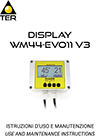
TER Wind Display WM44-EV011 V3 – Wind Speed and Direction Display with Data Logging
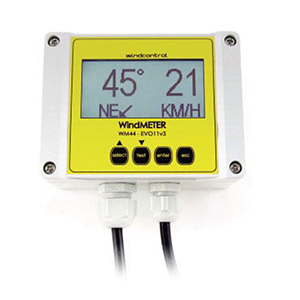
The TER WM44-EV011 V3 Wind Display is an advanced industrial wind monitoring instrument designed to provide clear, reliable indication of wind speed and wind direction for applications where changing wind conditions can affect equipment operation, lifting activities or site safety. Featuring a backlit graphical LCD, programmable wind speed alarms, two alarm relays, analogue output and data logging capabilities, the WM44-EV011 V3 provides operators with an effective interface for monitoring wind conditions in both indoor and outdoor industrial environments.
Designed for use with compatible wind speed sensors and wind vanes, the WM44-EV011 V3 can accept frequency, 4-20 mA analogue or RF input configurations depending on the selected system. This flexibility allows the display to form the central monitoring component of a complete wind measurement system, providing immediate wind information while also supporting alarm signalling and connection to other industrial equipment.
The WM44-EV011 V3 is particularly suited to industrial applications where wind conditions need to be monitored continuously. These can include cranes, lifting equipment, construction machinery, industrial plants, outdoor handling systems and other equipment where excessive wind speed may influence safe operating limits or operational decisions.
With an IP65 enclosure, selectable wind speed units, wind direction indication in degrees and cardinal points, adjustable alarms and data recording functionality, the TER WM44-EV011 V3 combines monitoring, indication and signalling functions within a compact industrial display.
Industrial Wind Speed and Direction Monitoring
Wind conditions can change quickly, particularly around outdoor lifting equipment, elevated structures, construction sites and exposed industrial facilities. Accurate measurement provides operators with objective information that can be incorporated into established operating procedures and site-specific wind limits.
The TER WM44-EV011 V3 is designed to display both wind speed and wind direction when connected to the appropriate sensors. Wind speed is presented as a three-digit value and can be configured for kilometres per hour (km/h), miles per hour (mph) or metres per second (m/s). This allows the display format to be matched to the units used by the equipment manufacturer, site procedures or operator requirements.
Wind direction can also be displayed as a three-digit value in degrees together with cardinal-point information. Presenting direction in an immediately recognisable format helps operators understand not only how fast the wind is moving but also the direction from which the measured wind condition is occurring.
This combination is useful in applications where wind direction may be relevant to equipment orientation, load characteristics or site conditions. Rather than requiring separate instruments for speed and direction, the WM44-EV011 V3 provides a central interface for both measurements when configured with compatible sensing equipment.
Clear Backlit Graphic LCD
At the centre of the WM44-EV011 V3 is a backlit 128 x 64 pixel graphic liquid crystal display. The graphical interface allows current wind information, configuration data, alarm information and historical graphs to be presented through a single operator interface.
A clear display is particularly important in industrial wind monitoring because operators may need to assess changing conditions quickly. The WM44-EV011 V3 presents the measured wind information directly rather than requiring operators to interpret an analogue gauge or convert an electrical sensor signal into an engineering value.
The backlighting assists readability across a range of operating conditions, while the graphical display provides sufficient flexibility for the instrument’s monitoring and data review functions.
Wind speed can be displayed in the unit most appropriate for the application, while wind direction can be represented in degrees and cardinal points. This makes the display suitable for facilities where different users may require straightforward, easily interpreted wind information.
Adjustable Wind Speed Alarms
One of the most important features of the TER WM44-EV011 V3 is its adjustable wind speed alarm capability. Rather than functioning only as a passive display, the unit can monitor measured wind speed against configured alarm thresholds and provide relay outputs for integration into an appropriate warning or control system.
The WM44-EV011 V3 incorporates two alarm relays. These provide the system designer with the ability to establish wind-related signalling according to the requirements of the application.
For example, a wind monitoring system may be configured so that an initial threshold provides a warning that wind speed is approaching an operational limit, while another threshold is incorporated into the site’s higher-level alarm or control strategy. The exact response to each alarm should always be determined by the equipment manufacturer, risk assessment and applicable operating procedures.
This programmable approach makes the WM44-EV011 V3 suitable for a broad range of applications because the alarm arrangement can be configured around the particular machinery and operating environment rather than relying on one fixed threshold.
Two Industrial Alarm Relay Outputs
The WM44-EV011 V3 provides two alarm relay outputs. According to the manufacturer’s technical specification, the alarm relays are rated at 250 Vac, 8 A.
The first alarm provides normally open and normally closed contacts, while the second alarm provides a normally open contact. The relay contacts are dry contacts, providing flexibility for integration into external warning and control circuitry.
This means the WM44-EV011 V3 can provide more than a local visual indication of wind conditions. The relay outputs can form part of a broader system incorporating suitable warning devices or control equipment, subject to the electrical design and safety requirements of the application.
Any function that affects machinery operation or safety should be engineered appropriately for the complete system. Wind monitoring equipment should complement the equipment manufacturer’s specified operating limits and established site safety controls.
Suitable for Crane and Lifting Applications
Wind monitoring is particularly important in lifting applications because wind can affect cranes, suspended loads and load-handling operations. The influence of wind depends on many factors, including equipment type, configuration, operating radius, load geometry, exposed surface area and manufacturer-defined limitations.
The TER WM44-EV011 V3 provides a practical interface for displaying measured wind conditions to crane operators and site personnel when incorporated into an appropriately designed wind monitoring system.
Potential applications include tower cranes, gantry cranes, mobile lifting systems, construction lifting equipment, outdoor material handling installations and other machinery operating in exposed locations.
Importantly, the WM44-EV011 V3 does not itself establish the safe wind speed for a crane or lifting operation. Permissible limits must be determined from the equipment manufacturer’s instructions, applicable engineering requirements, risk assessments and site procedures. The display provides the measured information and configurable alarm functionality that can support these decisions.
Frequency, 4-20 mA and RF Sensor Input Options
A major advantage of the WM44-EV011 V3 platform is its flexibility in accepting different wind sensor technologies. Depending on the selected version and system configuration, input signals can include frequency, analogue 4-20 mA or RF communication.
Frequency inputs allow the unit to operate with compatible pulse-output anemometers. In this type of system, the wind sensor produces a frequency related to measured wind speed, which is interpreted by the display and converted into a usable engineering value.
Compatible 4-20 mA wind sensors provide an industry-standard analogue signal. The 4-20 mA format is widely used throughout industrial instrumentation because it provides a practical method of transmitting measurement information between field sensors and monitoring equipment.
RF versions provide an additional option for applications where a wireless connection between compatible sensing equipment and the display is preferred. This can be useful where conventional sensor cabling would be difficult because of installation geometry, moving machinery or other site considerations.
RF Connectivity for Wireless Wind Monitoring
RF-equipped versions of the WM44 platform use IEEE 802.15.4 communication in the 2.4 GHz ISM band. This allows compatible TER wind sensing equipment and the display to be incorporated into a wireless monitoring arrangement.
Wireless communication can provide significant installation flexibility in certain applications. Running a physical cable between an anemometer and a display may be difficult where sensors are mounted on elevated structures or equipment with complex cable routing requirements.
RF configurations can reduce the need for a direct signal cable between compatible devices, although the suitability of wireless communication should always be assessed for the installation environment.
TER also provides versions with an external RP-SMA antenna connection for situations where the display is installed in a location with poor RF communication conditions. This can be particularly relevant when the display is installed inside a metal enclosure or other structure capable of attenuating the wireless signal.
Sensor Power Supply Output
The WM44-EV011 V3 incorporates a 15 Vdc power output for compatible sensors. Providing a sensor supply directly from the display can simplify the design of the complete wind monitoring system by reducing the need for an independent power source for appropriate connected sensors.
The display therefore acts as more than a visual indicator. It can form the central interface between the wind sensing equipment, operator, alarm outputs and external monitoring or control systems.
When specifying the complete installation, sensor type, input configuration, power requirements and wiring arrangement should all be checked to ensure compatibility with the selected WM44-EV011 V3 version.
4-20 mA Analogue Output
In addition to accepting compatible sensor inputs, the WM44-EV011 V3 provides a 4-20 mA analogue output. This enables measured information to be transmitted to suitable external industrial equipment.
A 4-20 mA output is particularly useful where the wind monitoring system needs to interface with another device or higher-level monitoring architecture. Depending on the application and system design, the signal may be incorporated into compatible PLC, monitoring, indication or data acquisition equipment.
The manufacturer’s technical specification lists a maximum connectable impedance of 500 Ohm, 10-bit analogue output resolution and analogue output accuracy of 1.5%.
This output capability increases the flexibility of the WM44-EV011 V3, allowing the display to function both as a local operator interface and as part of a wider industrial monitoring system.
Integrated Wind Data Logging
The datalogger version of the WM44-EV011 V3 provides historical recording of wind speed and direction. This is a valuable feature for applications where users need more than an instantaneous wind reading.
Wind speed and direction information can be recorded in internal memory, and the programming functions allow the recording frequency to be configured. Recorded information can also be exported to a microSD card, providing a practical method of transferring wind data for further review.
Historical wind information can assist with operational review, troubleshooting and understanding the conditions experienced at a particular installation. Instead of relying exclusively on an operator’s recollection of a wind event, recorded measurements provide a data-based reference.
40-Hour and 96-Hour Historical Graphs
The WM44-EV011 V3 provides graphical review of recent wind data directly on its LCD. The graph mode can display the last 40 hours using 10-minute intervals or the last 96 hours using 1-hour intervals.
This allows operators or maintenance personnel to inspect recent wind behaviour without first exporting data to another device. Shorter 10-minute intervals provide greater detail across the recent 40-hour period, while the 96-hour view provides a broader picture of wind conditions over several days.
Graphical presentation can make trends and changing conditions easier to recognise than reviewing individual numerical measurements. It provides a useful overview of whether wind conditions have remained relatively stable or varied significantly during the selected period.
Automatic Minimum and Maximum Wind Speed Recording
The WM44-EV011 V3 also automatically records minimum and maximum wind speed values. These values can be accessed through the display interface, providing a quick method of identifying the wind-speed extremes experienced during the relevant operating period.
This function is useful when personnel need to determine whether stronger wind conditions have occurred since the display was last checked. According to the manufacturer’s documentation, the stored minimum and maximum values are cleared if power to the unit is removed.
The minimum and maximum function complements the graphical history and datalogger capabilities, giving users several different ways of reviewing measured wind conditions.
IP65 Protection for Indoor and Outdoor Installation
The WM44-EV011 V3 is designed for indoor and outdoor installation and features an IP65-rated polycarbonate enclosure. This provides a level of environmental protection appropriate for many industrial monitoring applications.
The IP65 classification indicates protection against dust ingress and water jets under the applicable standard test conditions. This is particularly useful for wind monitoring equipment, which may need to be installed in exposed locations where conventional indoor instrumentation would not be suitable.
The manufacturer’s technical data specifies an operating temperature range of -20°C to +70°C and a storage temperature range of -35°C to +70°C. These specifications support use across a broad range of industrial environmental conditions.
Compact Industrial Wind Monitoring Interface
Despite its broad functionality, the WM44-EV011 V3 is housed in a compact enclosure. The unit weighs approximately 250 grams and combines the graphical display, configuration interface, alarm functionality, sensor connections, analogue output and data logging capability into one device.
This compact format allows the display to be positioned where operators or site personnel can readily view current wind information while maintaining an enclosure designed for industrial use.
With wind speed and direction indication, selectable measurement units, two adjustable alarm relays, 4-20 mA output, multiple sensor input technologies, historical graphs, minimum and maximum recording and data logging capability, the TER WM44-EV011 V3 provides a comprehensive platform for industrial wind monitoring applications.
Flexible Wind Monitoring System Integration
The TER WM44-EV011 V3 Wind Display is designed to function as the central operator interface within an industrial wind monitoring system. By combining sensor inputs, local indication, programmable alarms, analogue output and data logging functionality, the display provides a flexible platform for integrating wind information into cranes, lifting equipment, industrial machinery and site monitoring systems.
A key advantage of the WM44-EV011 V3 is its ability to accommodate different wind sensing technologies. Depending on the selected configuration, the display can operate with frequency, 4-20 mA or RF sensor signals. This allows system designers to select a sensing arrangement that suits the physical layout, cabling requirements and operating environment of the application.
The display can be used to present real-time wind speed information, wind direction when connected to suitable equipment, historical wind data and alarm status. At the same time, relay and analogue outputs allow the measured information to be incorporated into external warning, monitoring or control equipment.
Integration with TER Wind Sensors
The WM44-EV011 V3 can form part of a complete TER wind monitoring solution when paired with compatible wind sensing equipment. TER provides wind measurement products designed for industrial applications where reliable information about changing environmental conditions is required.
Depending on the selected sensor and display configuration, the wind measurement signal can be transferred using a wired frequency output, industrial 4-20 mA analogue signal or RF communication. This flexibility is particularly useful when designing systems for cranes and other large machinery, where the physical distance and movement between the sensor and operator display can make conventional wiring more complex.
When specifying a complete system, the sensing technology, display version, electrical supply and required outputs should be considered together. Matching these components correctly helps ensure that the display receives the appropriate signal and can provide the required monitoring and alarm functions.
Wind Speed Sensor Input
Wind speed measurement begins at the anemometer or compatible wind sensor. The sensor detects the movement of air and converts this measurement into an electrical signal that can be interpreted by the WM44-EV011 V3.
For frequency-based sensors, the frequency of the incoming signal corresponds to the measured wind speed. The WM44-EV011 V3 processes this signal and converts it into an engineering value that can be displayed in kilometres per hour, miles per hour or metres per second.
Where a 4-20 mA sensor is used, the measured wind speed is represented by an analogue current signal. This industrial signalling method is widely used because it provides a practical means of transmitting measurement information between field instrumentation and monitoring devices.
The selected sensor should always be compatible with the specific WM44 configuration and should be installed in a location that provides a representative measurement of the wind conditions relevant to the equipment or operating area.
Wind Direction Monitoring
When the system includes compatible wind direction sensing equipment, the WM44-EV011 V3 can provide operators with information about the direction of the measured wind as well as its speed.
Wind direction can be presented numerically in degrees and through cardinal-point information. This combination provides both precise and easily interpreted information through the same graphical display.
Direction monitoring can be particularly useful for applications involving large exposed structures or loads where the effect of wind may vary according to its direction relative to the machinery. It can also provide useful environmental information for site operators who need to understand how local wind conditions are changing over time.
The relevance of wind direction will depend on the application. Any operating limits or actions associated with wind direction should be established through the machinery manufacturer’s requirements, engineering assessment and site procedures.
4-20 mA Industrial Sensor Compatibility
The ability to work with compatible 4-20 mA sensing equipment gives the WM44-EV011 V3 an important advantage in industrial installations. The 4-20 mA current loop is an established instrumentation standard used extensively throughout process control, automation and machinery monitoring.
Current-loop signalling can be advantageous where the distance between the field sensor and display is significant. It also provides an electrical signal format that is familiar to industrial electricians, automation engineers and system integrators.
When using a 4-20 mA wind sensor, correct wiring, scaling and system configuration are essential to ensure that the displayed engineering value accurately represents the measured wind condition.
Electrical installation should be completed by appropriately qualified personnel in accordance with the manufacturer’s documentation and requirements applicable to the installation.
Frequency Input for Compatible Anemometers
Frequency input provides another method of connecting compatible anemometers to the TER wind display. In a frequency-based measurement system, the sensor generates pulses or a varying frequency corresponding to wind speed.
The WM44-EV011 V3 interprets this signal and converts it into the selected wind speed unit for presentation to the operator. This allows compatible wind sensors to provide a relatively direct measurement interface without requiring a separate external display or conversion instrument.
The use of multiple supported input technologies also makes the WM44 platform adaptable to different installation requirements. A system designer can select the appropriate configuration according to the sensor, required cable length, machinery layout and existing electrical infrastructure.
RF Wireless Sensor Communication
For applications where physical sensor cabling is difficult or undesirable, compatible WM44 configurations support RF communication. The wireless system uses IEEE 802.15.4 communication in the 2.4 GHz ISM frequency band.
Wireless communication can be particularly advantageous on cranes and large industrial machinery. An anemometer may need to be positioned high on a structure or at a location where routing a dedicated signal cable to the operator display would require complex cable management.
An RF arrangement can reduce the need for this direct signal wiring between compatible devices. However, the suitability of wireless communication should be assessed for the actual installation because structures, enclosures and other equipment can affect radio signal performance.
Metal structures are especially relevant in crane applications because cranes commonly incorporate substantial steel components. Installation planning should therefore consider the location of both the sensor and receiver to establish dependable communication.
External Antenna Options
TER provides configurations that can accommodate an external antenna through an RP-SMA connection. This can be useful where the display itself is positioned in an enclosure or location that reduces the effectiveness of the internal RF arrangement.
For example, a display installed inside a metal electrical cabinet may experience greater radio-frequency attenuation than a unit installed in an unobstructed location. An appropriately positioned external antenna can provide greater flexibility when establishing the wireless communication path.
Any external antenna installation should be carried out according to the manufacturer’s requirements and should consider environmental exposure, cable routing and the mechanical protection required for the application.
Programmable Wind Alarm Thresholds
The WM44-EV011 V3 provides programmable alarm functionality that allows measured wind speed to be compared against configured threshold values. This converts the instrument from a simple display into an active component of the site’s wind monitoring strategy.
Two alarm levels allow different stages of response to be established. In an appropriately engineered system, an initial threshold might be used to indicate that wind conditions are increasing, while another threshold may represent a higher-level warning condition.
The appropriate alarm values should never be selected arbitrarily. They should be based on the machinery manufacturer’s permitted wind limits, load characteristics, equipment configuration, engineering requirements and site-specific risk assessment.
This is particularly important for crane applications because there is no single universal maximum wind speed applicable to every crane or lifting operation. Different equipment configurations and loads can respond differently to the same measured wind conditions.
Alarm Relay Contact Configuration
The WM44-EV011 V3 incorporates two relay outputs for alarm signalling. The manufacturer’s technical information specifies relay ratings of 250 Vac at 8 A.
Alarm 1 provides normally open and normally closed dry contacts, giving the system designer flexibility when determining the required circuit behaviour. Alarm 2 provides a normally open dry contact.
Dry relay contacts allow the display to interface with appropriately designed external circuits without supplying the controlled voltage directly through the measurement signal itself. This can make integration with warning devices and industrial control systems more flexible.
Any circuit used to initiate machinery control or a safety-related function must be designed according to the requirements of the complete machine and applicable standards. The presence of alarm relays does not by itself make the WM44-EV011 V3 a safety-rated control system.
Integration with Visual and Audible Warnings
In an appropriately designed installation, the relay outputs can be used as part of a broader wind warning arrangement. External devices may provide personnel with additional visual or audible indications when configured wind thresholds are reached.
This can be useful where the display is not continuously visible to every person affected by the wind conditions. A local WM44 display can provide detailed numerical information to an operator while separate warning equipment provides a more general indication elsewhere within the operating area.
The exact arrangement will depend on the site and application. Warning methods should be selected so that personnel understand the meaning of each alarm state and the actions required under established operating procedures.
4-20 mA Output for External Monitoring Systems
In addition to its local display and relay outputs, the WM44-EV011 V3 provides a 4-20 mA analogue output for connection to compatible external monitoring equipment.
This enables the measured wind information to be incorporated into a larger industrial monitoring architecture. For example, a compatible PLC, data acquisition system or supervisory monitoring system may be able to receive the analogue signal and use it for remote indication, data collection or other appropriately engineered functions.
The manufacturer’s documentation specifies a maximum connectable impedance of 500 Ohm, 10-bit analogue output resolution and 1.5% accuracy for the analogue output.
Providing both relay and analogue outputs gives the WM44-EV011 V3 considerable integration flexibility. The relays can provide discrete threshold-based signalling while the 4-20 mA output provides a continuously variable signal representing the measured condition.
Wind Data Logging Capability
Data logging is one of the most useful capabilities of the WM44-EV011 V3 for applications requiring a record of historical wind conditions. Instead of providing only the current wind reading, the datalogger can retain wind speed and direction information for later review.
This historical information can assist site managers, operators, engineers and maintenance personnel when reviewing environmental conditions experienced during a particular operating period.
For example, if a site experiences unusually strong winds, recorded data can provide a useful reference when investigating the conditions that occurred. Historical measurements can also help users understand typical variations in wind conditions at the installation.
Recorded information should be interpreted in the context of the sensor installation and system configuration. Wind measurements represent conditions at the sensor location, which may differ from conditions elsewhere across a large site or structure.
Configurable Data Recording Frequency
The data recording frequency can be configured through the WM44 programming functions. This enables the logging arrangement to be adapted to the requirements of the application.
More frequent recording provides greater temporal detail but generates a larger quantity of data. Less frequent recording can provide a broader historical record while reducing the number of stored measurement points.
The appropriate configuration will depend on how the information is intended to be used. Applications focused on short-duration wind changes may benefit from a different recording strategy from installations where users primarily require long-term environmental trends.
microSD Data Export
The WM44-EV011 V3 datalogger provides the ability to export recorded information using a microSD card. This allows stored wind data to be transferred from the field instrument for review and retention.
Removable storage provides a practical method of accessing historical information without requiring the display to be permanently connected to a computer or network. Personnel can retrieve the recorded data and review it using appropriate external tools.
This functionality is particularly useful for standalone installations where the WM44 operates independently but historical wind information is still required for engineering, operational or maintenance purposes.
On-Screen Historical Wind Graphs
Not every wind-data review requires exporting information. The WM44-EV011 V3 can also display recent wind history graphically on its integrated LCD.
The display provides a 40-hour graph using 10-minute intervals and a 96-hour graph using 1-hour intervals. These two views provide different levels of historical detail.
The 40-hour view is useful for examining more recent conditions at relatively short intervals, while the 96-hour view provides an overview extending across four days. This can help personnel identify trends, periods of stronger wind or significant changes without needing separate data analysis equipment.
Graphical representation is particularly valuable because patterns can often be identified more quickly from a graph than from a long series of individual numerical readings.
Minimum and Maximum Wind Speed Information
The display automatically records minimum and maximum wind speed values, giving users a quick indication of the range of conditions experienced during the relevant operating period.
This function can be useful during routine inspections. An operator or supervisor can check whether a higher wind speed has occurred since the previous observation even if that peak is no longer present at the time the display is viewed.
The manufacturer’s documentation notes that the stored minimum and maximum values are cleared when power is removed from the unit. This behaviour should be considered where historical peak values are important to the application’s operating or reporting procedures.
Installation Location Considerations
Correct positioning of both the display and wind sensor is important to obtaining a practical wind monitoring system. The WM44 display should be located where the intended operator or personnel can readily view the screen and access the controls when required.
The wind sensor should be positioned where it can measure conditions representative of the machinery or operating area being monitored. Nearby structures, buildings or equipment can influence airflow and potentially create shielding, turbulence or locally accelerated wind conditions.
For crane applications, the sensor position should be determined with consideration for the crane structure, maximum operating configuration and the wind conditions that are most relevant to the equipment.
Installation should follow the manufacturer’s documentation and any applicable machinery, electrical and workplace requirements.
IP65 Polycarbonate Enclosure
The WM44-EV011 V3 is housed in an IP65-rated polycarbonate enclosure suitable for indoor and outdoor installation within the conditions specified by the manufacturer.
The IP65 classification provides dust protection and resistance to water jets under the applicable standard test conditions. This makes the display considerably better suited to exposed industrial environments than conventional instrumentation intended solely for installation inside clean control rooms.
As with any IP-rated equipment, the integrity of the complete installation depends on correct installation practices. Cable entries, glands, covers and other interfaces should be installed appropriately so that the intended environmental protection is maintained.
Electrical Supply and System Design
The electrical supply, sensor connections, relay wiring and analogue output should be planned as part of the complete wind monitoring system. Correct electrical design is particularly important where the WM44 is being integrated with crane control equipment or external alarms.
Cabling should be routed and protected according to the machinery and installation environment. On moving equipment, consideration should be given to cable movement, mechanical protection and potential interference with other machine components.
Electrical work should be carried out by appropriately qualified personnel using the TER technical documentation for the specific WM44-EV011 V3 configuration being installed.
A Complete Interface for Industrial Wind Monitoring
The combination of multiple sensor input technologies, local graphical indication, programmable alarm relays, 4-20 mA output, RF communication options and data logging makes the TER WM44-EV011 V3 much more than a basic wind speed display.
It can provide operators with immediate wind information while simultaneously supporting external warning equipment, industrial monitoring systems and historical data review.
For cranes, lifting machinery, construction equipment and industrial installations exposed to changing wind conditions, this combination provides a practical foundation for a comprehensive wind monitoring arrangement.
When correctly specified and integrated with suitable sensors and site procedures, the TER WM44-EV011 V3 provides a flexible and robust interface for monitoring wind speed and direction and communicating changing conditions to operators and associated industrial systems.
Wind Monitoring for Cranes and Lifting Equipment
The TER WM44-EV011 V3 Wind Display is particularly suited to cranes and lifting equipment operating in environments where changing wind conditions can influence operational decisions. Wind can affect crane structures, suspended loads and lifting accessories, with the resulting forces varying according to equipment configuration, load geometry, exposed surface area and wind direction.
By providing operators with a clear indication of measured wind speed and, when appropriately configured, wind direction, the WM44-EV011 V3 can form an important part of a broader wind monitoring strategy. The display allows current conditions to be viewed locally while programmable alarm relays can provide additional signalling when configured thresholds are reached.
The system does not determine whether a particular lifting operation is safe. Permitted wind limits must be established from the crane or equipment manufacturer’s instructions, engineering requirements, load characteristics, site procedures and applicable risk assessments. The WM44-EV011 V3 provides measurement, indication, alarm and data logging capabilities that can support personnel in applying those established requirements.
Tower Crane Wind Monitoring
Tower cranes operate at significant heights and can be exposed to wind conditions that differ substantially from those experienced at ground level. For this reason, appropriate measurement at a representative position on the crane can provide valuable information to operators and site personnel.
A compatible anemometer can be positioned at an appropriate location on the crane structure, with wind information transmitted to the WM44-EV011 V3 using the selected wired or RF arrangement. The operator can then view the measured wind speed through the graphical display without relying solely on ground-level observations.
Where wind direction measurement is included, the system can provide additional information about the direction of the measured airflow. Historical graphs and data logging can further assist with reviewing how conditions have changed throughout the working period.
Gantry and Overhead Crane Applications
Outdoor gantry cranes and other exposed material handling systems can also benefit from continuous wind monitoring. These machines may operate across large industrial sites, storage yards, manufacturing facilities or material handling areas where wind conditions can vary considerably.
The WM44-EV011 V3 provides a central interface through which operators can monitor current wind conditions and receive configured alarm indications. Its IP65 enclosure and broad operating temperature range support installation in many industrial environments, subject to the manufacturer’s installation requirements.
The availability of wired and compatible wireless sensor arrangements can also provide useful installation flexibility where the distance or physical movement between the sensing location and display makes conventional cabling more difficult.
Construction Site Wind Monitoring
Construction sites frequently involve equipment and activities that can be influenced by wind, including cranes, lifting operations and elevated work. Conditions can change rapidly, particularly on exposed sites or around taller structures.
The WM44-EV011 V3 provides an objective measurement interface that allows personnel to monitor wind conditions rather than relying on subjective assessment alone. Programmable alarms can be configured around appropriately established operating thresholds, while historical information provides additional insight into recent conditions.
Where a site uses several pieces of equipment, the location of the wind sensor should be selected carefully so that the measurement is relevant to the intended application. A reading obtained at one location should not automatically be assumed to represent conditions everywhere across a large or complex construction site.
Ports, Terminals and Material Handling Facilities
Ports, terminals and outdoor material handling facilities can involve large machinery operating in exposed environments. Cranes, lifting systems and material handling equipment may be subjected to changing winds throughout their operating cycles.
A dedicated wind monitoring system can provide operators with continuous information while allowing alarm thresholds to be incorporated into site procedures. The WM44-EV011 V3’s local display, relay outputs, analogue output and data logging functions provide several ways of communicating and recording this information.
Historical wind records can also be useful when reviewing conditions experienced during a particular period. The ability to export logged information provides a practical means of retaining or analysing measurements outside the display itself.
Industrial and Infrastructure Applications
Although crane and lifting applications are a natural fit for the WM44-EV011 V3, the instrument can also be considered for other industrial applications requiring wind speed and direction monitoring.
Potential applications include manufacturing sites, outdoor processing facilities, infrastructure installations, exposed machinery, industrial yards and other locations where wind information is relevant to operating procedures or equipment management.
The combination of local display, configurable alarms and analogue signalling makes the unit suitable for standalone monitoring as well as integration into a broader industrial system.
Selecting the Correct Wind Monitoring Configuration
Selection of a TER wind monitoring system should begin with the requirements of the application. Factors to consider include whether wind speed alone or both speed and direction are required, the type of sensor signal, installation distance, electrical supply, alarm requirements, data logging requirements and the preferred method of communication between the sensor and display.
For a straightforward wired installation, a compatible frequency or 4-20 mA sensor arrangement may provide an effective solution. Where direct cabling is difficult, a compatible RF configuration may provide additional flexibility.
Applications requiring historical information should also consider the data logging functionality, including recording intervals, on-screen graphs and microSD export capabilities.
Careful specification of the complete system helps ensure that the display, sensors, communication method and outputs are suitable for the intended machinery and environment.
Importance of Correct Anemometer Positioning
The performance of any wind monitoring system depends not only on the display but also on where and how the sensing equipment is installed. Buildings, structural members, machinery and other obstructions can significantly influence local airflow.
A sensor positioned behind a large obstruction may experience shielding, while airflow around structures can create turbulence or local acceleration. Consequently, sensor placement should be selected so that the measured conditions are representative of the wind relevant to the application.
For crane installations, this may require consideration of crane geometry, maximum operating height and surrounding structures. Installation recommendations provided by the sensor and equipment manufacturers should be followed.
Establishing Appropriate Wind Alarm Levels
The programmable alarm capability of the WM44-EV011 V3 provides flexibility, but alarm thresholds need to be based on appropriate engineering and operational information.
There is no universal wind-speed alarm value suitable for every crane, load or industrial application. A crane may have different permissible limits depending on configuration, operating condition and the characteristics of the load being handled.
Alarm settings should therefore be derived from applicable manufacturer documentation, engineering assessment and established site procedures. Where two thresholds are used, they can support a staged warning strategy appropriate to the application.
Personnel should also be trained to understand the meaning of each alarm and the required response. An alarm is most effective when it forms part of a clear operating procedure rather than functioning as an isolated indication.
Using Historical Wind Data
Real-time measurement tells operators what is happening now, while data logging provides information about what has occurred previously. The WM44-EV011 V3 combines these capabilities within the same monitoring interface.
Historical data can help personnel review periods of changing wind, identify peak conditions and understand patterns experienced at the installation. This can be particularly useful when investigating an operational event or reviewing conditions across a working period.
The 40-hour graphical view at 10-minute intervals provides relatively detailed information about recent conditions, while the 96-hour view at 1-hour intervals gives users a broader overview extending across four days.
For more detailed analysis or record retention, logged information can be exported using microSD storage. This allows data to be reviewed outside the instrument using appropriate tools.
Inspection and Maintenance
Periodic inspection should form part of the maintenance program for the complete wind monitoring installation. The display enclosure, sensor, mounting hardware, wiring and communication system should be checked at intervals appropriate to the operating environment.
For outdoor installations, contamination, weather exposure and mechanical conditions around the sensor should be considered. An anemometer or wind vane needs to remain unobstructed and capable of responding correctly to changing airflow.
Wired installations should be checked for cable damage, secure connections and appropriate environmental sealing. RF installations should be checked for reliable communication between the compatible sensor and display.
The WM44 display should also be inspected to confirm that the screen remains readable, the enclosure is secure and any cable entries continue to maintain the intended environmental protection.
Maintaining IP65 Environmental Protection
The WM44-EV011 V3 features an IP65 polycarbonate enclosure. Maintaining this protection depends on correct installation and ongoing condition of the complete enclosure system.
Cable glands and entries should be appropriate for the installation, covers should be correctly secured and any modifications should avoid compromising enclosure integrity. Damage to the housing or sealing interfaces should be addressed as part of normal inspection and maintenance.
For outdoor or exposed industrial installations, maintaining the environmental protection of electrical instrumentation is important for long-term reliability.
Benefits of Local Wind Information
One of the primary advantages of the WM44-EV011 V3 is that wind information can be made directly available to the personnel who need it. The backlit 128 x 64 graphical LCD provides an immediate indication without requiring access to a separate computer or supervisory system.
Operators can view current wind speed in km/h, mph or m/s and, when appropriately configured, wind direction in degrees and cardinal points. Recent minimum and maximum values and historical graphs provide additional context.
This local visibility can be particularly useful for crane operators and site personnel who need rapid access to measured conditions during normal operations.
Benefits of External System Integration
While local indication is valuable, some installations require wind information to be communicated elsewhere. The WM44-EV011 V3 provides both relay outputs and a 4-20 mA analogue output to support integration with compatible external equipment.
The two relay outputs allow configured wind thresholds to generate discrete signals, while the analogue output provides a continuously variable representation of the measured condition.
This combination enables the display to act as an interface between field sensing equipment and other appropriately engineered industrial monitoring or warning systems.
Benefits of TER RF Wind Monitoring
Wireless communication can provide a significant practical advantage where sensor cabling would otherwise be difficult. Crane structures, elevated equipment and moving machinery can present challenges for conventional wiring.
Compatible TER RF configurations use IEEE 802.15.4 communication within the 2.4 GHz ISM band. This allows wind information to be transferred between compatible devices without requiring a direct signal cable.
Where radio conditions are less favourable, configurations supporting an external RP-SMA antenna can provide additional installation flexibility. The actual RF performance should always be assessed in the intended environment, particularly around large metal structures.
Why Choose the TER WM44-EV011 V3 Wind Display?
The TER WM44-EV011 V3 combines multiple functions that would otherwise require several separate components. It provides wind speed and direction indication, programmable alarm thresholds, relay outputs, analogue output, historical graphs and data logging within a compact industrial enclosure.
Support for different sensor technologies further increases its versatility. Frequency, 4-20 mA and compatible RF arrangements allow the wind monitoring system to be configured according to the requirements of the application.
The backlit graphical display provides a clear operator interface, while selectable wind speed units make the instrument adaptable to different equipment specifications and site conventions.
An IP65 polycarbonate enclosure and specified operating temperature range from -20°C to +70°C support use across a wide variety of indoor and outdoor industrial environments.
TER Wind Monitoring Solutions from Control Devices
Control Devices supplies TER wind monitoring equipment for Australian industrial, crane, lifting and material handling applications. The WM44-EV011 V3 Wind Display can be combined with compatible wind sensing equipment to create a monitoring system tailored to the requirements of the installation.
Control Devices can assist customers with product selection and technical information when determining the appropriate display, sensor input, communication method and system configuration for a new installation or equipment upgrade.
When enquiring about a wind monitoring system, useful application information can include the machinery type, required wind measurements, sensor mounting location, distance between the sensor and display, available electrical supply, alarm requirements, communication preference and whether historical data logging is required.
Providing this information can assist in identifying an appropriate TER configuration for the intended application.
Comprehensive Industrial Wind Speed and Direction Monitoring
The TER WM44-EV011 V3 Wind Display provides a comprehensive solution for applications requiring more than a simple instantaneous wind speed indication. By combining real-time monitoring with configurable alarms, wind direction information, analogue signalling and historical data recording, the display provides operators with a detailed picture of changing wind conditions.
Its compatibility with different sensing and communication technologies allows the system to be adapted to a broad range of industrial installations. Wired frequency and 4-20 mA configurations provide conventional sensor interfaces, while compatible RF technology provides an alternative where direct cabling is difficult.
Two programmable alarm relays allow measured wind conditions to be incorporated into an appropriately engineered warning strategy, while the 4-20 mA output enables integration with compatible external monitoring equipment.
Historical graphs covering 40 hours at 10-minute intervals or 96 hours at 1-hour intervals provide convenient on-screen review, while data logging and microSD export support more detailed analysis and record keeping.
TER WM44-EV011 V3 Wind Display – Industrial Wind Monitoring from Control Devices
For cranes, lifting equipment, construction machinery, industrial facilities and other applications where changing wind conditions need to be monitored, the TER WM44-EV011 V3 provides a versatile combination of measurement display, alarm signalling and data recording.
The unit’s 128 x 64 pixel backlit graphical LCD presents wind information clearly, while selectable km/h, mph and m/s units allow the display to match the conventions used by the equipment or facility. Wind direction can also be presented in degrees and cardinal points when the system is connected to appropriate sensing equipment.
With two programmable alarm relays, 4-20 mA analogue output, frequency, analogue and compatible RF sensor options, data logging functionality, microSD export and an IP65 industrial enclosure, the WM44-EV011 V3 provides a flexible foundation for a complete wind monitoring system.
Contact Control Devices for further information, technical assistance and product selection support for the TER WM44-EV011 V3 Wind Display and compatible TER wind speed and direction sensing solutions.