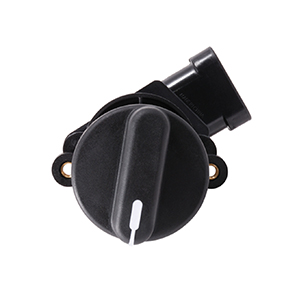

Description
Williams Controls WM-547 Rotary Hand Control
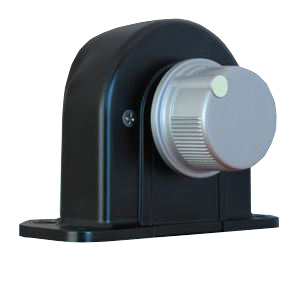
The Williams Controls WM-547 Rotary Hand Control is a rugged, infinitely variable electronic hand control engineered for demanding off-highway vehicle, mobile equipment and industrial control applications. Designed to provide precise manual control through a compact rotary interface, the WM-547 combines robust mechanical construction with advanced electronic sensing technology to deliver reliable operator input in challenging working environments.
Providing infinitely variable movement between 0° and 90°, the WM-547 enables an operator to accurately control a proportional function rather than relying on simple on/off switching or fixed-position selection. Typical applications include engine RPM control, chassis module inputs and hydraulic pump control, making the WM-547 particularly suitable for construction machinery, agricultural equipment, material handling vehicles, specialised mobile equipment and other off-highway platforms.
At the heart of the WM-547 is configurable electronic sensing technology. The control can be equipped with a non-contact Hall-effect sensor that may be programmed for analogue output and/or integrated switching functions. Depending on application requirements, contact and PWM sensor configurations can also be provided, giving OEM designers and system integrators considerable flexibility when matching the hand control to a particular electronic control architecture.
The WM-547 has been developed specifically for demanding vehicle environments. Its electronics are sealed to IP67 in accordance with IEC 60529 and are designed for high resistance to electromagnetic interference, with compliance to SAE J1113. Environmental protection enables the hand control to be considered for mounting either inside or outside the vehicle cab, subject to correct installation and application requirements.
Mechanical and ergonomic characteristics have also been carefully considered. The main body is manufactured from Nylon 66, while the rotary knob incorporates a thermoplastic elastomer over-mould designed to provide an improved tactile interface for the operator. Multiple shaft orientations and two sensor positions are available, while the knob colour can be customised depending on application requirements.
For Australian OEMs, equipment manufacturers, engineers and system integrators, Control Devices Pty Ltd can assist with the selection and supply of Williams Controls WM-547 Rotary Hand Controls for new equipment designs, specialised vehicle applications and compatible replacement requirements.
Infinitely Variable 0° to 90° Rotary Control
One of the defining characteristics of the Williams Controls WM-547 is its infinitely variable 90° angular operating range. Rather than functioning as a conventional rotary switch with a limited number of predetermined positions, the WM-547 allows the operator to select a position continuously throughout its available travel.
This proportional operation is particularly useful for machine functions where the operator needs to make gradual adjustments. Engine speed, hydraulic pump demand and electronic chassis inputs are examples of applications where precise control may be preferable to simple fixed-position switching.
As the operator rotates the knob, the sensing system detects the changing angular position and generates the corresponding electrical output. A compatible electronic controller can then interpret this signal and adjust the controlled function according to the machine’s programmed operating strategy.
The WM-547 therefore provides a straightforward physical interface between the operator and an electronic vehicle or machine control system. The rotary format can be especially useful where a compact hand-operated control is required or where a traditional lever or pedal arrangement would not be appropriate.
Designed for Off-Highway Vehicle Applications
The WM-547 has been developed specifically for a variety of off-highway applications. These operating environments can place substantially greater demands on electronic controls than conventional indoor or light-duty installations.
Construction equipment, agricultural machinery, material handling vehicles and specialised mobile equipment may be exposed to vibration, dust, moisture, temperature extremes and long working shifts. Operator controls installed on these machines must therefore provide not only accurate electrical performance but also the mechanical and environmental durability required for professional equipment.
The WM-547 addresses these requirements through a combination of rugged materials, environmentally sealed electronics and sensing technology designed for demanding operating conditions.
Its compact rotary design also enables the control to be integrated into dashboards, consoles, armrests or other suitable operator-interface locations depending on the equipment design.
Because the electronics are environmentally protected, the WM-547 can be considered for installation either inside or outside the cab, providing additional flexibility for specialised equipment designs where the control location may be exposed to challenging conditions.
Non-Contact Hall-Effect Sensing Technology
A major advantage of the WM-547 is the availability of non-contact Hall-effect sensing technology. Hall-effect sensors determine position by detecting changes in a magnetic field, enabling rotary movement to be measured electronically without relying on the conventional resistive track and mechanical wiper arrangement found in traditional potentiometers.
In a rotary hand control, this is particularly beneficial because the knob may be adjusted repeatedly throughout every working shift. Eliminating conventional contacting sensing elements from the primary position measurement process can help reduce sensing-element wear and support dependable performance throughout the operating life of the control.
As the WM-547 knob moves through its 90° angular range, the Hall-effect sensor detects the corresponding position and generates an electrical output. This signal can then be interpreted by the vehicle or machine controller as the operator’s requested command.
The Hall-effect sensor can be programmed for analogue output and/or integrated switching functions, providing flexibility when adapting the control to different machine architectures.
This combination of proportional rotary movement and non-contact sensing makes the WM-547 particularly suitable for electronic throttle, hydraulic and machine-control applications requiring smooth and repeatable operator input.
Flexible Electronic Output Configurations
Off-highway vehicles and industrial machines use a wide variety of electronic control systems, and the electrical interface required from a hand control can vary considerably between applications. The WM-547 addresses this requirement through multiple available output configurations.
Published output options include APS, Dual APS, PWM, Dual PWM and combined APS/IVS configurations. These alternatives enable the WM-547 platform to be adapted to different electronic controllers and system architectures.
APS, or Accelerator Position Sensor, configurations provide a proportional position signal corresponding to the operator’s selected rotary position. Dual APS configurations can provide multiple position signals for control systems designed to monitor more than one sensor channel.
PWM, or Pulse Width Modulation, provides an alternative method of transmitting operator position information to compatible electronic controllers. Dual PWM configurations are also available where multiple PWM channels are required.
Combined APS/IVS arrangements provide accelerator position information together with an Idle Validation Switch function for compatible applications.
The appropriate output arrangement should always be selected according to the requirements of the receiving controller and overall machine control strategy. Control Devices can assist customers with identifying a WM-547 configuration appropriate for the intended application.
5 V and 12 V to 24 V Operating Configurations
Electrical systems used throughout off-highway vehicles and industrial machinery can operate at different supply voltages depending on the vehicle platform, controller and overall system architecture.
The Williams Controls WM-547 is available in configurations supporting 5 V operation as well as 12 V to 24 V arrangements, providing flexibility for integration into a broad range of electronic systems.
The exact operating voltage depends on the selected sensor and output configuration. For this reason, engineers should confirm the required electrical characteristics before specifying a particular WM-547 part number.
Supply voltage, output type, controller input requirements, wiring and connector configuration should all be considered together when integrating the control into a new machine design or selecting a compatible replacement.
This configurability is one of the key advantages of the WM-547 platform, allowing the same fundamental rotary hand-control concept to support a variety of equipment and electronic control architectures.
Engine RPM Control Applications
Engine RPM control is one of the principal applications identified for the WM-547. Many off-highway machines require the operator to select and maintain an engine speed appropriate for a particular working function.
Examples can include machinery where engine speed influences hydraulic performance, auxiliary equipment operation or general machine productivity. A proportional rotary hand control allows the operator to make gradual adjustments and select an appropriate command within the available control range.
When correctly integrated with a compatible engine or machine controller, movement of the WM-547 can be translated into an electronic command representing the requested operating level.
The rotary knob format can also be advantageous where the operator needs to set a command and leave the control at the selected position during an extended machine operation.
Actual engine response and control strategy are determined by the receiving electronic system, so compatibility between the WM-547 output and the engine or vehicle controller must always be verified.
Hydraulic Pump Control
Hydraulic systems are fundamental to many off-highway machines, and the WM-547 can be used as an operator input for compatible hydraulic pump control applications.
Construction equipment, agricultural machinery and specialised mobile machines frequently require adjustable hydraulic performance according to the task being performed. A proportional rotary hand control provides a convenient method of allowing the operator to select the desired command.
The infinitely variable 0° to 90° movement enables fine adjustment throughout the available operating range rather than restricting the operator to a small number of fixed settings.
The electronic output can then be interpreted by the machine controller and used as part of the overall hydraulic control strategy.
Because hydraulic systems and controllers differ significantly between machines, the required WM-547 electrical output must be selected to match the intended controller and system architecture.
Chassis Module Input Control
The WM-547 is also suitable for chassis module input applications where a vehicle electronic system requires an adjustable manual command from the operator.
Modern off-highway machines increasingly rely on electronic modules to coordinate vehicle and equipment functions. Instead of using direct mechanical connections between the operator control and the controlled system, an electronic hand control can provide a proportional signal to the chassis or machine controller.
This architecture gives equipment designers greater flexibility in locating the operator control and integrating its command into a broader electronic control strategy.
The WM-547’s configurable sensor outputs further assist this process by providing several electrical interface options for different controller requirements.
IP67-Sealed Electronics
Environmental protection is a particularly important characteristic for controls installed on off-highway machinery. Dust, water, mud and other contaminants can be encountered regularly during normal equipment operation.
The electronics within the Williams Controls WM-547 are sealed to IP67 in accordance with IEC 60529. This provides a high level of protection against dust ingress and water exposure under the conditions defined by the IP67 rating.
This environmental sealing contributes to the WM-547’s suitability for demanding mobile equipment applications and allows the unit to be considered for installation both inside and outside the operator cab.
Correct installation remains essential to achieving dependable environmental performance. Wiring, connectors, mounting arrangements and the surrounding machine structure should all be designed appropriately for the intended operating environment.
High Resistance to Electromagnetic Interference
Modern off-highway machines contain numerous electronic and electrical systems capable of contributing to the surrounding electromagnetic environment. Engine management systems, electric motors, solenoid valves, communication networks, alternators, power electronics and radio equipment may all operate within the same vehicle.
The WM-547 electronics are designed for high electromagnetic interference resistance and comply with SAE J1113 requirements.
This characteristic is particularly important for an electronic operator control because the signal generated by the WM-547 may be used by a controller to determine engine, hydraulic or machine demand.
Robust electromagnetic compatibility helps support dependable operation within electrically complex vehicle environments, while appropriate machine-level wiring, grounding and harness routing remain important considerations for the system designer.
500,000 Full-Travel Cycle Product Life
Operator controls installed on working machinery can experience substantial numbers of movements throughout their service life. A rotary control used to adjust engine speed or hydraulic performance may be operated repeatedly during every shift.
The Williams Controls WM-547 is specified for a product life of 500,000 full-travel cycles, supporting applications where long-term durability is an important selection requirement.
A full-travel cycle represents movement through the operating range and return, providing a useful indication of the control’s mechanical endurance under repeated operation.
The use of non-contact Hall-effect sensing complements this mechanical durability by eliminating the conventional contacting resistive track from the primary position measurement process.
Together, these characteristics make the WM-547 a practical solution for professional equipment where reliable operator control must be maintained throughout an extended working life.
Robust Mechanical Performance
The WM-547 has been designed to withstand the mechanical demands associated with off-highway equipment. Its normal operating torque is specified at approximately 0.3 Nm, providing a defined rotary control action for the operator.
The unit has a specified maximum torque capability of 4.5 Nm, demonstrating the robustness of the rotary control assembly.
This mechanical strength is particularly valuable in industrial and vehicle applications where controls may be operated while the machine is vibrating, while the operator is wearing work gloves or under conditions considerably more demanding than those encountered by conventional consumer electronic controls.
Correct mounting and operation within the manufacturer’s specifications remain important to achieving the intended service life and performance.
Designed to Withstand Vehicle Vibration
Off-highway equipment can expose mounted components to continuous vibration generated by engines, hydraulic systems, drivetrains, rough terrain and machine operation.
The WM-547 has been specified for three-hour, three-axis random broadband vibration testing at levels up to 4 g.
This vibration resistance reinforces its suitability for mobile equipment where electronic controls must continue operating reliably despite continuous mechanical movement and vibration.
The combination of robust mechanical construction, non-contact sensing and environmental protection provides the WM-547 with characteristics specifically suited to professional vehicle and machine applications.
Wide Operating Temperature Range
Off-highway machinery may operate in extremely different climatic environments. Equipment can be exposed to sub-zero temperatures during winter operation and substantial heat during summer or when operating near engines and hydraulic systems.
The Williams Controls WM-547 has a specified operating temperature range from -40°C to +85°C, enabling the control to support equipment operating across a broad range of environmental conditions.
The specified storage temperature range extends from -40°C to +125°C, providing additional tolerance for equipment and components when not in active operation.
This broad temperature capability is particularly valuable for mobile equipment expected to operate outdoors throughout the year or in applications where ambient conditions cannot be tightly controlled.
Rugged Materials for Professional Equipment
Material selection plays an important role in the durability, environmental resistance and operator feel of a hand control. The WM-547 uses materials selected specifically for demanding vehicle applications.
The main body is manufactured from Nylon 66, providing a durable structural housing for the control assembly. The sensor housing uses PBT polyester, another engineering thermoplastic commonly selected for demanding electrical and mechanical applications.
The operator knob incorporates a thermoplastic elastomer over-mould. This provides a tactile surface intended to improve the physical interface between the operator’s hand and the rotary control.
The combination of structural engineering plastics and an elastomeric knob surface provides a practical balance between mechanical durability, environmental performance and operator usability.
Customisable Knob and Installation Configuration
Different machine platforms can require different control orientations, mounting arrangements and operator-interface characteristics. The WM-547 therefore offers configuration flexibility to assist OEM designers with integrating the hand control into different equipment layouts.
The unit is available with multiple shaft orientations and two sensor positions, providing additional flexibility when determining the relationship between the rotary control, mounting surface and surrounding machine components.
The knob colour can also be customised depending on the application. This can be useful where equipment manufacturers use colour coding to distinguish between different machine functions or wish to maintain a consistent operator-interface design across a product range.
These configuration options make the WM-547 particularly attractive for OEM applications where a standardised electronic control platform must be adapted to suit different vehicle models or machine functions.
Built for Demanding Off-Highway Operating Environments
The Williams Controls WM-547 Rotary Hand Control has been developed around the demanding environmental requirements encountered in off-highway vehicles and mobile machinery. Unlike controls installed in protected indoor environments, vehicle-mounted hand controls can be exposed to continuous vibration, dust, humidity, moisture and significant temperature changes throughout their operating life.
Construction machinery, agricultural equipment, material handling vehicles and specialised mobile machines can operate for extended periods in environments where dirt and contamination are unavoidable. The WM-547 combines rugged mechanical construction with environmentally sealed electronics to provide a dependable operator interface for these challenging applications.
This environmental capability also gives equipment manufacturers greater flexibility when determining the location of the hand control. Depending on the complete installation and application requirements, the WM-547 can be considered for mounting either inside or outside the vehicle cab.
The surrounding installation must always be designed appropriately. Connector selection, cable routing, mounting arrangement and exposure to mechanical loads should all be considered to maintain the intended performance and service life of the complete control system.
Resistance to High Humidity
Humidity is an important consideration for electronic controls used in mobile machinery. Vehicles may operate outdoors in rain, tropical climates or environments where significant changes in temperature can create condensation around electronic components.
The WM-547 has been tested for high-humidity environments, with published environmental specifications including exposure to 95% relative humidity for 120 hours.
This capability complements the IP67 sealing of the electronics and contributes to the control’s suitability for demanding off-highway environments.
For agricultural machinery, construction equipment and other vehicles routinely exposed to changing weather conditions, resistance to moisture and humidity can be an important factor in achieving dependable long-term electronic performance.
Sand and Dust Resistance for Harsh Applications
Dust and airborne contamination can present significant challenges for operator controls installed on construction, agricultural and industrial equipment. Fine particles can enter inadequately protected electronic assemblies, while accumulated dirt can affect mechanical components and electrical connections.
The WM-547 has been designed and tested with these environments in mind, including sand and dust resistance according to SAE J1455 requirements.
This environmental capability reinforces the suitability of the hand control for machinery operating on construction sites, farms, mines, material handling facilities and other locations where dust and contamination may be present.
Combined with IP67-sealed electronics, the WM-547 provides a robust electronic control platform for applications requiring reliable proportional operator input despite demanding environmental exposure.
Flexible Integration into Operator Consoles
The compact rotary configuration of the WM-547 provides equipment manufacturers with considerable flexibility when designing operator consoles and control panels.
Unlike a large lever assembly or floor-mounted pedal, a rotary hand control can be integrated into relatively compact dashboard or console areas. This can be particularly valuable in modern machine cabins where displays, switches, joysticks and electronic controls compete for available operator-interface space.
The WM-547 may be positioned where the operator can comfortably reach and adjust the control while maintaining visibility of the surrounding equipment and instrumentation.
Potential installation locations can include dashboards, side consoles, armrest assemblies and specialised control panels, subject to the mechanical and environmental requirements of the particular machine.
The availability of multiple shaft orientations and two sensor positions provides further flexibility when packaging the control within the available space.
Operator-Focused Rotary Knob Design
A hand control must provide more than accurate electronic output. It must also provide a practical physical interface that an operator can use repeatedly throughout a working shift.
The WM-547 incorporates a rotary knob with a thermoplastic elastomer over-mould. This provides a tactile contact surface intended to support positive operator interaction with the control.
This characteristic can be particularly useful on working machinery where the operator may be wearing gloves or where machine vibration makes secure interaction with controls important.
The approximately 0.3 Nm normal operating torque provides a defined resistance during adjustment, helping create a controlled rotary action as the operator moves through the available 0° to 90° range.
Rather than functioning as a free-spinning dial, the WM-547 is designed as a professional vehicle control with mechanical characteristics appropriate to demanding mobile equipment applications.
Customisable Knob Colour for OEM Applications
The WM-547 knob colour can be customised according to application requirements, providing OEM equipment manufacturers with additional flexibility when designing the operator interface.
Colour coding can be particularly useful where several controls are positioned together on a machine console. Different colours can help distinguish between functions or provide a visual reference for operators.
Customisation can also assist equipment manufacturers seeking to maintain consistent styling or operator-interface conventions across different machines within a product family.
Actual colour availability and configuration requirements should be confirmed when specifying the control, particularly for OEM production programs.
Proportional Control for Engine Speed Management
One of the primary applications for the WM-547 is engine RPM control. Many off-highway machines require the operator to select an engine operating speed appropriate to the task being performed.
For example, hydraulic equipment may require increased engine speed to provide the required hydraulic flow, while other machine operations may benefit from reduced engine speed when maximum power is unnecessary.
The infinitely variable 0° to 90° movement of the WM-547 enables the operator to make progressive adjustments rather than selecting only from a limited number of predetermined settings.
In an appropriately designed electronic control system, the hand control generates a signal representing the operator’s selected position. The engine or machine controller can then interpret that input according to its programmed control strategy.
The WM-547 therefore provides the human-machine interface required for proportional electronic control while leaving the actual engine response to the receiving controller.
Electronic Throttle Control Applications
The WM-547 can also provide a practical operator input for compatible electronic throttle control systems. In these applications, the rotary hand control can function as a manually adjustable throttle demand device.
This can be particularly useful on equipment where the operator needs to establish and maintain a particular engine demand during a stationary or working operation.
Electronic throttle systems provide equipment manufacturers with greater flexibility than traditional mechanical throttle linkages. Rather than requiring a physical cable or linkage between the hand control and engine, the WM-547 can provide an electrical signal to a compatible electronic controller.
This allows the control to be located according to operator and machine design requirements while the receiving electronic system determines the appropriate engine response.
Correct electrical compatibility is essential in throttle applications. The selected WM-547 output, supply voltage and signal characteristics must be matched to the requirements of the engine or machine controller.
Hydraulic System Demand Control
Hydraulic systems are widely used throughout construction, agricultural, material handling and specialised mobile equipment. In many applications, the operator needs the ability to adjust hydraulic system demand according to the task being performed.
The WM-547 provides a compact proportional interface that can be integrated into an electronic hydraulic control architecture.
Rotating the hand control through its available travel provides the electronic system with a variable command signal. The machine controller can then use this signal to manage the appropriate hydraulic function according to the system design.
The infinitely variable control characteristic allows fine adjustment, which can be valuable where the operator needs greater control than would be available from simple low, medium and high settings.
Potential applications can include hydraulic pump demand, auxiliary hydraulic functions and other electronically controlled machine systems requiring a manually adjustable proportional input.
Construction Equipment Applications
Construction machinery represents a natural application environment for the Williams Controls WM-547. Excavators, loaders, compactors, cranes and specialised construction vehicles can require adjustable electronic inputs for engine, hydraulic and auxiliary machine functions.
These machines also operate in some of the most challenging environments encountered by electronic controls. Dust, vibration, temperature changes and moisture can all be present during normal operation.
The WM-547’s IP67-sealed electronics, vibration resistance and broad operating temperature capability make it well suited to these conditions.
Its compact rotary format can be integrated into operator consoles where space may already be occupied by joysticks, displays, switches and other controls.
The non-contact Hall-effect sensing option is particularly attractive for construction equipment where controls may be adjusted frequently over long operating shifts.
Agricultural Machinery Applications
Agricultural equipment can also benefit from the WM-547’s combination of proportional control and environmental durability.
Tractors, harvesters, sprayers and specialised agricultural machinery often require manually adjustable control of engine speed, hydraulic functions or other machine parameters.
A rotary hand control allows an operator to establish an appropriate setting and make fine adjustments according to changing operating requirements.
Agricultural environments can expose electronic components to dust, humidity, temperature changes and vibration. The WM-547 has been designed with these conditions in mind, making it a practical candidate for integration into modern electronically controlled agricultural equipment.
The ability to customise the knob colour may also help equipment manufacturers distinguish between different functions on complex agricultural control consoles.
Material Handling Equipment
Material handling vehicles and machinery frequently require compact, reliable operator controls capable of withstanding repeated daily operation.
Depending on the equipment architecture, the WM-547 can be used to provide a proportional input for engine, hydraulic or other electronically controlled machine functions.
Its compact size is beneficial where available console space is limited, while the rotary interface provides an intuitive method of adjusting a variable command.
The 500,000 full-travel cycle design life also supports applications where the control may be operated regularly throughout extended working shifts.
Specialised Mobile Equipment
Not every vehicle fits into a conventional construction, agricultural or material handling category. Specialised mobile equipment may be designed for municipal services, maintenance, infrastructure, utilities or other professional applications.
These machines often require application-specific operator controls and may be produced in substantially smaller volumes than mainstream commercial vehicles.
The configurable nature of the WM-547 can be particularly valuable in these OEM applications. Multiple electronic output arrangements, supply voltage options, shaft orientations, sensor positions and customisable knob colours enable the control to be adapted to different system requirements.
For specialised equipment manufacturers, this provides a proven rotary hand-control platform without requiring an entirely unique control concept for every machine.
APS and Dual APS Configurations
Accelerator Position Sensor configurations allow the WM-547 to provide an analogue position signal corresponding to the operator’s selected rotary position.
For systems requiring additional signal monitoring, Dual APS configurations can provide multiple position channels for interpretation by the receiving electronic controller.
In a compatible system, multiple channels can enable the controller to compare signals as part of its overall diagnostic strategy.
The specific relationship between outputs and the controller’s acceptable signal ranges must be confirmed for each application. A dual-channel hand control should be treated as one component within the complete electronic control architecture rather than as a standalone safety system.
PWM and Dual PWM Configurations
Pulse Width Modulation provides an alternative electronic output method for control systems designed to interpret PWM signals.
The WM-547 can be configured with PWM or Dual PWM outputs depending on application requirements. This provides additional flexibility when integrating the hand control with different machine controllers.
Rather than transmitting position solely as a proportional analogue voltage, PWM communicates the operator command through the characteristics of the modulated signal.
The receiving controller must be specifically designed and configured for the applicable WM-547 output. Electrical compatibility should therefore be confirmed before selecting a PWM configuration.
APS and Idle Validation Switch Configurations
Combined APS/IVS configurations provide accelerator position information together with an Idle Validation Switch function.
In compatible engine or vehicle control architectures, idle validation can provide an additional indication associated with the control’s idle or minimum-demand position.
The receiving controller can use this information according to its programmed control strategy and diagnostic requirements.
The exact switching behaviour and electrical characteristics should be confirmed against the specific WM-547 configuration being considered.
Advantages of Non-Contact Sensing in High-Use Controls
Operator controls can experience substantial wear because they are directly and repeatedly manipulated throughout the working life of the equipment.
Non-contact Hall-effect sensing provides an important advantage in these applications by removing the conventional contacting resistive track and wiper from the primary position measurement process.
As the operator rotates the WM-547, position can be detected magnetically rather than through repeated sliding contact between sensing surfaces.
This helps reduce sensing-element wear and complements the control’s specified 500,000 full-travel cycle product life.
For fleet operators and OEM equipment manufacturers, durable sensing technology can contribute to improved long-term reliability and reduce the likelihood of performance degradation associated with wear of traditional contacting sensor elements.
Integration with Modern Electronic Machine Controls
Modern mobile machinery increasingly relies on electronic control modules to coordinate engine, hydraulic, transmission and auxiliary equipment functions.
The WM-547 fits naturally into this architecture by converting the operator’s rotary input into an electrical signal that can be interpreted by the appropriate electronic controller.
This electronic approach can provide substantial design flexibility. The hand control does not necessarily need to be physically connected to the controlled mechanism through a long mechanical linkage. Instead, the electrical signal can be routed through the machine wiring harness to the relevant controller.
Equipment manufacturers can therefore locate the control according to operator ergonomics and available console space while designing the machine’s electronic architecture around the required signal interface.
The availability of analogue, PWM and switching configurations further expands the range of control architectures with which the WM-547 can potentially be integrated.
Important Integration Considerations
Correct specification is essential when integrating the WM-547 into either a new machine or an existing electronic control system.
Engineers should identify the required operating voltage, sensor technology, output configuration and signal characteristics before selecting the appropriate hand control.
Mechanical factors should include available mounting space, shaft orientation, required sensor position and accessibility for the operator. The relationship between minimum and maximum control positions should also be considered when designing surrounding graphics or panel markings.
Environmental factors such as water exposure, dust, vibration and temperature should be evaluated as part of the complete installation.
For replacement applications, the original Williams Controls part number should be used wherever possible to identify the correct electrical and mechanical configuration rather than selecting a replacement based only on physical appearance.
A Flexible Platform for OEM Equipment Manufacturers
The Williams Controls WM-547 provides OEM equipment manufacturers with a highly adaptable rotary control platform capable of supporting a variety of machine functions.
Its 0° to 90° infinitely variable movement provides intuitive proportional adjustment, while configurable sensing technologies and output formats enable integration with different electronic control systems.
Mechanical configuration options further assist designers with packaging the control into dashboards, consoles and specialised operator interfaces.
Combined with IP67 environmental protection, SAE J1113 electromagnetic compatibility and a broad operating temperature range, this flexibility makes the WM-547 particularly suitable for professional off-highway equipment.
For OEMs seeking a rugged electronic rotary hand control that can be adapted to different machines and control strategies, the WM-547 provides an effective combination of operator usability, electronic flexibility and environmental durability.
Reliable Operator Control for Long Working Shifts
Off-highway vehicles and industrial machines are frequently operated for extended periods, placing significant demands on both the operator and the controls they use. A hand control responsible for functions such as engine speed or hydraulic demand must provide predictable operation throughout the working shift while also withstanding repeated adjustment over the service life of the equipment.
The Williams Controls WM-547 Rotary Hand Control has been developed around these requirements. Its infinitely variable 0° to 90° movement provides a straightforward method of selecting a proportional command, while the rotary format allows the operator to make both broad and fine adjustments according to the requirements of the machine.
The approximately 0.3 Nm normal operating torque provides a defined rotary action, while the thermoplastic elastomer over-mould on the knob provides a practical tactile interface between the operator and the control.
These characteristics make the WM-547 particularly appropriate for applications where an operator may need to establish a setting and then make occasional adjustments throughout an extended machine operation.
Long-Term Durability for Professional Equipment
Durability is an important consideration for any control installed in professional mobile equipment. Construction, agricultural and material handling machines can accumulate substantial operating hours, and operator controls may be adjusted repeatedly throughout each working day.
The WM-547 is specified for a product life of 500,000 full-travel cycles. This provides a strong mechanical endurance capability for applications requiring repeated rotary adjustment.
The availability of non-contact Hall-effect sensing further complements this mechanical durability. Rather than relying on a conventional resistive track and wiper for position measurement, Hall-effect technology can determine control position through changes in a magnetic field.
Reducing dependence on contacting sensing surfaces can be particularly advantageous in high-use applications because the primary position measurement process does not experience the same type of sliding electrical contact associated with traditional potentiometric sensors.
Together, the robust mechanical design and non-contact sensing option provide a control platform engineered for the long-term demands of professional equipment.
Designed for Reliable Electronic System Integration
The WM-547 is designed to function as an operator input within a broader electronic machine control architecture. The hand control generates an electrical signal corresponding to the operator’s selected rotary position, while the receiving controller determines how that signal affects the machine.
This separation between operator input and controlled function provides equipment designers with considerable flexibility. The same fundamental rotary control concept can potentially be used for different applications depending on the selected sensor configuration and the programming of the receiving electronic controller.
For example, one application may use the WM-547 as an engine RPM command, while another may use it to establish hydraulic demand or provide an adjustable input to a chassis control module.
Correct electrical matching remains essential. The selected WM-547 configuration must be compatible with the controller’s supply voltage, input characteristics, signal type and diagnostic requirements.
Choosing the Correct Electronic Output
The availability of multiple output configurations is one of the principal advantages of the WM-547, but it also means that the correct version must be selected for each application.
APS configurations can provide proportional analogue position information, while Dual APS arrangements can support electronic architectures requiring multiple position channels.
PWM and Dual PWM configurations provide alternatives for controllers designed to interpret pulse width modulated position information. Combined APS/IVS configurations can provide position information together with idle validation functionality.
Engineers should therefore determine the electrical requirements of the receiving controller before specifying the hand control. The existing part number should also be confirmed carefully when the WM-547 is being selected as a replacement component.
Control Devices can assist customers in identifying an appropriate WM-547 configuration based on the required output type, operating voltage and application information.
Replacement WM-547 Selection Considerations
When replacing an existing electronic rotary hand control, physical similarity alone is not sufficient to confirm compatibility.
Two WM-547 controls may share the same general appearance while incorporating different sensor technologies, output signals, voltage requirements, shaft orientations or connector arrangements.
For this reason, the existing Williams Controls part number should be recorded wherever possible before ordering a replacement. The machine model, controller type and available electrical information may also assist with identifying the appropriate configuration.
Replacing an electronic control with an electrically incompatible version can result in incorrect signal behaviour or prevent the receiving controller from interpreting the operator input correctly.
Where the original specification is uncertain, Control Devices can assist with reviewing the available information before a replacement WM-547 is selected.
Mechanical Installation Considerations
Correct mechanical installation is important to achieving dependable operation and a practical operator interface.
The mounting position should allow the operator to access the rotary knob comfortably while minimising the possibility of accidental operation. The surrounding console or panel should provide sufficient clearance for the full 0° to 90° operating movement.
Equipment designers should also consider the available shaft orientation and sensor position when determining how the WM-547 will be packaged within the operator console.
Panel markings may be incorporated around the control to indicate minimum, maximum or intermediate operating positions where appropriate. The ability to customise the knob colour can provide an additional method of identifying the function.
Electrical harnesses should be routed and supported appropriately to prevent unnecessary loading of the connector or wiring during machine vibration and maintenance.
Environmental Installation Considerations
The IP67-sealed electronics provide substantial protection for demanding vehicle applications; however, the environmental performance of the complete installation depends on more than the control itself.
Connectors, mating components, wiring seals and cable routing should all be appropriate for the intended operating environment. Where the control is installed outside the cab or in an exposed location, particular attention should be given to water paths, contamination and mechanical protection.
Equipment manufacturers should also consider whether surrounding components could expose the control to conditions beyond its specified operating limits.
Correct installation allows the WM-547’s environmental capabilities to be used effectively as part of a robust machine control system.
Performance in High-Vibration Applications
Continuous vibration is a normal characteristic of many off-highway vehicles. Diesel engines, hydraulic systems, drivetrains and movement across uneven terrain can all transmit vibration through the machine structure.
The WM-547 has been designed for these demanding conditions and is specified for three-hour, three-axis random broadband vibration testing at levels up to 4 g.
This mechanical resistance is particularly valuable when the control is installed directly into a dashboard, console or operator station attached to the machine structure.
The combination of vibration resistance, robust construction and electronic sensing helps make the WM-547 suitable for equipment where dependable operator input must be maintained despite continuous mechanical movement.
Performance Across Temperature Extremes
Mobile equipment can operate across substantially different environmental temperatures. Agricultural machines may work throughout hot summer conditions, while construction and specialised vehicles may be required to operate during extremely cold winter conditions.
The WM-547 is specified for operation from -40°C to +85°C, providing a broad temperature range suitable for demanding professional applications.
Its storage temperature specification extends from -40°C to +125°C, providing additional tolerance when the equipment or component is not in active operation.
This broad environmental capability supports the use of the WM-547 across different geographic regions and machine operating conditions.
Engineered for Dusty and Humid Conditions
Off-highway equipment may be exposed to dust and humidity throughout its working life. Agricultural machinery can operate in dry, dusty fields before being stored in humid environments, while construction equipment may experience dirt, rain and changing weather conditions on the same project.
The WM-547’s environmental specifications include high-humidity resistance, with testing at 95% relative humidity for 120 hours.
The control is also designed for sand and dust resistance according to SAE J1455 requirements.
Combined with IP67-sealed electronics, these characteristics reinforce the WM-547’s suitability for challenging mobile equipment environments.
WM-547 for OEM Equipment Development
The Williams Controls WM-547 provides OEM equipment manufacturers with a configurable control platform suitable for integration into new machine designs.
During the development process, engineers can select an appropriate electronic output arrangement based on the receiving controller while considering the available shaft orientations and sensor positions for mechanical integration.
The customisable knob colour can also assist with developing a consistent operator-interface strategy across an equipment range.
Because the WM-547 can support multiple applications, OEM manufacturers may potentially utilise the same fundamental control family across different machines or functions while selecting configurations appropriate to each system.
This can provide advantages when designing product families where common operator-interface concepts are desirable.
WM-547 for Construction Machinery
Construction equipment requires controls capable of performing reliably despite continuous vibration, dirt and demanding operating conditions. The WM-547 provides a compact proportional control suitable for integration into the operator stations of compatible construction machines.
Potential uses include engine RPM selection, hydraulic demand adjustment and other electronically controlled functions requiring a variable manual input.
The rotary configuration occupies relatively little console space and allows the operator to select a position within the available 90° travel.
Environmental sealing and resistance to vibration further support its use in demanding construction applications.
WM-547 for Agricultural Equipment
Modern agricultural machinery increasingly incorporates electronic control systems for engine, hydraulic and auxiliary equipment functions.
The WM-547 can provide a proportional manual input to these systems, allowing the operator to select and adjust a command through its infinitely variable rotary movement.
Its environmental resistance is particularly relevant to agricultural applications where controls may be exposed to dust, humidity, changing temperatures and long operating periods.
For OEM agricultural equipment manufacturers, configurable electrical outputs and mechanical options also provide flexibility when integrating the WM-547 into different machine platforms.
WM-547 for Material Handling and Specialised Vehicles
Material handling machines and specialised vehicles frequently require compact operator controls that can withstand high levels of daily use.
The WM-547’s rotary interface can be incorporated into dashboards, consoles and other operator-control areas where an adjustable proportional command is required.
Depending on the electronic architecture, the control can provide input for engine, hydraulic or other machine functions.
Its configurable nature makes the WM-547 particularly valuable for specialised OEM applications where the machine design requires a specific combination of mechanical arrangement and electrical output.
Key Factors When Specifying a WM-547
Before selecting a Williams Controls WM-547 Rotary Hand Control, the mechanical, electrical and environmental requirements of the application should be reviewed carefully.
- Required electronic output configuration
- APS, Dual APS, PWM, Dual PWM or APS/IVS requirements
- Required operating voltage
- Compatibility with the receiving electronic controller
- Connector and wiring requirements
- Required shaft orientation
- Required sensor position
- Available panel and console mounting space
- Operator access and ergonomics
- Required knob colour or identification
- Environmental exposure
- Operating temperature requirements
- Expected vibration levels
- Application duty cycle
- Existing Williams Controls part number for replacement applications
Reviewing these requirements before ordering helps ensure the selected WM-547 configuration is appropriate for the intended equipment and electronic control system.
Williams Controls WM-547 Key Features
The WM-547 combines proportional rotary control, configurable electronics and robust environmental performance in a compact package designed for professional mobile equipment.
- Heavy-duty electronic rotary hand control
- Infinitely variable 0° to 90° operating range
- Designed for off-highway vehicle applications
- Suitable for engine RPM control
- Suitable for chassis module inputs
- Suitable for hydraulic pump control
- Non-contact Hall-effect sensor options
- Programmable analogue and switching functionality
- Contact sensor options available depending on configuration
- PWM sensor options available depending on configuration
- APS output configurations
- Dual APS configurations
- PWM and Dual PWM configurations
- APS/IVS configurations
- 5 V configurations available
- 12 V to 24 V configurations available
- IP67-sealed electronics to IEC 60529
- High resistance to electromagnetic interference
- SAE J1113 compliant electronics
- Designed for 500,000 full-travel cycles
- Approximately 0.3 Nm normal operating torque
- 4.5 Nm maximum torque capability
- Three-axis random broadband vibration resistance up to 4 g
- 95% relative humidity testing for 120 hours
- Sand and dust resistance to SAE J1455
- Operating temperature range from -40°C to +85°C
- Storage temperature range from -40°C to +125°C
- Nylon 66 main body
- PBT polyester sensor housing
- Thermoplastic elastomer over-moulded knob
- Multiple shaft orientations available
- Two sensor positions available
- Customisable knob colour
- Suitable for installation inside or outside the cab when appropriately configured and installed
Why Choose the Williams Controls WM-547 Rotary Hand Control?
The Williams Controls WM-547 provides an effective combination of operator usability, electronic flexibility and heavy-duty environmental performance.
Its infinitely variable 0° to 90° rotary movement provides precise proportional control, making it suitable for applications where the operator needs greater adjustment capability than a conventional multi-position switch can provide.
Available non-contact Hall-effect sensing technology provides dependable position measurement while reducing reliance on conventional contacting sensing elements. Multiple APS, PWM and switching configurations allow the control to be adapted to different electronic architectures.
Environmental characteristics including IP67-sealed electronics, SAE J1113 electromagnetic compatibility, vibration resistance and operation from -40°C to +85°C support use in demanding off-highway applications.
The compact rotary format, multiple shaft orientations, alternative sensor positions and customisable knob colour further increase the flexibility available to OEM equipment designers.
Together, these characteristics make the WM-547 a versatile solution for electronic engine RPM control, hydraulic pump demand, chassis module inputs and other proportional machine control applications.
Williams Controls Hand Controls from Control Devices
Control Devices Pty Ltd supplies Williams Controls electronic hand controls, throttle controls, pedals and position sensing products for Australian OEM, commercial vehicle, industrial and mobile equipment applications.
For customers specifying the WM-547, Control Devices can assist with identifying the appropriate configuration based on the required electronic output, supply voltage, mechanical arrangement and application environment.
For replacement applications, providing the existing Williams Controls part number and available machine information can help identify the required control configuration.
For new OEM designs, Control Devices can assist equipment manufacturers and engineers in reviewing the application requirements and selecting an appropriate Williams Controls electronic control solution.
A Versatile Heavy-Duty Electronic Rotary Hand Control
The Williams Controls WM-547 Rotary Hand Control provides a robust and configurable solution for applications requiring precise proportional operator input in demanding off-highway and industrial environments.
Its infinitely variable 90° movement enables smooth adjustment, while configurable Hall-effect, contact and PWM sensing options provide flexibility for integration into different electronic machine architectures.
With IP67-sealed electronics, SAE J1113 electromagnetic compatibility, resistance to demanding vibration and environmental conditions, and a product life of 500,000 full-travel cycles, the WM-547 has been developed around the requirements of professional mobile equipment.
Whether used for engine RPM control, hydraulic pump control, chassis module input or another compatible proportional control function, the WM-547 provides the combination of durability, electronic flexibility and operator usability expected from a Williams Controls heavy-duty control product.
For assistance selecting the correct Williams Controls WM-547 Rotary Hand Control, contact Control Devices Pty Ltd to discuss your application, existing part number, required electronic output and vehicle or machine control system.